Capítulo 1
The Flavor Revolution: Transforming Vegetables Beyond Recognition
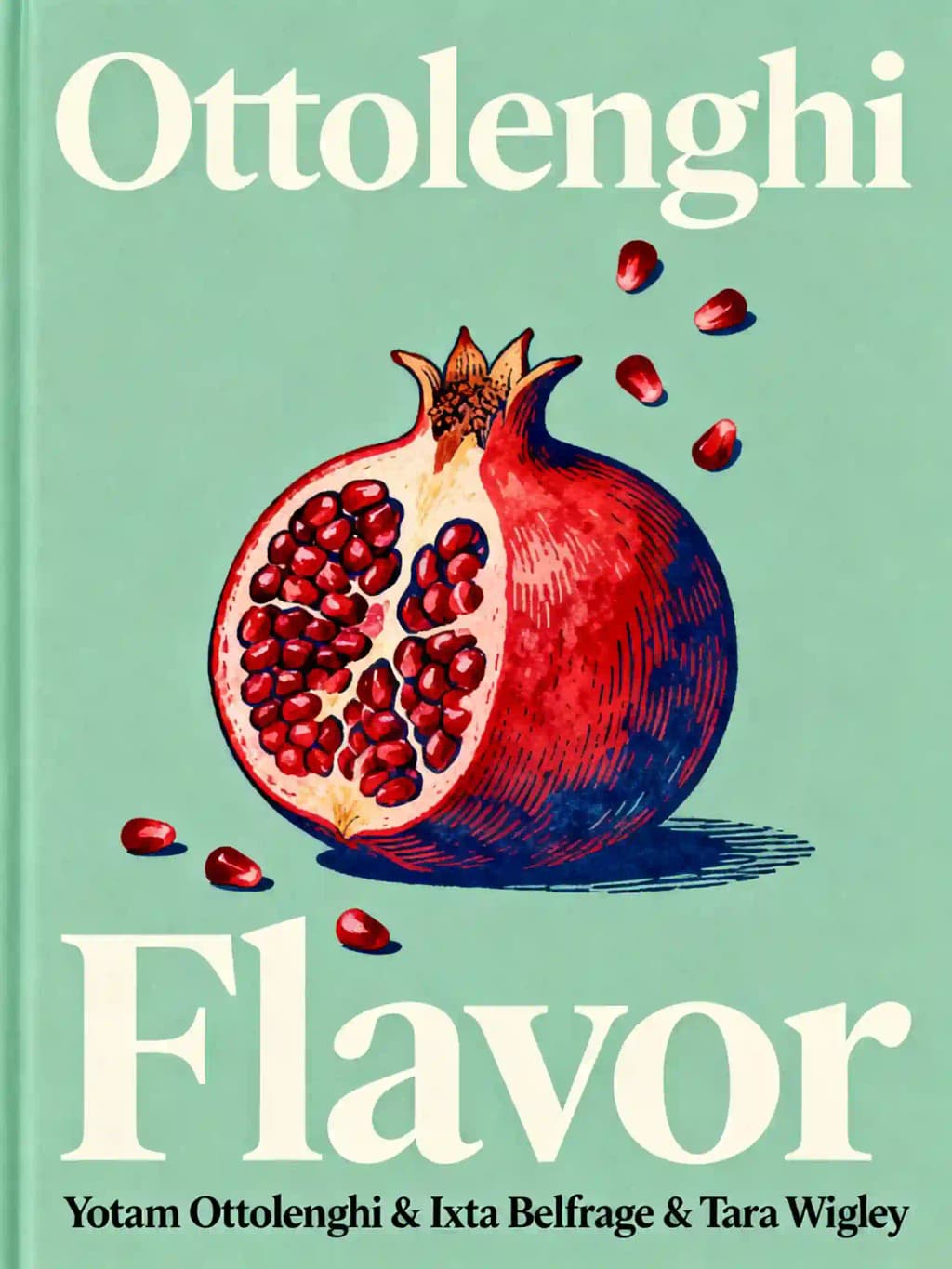
When Yotam Ottolenghi first pondered how many more ways there were to roast a cauliflower or fry an eggplant, he discovered the answer was surprisingly abundant. "Ottolenghi Flavor" represents the culmination of his vegetable-focused trilogy, following the acclaimed "Plenty" and "Plenty More." This groundbreaking cookbook has become a cultural phenomenon, with celebrities like Chrissy Teigen and Nigella Lawson publicly praising its innovative approach. Its impact extends beyond kitchens-restaurants worldwide now feature "Ottolenghi-inspired" sections on their menus, and the distinctive flavor combinations have influenced an entire generation of home cooks. Working alongside co-author Ixta Belfrage, whose global culinary influences span from Mexico to Brazil, Ottolenghi presents a revolutionary framework for understanding and amplifying vegetable flavors through three key concepts: Process, Pairing, and Produce-transforming humble ingredients into extraordinary culinary experiences.
Capítulo 2
The Flavor Trinity: Process, Pairing, and Produce
At the heart of "Ottolenghi Flavor" lies a brilliant conceptual framework that demystifies how to maximize the potential of vegetables. Rather than simply providing recipes, Ottolenghi and Belfrage offer a comprehensive philosophy built on three pillars that work in harmony to elevate plant-based cooking, transforming humble ingredients into extraordinary dishes.
Process transforms vegetables through techniques that fundamentally alter their character. Charring creates complex flavor compounds through caramelization and the Maillard reaction, converting simple sugars into hundreds of new flavor molecules. This technique works particularly well with sturdy vegetables like cauliflower, where high-heat roasting creates crispy, deeply browned florets with an almost meat-like intensity. Browning focuses on developing golden crusts and nutty aromas without blackening, as demonstrated in their signature butter-basted mushrooms that develop a rich mahogany exterior while maintaining succulence within. Infusing gently transfers aromatic compounds from herbs, spices, and alliums into oils and liquids - think garlic-steeped olive oil or chile-infused butter that become flavor foundations for countless dishes. Aging harnesses time rather than heat, using controlled decay through fermentation or preservation to concentrate flavors, exemplified in their lacto-fermented tomatoes or preserved lemons that add depth and complexity.
Pairing introduces complementary elements that enhance vegetables' natural qualities through strategic combinations. Acidity brightens and balances, whether from citrus, vinegar, or fermented ingredients like tamarind. For instance, a splash of lime juice awakens roasted sweet potatoes, while pomegranate molasses adds both tang and depth to grilled eggplant. Sweetness, when thoughtfully applied, doesn't merely make vegetables palatable but reveals their hidden dimensions - a touch of maple syrup amplifies the natural sweetness of roasted carrots while creating caramelized edges. Fat carries flavor compounds and provides satisfying mouthfeel through olive oils, dairy, or plant-based alternatives, transforming simple greens into luxurious dishes. Chili heat contributes not just spiciness but complex undertones ranging from fruity to smoky, with Mexican varieties like ancho and chipotle particularly celebrated throughout the book for their ability to add depth without overwhelming.
Produce recognizes that certain ingredients naturally possess exceptional flavor potential and should be selected and combined strategically. Mushrooms deliver umami richness through their natural glutamates, making them perfect partners for milder vegetables. Alliums provide aromatic foundations - from the sweet mellowness of slow-cooked onions to the sharp pungency of raw garlic. Fruits contribute natural sweetness and acidity while adding textural contrast - fresh figs paired with roasted vegetables, or dried apricots in savory stews. Herbs play dual roles as both produce and flavoring, with woody herbs like rosemary and thyme standing up to high-heat cooking while tender herbs like basil and cilantro add fresh finishing notes.
This three-part framework doesn't just improve individual recipes-it transforms how we conceptualize vegetable cooking entirely, providing a transferable system that empowers creative experimentation beyond the cookbook's pages. By understanding these principles, home cooks can confidently improvise, knowing how to build layers of flavor and create memorable vegetable-focused dishes that satisfy on multiple levels.
Capítulo 3
The Pantry Revolution: 20 Essential Flavor Bombs
Ottolenghi's approach to flavor begins with a carefully curated pantry that serves as the foundation for culinary creativity. His list of 20 essential ingredients represents a global tour of umami-rich flavor bombs that can instantly transform ordinary vegetables into extraordinary dishes.
Fermented and aged ingredients feature prominently, creating layers of complexity that would otherwise require hours of cooking. Black garlic, gently heated for weeks until it develops sweet, balsamic notes; miso paste, the embodiment of umami with its perfect balance of sweet, salty and savory; and fish sauce, an intensely funky yet transformative Southeast Asian condiment-all provide shortcuts to depth and richness.
Chili varieties form another cornerstone of the Ottolenghi pantry, each contributing distinct characteristics beyond mere heat. Cascabel chilies, a favorite at Ottolenghi's ROVI restaurant, offer sweet, nutty, and chocolatey notes perfect for both savory dishes and desserts. Ancho chilies bring fruity sweetness with moderate heat, while chipotles add smokiness from their traditional smoking process. These chilies aren't just about spiciness-they're about building complex flavor profiles.
Acidic ingredients provide essential brightness and balance. Black limes (dried limes popular in Persian cuisine) contribute an earthy, slightly bitter acidity unlike any fresh citrus. Hibiscus flowers deliver cranberry-like tartness along with vibrant color. Rice vinegar offers milder, rounder acidity than Western vinegars, making it perfect for dressings that don't overwhelm delicate vegetables.
What makes this pantry approach revolutionary is how these ingredients cross traditional culinary boundaries. Shaoxing rice wine appears in Italian caponata, Mexican cascabel chilies flavor Middle Eastern butter beans, and Korean gochujang enhances British swede. This borderless approach to flavor reflects Ottolenghi and Belfrage's diverse backgrounds and creates a distinctive culinary language that feels simultaneously innovative and intuitive.
Haven't you always wondered why restaurant food tastes so much more complex than home cooking? These pantry staples are often the secret-concentrated flavor enhancers that professional chefs rely on but rarely explain. By demystifying these ingredients and making them accessible, Ottolenghi empowers home cooks to achieve restaurant-quality results.
Capítulo 4
The Transformative Power of Heat: Charring and Browning
Ottolenghi's approach to heat transcends conventional cooking methods, demonstrating how different applications of temperature fundamentally transform vegetables' flavor profiles. Rather than simply cooking ingredients until tender, he harnesses heat as a chemical catalyst that creates entirely new flavor compounds.
Charring represents the most dramatic transformation, where intense heat creates a chemical reaction between amino acids and sugars, concentrating flavors while adding complexity, bitterness, sweetness, and an irresistible smoky aroma. Different vegetables demand different approaches: broccoli and cauliflower benefit from pre-cooking before grilling, while pumpkin and beetroot are best chargrilled first then finished in the oven. For the deepest smoky flavor, Ottolenghi recommends placing vegetables directly on an open flame-particularly effective with aubergines for dishes like the Herb and Burnt Aubergine Soup, where deeply blackened skin creates ribbons of smoky flesh that form the soup's foundation.
Browning operates on similar principles but with more restraint, creating golden crusts and nutty aromas without blackening. This process-scientifically known as the Maillard reaction-occurs at temperatures above 110C and produces thousands of flavor compounds. Vegetables with higher sugar content like beetroot, celeriac, and cauliflower respond particularly well. The Whole Roasted Celeriac exemplifies this technique, transforming a humble root vegetable into a caramelized delight as its starches convert to sugars during slow roasting.
What makes these techniques revolutionary is their ability to create meat-like satisfaction from vegetables. The caramelized exterior of Celeriac Steaks with Cafe de Paris Sauce delivers the same sensory pleasure as a traditional steak, while the deeply charred eggplant in Steamed Aubergines with Charred Chilli Salsa provides the smoky complexity typically associated with grilled meat. These techniques don't just cook vegetables-they fundamentally reimagine their potential.
Have you ever noticed how roasted vegetables taste sweeter than their raw counterparts? This isn't just perception-heat literally converts starches to sugars while creating hundreds of new flavor compounds. Understanding this chemistry empowers cooks to harness heat strategically rather than simply following prescribed temperatures and times.
Capítulo 5
The Gentle Art of Flavor Extraction: Infusing and Aging
While dramatic techniques like charring create immediate transformation, Ottolenghi equally celebrates subtler processes that build flavor through patience rather than intensity. Infusing and aging represent the gentler side of his flavor philosophy, extracting complexity through time rather than force.
Infusing operates on a simple principle-aromatics transfer their essence to liquid through gentle heat and time, much like brewing tea. The magic lies in the endless possible combinations: Mediterranean infusions with rosemary, thyme and olive oil; Indian variations with curry leaves, mustard seeds and chilies; or East Asian profiles with ginger, star anise and sesame. The Butter Beans in Smoked Cascabel Oil exemplifies this approach, where charred cascabel chilies, garlic, jalapenos and citrus peels steep in olive oil to create a deeply aromatic bath for creamy beans. What makes these infusions so valuable is their efficiency-they create multiple culinary assets simultaneously: flavored oils for drizzling, visual appeal with colored oils, and textural contrast when fried aromatics become crisp garnishes.
Aging represents perhaps the most profound transformation, where time rather than heat becomes the primary agent of change. Originally developed as preservation methods, techniques like fermentation and curing create concentrated flavor experiences through controlled decay. Unlike cooking processes that require external heat, aging harnesses internal biological processes to convert ingredients into more complex, nutritious forms. The book celebrates aged ingredients like miso, black garlic, and gochujang as flavor bombs that deliver outsized impact with minimal quantities. These ingredients require careful balancing with fresh, zesty elements-pairing soy sauce with lemon or lime, for instance-to achieve perfect harmony.
What makes these gentle techniques so valuable in modern cooking is their efficiency. An infused oil can be prepared in minutes but transform multiple dishes throughout the week. Aged ingredients like miso paste or black garlic can instantly add depth that would otherwise require hours of cooking. In our time-pressed world, these approaches offer maximum flavor impact with minimal active cooking time.
Isn't it fascinating how some of our most prized foods-cheese, wine, chocolate-are products of controlled decay? By understanding and harnessing these natural processes, we tap into culinary traditions that stretch back millennia while creating thoroughly modern flavor experiences.
Capítulo 6
The Chemistry of Complementary Flavors: Sweetness and Fat
Ottolenghi's approach to pairing flavors reveals a sophisticated understanding of how taste elements interact to create harmonious dishes. Rather than treating sweetness and fat as mere indulgences, he demonstrates how these elements function as crucial building blocks in constructing balanced vegetable-forward cuisine.
Sweetness in savory cooking operates with remarkable complexity. Ottolenghi distinguishes between taste (detected by taste buds) and flavor (the combination of taste with aromas detected by olfactory cells). While sweetness is registered by taste buds, its complete expression requires aromatic compounds that create distinctive character-the difference between tasting sugar water versus a ripe peach. In savory contexts, sweetness never works in isolation but interacts with other taste elements, creating complex profiles that transcend simple categorization. The Sweet and Sour Sprouts with Chestnuts and Grapes exemplifies this approach, where Brussels sprouts' natural bitterness is balanced by the sweetness of chestnuts and grapes, all marinated in Shaoxing rice wine and soy sauce to create a harmonious whole.
Fat serves dual purposes-both as cooking medium and flavor carrier. Scientifically, fats like olive oil function as superior cooking mediums because their higher boiling points allow ingredients to dry out and develop crispy textures while concentrating flavors. This creates ideal conditions for the Maillard reaction that produces intense flavor compounds-vegetables boiled in water merely become hot versions of themselves, while those cooked in fat transform completely. Beyond science, Ottolenghi's team reaches for olive oil instinctively, loving its "grassy, peppery taste" and describing it as "the Mediterranean sun made liquid." The book explores different fat categories: liquid fats (olive oil, clarified butter), dairy products (cheese, yogurt), and vegetable fats (coconut, avocado). Each brings distinct qualities-neutral oils for clean frying, full-fat yogurt for creaminess without heaviness, and coconut milk for richness in dishes like the Ultimate Traybake Ragu.
What makes this approach revolutionary is its precision-understanding exactly how much sweetness or fat is needed to enhance rather than overwhelm vegetables' natural qualities. It's not about making vegetables palatable through disguise but about strategically amplifying their inherent characteristics.
Have you noticed how a small amount of honey or maple syrup can make vegetables taste more like themselves rather than simply sweeter? This paradoxical effect comes from sweetness' ability to round out bitter compounds while enhancing natural sugars-a balancing act that requires remarkable precision.
Capítulo 7
The Brightness Principle: Acidity and Chili Heat
If there's one signature element that defines Ottolenghi's cooking philosophy, it might be his masterful use of acidity and heat to create vibrant, lively dishes that dance on the palate. These elements serve as counterpoints to the richness of fats and sweetness, creating the dynamic tension that makes his recipes so compelling.
Acidity forms a cornerstone of nearly every Ottolenghi recipe, with each team member bringing their preferred form-Yotam with lemons, Ixta with vinegary quick-pickles, and Noor with dried black Omani limes. While seemingly straightforward, acidity encompasses a spectrum of sensations from tanginess to tartness. Scientifically, acids dissolve in water to release hydrogen ions and remove oxygen from other substances, explaining their preservative qualities in ferments and pickles. In practice, acidity functions as both preservative and flavor enhancer, brightening dishes while extending their shelf life. The Lime and Coconut Potato Gratin demonstrates this principle beautifully, where lime juice cuts through coconut cream's richness while lime zest adds aromatic complexity to the finished dish.
Chili heat has become an Ottolenghi pantry obsession, with an ever-expanding collection of fresh chilies, dried varieties, flakes, pastes, oils, and pickles. The book explores chilies not just as sources of spiciness but as complex flavor carriers with notes ranging from sweet to smoky, leathery to chocolatey. Fresh chilies can be enhanced through charring to concentrate complexity, or through pickling to soften their kick while maintaining freshness. Dried chilies offer even greater versatility-smoky chipotles, sweet cascabels, and fruity anchos each contribute distinctive characteristics beyond mere heat. The Hasselback Beetroot with Lime Leaf Butter exemplifies this sophisticated approach, where green chili adds brightness to the lime leaf salsa without overwhelming the dish's delicate balance.
What makes this approach revolutionary is its precision and restraint. Rather than using acidity and heat as dominant flavors, Ottolenghi employs them as calibration tools that bring dishes into perfect balance. A squeeze of lemon or a hint of chili often represents the final touch that makes a dish sing rather than the primary flavor focus.
When was the last time you tasted something that made your mouth water immediately? That involuntary response is often triggered by perfectly calibrated acidity-a culinary magic trick that makes flavors seem more vivid and immediate.
Capítulo 8
Global Flavor Alchemy: Cross-Cultural Techniques
Perhaps the most revolutionary aspect of Ottolenghi's approach is his fearless cross-cultural fusion that transcends traditional culinary boundaries. Rather than adhering to established cuisine categories, he and Belfrage create a borderless flavor language that draws techniques and ingredients from across the globe based on their functional qualities rather than their origins. This philosophy emerges from their understanding that flavor compounds and cooking techniques often parallel each other across different cultures, even when separated by vast distances and histories.
This approach manifests in unexpected combinations that somehow feel intuitive rather than forced. Za'atar Cacio e Pepe marries the herbal notes of Middle Eastern za'atar with the pepper and cheese of the Italian classic, enhancing rather than compromising its beloved simplicity. The za'atar's sesame and sumac notes actually amplify the pepper's complexity while adding a subtle earthiness that complements the Pecorino Romano. Pappa al Pomodoro with Lime and Mustard Seeds transforms the humble Tuscan bread soup with an Indian-inspired tempering of mustard seeds, chilies, and curry leaves, creating layers of aromatic depth that enhance the tomato's natural umami. The Curry-Crusted Swede Steaks feature a powerful fenugreek-forward marinade that permeates the root vegetable, paired with a bright grapefruit salad that balances the intense spices, demonstrating how bitter and sweet notes can harmonize across cultural traditions.
What makes these combinations work is Ottolenghi and Belfrage's deep understanding of flavor principles rather than mere adherence to tradition. They recognize that the aromatic complexity of curry leaves can enhance Mediterranean tomato dishes just as effectively as basil, or that the umami depth of miso can elevate European root vegetables. Their Miso-Butter Onions, for instance, combine Japanese fermented soybean paste with French cooking techniques, creating a dish that's simultaneously familiar and novel. The Black Lime Tofu demonstrates how Persian dried limes can add compelling citrus notes to East Asian ingredients, while their Coconut and Turmeric Oats reimagine a Western breakfast staple through an Indian lens.
The cookbook's organization reflects this philosophy by grouping recipes according to technique and flavor profile rather than country of origin. Dishes are categorized by process (charring, browning, infusing, aging) and pairing (sweetness, fat, acidity, heat) rather than by cuisine type, encouraging readers to think beyond traditional categories. This systematic approach helps home cooks understand how similar techniques - like the slow caramelization of onions - appear across multiple culinary traditions, from French onion soup to Indian biriyani.
The universal nature of certain flavor combinations appears independently across cultures, revealing deep connections in human taste preferences. Garlic and citrus in Mediterranean cooking echo ginger and lime in Southeast Asian traditions; fermented vegetables appear in Korean kimchi and German sauerkraut alike. The book explores how chili heat is balanced with sweetness in Mexican cuisine just as it is in Thai cooking, and how the umami-rich combinations of aged cheese and cured meats in Italian antipasti mirror the fermented soybean and fish sauce pairings in Japanese cuisine. By focusing on these fundamental flavor relationships rather than rigid cultural categories, Ottolenghi creates a truly global cooking philosophy that feels both innovative and timeless, while respecting and celebrating the diverse culinary traditions that inspire it.
Capítulo 9
The Vegetable Renaissance: Transforming Plant-Based Cooking
"Ottolenghi Flavor" represents far more than a collection of recipes-it heralds a fundamental shift in how we approach vegetable cooking. Rather than treating vegetables as mere side dishes or reluctant substitutes for meat, Ottolenghi elevates them to star status through techniques that maximize their inherent potential.
This philosophy manifests brilliantly in dishes like the Whole Roasted Celeriac, which transforms the humble root vegetable into three distinct centerpiece preparations. The basic technique-slow-roasting with just oil and salt until deeply caramelized-becomes the foundation for sophisticated variations: paired with pickled celeriac and sweet chilli dressing; served as "tacos" with date barbecue sauce in cabbage leaves; or sliced into "steaks" topped with decadent Cafe de Paris butter. Each preparation delivers the satisfaction traditionally associated with meat dishes while celebrating celeriac's unique qualities.
Similarly, the Ultimate Traybake Ragu achieves remarkable umami depth without meat through a clever combination of vegetables (carrots, onions, mushrooms), umami-rich ingredients (miso, soy sauce, dried porcini), and proper technique (roasting until caramelized before adding lentils and barley). The result freezes beautifully and versatilely tops pasta, polenta, or forms the base for lasagne or shepherd's pie-functioning exactly as a traditional meat ragu would while offering its own distinctive character.
What makes this approach revolutionary is its unapologetic celebration of vegetables on their own terms. Rather than mimicking meat, Ottolenghi harnesses vegetables' unique properties-the way eggplant absorbs flavor like a sponge, how mushrooms develop meaty textures when properly cooked, or how cauliflower's florets capture sauce in their nooks and crannies. The flexitarian approach acknowledges diversity in eating habits-of the 100 recipes, 45 are strictly vegan and another 17 easily "veganised"-inviting everyone to celebrate vegetables' chameleon-like ability to take on flavor and metamorphose from one dish to the next.
When did vegetables transition from obligation to celebration on our plates? This shift represents one of the most significant culinary evolutions of our time-a recognition that plant-based cooking can offer pleasure and satisfaction equal to or surpassing traditional meat-centered meals when approached with proper technique and imagination.
Capítulo 10
From Kitchen to Table: Practical Magic for Home Cooks
Beyond its philosophical framework and innovative flavor combinations, "Ottolenghi Flavor" offers remarkably practical wisdom for home cooks. The book acknowledges the realities of modern cooking-time constraints, ingredient availability, and the need for flexible approaches-while still delivering extraordinary results.
This practicality manifests in thoughtful make-ahead components that can transform multiple meals. The Smoked Cascabel Oil that bathes butter beans can be prepared weeks in advance and drizzled over eggs, vegetables, or grilled proteins. The Curry Leaf Mayonnaise that elevates oven chips keeps for up to two weeks and enhances everything from sandwiches to grilled prawns. These building blocks allow home cooks to invest time once and reap the flavor benefits across multiple meals.
Ingredient flexibility appears throughout the book, with Ottolenghi consistently offering substitutions and variations. Can't find fresh curry leaves? Mint leaves work in the chickpea pancakes. No cascabel chilies? Ancho or guajillo varieties can substitute. This approach recognizes that while specialty ingredients create distinctive results, cooking should remain accessible rather than frustratingly precise.
The book's organization into practical meal categories further enhances its usability. Sections like "One Pan, Ready in 30 Minutes or Less," "Low-Effort/High-Impact Meals," and "Make-Ahead Meals" help readers navigate the recipes based on their real-world needs rather than abstract categories. Each suggestion pairs main dishes with complementary sides, offering complete meal solutions rather than isolated recipes.
Perhaps most importantly, Ottolenghi acknowledges that cooking should bring joy rather than stress. Techniques like using a piping bag to form swede gnocchi directly into simmering water make traditionally difficult dishes more approachable. The option to use store-bought components when time is limited-pre-cooked beetroots for Hasselback Beetroot, tinned beans for Black Beans with Coconut-ensures that the essence of each dish remains accessible even when shortcuts are necessary.
How often have you abandoned an exciting recipe because it seemed too complex or time-consuming? Ottolenghi's practical magic lies in making extraordinary cooking feel achievable-breaking complex techniques into manageable steps while ensuring that even simplified versions deliver remarkable results.