Capítulo 1
The Revolution of Joy: Finding Happiness Through Connection, Not Achievement
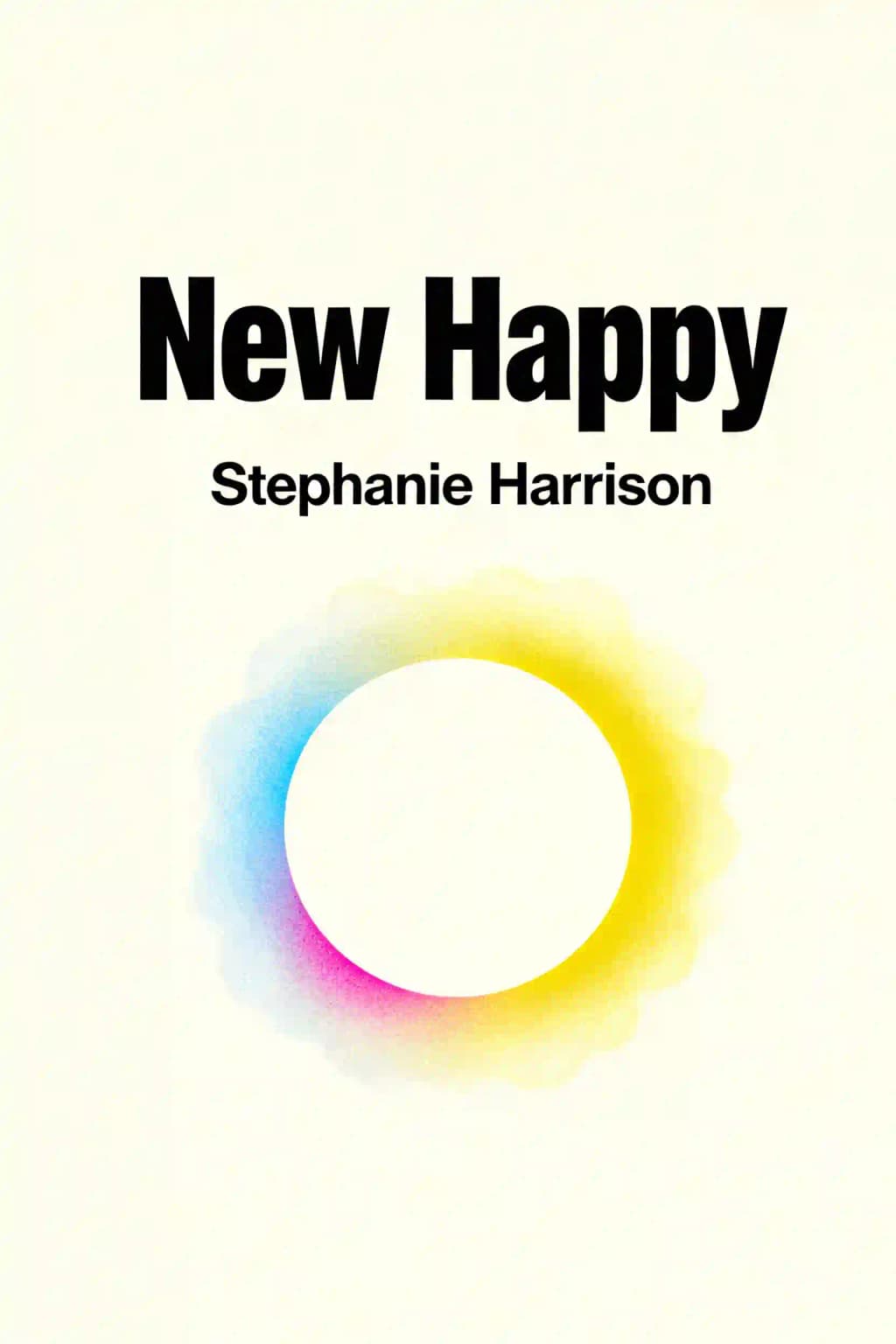
In 2013, Stephanie Harrison found herself curled on her New York City bedroom floor, watching darkness spread across the skyline and feeling it spread within her too. Despite checking all the boxes society told her would bring happiness-prestigious education, impressive career, external success-she was desperately unhappy. This moment of questioning sparked a transformative journey that would eventually touch the lives of millions. Harrison's philosophy, developed through personal experience and rigorous academic study at the University of Pennsylvania's positive psychology program, has resonated deeply with readers seeking authentic happiness in an achievement-obsessed world. Even Oprah Winfrey has praised the book as "a roadmap to joy that challenges conventional wisdom." What makes Harrison's approach so compelling is that it doesn't just critique our cultural misconceptions about happiness-it offers a practical alternative grounded in both ancient wisdom and cutting-edge science. Her work has become particularly relevant as global happiness levels hit record lows, with millions finding themselves in the same position Harrison once was: successful on paper but empty inside.
Capítulo 2
The Happiness Myth That's Ruining Our Lives
Happiness drives everything we do. From our breakfast choices to our career aspirations, all our behaviors are guided by an internal compass pointing toward what we believe will make us happy. Studies across 47 nations show students rank happiness as their single most important life goal. Our brains are literally wired with circuits that motivate us to pursue what we think will bring happiness.
Yet despite this universal pursuit, Americans report being the unhappiest they've been in fifty years. Rates of loneliness, mental illness, and suicide have reached alarming levels. The fundamental problem is that most people operate with a deeply flawed definition of happiness that guides their life choices in counterproductive directions.
This definition-what Harrison calls "Old Happy"-teaches that happiness comes from perfectionism, wealth accumulation, material possessions, conformity, overwork, fame, and competitive success. Research consistently shows these pursuits actually decrease well-being, causing depression, anxiety, and loneliness. Even enormously successful people like Shaquille O'Neal have acknowledged the emptiness of these pursuits, famously saying after achieving wealth and fame: "I was successful but not happy."
Where did this harmful definition come from? It's not our fault-it's been handed down by society without our conscious choice. Like many mistaken beliefs throughout history (earth-centered universe, divine right of kings, pre-germ theory medicine), our Old Happy beliefs will likely seem foolish to future generations.
The process begins in our earliest days as our brains absorb messages from our surrounding culture. In Western societies, three powerful forces shape our values: individualism, capitalism, and domination. While individualism has positive aspects like freedom and autonomy, its shadow side teaches that we are separate from others, placing self-interest above community needs. This cultural shift is measurable-studies of books published between 1800-2000 show individualistic words like "me" and "self" appearing with increasing frequency, while children's television shows now rank personal fame as the top value compared to its fifteenth-place ranking in 1967.
These forces amplify each other like a three-headed monster, influencing behaviors like social media posting where we highlight ourselves (individualism), showcase accomplishments (capitalism), and strive to prove our superiority (domination). The result? A worldview that tells us: I am lacking something, I must achieve expected outcomes, and I am separate from others-creating the belief that happiness comes from proving our worth through achievement while doing it alone.
Capítulo 3
The New Definition of Happiness That Changes Everything
After a decade of research across academic studies, philosophy, theology, and leadership, Harrison discovered a consistent message about happiness: it requires both being yourself and giving of yourself. From Mary Shelley to Marie Curie to Martin Luther King Jr., this wisdom appears repeatedly throughout history. Modern science confirms that using your unique strengths increases happiness while connecting with others leads to longer, more fulfilling lives.
This "New Happy" philosophy builds on ancient wisdom from figures like Aristotle and Buddha but incorporates modern scientific research to address contemporary needs. Unlike Old Happy's external pursuits, this happiness isn't something to acquire or wait for-it's available now through personal transformation.
The formula is remarkably consistent: discover who you truly are and share yourself in ways that help others. This path combines using your unique strengths with meaningful connection to others, creating a sense of purpose that transcends the emptiness of achievement for its own sake.
Scientists discovered that Americans aggressively pursuing happiness ended up unhappier than ever because their Old Happy worldview led them to focus excessively on themselves rather than nurturing relationships and using their gifts to help others. Like a compass exposed to a powerful magnetic field that points in the wrong direction, Old Happy sends us flying away from true joy.
There is no lasting happiness in isolation, acquisition, or superiority-it's like expecting delicious pudding but getting a mouthful of lard instead. Without language to describe this problem, we've defaulted to thinking something is wrong with us, when what's wrong is our shared definition of happiness.
Naming Old Happy is the first step to freedom. When you recognize its influence-in self-criticism about your appearance, pressure to overwork, reluctance to ask for help, social media boasting, or policies that dominate others-call it out: "That's Old Happy." This naming helps you realize you aren't Old Happy but someone affected by it, making it easier to accept yourself, pursue what matters, and build meaningful relationships.
Capítulo 4
The Secret to Happiness That's Been Hidden in Plain Sight
The chapter begins by debunking a pervasive misconception-Maslow's Hierarchy of Needs pyramid. Though widely accepted as fact, Maslow never created this pyramid; it evolved through misinterpretations, eventually formalized by a Milwaukee consulting firm. Like the flawed U.S. food pyramid that guided eating behaviors for decades, Maslow's pyramid has similarly shaped our misguided approach to happiness by reinforcing Old Happy's three lies: that we must "climb to the top," that self-actualization means achieving extrinsic goals, and that happiness is an individual pursuit disconnected from others.
The pyramid visualization reinforces Old Happy's flawed thinking in three ways. First, it creates a hierarchy suggesting we must climb from bottom to top, when Maslow himself wrote that we pursue all needs simultaneously. A public health professor shares how James Arinaitwe, who became an orphan in Uganda at age five, laughed at the Western notion that purpose is only for those with everything else-for him, "purpose gives you hope" even amid poverty. Second, the pyramid's ambiguous "self-actualization" top level gets misinterpreted as achieving fame and wealth rather than taking authentic action motivated by your true self. Finally, the pyramid focuses entirely on individual needs, completely omitting our connection to others.
The truth is that helping others isn't optional-it's a fundamental human need. Research shows babies as young as three months demonstrate concern for others, and by eighteen months actively try to comfort those in distress. Our brains reward helping through "helper's high," activating the same pleasure centers as food or sex. Helping connects directly to our well-being: it reduces stress, increases longevity, and builds self-worth.
Even in humanity's darkest moments-like concentration camps or 9/11-people instinctively help others. When volunteers rushed toward Ground Zero, they described feeling compelled to help, gaining meaning and connection while alleviating others' suffering. As Barbara Kingsolver notes, "happy people have found a use for themselves, like a good tool." This is the secret to happiness.
The debate about whether helping is "selfish" or "selfless" only makes sense if we see ourselves as separate from others. In reality, service is neither-it's mutually beneficial. Like sunflowers that share soil resources when growing together, humans thrive in connected communities. True service isn't suffering or saving others-it's making contributions while maintaining your well-being.
Harrison founded The New Happy during her partner Alex's illness, despite well-meaning friends suggesting she focus on herself instead. But helping others became her lifeline, giving her meaning and connection when she needed it most. The key insight: "You never have to wait to be happy because there is always someone out there you can help."
Capítulo 5
The Paradox of Asking for Help
Michael Phelps, the most decorated Olympian ever, says one of his hardest challenges wasn't his grueling training but learning to ask for help. This common struggle stems from Old Happy's lies: that needing help means you're imperfect, that external achievements will solve your problems, and that you must solve everything alone. These beliefs make difficult times even harder.
Phelps admitted, "I used to hate who I saw in the mirror. The only thing I saw was a swimmer. I never saw myself as a human being." Like many caregivers of dementia patients who feel guilty for their struggles, we often reject help because our self-worth is tied to not needing it. The solution is treating ourselves with kindness-looking at ourselves with the same loving eyes we'd turn toward others who are suffering. You're worthy even in your most painful moments.
If you're only giving help but never receiving it, you're still trapped in Old Happy thinking. Asking for help actually gives others the chance to experience happiness through service-what Harrison calls "the helping paradox." Create a "Signal List" of physical and emotional signs that indicate when you need support, including bodily distress signals, emotions like anger or anxiety, and behavioral changes like disconnecting from people or skipping enjoyable routines. Be direct when asking for help, as people are far more willing to assist than we typically assume.
Just as a tidy house inevitably becomes messy again through daily living, human life naturally includes struggles. Old Happy makes us believe success will eliminate pain, but even Michael Phelps with his 28 Olympic medals acknowledges "there's never a finish line" with mental health struggles. A happy life isn't one without pain-it's learning to live alongside pain.
While we experience glorious moments of brightness and beauty, most of our lives involve navigating various "messes"-from profound trauma to daily frustrations. This doesn't indicate something is wrong; it confirms you're human. Our culture encourages hiding pain, but as Kristin Neff's research shows, recognizing our "common humanity" in suffering is essential.
Our pain, rather than isolating us, can connect us to everyone else who suffers. By reframing specific struggles ("I'm a young caregiver for a partner with a mysterious disease") into broader shared experiences ("I'm a person who has gone through pain"), we discover our connection to all humanity. This shift enables deeper compassion for ourselves and others. As Spanish philosopher Miguel de Unamuno said, "man dies of cold, not of darkness"-it's isolation in pain that destroys us, not the pain itself.
Capítulo 6
Finding Joy in an Interconnected World
Shigeru Miyamoto, Nintendo's legendary game designer, once said he wished he could redesign the world to make people "more thoughtful and kind toward each other." This represents the shift from Old Happy's "egosystem" to New Happy's "ecosystem"-terms coined by psychologists Jennifer Crocker and Amy Canevello. In an egosystem, people focus on boosting their ego and winning at others' expense. In an ecosystem, people recognize they're part of an interconnected web where caring for others contributes to their own happiness.
What seems like an ordinary day-waking up, interacting with family, working with colleagues, meeting friends, engaging with community-is actually extraordinary. These daily interactions form an ecosystem of mutual giving and receiving that encompasses family, coworkers, clients, friends, community, culture, and nature. These everyday connections provide the perfect opportunity to start living your New Happy through three powerful shifts.
The first shift asks: "How can I help?" When Octavia Spencer's car broke down in a busy intersection early in her Hollywood career, Keanu Reeves stopped his motorcycle to push her car to safety while others just honked. In everyday moments, we can offer to drop off meals for a coworker whose spouse is undergoing chemotherapy, invite new neighbors to community gatherings, or donate to wildfire relief efforts. Studies show self-consciousness often prevents us from helping-we worry about doing it wrong or whether our contribution matters. But as sociologist Emile Durkheim noted, "altruism is no mere ornament to social life, but its fundamental basis." Every act of kindness is a stitch holding society together.
The second shift asks: "Who helped me?" When Amanda realized she'd left her car trunk open while rushing to catch a train, she turned back to see a stranger closing it for her-help she would never have known about had she not forgotten. We often take assistance for granted, whether it's a colleague's congratulatory message, a barista preparing our favorite coffee, or a partner picking up the kids. Recognizing the help we receive generates gratitude, which studies show improves depression, anxiety, blood pressure, and quality of life.
The third shift asks: "Where are others helping?" Many believe it's advantageous to view the world as dangerous, but Jer Clifton's research proves otherwise. Those who see the world as bad are less healthy physically and mentally, more likely to attempt suicide, more dissatisfied at work, and less happy overall. In contrast, seeing the world as good correlates with success and happiness. Even Anne Frank, hiding from Nazis, wrote: "I still believe that people are really good at heart."
Beyond these daily shifts lies an even deeper happiness: crafting a life that integrates helping into everything we do. Stanford psychologists William Damon and Anne Colby studied moral exemplars-ordinary people doing extraordinary things to help others. Despite their diverse backgrounds, these people shared key qualities: moral certainty, profound joy, optimism, and the integration of personal goals with world-betterment goals.
Capítulo 7
Discovering Your Unique Gifts to Share
Richard Adams discovered his gift at age 52 when a car ride story for his daughters became "Watership Down"-a beloved children's book rejected seven times before becoming one of Penguin's best-selling books ever. This illustrates how we all possess three types of gifts: humanity (who we are), talent (what we do), and wisdom (what we know). Adams' humanity showed in his book's lessons about nature and power; his talent emerged in storytelling that terrified yet captivated; his wisdom came from military experience, knowledge of Hampshire, and understanding that children could handle scary stories with meaningful messages.
You'll recognize your gifts because using them feels good-they energize you and whisper, "This is what I'm supposed to be doing." Like Toni Morrison, who realized writing was her gift because other pursuits would bore her, you'll know your gifts by how they make you feel, not by others' criteria. Your joy expands when you combine your gifts into something utterly unique-your special blend of humanity, talent, and wisdom makes you "one of one." Unlike Old Happy's comparative measures of success, your incomparable gifts find their purpose when given away to benefit others.
Discovering your gifts often begins by recognizing them in others. Like Michelangelo releasing figures from marble blocks, we can help others see their authentic selves through specific compliments about their humanity ("You're incredible at staying calm"), talent ("Thank you for your diligent planning"), or wisdom ("I appreciate your expertise"). When Harrison pointed out her friend Cory's gifts in facilitating, teaching and inspiring enthusiasm, Cory was surprised but empowered to use these gifts more intentionally. No one's gifts emerge without someone to identify and encourage them-like Ryan Coogler's professor who recognized his visual writing talent and suggested screenwriting, launching his filmmaking career.
Our gifts create ripple effects beyond what we can imagine. Darren O'Brien, a rail station manager, watched a documentary about domestic violence survivors and created "Rails to Refuge"-a program offering free, untraceable train tickets to people escaping abuse. This initiative has saved over three thousand people and transports four people to safety daily. O'Brien's humanity (compassion), wisdom (recognizing railways could help), and talent (advocating within the system) combined to make this possible. But his gifts didn't stand alone-they were sparked by Charlotte, a survivor who appeared in the documentary and later became a refuge CEO. This illustrates how gifts work: they extend outward, creating a chain of impact where we're sometimes the visible link and sometimes the unseen connection.
Capítulo 8
Humanity: The Foundation of True Connection
Humanity is the foundational gift required for happiness, upon which talent and wisdom are built. The chapter opens with Shiro Oguni's story-after receiving the wrong order at a restaurant run by dementia patients, he created "The Restaurant of Mistaken Orders" to change how society treats people with dementia. Despite 37% of orders being incorrect, 99% of customers were satisfied, and staff experienced profound joy through connection.
Our culture portrays love as confined to romantic relationships, but research by Barbara Fredrickson reveals it's actually an emotion shared between any two people that creates a desire to invest in each other's well-being. This emotion-love-functions like a miracle pill, lowering blood pressure, improving heart health, reducing stress and depression, strengthening relationships, increasing resilience and meaning, and helping mental health. The vagus nerve connecting brain to heart acts as a "love barometer," activating when we share moments of care with others. Our humanity gifts-kindness, compassion, courage, forgiveness, patience, and many more-are expressions of this love.
Discovering humanity gifts is like drawing back curtains to let inner light shine through. Loving-kindness meditation helps cultivate this compassionate nature by generating loving feelings while repeating: "May you feel safe and protected. May you feel happy and peaceful. May you feel healthy and strong. May you live with ease." Research shows just ten minutes daily improves both capacity for love and personal happiness. Harrison suggests a simple daily practice: mentally wishing happiness for strangers you pass-"I hope you will be happy today" or "You deserve love and happiness."
When Spanish runner Ivan Fernandez Anaya saw Kenyan competitor Abel Mutai stop short of the finish line thinking he'd already won, he could have overtaken him. Instead, he guided Mutai to the proper finish line, prioritizing humanity over victory. Slowing down-literally and figuratively-helps us see opportunities for love around us. A Princeton study demonstrated this when seminary students preparing talks on the Good Samaritan were less likely to help a person in distress when rushing (only 10% of hurried students stopped).
Peace researchers have discovered something surprising and empowering: beyond complex factors like government systems and economic policies, peaceful societies are distinguished by their abundance of "micro-moments of love" shared between citizens. As researchers Peter T. Coleman and Douglas Fry describe it, "Sustaining peace happens through positive reciprocity: I show you a kindness and you do me a favor in return, multiplied throughout the social world a million times over." These small acts of humanity, accessible to everyone, collectively create profound societal transformation.
Capítulo 9
Talent: Discovering Your Path to Contribution
We tend to view talented people-from Leonardo da Vinci to Serena Williams-as having been born extraordinary, reinforcing Old Happy beliefs about perfect selves, external outcomes, and separation. Yet every celebrated talent followed the same "invisible path" that anyone can learn to walk. Harrison reveals this three-step process: discover your true self's innate potential, turn that potential into talent, and evolve your talent over time.
Drawing from Aristotle's concept of the "daimon" (true self containing innate potential), Harrison presents three steps to developing talent: discover your innate potential, transform potential into talent, and evolve your talent over time. This framework makes "the invisible path, now made visible."
Julia Child discovered her passion for food at nearly forty after a transformative meal at La Couronne in France-an experience she described as "an opening up of the soul and spirit." Harrison suggests we discover our talents by noticing when our true self signals interest through feelings of excitement, warmth, or curiosity-like "panning for gold." Strategies include revisiting childhood passions, identifying whose daily schedule you envy, recognizing what comes easily to you, and gathering feedback from others. If you're not finding "gold fragments" in your current life, seek new experiences: explore unfamiliar library sections, try new hobbies, or connect with people in different fields.
To turn potential into talent, create flow experiences by matching challenges with your skill level. Start with comfortable tasks, then increase difficulty by about 10% to avoid both stress and boredom. This gradual progression builds mastery through enjoyable practice. Flow is powerful because it helps you enter a focused state of consciousness lasting hours rather than seconds. Building community also accelerates talent development: connect with peers for mutual support, find mentors who can guide you, and study masters in your field.
Your talent must continually evolve as you grow. As Martha Graham noted, "There is a vitality, a life force" that is uniquely expressed through you, and blocking it means "it will never exist through any other medium." You can evolve your talent in three ways: go deeper (like Dickens exploring different writing forms), move sideways into related fields (like Julia Child expanding from cookbooks to television), or make a leap into new domains (like da Vinci pursuing art, anatomy, and engineering). Remember that talents aren't fixed identities-they're expressions of your potential that can manifest in various contexts, whether professional or personal, reaching millions or just one person who needs your gift.
Capítulo 10
Wisdom: The Overlooked Gift We All Possess
We all possess wisdom, though many don't recognize it. Artist Susan O'Malley's exhibit "Advice from My 80-Year-Old Self" demonstrated this by collecting profound insights from ordinary people of all ages. Wisdom involves using life experiences to grow and contribute to others' well-being through guidance and problem-solving. Harrison defines "wisdom gifts" as insights from personal experience that, when acted upon, benefit others-whether through inspiring movements, solving problems, or making good decisions.
We often fail to recognize our own wisdom due to the "curse of knowledge"-once we know something, we can't imagine what it's like not to know it. Elizabeth Newton's experiment showed this: "tappers" assumed listeners could identify songs from their taps, but only 0.01% actually could. To access our wisdom, we must shift perspective from self-focus to considering what others need. Research confirms this: people give wiser advice when imagining helping a friend rather than solving their own problems, or when viewing issues from an outsider's perspective.
Harrison's mother, a former Olympic swimmer who struggled for 27 years after retirement, found purpose after a fellow Olympian's suicide by supporting athletes transitioning out of sports. Her journey exemplifies how unique life experiences generate wisdom that can benefit others. The prompt "What have I learned in my life that could benefit others?" helps uncover this wisdom, whether from being a trailblazer in your field, navigating immigration challenges, or witnessing a loved one's struggles with disability.
Our accomplishments generate wisdom that can guide others following similar paths. Harrison shares how teacher Erin Lockwood's students wrote to famous authors, and Kurt Vonnegut responded with profound wisdom about creativity: "You have experienced becoming, learned a lot more about what's inside you, and you have made your soul grow." This wisdom-focusing on the process rather than external validation-had ripple effects in their lives twenty years later.
Our struggles generate unique wisdom that can help others. As Elisabeth Kubler-Ross wrote, "The most beautiful people have known defeat, suffering, struggle, loss, and found their way out." Wise people transform their pain into help for others-like librarian Barbara Weedman who created baby carrels in libraries after experiencing the challenges of single motherhood, or Oprah Winfrey who used her experiences of poverty and abuse to empower others.
Our collective wisdom, not individual genius, drives human progress. Anthropologists Henrich and Muthukrishna argue we've built a "collective brain" of accumulated knowledge over thousands of years. We contribute to this through creating programs, writing, teaching, offering perspectives, speaking up, making things, and sharing stories. Harrison shares how artist Susan O'Malley's work-combining wisdom, talent and humanity-provided hope during her partner's illness, demonstrating how our gifts reach through space and time to help others in profound ways.
Capítulo 11
Transforming Work Into a Source of Meaning
John Oliver's 2013 investigation of Australian gun control revealed contrasting definitions of success. Former Queensland premiere Rob Borbidge, who lost his political career implementing gun control, defined success as "making society a better place." Meanwhile, U.S. Senator Harry Reid's aide defined it as "getting reelected." This illustrates how Old Happy views work as competition-winning at all costs-while most people privately reject this definition. A study revealed 92% believe others define success as accumulating wealth and power, yet 97% personally define it as pursuing their interests and talents. We're collectively trapped in a system no one actually wants.
Dr. Thanh Neville transformed her ICU work by implementing the 3 Wishes Project (3WP), granting end-of-life wishes for terminal patients. The program brings profound meaning to patients' final moments-from outdoor patio transfers to keepsake fingerprint keychains families treasure for years. This job-crafting approach combines her medical talent with compassion, transforming both patient care and her own fulfillment: "It has brought me joy because I can do so much more for my patients now, and I have a much greater awareness that love is what matters most in life."
Job-crafting, pioneered by psychologists Amy Wrzesniewski and Jane Dutton, involves reshaping your work through three approaches: crafting tasks (like Chewy representatives sending flowers to customers whose pets died), crafting relationships (like Maria who transformed her data management job by connecting with coworkers), or crafting projects (like teachers Jessica Martin and Asherah Weiss creating the viral "Peptoc" compassion hotline offering recorded encouragement from children). These approaches use the equation: task x gift = greater happiness for everyone.
Sometimes your growth requires a new environment, like Jesse Milliken who left Nike after fifteen years to address climate change. Combining his shoe design talents with his wife's sustainability expertise, they founded Woolybubs, creating baby shoes that dissolve in boiling water instead of spending centuries in landfills.
When feeling restless in your career, celebrate it as growth-like a plant becoming root-bound needing a larger pot. Remember: your job is not your work. Your true work is being and giving yourself. To find a better-fitting role, use the journalism framework: What gifts do you most want to use? Where might they be valued? Why does this matter to you? Who could help you explore opportunities? How will you take action? When will you start?
Jelani Memory transformed childhood conversations by founding A Kids Co., publishing books that help children discuss difficult topics from racism to death. Despite being "naturally depressive, naturally sad, naturally cynical," Memory discovered that "when I'm giving, I'm instantly fueled with joy and energy. It has changed everything."
Work is perfectly positioned for happiness because it enables constant giving and receiving. The cake from your local bakery, the national park you visited, the painting on your wall-all result from others sharing their gifts. When you put giving at the center of your work, you'll experience the greatest form of success there is.
Capítulo 12
Creating Community Through Shared Purpose
Haraldur Thorleifsson's experience of being unable to enter a store in his wheelchair while his family went inside sparked a transformation. As a design leader at Twitter who had recently returned to Iceland, he launched Ramp Up Iceland to build one hundred ramps in downtown Reykjavik. The project was completed in just seven months, enabling wheelchair users to access downtown spaces for the first time in decades. Now expanded to building fifteen hundred ramps across Iceland, Thorleifsson's initiative demonstrates how individuals can use their gifts to transform communities.
The chapter explores how we can care for our shared resources or "commons." William Forster Lloyd's historical pamphlet described how self-interested actions lead to depletion of common resources, later popularized as "the tragedy of the commons" by Garrett Hardin. However, Elinor Ostrom won the Nobel Prize for disproving this pessimistic view, showing that communities can successfully manage shared resources. This concept extends beyond natural resources to communities themselves, which belong to everyone and should extend belonging to everyone.
We already belong to many communities we take for granted-from cities and religious groups to social circles and online communities. Research shows that strong community ties significantly increase happiness, health, and resilience. The first step to greater belonging is claiming these communities as our own, saying "That's my neighborhood" or "That's my library." Studies show this psychological ownership transforms how we treat shared spaces-in one experiment, people who nicknamed a lake were seven times more likely to pick up trash. This shift moves us from thinking "Someone should do something" to "I can do something."
The chapter compares global problems to ball pits filled with local expressions of those issues. Like Thorleifsson who made Reykjavik accessible, we can each reach into the pit and address the specific "ball" affecting our local community. This aligns with Ostrom's research showing local people using their gifts create the best local solutions.
The chapter profiles Lisa Thomas-McMillan, who opened Drexel & Honeybee's, a donation-only restaurant in Brewton, Alabama, after being inspired by Jon Bon Jovi's similar initiative. Despite initial skepticism, the restaurant now attracts tourists nationwide while ensuring no one goes hungry. Similarly, Keyatta Mincey Parker created "A Sip of Paradise," a community garden supporting Atlanta's bartenders during the pandemic.
The chapter tells the story of Colquitt, Georgia, a dying town revitalized by "Swamp Gravy"-a musical created from local stories. What began as a desperate attempt to save the town has run for thirty years, generating $7 million annually in tourism, building community resources, and even performing at the Kennedy Center. The production demonstrates how communities using their collective gifts can create extraordinary transformation.
When caring for communities, we often encounter suffering that can feel overwhelming. Our natural empathy-literally sharing others' feelings-can lead to personal distress that makes us pull away. The solution is developing compassion, which involves feeling loving emotions coupled with the desire to alleviate others' pain. Buddhist monk Matthieu Ricard described how empathy left him emotionally exhausted when viewing suffering children, while compassion allowed him to feel boundless love without distress.
Capítulo 13
The Happiness Revolution Starts With You
Like the king in Tolstoy's "The Three Questions" who discovers wisdom through helping others, we've learned that happiness comes through service. The answers to our fundamental questions about identity, purpose, and connection all point to the same conclusion: we are here to help each other. Our gifts are meant to be expressed not for outcomes but as expressions of our true selves, and the best way to use them is in service to others.
Making the world better isn't a solo task but an orchestral one where every instrument plays its unique part. No problem can be solved by one person alone-even those operating at scale rely on thousands of volunteers and supporters. We're encouraged to identify the world problems we most want to solve, whether in health, violence prevention, rights, access, economics, environmental protection, or society.
The path to happiness begins with the person right in front of you who needs your unique gifts, just as you need to share them. Through this mutual need, we find belonging, purpose, and happiness, creating a better world one act of help at a time. As Harrison concludes: "It turns out that love really does add up."
This revolution in how we understand happiness isn't just theoretical-it's transformative. When we shift from the Old Happy pursuit of achievement, perfection, and separation to the New Happy practice of authenticity, contribution, and connection, we discover that joy was available all along. We just needed to look in a different direction: toward each other.