Capítulo 1
Beyond Money and Power: Redefining Success
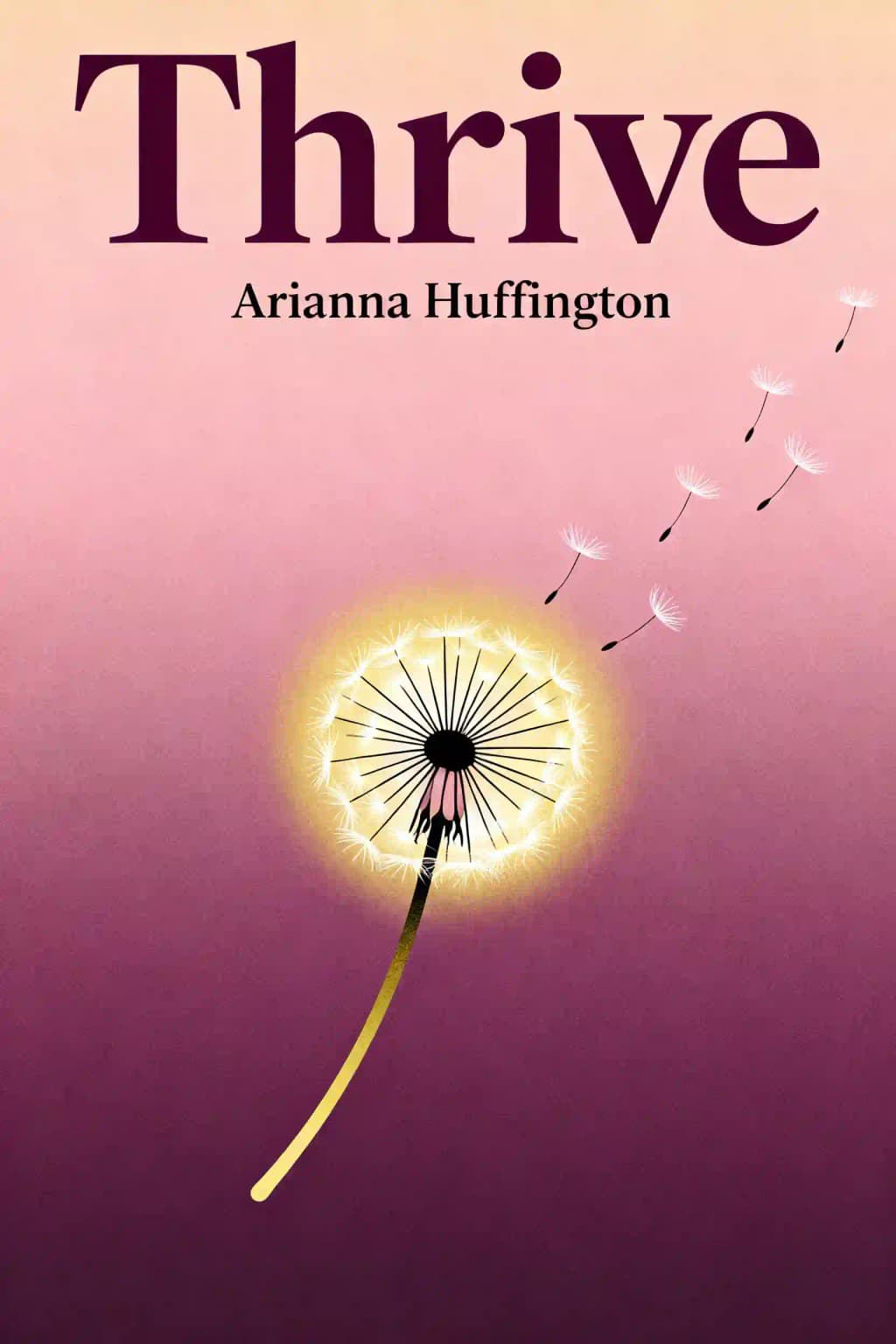
In the spring of 2007, Arianna Huffington collapsed in her office, lying in a pool of blood from a broken cheekbone. This dramatic wake-up call forced her to confront an uncomfortable truth: the traditional markers of success-money and power-had left her physically and mentally depleted. Her collapse became the catalyst for a radical reevaluation of what success truly means. "Thrive" quickly became a cultural phenomenon, spending weeks on bestseller lists and igniting conversations across boardrooms, universities, and social media. Even Oprah Winfrey called it "one of the most important books of our time," while CEOs from companies like Aetna and Zappos implemented its principles in their corporate cultures. What makes this book particularly powerful is how it arrived precisely when our always-on, burnout culture reached critical mass-offering not just critique but practical solutions. What if success were measured not just by the size of our bank accounts but by the depth of our well-being, wisdom, wonder, and capacity for giving?
Capítulo 2
The Burnout Epidemic: When Success Becomes Self-Destruction
Our modern definition of success is literally killing us. The statistics are alarming: working women face a 40% increased risk of heart disease and 60% greater risk of diabetes compared to less-stressed colleagues. The economic impact is equally staggering-U.S. businesses lose over $63 billion annually to insomnia-related productivity losses, while the UK loses 105 million workdays yearly to stress. Japan has even coined a term, "karoshi," meaning death by overwork, with hundreds of cases reported annually.
This isn't just about individual health. It's about a fundamentally broken approach to work and achievement that equates exhaustion with dedication and sleep deprivation with commitment. We've created a culture that celebrates the burned-out executive checking emails at 3 AM and glorifies the 80-hour workweek as a badge of honor. Young professionals in industries like consulting and investment banking wear their sleep deprivation like medals, competing to see who can survive on the least rest while maintaining peak performance.
Have you ever noticed how we treat stress as an inevitable byproduct of success rather than what it actually is-a warning sign that something is deeply wrong? We've normalized a state of perpetual fight-or-flight that our bodies were never designed to sustain. Like gazelles who return to peaceful grazing after danger passes, we must learn to deactivate our stress response when threats subside rather than remaining in constant high alert. Research shows that chronic stress actually shrinks the hippocampus, impairs memory formation, and accelerates cellular aging.
What's particularly interesting is how this redefinition of success is happening alongside mounting scientific evidence that well-being directly impacts performance. Companies like Aetna that implemented yoga and meditation programs saw healthcare costs drop 7% while productivity increased by 69 minutes daily per participant. Google's "Search Inside Yourself" program and General Mills' meditation rooms aren't just feel-good initiatives-they're strategic investments in sustainable performance. Microsoft's four-day workweek experiment in Japan led to a 40% increase in productivity, while Nike's mindfulness programs have become central to their corporate culture.
The wake-up call can come in many forms. For Huffington, it was collapsing from exhaustion and breaking her cheekbone on her desk. For former Google China president Lee Kai-Fu, it was a cancer diagnosis that prompted him to abandon his "fighting to the death" motto in favor of adequate sleep and exercise. For Aetna CEO Mark Bertolini, it was a skiing accident that broke his neck. Salesforce CEO Marc Benioff now mandates meditation breaks during his workday after experiencing burnout early in his career. The question isn't whether the wake-up call will come, but whether we'll listen before it's too late. Studies show that 76% of employees experience burnout at least sometimes, with 28% reporting they're burned out "very often" or "always."
Capítulo 3
Sleep Revolution: The Ultimate Performance Enhancer
"I'll sleep when I'm dead" might be the most dangerous phrase in our modern lexicon. We've developed a bizarrely antagonistic relationship with sleep, treating it as an inconvenience that interferes with productivity rather than the biological necessity it actually is. This misguided approach represents perhaps the most fundamental disconnect in our relationship with well-being.
What if I told you that the most powerful performance enhancer available isn't found in a pill or a productivity hack, but in your bedroom? The science is unequivocal: adequate sleep improves virtually every aspect of human performance. During sleep, our brains clear out harmful waste proteins that accumulate during waking hours-functioning like a biological dishwasher that can't operate while we're entertaining guests. Without this crucial maintenance, our cognitive functions deteriorate rapidly.
The sports world has embraced this reality far ahead of the business world. When Stanford researcher Cheri Mah studied basketball players who increased their sleep duration, the results were stunning: three-point shooting accuracy improved by 9.2 percent, free throws by 9 percent, and sprint times decreased significantly. NBA teams now track players' sleep patterns religiously, with stars like Kobe Bryant prioritizing pre-game rest. Olympic marathoner Ryan Hall schedules daily 90-minute naps as part of his training regimen.
Yet in the business world, we still glorify the executive who sends emails at 2 AM and arrives first at the office. This disconnect between science and practice represents one of the most damaging aspects of our current definition of success. The irony is painful: we sacrifice sleep in the name of productivity, unaware that this very sacrifice undermines the performance we're trying to enhance.
Women face particularly severe consequences from sleep deprivation. The average working mother gets just over five hours of sleep nightly-far below the recommended seven to nine hours. This chronic sleep deficit contributes to increased rates of depression, anxiety, weight gain, and cardiovascular problems among women.
The solution begins with a fundamental shift in perspective: treating bedtime as a non-negotiable appointment rather than a flexible variable that accommodates everything else. Set an alarm for bedtime, not just wake-up time. Keep devices out of the bedroom. Create a sleep sanctuary with darkness, quiet, and comfortable temperature. Most importantly, recognize that adequate sleep isn't indulgent-it's essential for peak performance in every domain of life.
Capítulo 4
Digital Detox: Reclaiming Our Attention and Humanity
Our relationship with technology has become pathological, evolving from a useful tool into a compulsive addiction. The average smartphone user checks their device every six and a half minutes-approximately 150 times daily-with peak users reaching 300 or more daily checks. This isn't casual usage; it's compulsive behavior that fundamentally alters our relationship with ourselves and others, creating what psychologists call "technological dependence syndrome."
Consider the modern restaurant scene: tables of four or more people, physically together but mentally elsewhere, each bathed in the blue light of their devices. Studies show that even the mere presence of a phone on the table diminishes the quality of face-to-face conversations and reduces empathy between participants. We've normalized a bizarre social reality where physical presence no longer implies mental or emotional presence. Writer David Roberts captured this modern condition perfectly when he described how he thinks in tweets, feels physical twitching when separated from his phone, and can't even use the bathroom without digital distraction.
The consequences extend far beyond social awkwardness into professional and physiological impacts. Knowledge workers now spend 28% of their time (over eleven hours weekly) on email alone, with each message requiring sixty-seven seconds of recovery time before returning to the original task. This constant task-switching costs American businesses an estimated $997 billion annually in lost productivity. Many experience "email apnea"-unconsciously holding their breath while checking messages, which disrupts oxygen flow and exacerbates stress. This phenomenon affects up to 80% of office workers, contributing to increased anxiety and decreased cognitive function.
Perhaps most disturbing is how our digital addictions affect our most precious relationships and moments. Louis C.K. brilliantly captured this phenomenon when describing parents who miss their children's milestones while trying to record them: "The resolution on the kid is unbelievable if you just look." Studies show that children feel neglected and compete with devices for parental attention, with 54% of children feeling their parents check their phones too frequently. We've become so obsessed with documenting experiences that we forget to have them, creating what psychologists call "digital memory outsourcing."
Our hyperconnectivity creates what Huffington calls "the snake in our digital Garden of Eden"-a temptation that promises knowledge but delivers distraction. The constant stream of information triggers cortisol release and creates an artificial state of permanent fight-or-flight, replacing genuine human connection with shallow digital interactions. Research shows that heavy social media users experience higher rates of depression and anxiety, while their brains physically rewire for constant stimulation rather than sustained focus or deep thought.
The solution isn't abandoning technology but establishing healthy boundaries through intentional digital wellness practices. Some companies have implemented "email vacations" or policies limiting after-hours connectivity, reporting up to 23% productivity increases. Others designate technology-free zones or times, such as device-free dinners or "Tech Shabbats." Progressive organizations are introducing "deep work" periods where employees disconnect from digital communications for focused work sessions. The key is recognizing that our devices should serve our humanity, not diminish it.
When we disconnect from our screens, we reconnect with something far more valuable: our capacity for wonder, creativity, and genuine human connection. Studies show that just three days of digital detox can reset our circadian rhythms and improve sleep quality by 21%. We regain the ability to be fully present-a gift increasingly rare in our fractured attention economy-and rediscover the joy of unmediated human experience.
Capítulo 5
Meditation: The Attention Revolution
Once dismissed as New Age nonsense, meditation has undergone a remarkable transformation in public perception. What was previously considered esoteric has become mainstream, embraced by everyone from Fortune 500 CEOs to professional athletes to military units. This shift reflects growing recognition that meditation delivers measurable benefits for performance, creativity, and well-being.
The science behind meditation is compelling. It physically changes our brains-increasing prefrontal cortex thickness (associated with attention and decision-making) while slowing age-related thinning. It activates genes that enhance immunity and reduce inflammation. Richard Davidson's groundbreaking research reveals that meditation creates "physically different" brains, while Matthieu Ricard earned the title "happiest man in the world" with unprecedented gamma wave readings during meditation.
Beyond physical benefits, meditation reduces loneliness, PTSD, and depression while increasing positive emotions like joy and gratitude. It enhances our ability to refocus after distractions and boosts creativity-as Steve Jobs noted, when the mind calms, "intuition starts to blossom and you see things more clearly."
What makes meditation particularly valuable in our modern context is how it counteracts the attention fragmentation caused by our digital lives. It strengthens what Huffington calls our "attention muscle," training the mind to remain present rather than constantly seeking stimulation. This capacity for sustained attention becomes increasingly precious in an economy that profits from our distraction.
Corporate leaders have embraced this practice not out of spiritual conviction but pragmatic results. Bill Ford, Jeff Weiner, and Marc Benioff all maintain regular meditation practices. NBA coach Phil Jackson taught "one breath, one mind" mindfulness to his championship teams. Tennis great Ivan Lendl used mental exercises to help Andy Murray win grand slams.
The beauty of meditation lies in its simplicity and accessibility. It requires no special equipment, can be practiced anywhere, and delivers benefits with just minutes of daily practice. Whether through formal sitting meditation or mindful activities like running or gardening, the key is finding a regular practice that trains your mind to be fully present.
For beginners, start with just five minutes daily of focused breathing. Sit comfortably, close your eyes, and direct attention to your breath. When your mind wanders (which it will), gently redirect it back to your breathing without judgment. This simple practice, performed consistently, can transform your relationship with stress, attention, and ultimately yourself.
Capítulo 6
Intuition: The Wisdom Beyond Logic
We've become dangerously overreliant on data and analytics while neglecting one of our most powerful decision-making tools: intuition. This "inner knowing" operates beneath conscious awareness, processing information rapidly and often more accurately than deliberate reasoning. Yet our culture's emphasis on quantifiable metrics and logical analysis has relegated intuition to the realm of superstition rather than recognizing it as a sophisticated cognitive function.
The evidence for intuition's power is compelling. Art historians can instantly identify fake artifacts without knowing exactly how. NICU nurses detect sepsis in infants before tests confirm it. Firefighters evacuate buildings moments before collapse based on unexplainable hunches. Our "adaptive unconscious" processes vast amounts of data quickly and quietly, often arriving at conclusions our conscious mind hasn't yet reached.
This isn't mystical thinking-it's how our brains naturally work. Research shows that intuition-based decisions are rapid, unconscious, based on experience, and frequently highly accurate. They represent pattern recognition operating at lightning speed, drawing on accumulated knowledge that may not be consciously accessible in the moment.
Yet modern life's distractions-email overload, smartphones, sleep deprivation-disconnect us from this inner wisdom. We're so busy processing external information that we can't hear the quiet voice of intuition. As Harvard professor Nancy Koehn notes, "information does not equal knowledge, and knowledge does not equal understanding, and understanding does not equal wisdom."
Reconnecting with intuition requires creating space for it to emerge. Meditation, adequate sleep, and periods of digital disconnection all help restore access to this inner guidance system. Steve Jobs considered intuition "more powerful than intellect," and built one of history's most innovative companies by trusting his intuitive sense of what people would want before they knew to ask for it.
The next time you face an important decision, try this experiment: after gathering necessary information, set the problem aside and engage in an activity that occupies your conscious mind-walking, showering, or gardening. Notice what insights arise when you're not actively thinking about the problem. This "incubation period" often produces solutions that analytical thinking alone cannot reach.
Intuition connects us to something larger beyond ourselves, helping us live from what Marcus Aurelius called our "inner citadel"-that place of wisdom and clarity that exists beneath the noise of daily life.
Capítulo 7
Wonder: Rediscovering Life's Everyday Miracles
Wonder isn't merely a product of what we see-whether beautiful, mysterious, or incomprehensible-but equally emerges from our state of mind and perspective. The same rain that causes complaints in some awakens poetry in others. While our modern lives often obscure it, wonder remains accessible through everyday miracles: children's faces, rainfall, flowers, seashells. As Walt Whitman observed, ordinary sunrises and sunsets surpass even the grandest natural wonders in their beauty.
Our digital culture, with its sophisticated algorithms delivering more of what we already like, undermines the mystery and surprise essential to wonder. These tools cater to a shriveled version of ourselves, knowing our preferences but not our possibilities. Nicholas Carr warns that we need "time for inefficient contemplation" alongside efficient data collection-time to "sit idly in the garden" rather than constantly operating machines.
Silence faces relentless assault from blaring news, buzzing smartphones, and screens in every space. We've become terrified of quiet, drowning out life's big questions with simplistic sound bites. Arianna confesses she once habitually turned on news immediately upon entering any room, but when she stopped, she discovered she missed nothing important while gaining something invaluable-space to hear that "still, small voice" we rarely attend to.
Coincidences offer another pathway to wonder. Whether you view them as mathematical probability or meaningful synchronicity, they elicit curiosity about the universe and all we don't yet understand. Research shows people who notice coincidences tend to be more confident and optimistic. They connect us across time, to one another, and to an invisible order beyond our understanding.
Perhaps most profoundly, confronting our mortality can awaken our capacity for wonder. Despite our best efforts at living well, our physical existence will eventually end. This universal equalizer, rather than diminishing life, makes it precious precisely because it's limited. As Laurie Anderson described witnessing Lou Reed's death after their meditation practice: "I have never seen an expression as full of wonder as Lou's as he died... I believe that the purpose of death is the release of love."
Cultivating wonder requires intentional practice: spending time in nature, visiting museums without photographing everything, creating periods of silence in your day, noticing coincidences without dismissing them, and occasionally contemplating your finite time on earth not with fear but with appreciation for life's extraordinary gift.
Capítulo 8
Giving: The Unexpected Path to Fulfillment
The science of giving reveals something remarkable: when we give to others, we receive benefits that no amount of self-focus can provide. Volunteering weekly yields happiness equivalent to a salary increase from $20,000 to $75,000. Donating to charity produces well-being comparable to doubling household income. Our bodies reward giving with reduced inflammation markers and improved health outcomes.
This isn't just feel-good philosophy-it's biology. The hormone oxytocin (the "love hormone") promotes empathy and generosity while battling cortisol (the "stress hormone"). When we help others, our bodies literally reward us with biochemical benefits that improve our health and happiness.
Giving produces equally remarkable effects in the workplace. Research from UnitedHealth Group found that over 75% of employees who volunteered felt healthier, 90% reported better moods, and 75% experienced less stress. University of Wisconsin studies revealed that employees who give back assist colleagues more, show greater work commitment, and are less likely to quit.
Adam Grant's groundbreaking research demonstrates that the highest-performing salespeople, engineers, and negotiators are those who help others without expectation of return. Companies led by "giver" CEOs like Starbucks' Howard Schultz tend to have more stable returns than those led by "taker" CEOs focused primarily on personal gain.
Technology has democratized giving, making "all donors equal in the eyes of philanthropy" according to GlobalGiving founder Dennis Whittle. Initiatives like Giving Tuesday (following Black Friday and Cyber Monday) have seen remarkable growth, with a 90% increase in online giving and thousands of nonprofit, institutional, and corporate partners participating globally.
The author dreams of a world where volunteering becomes as natural a weekend activity for families as shopping or seeing a movie-not something exceptional or particularly noble, just something we do that connects us with others. This connection is vital for addressing serious social problems like the sixteen million American children living in poverty.
The author's mother ("Yaya") embodied this giving spirit, living in "constant giving mode" and connecting deeply with everyone she encountered. When a stranger admired her necklace, she simply gave it to her, explaining, "It's not a trade, darling, it's an offering." When Yaya died, she left no will or possessions (having given most things away), but bequeathed a "treasure house of spirit" and lessons in nurturing and unconditional love.
Giving doesn't require grand gestures or significant resources. It can be as simple as making small kindnesses a daily habit, connecting personally with people you might normally overlook, or using your unique talents to help others. These small acts help transition from being a "go-getter" to a "go-giver," reconnecting you to the world and to the natural abundance in your life.
Capítulo 9
The Third Metric: A New Definition of Success
Our current model of success-where working to exhaustion is considered honorable-is failing us all, but especially women who face higher health risks from stress. The time has come to reexamine our assumptions about work and success and embrace what Huffington calls the "Third Metric"-a definition of success that goes beyond money and power to include well-being, wisdom, wonder, and giving.
This isn't about abandoning ambition or achievement. Rather, it's about recognizing that sustainable success requires nurturing all dimensions of our humanity. The most effective leaders aren't those who sacrifice everything for work, but those who bring their full, well-rested, creative selves to their endeavors.
Women in particular have an opportunity to lead this redefinition of success. When women leave high-powered positions, it's often not just about childcare but about lack of engagement and fulfillment. Caroline Turner, who left a successful executive career, found that after childcare concerns, the most common reason women quit was lack of enjoyment in their jobs. The workplace needs to evolve beyond valuing only masculine ways of succeeding fueled by stress and burnout.
This evolution is already happening. Companies like The Huffington Post have implemented policies that combat burnout through clear boundaries around after-hours work, encouraged vacation time, and wellness amenities like nap rooms and meditation classes. Initially met with skepticism, these initiatives have proven their value as employees recognize that recharging isn't indulgent-it's essential for sustainable performance.
The Third Metric represents a profound shift in how we measure success-from external achievements to internal well-being, from acquisition to contribution, from exhaustion to thriving. It's about recognizing, as the Harvard Grant Study concluded after seventy-five years of research, that "Happiness is love. Full stop."
As David Foster Wallace observed, "everybody worships" something, and our choice of what to worship determines our lives. Worshipping money, power, recognition or fame will never satisfy us, and rushing madly through life creates a perpetual "time famine." The Third Metric offers another way forward based on the timeless truth that life is shaped from the inside out-a principle celebrated by spiritual teachers throughout history and now validated by science.
The invitation is clear: find your "place to stand"-your source of wisdom, peace and strength-and from there remake the world according to your own definition of success. Move forward with "more grace, more joy, more compassion, more gratitude, and yes, more love. Onward, upward, and inward!"