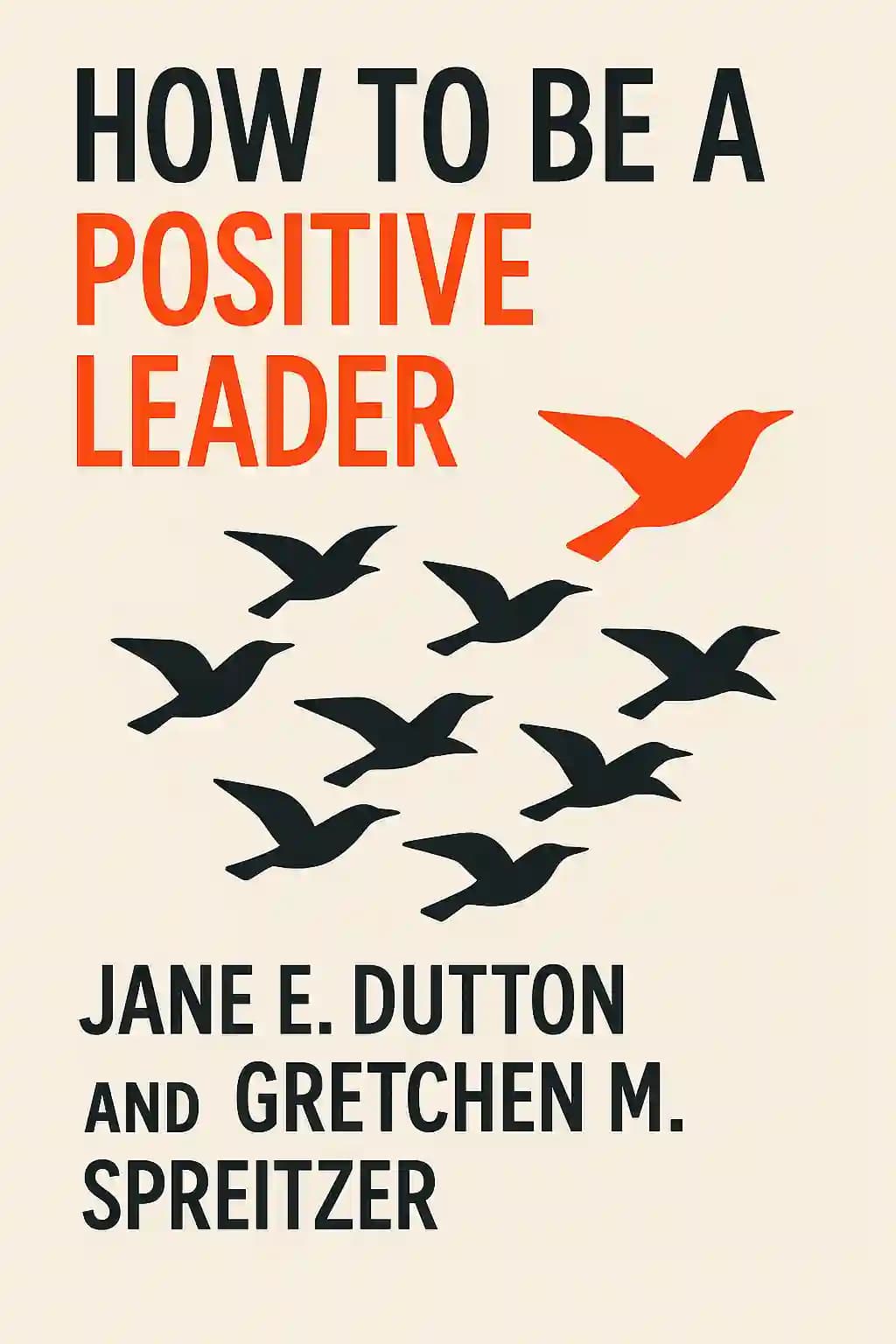
Transform your leadership with "How to Be a Positive Leader" - where small actions create massive impact. Endorsed by MIT and Babson College experts, this collection of 13 essays offers 800+ immediately implementable ideas that spark innovation and build authentic workplace connections.
Jane E. Dutton and Gretchen M. Spreitzer, co-authors of How to Be a Positive Leader: Small Actions, Big Impact, are renowned experts in organizational behavior and positive leadership.
Dutton, a distinguished professor at the University of Michigan’s Ross School of Business, and Spreitzer, a professor of management and organizations at the same institution, combine decades of research on workplace thriving, employee empowerment, and ethical leadership. Their book, a practical guide in the leadership and self-improvement genre, distills strategies for fostering resilience, innovation, and high-quality connections in organizations.
Both have co-authored influential works like The Oxford Handbook of Positive Organizational Scholarship and A Company of Leaders, establishing them as pioneers in positive organizational scholarship. Their research frameworks, such as the “reflected best self” model, are widely applied in corporate training and academic programs.
Praised as “readable and practical” by industry leaders, How to Be a Positive Leader has become a staple in executive education and management curricula, bridging cutting-edge research with actionable tools for modern workplaces.
How to Be a Positive Leader reveals how small, research-backed actions can create transformative workplace results. It teaches leaders to foster high-quality connections, cultivate meaningful work, and design ethical cultures. Key concepts include job crafting, mindful negotiation, and building hope to drive sustainable organizational change.
This book is ideal for managers, HR professionals, and aspiring leaders seeking practical strategies to boost employee engagement and organizational resilience. It’s particularly relevant for those aiming to create inclusive, energizing work environments through evidence-based leadership practices.
High-quality connections (HQCs) are brief, positive interactions that leave participants feeling energized, valued, and capable. Dutton argues HQCs boost creativity, learning, and organizational adaptability. Examples include active listening, expressing gratitude, and fostering psychological safety.
The book emphasizes “small actions with big impact,” like designing rituals to celebrate progress or empowering employees to co-create solutions. Dutton highlights case studies from Ford and Zingerman’s, showing how subtle shifts in communication and culture drive sustainable change.
Job crafting involves employees reshaping their roles to better align with their passions and strengths. Leaders can facilitate this by encouraging autonomy, providing skill-building opportunities, and recognizing individualized contributions.
Dutton links ethical leadership to daily acts of compassion, fairness, and integrity. She argues that modeling virtues like empathy builds trust, reduces burnout, and strengthens team cohesion. Examples include transparent decision-making and prioritizing employee well-being.
The book cites Griffin Hospital’s patient-centered care model, Burt’s Bees’ sustainability initiatives, and Zingerman’s employee empowerment practices. These cases illustrate how positive leadership principles drive innovation and loyalty.
Unlike theoretical guides, Dutton’s work focuses on actionable, research-based micro-strategies. It emphasizes achievable daily habits over grand gestures, making it accessible for leaders at all levels.
Yes. The book’s emphasis on high-quality connections and psychological safety translates well to virtual settings. Tactics like virtual recognition programs and structured check-ins help maintain engagement in distributed teams.
Absolutely. Its focus on resilience, ethical cultures, and employee well-being aligns with post-pandemic workplace trends. The actionable frameworks remain relevant for addressing burnout, hybrid work challenges, and Gen Z’s demand for purpose-driven leadership.
Sinta o livro através da voz do autor
Transforme conhecimento em insights envolventes e ricos em exemplos
Capture ideias-chave em um instante para aprendizado rápido
Aproveite o livro de uma forma divertida e envolvente
Small actions can create extraordinary impact.
Trusting others requires demonstrating vulnerability.
Outsourcing inspiration connects employees directly with the people who benefit from their work.
Divida as ideias-chave de How to Be a Positive Leader em pontos fáceis de entender para compreender como equipes inovadoras criam, colaboram e crescem.
Destile How to Be a Positive Leader em dicas de memória rápidas que destacam os princípios-chave de franqueza, trabalho em equipe e resiliência criativa.

Experimente How to Be a Positive Leader através de narrativas vívidas que transformam lições de inovação em momentos que você lembrará e aplicará.
Pergunte qualquer coisa, escolha a voz e co-crie insights que realmente ressoem com você.

Criado por ex-alunos da Universidade de Columbia em San Francisco
"Instead of endless scrolling, I just hit play on BeFreed. It saves me so much time."
"I never knew where to start with nonfiction—BeFreed’s book lists turned into podcasts gave me a clear path."
"Perfect balance between learning and entertainment. Finished ‘Thinking, Fast and Slow’ on my commute this week."
"Crazy how much I learned while walking the dog. BeFreed = small habits → big gains."
"Reading used to feel like a chore. Now it’s just part of my lifestyle."
"Feels effortless compared to reading. I’ve finished 6 books this month already."
"BeFreed turned my guilty doomscrolling into something that feels productive and inspiring."
"BeFreed turned my commute into learning time. 20-min podcasts are perfect for finishing books I never had time for."
"BeFreed replaced my podcast queue. Imagine Spotify for books — that’s it. 🙌"
"It is great for me to learn something from the book without reading it."
"The themed book list podcasts help me connect ideas across authors—like a guided audio journey."
"Makes me feel smarter every time before going to work"
Criado por ex-alunos da Universidade de Columbia em San Francisco

Obtenha o resumo de How to Be a Positive Leader como PDF ou EPUB gratuito. Imprima ou leia offline a qualquer momento.
Leadership isn't about grand gestures or complex frameworks-it's about small, intentional actions that create extraordinary impact. The most effective leaders understand that seemingly minor interventions can dramatically transform organizational culture and performance. When you express genuine gratitude, connect employees with the beneficiaries of their work, or foster high-quality interactions, you're not just being "nice"-you're engaging in evidence-based practices that improve everything from innovation to retention. What makes these approaches so powerful is their accessibility-they don't require massive resources or restructuring, yet they yield measurable results across industries. The most successful organizations have discovered that positive leadership isn't a feel-good philosophy but a practical strategy that creates resilient, adaptive teams capable of thriving amid constant change.