Capítulo 1
A Day Unlike Any Other: When Identity Transcends the Physical
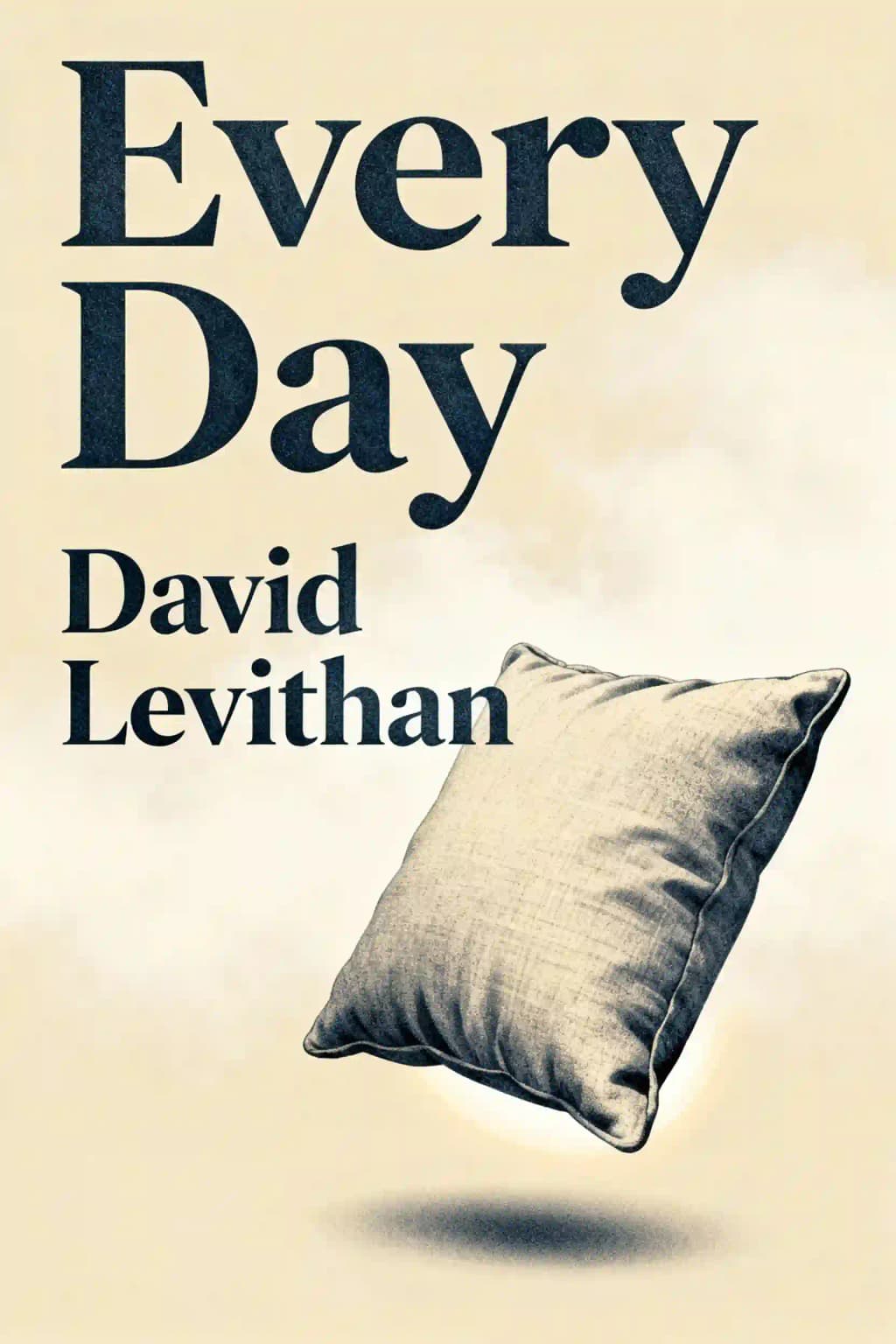
What if you woke up every morning in a different body? This is the extraordinary reality explored in David Levithan's groundbreaking novel "Every Day," which follows the journey of "A," a consciousness that inhabits a new teenage body each day. Since its 2012 publication, the book has captivated millions with its profound exploration of identity beyond physical appearance. Named one of Time Magazine's best YA novels of all time and praised by John Green as "a story that will make you rethink how you see the world," this modern classic has resonated deeply with readers seeking stories that transcend conventional boundaries of gender, sexuality, and identity. The novel's unique premise challenges us to consider a provocative question: If you strip away physical appearance, gender, race, and circumstance, what remains of who we truly are?
Capítulo 2
The Rules of Impermanence: A's Extraordinary Existence
Every morning, A wakes up in a different sixteen-year-old's body with no warning of who or where they'll be next. This has been A's reality since birth - a life defined by constant transition and adaptation. Over nearly 6,000 days of existence, A has developed a careful code of conduct: access the host's memories quickly, follow their routine as closely as possible, and leave minimal traces of having been there. "I try not to interfere. For the most part, I merely occupy," A explains, describing the delicate balance of borrowing someone's life for twenty-four hours. This self-imposed protocol extends to everything from maintaining the host's relationships to completing their homework assignments, all while navigating the complex emotional landscape of teenage life.
A's existence is a masterclass in impermanence. There's no continuity of relationships, no lasting connections, no physical constants. Knowledge becomes the only possession that travels between bodies - memories, experiences, and insights gathered from thousands of different lives. A has inhabited bodies of all genders, races, and backgrounds: athletes training for championships, musicians preparing for recitals, troubled teens contemplating difficult decisions, and ordinary students just trying to get through another day. Each experience adds another layer to A's understanding of human nature, teaching valuable lessons about empathy, resilience, and the shared struggles that connect us all. A has learned to find beauty in this transient existence, appreciating the unique perspective that comes from experiencing life through countless different lenses.
This carefully maintained equilibrium shatters on day 5994, when A wakes up in the body of Justin, a self-centered teenager with a girlfriend named Rhiannon. Something about her captivates A - her gentle resilience, the quiet determination in her eyes, the way she bites her fingernails when nervous. Breaking all self-imposed rules, A takes Rhiannon to the beach for a perfect day together, creating a genuine connection that feels unlike anything A has experienced before. The day unfolds with stolen moments of authentic joy: sharing secrets, dancing to car radio music, and walking barefoot in the sand. "It's okay to be happy," A tells her when she seems afraid to enjoy herself, and in that moment of shared joy, everything changes. The simple pleasure of watching her smile becomes more meaningful than thousands of previous experiences.
This pivotal day sets in motion a series of events that will challenge A's understanding of love, identity, and the ethics of their unusual existence. For the first time, A wants more than just a day - they want continuity, connection, and the possibility of a relationship that transcends the constant change of bodies. This desire forces A to confront fundamental questions about the nature of love: Can it exist without physical consistency? Is emotional connection enough? The pursuit of these answers leads A to break more rules, take greater risks, and push the boundaries of what seemed possible in their extraordinary existence. Each subsequent awakening becomes both a hope and a heartache - another chance to find Rhiannon, another day to figure out how to build something lasting in a life defined by change.
Capítulo 3
The Pursuit of Constancy in a Life of Change
After that perfect day with Rhiannon, A experiences an unprecedented disruption to their usual existence. Despite waking up in different bodies each day - some tantalizingly close to Rhiannon, others frustratingly hours away - A becomes consumed with seeing her again. This pursuit marks a profound shift in A's existence. Previously content to flow through different lives like water, accepting each day's new identity with philosophical detachment, A now has an anchor, a reason to resist the current of constant change. For the first time, A begins to see their condition not as a unique way of experiencing life, but as an obstacle to overcome.
When A manages to find Rhiannon again, the challenges become immediately apparent and multilayered. How do you maintain a connection with someone when your physical form changes completely every 24 hours? How can you ask someone to love you when "you" might appear as anyone - different genders, body types, ethnicities, personalities? The practical hurdles are matched only by the emotional complexities of such an unusual relationship.
During one particularly poignant meeting, A explains to Rhiannon: "I'm not defined by my body. I've never been defined by my body. I don't even care about my body, because it's never the same." This perspective, born from A's unique existence, highlights the novel's central question about the nature of identity and challenges conventional notions of selfhood. Is who we are truly separate from our physical appearance? Can love transcend the body to connect with something more essential? A's existence forces both characters - and readers - to confront these philosophical quandaries.
The logistics of their relationship prove nearly impossible, requiring elaborate planning and constant adaptation. A devises increasingly complex systems to let Rhiannon know who they are each day - encrypted emails, carefully chosen code words, specific meeting places that only they would know. But even when these systems work perfectly, the emotional reality remains challenging and often heartbreaking. When A appears as an extremely overweight boy named Finn, Rhiannon struggles to connect, honestly admitting she can't "see" A inside this body. When A inhabits the body of a stunningly beautiful girl named Ashley, Rhiannon feels equally distant, but for different reasons - jealousy, inadequacy, and confusion about her own sexuality all come into play.
These encounters force both characters to confront uncomfortable truths about attraction, connection, and the extent to which our perceptions of others are influenced by their physical appearance. Each day brings new challenges: sometimes A inhabits bodies with mental health issues, physical disabilities, or complex family situations that add layers of complexity to their attempts at connection. Through it all, A maintains that their essential self remains unchanged, while Rhiannon grapples with the reality that humans may not be capable of such complete separation between body and soul. A's pursuit of constancy in a life defined by change ultimately raises the question: Is love enough to overcome the most extreme form of long-distance relationship imaginable, where distance isn't measured in miles but in the vast gulf between different human experiences?
Capítulo 4
The Ethics of Borrowed Lives
As A's relationship with Rhiannon deepens, a troubling ethical question emerges: Is A's existence inherently wrong? By taking control of someone else's body, even for just a day, is A violating that person's autonomy?
This moral dilemma comes to a head when A inhabits the body of Nathan, a teenager who becomes aware something strange has happened to him. After A drives Nathan's body to a party to see Rhiannon, Nathan wakes up disoriented on the roadside with no memory of how he got there. Terrified and confused, Nathan concludes he was possessed by a demonic entity and goes public with his story.
The incident forces A to confront the consequences of their actions in a way they never had before. "I've never had someone react this way," A reflects, recognizing that their existence-which had always seemed natural to them-appears monstrous from an outside perspective. Nathan's fear and confusion are entirely reasonable responses to having lost control of his own body without consent.
This ethical quandary deepens when A inhabits the body of a suicidal girl, a severe drug addict, and a transgender boy-each situation presenting unique moral considerations about intervention and respect for the host's autonomy. When A wakes up in the body of Xavier, a virgin, and has the opportunity to be intimate with Rhiannon, they decline, explaining it would be wrong to take Xavier's virginity without his knowledge or consent.
Perhaps most poignantly, A experiences being in Rhiannon's body for a day-a complete reversal of their dynamic that forces A to consider the invasion of privacy from the other side. A treats this situation with extraordinary care, avoiding showering or changing clothes, and leaving Rhiannon a letter explaining everything.
Through these experiences, the novel explores profound questions about bodily autonomy, consent, and the responsibility we have toward others. A's existence becomes a metaphor for the ways we all temporarily occupy spaces in each other's lives, raising the question: What do we owe to those whose paths we briefly cross?
Capítulo 5
Love Beyond Physical Form: The Heart of Connection
At its core, "Every Day" examines whether love can exist beyond physical attraction. When A first meets Rhiannon while inhabiting Justin's body, there's a conventional physical attraction - but this initial meeting sets up the novel's central exploration of what happens when that physical constancy is removed. Through A's daily transformations, the story challenges our deeply held assumptions about the role appearance plays in romantic connections.
The relationship between A and Rhiannon becomes increasingly complex as A appears in different forms - male, female, attractive, plain, healthy, ill, tall, short, and across various racial backgrounds. Each new body forces both characters to confront their preconceptions about attraction and identity. When A inhabits the body of an obese teenager, Rhiannon's visible discomfort reveals how deeply ingrained our physical preferences are, even when we intellectually reject such biases.
"I don't think love can transcend everything," Rhiannon eventually admits after struggling to connect with A in certain bodies. Her raw honesty cuts to the heart of human nature - despite our best intentions, physical appearance affects our romantic feelings. This admission doesn't make her shallow; rather, it acknowledges the complex reality of human attraction. Through their journey, both characters develop a deeper understanding of connection that goes beyond the superficial, even as they grapple with its limitations.
The novel presents several counterpoints to A and Rhiannon's challenging dynamic. Most notably, when A inhabits the body of Vic, a transgender boy, they witness a relationship that offers hope. Vic's girlfriend Dawn sees and loves him exactly as he wants to be seen - not as his physical body might dictate, but as his true self. Their relationship demonstrates how love can recognize and embrace someone's essential nature beyond physical form. Similarly, when A briefly inhabits the body of a girl with severe depression, they observe how her boyfriend maintains unwavering devotion despite her mental health struggles.
The story reaches a poignant climax when A inhabits Alexander Lin's body - a kind, creative boy whose room is covered in Post-it notes with inspirational quotes. During their final evening together in Alexander's treehouse, surrounded by fairy lights and sharing their deepest truths, A experiences a moment of profound clarity: "Looking at her beautiful face in our own light, I know she is my first and only love." This scene crystallizes the novel's central message about the nature of connection.
While the novel doesn't offer easy answers about the balance between physical attraction and emotional connection, it thoughtfully explores their intricate interplay. Through A's experiences in hundreds of different bodies, the story suggests that while physical attraction may initiate relationships, something deeper - the recognition and acceptance of another's essential self - sustains them through challenges and changes. This theme resonates particularly strongly in an era where digital connections and long-distance relationships increasingly challenge traditional notions of physical presence in love.
Capítulo 6
The Reverend Poole Revelation: You Are Not Alone
Just as A begins to understand their feelings for Rhiannon, a startling revelation changes everything. Through Nathan's continued search for answers about his "possession," A encounters Reverend Poole, a silver-haired man who claims to be like A - able to inhabit different bodies, but with greater control over the process. Poole's appearance is deliberately unsettling: his silver hair gleams unnaturally, and his practiced smile never quite reaches his eyes, suggesting years of perfecting a facade of normalcy.
"Just because you're different, it doesn't mean you're unique," Poole tells A during their confrontation at Nathan's house. This statement shatters A's understanding of their own existence. After nearly 6,000 days of believing they were singular - each morning waking in a new body, each evening saying goodbye to another borrowed life - A discovers there are others with the same condition. Poole reveals an underground network of body-shifters, some who have mastered the ability to remain in chosen hosts for weeks or even months at a time.
This revelation introduces a profound temptation. If A could remain in one body, they could have a normal relationship with Rhiannon - share consecutive days together, make plans for the future, build a life that doesn't reset at midnight. The impossible could become possible. Yet Poole's menacing presence and manipulative approach suggest that such control comes at a terrible price. His casual discussion of "selecting" suitable bodies and "extending stays" reveals a disturbing disregard for the lives he interrupts. Each example he provides of successful long-term possession is tinged with moral compromise: a wealthy businessman's body "borrowed" indefinitely, a talented athlete's life redirected, families unknowingly living with an impostor.
The encounter with Poole forces A to confront fundamental questions about identity and ethics. Is A's constant movement between bodies a limitation to overcome or an essential part of who they are? Would staying in one body - effectively stealing someone else's life permanently - be a greater violation than borrowing it for a day? These questions are complicated by Poole's revelations about others like them who have chosen different paths: some who live as ethical nomads, others who have become permanent identity thieves.
Poole represents a darker path - one where difference becomes dominance and adaptation becomes appropriation. His existence proves A is not alone, but his methods suggest that community doesn't necessarily bring comfort. Through detailed accounts of his "successes," Poole reveals how he's manipulated families, maintained elaborate lies, and justified the complete erasure of others' identities. His sophisticated justifications for these actions - speaking of "making better use" of lives than their original owners - serve as a chilling warning about how easy it is to rationalize ethical compromises.
This revelation adds another layer to the novel's exploration of identity. Being unique doesn't exempt us from moral choices; if anything, it heightens our responsibility to define our own ethical boundaries. A must decide whether to pursue Poole's path of control - with its promise of stability and connection but moral corruption - or continue their transient existence with integrity, accepting the limitations and loneliness that come with maintaining their principles.
Capítulo 7
The Impossible Choice: Love Versus Reality
As their relationship develops, both A and Rhiannon face an impossible choice. Their love is real, but the practical barriers seem insurmountable. "I don't think I can do this," Rhiannon eventually tells A during a heartbreaking conversation in a park. Despite wanting to love A, she can't love every person A inhabits equally.
The impossibility of their situation becomes painfully clear: Rhiannon can never introduce A to friends, A will never meet her parents, they'll never wake up together. A desperately shares a fantasy of them living in New York City where, due to population density, they would likely stay nearby each day. But Rhiannon gently rejects this as impractical.
"I could love you forever if you were the same person every day," she admits, but she needs normalcy-friends, school, prom. Their conversation ends with mutual declarations of love, both recognizing that love alone isn't enough to overcome their unique circumstances.
This realization forces A to consider what constitutes a fulfilling life. Is it better to have brief, meaningful connections or to continue drifting through existence as an observer? The question becomes particularly poignant when A inhabits the body of Marc, whose grandfather has just died. During the funeral, A finds themselves sobbing not for Marc's grandfather, but from jealousy-realizing they'll never have a family to grieve for them, never leave memories behind, never have a body to mark their existence.
Similarly, when A experiences the life of Zara, who has a tender, comfortable relationship with her girlfriend Amelia, the contrast with their own situation becomes unbearable. Watching Amelia borrow Zara's shower, check out library books she knows Zara will like, and lend her car without question, A glimpses the sustained connection they can never have with Rhiannon.
These experiences culminate in A's recognition that some choices are not really choices at all-they're acknowledgments of reality. Sometimes love means letting go, not because feelings have faded, but because circumstances make connection impossible.
Capítulo 8
Finding Purpose in Impermanence
After the heartbreak of recognizing their relationship cannot work, A experiences a profound shift in perspective while inhabiting the body of Alexander Lin. Alexander's room tells his story-worn books, guitars in the corner, a lime-green couch where friends crash, and Post-it notes with quotes everywhere. His life is defined by thoughtfulness, creativity, and deep engagement with others.
Something about Alexander's existence speaks to A, offering a model for finding meaning despite impermanence. Alexander doesn't just pass through life-he leaves positive marks everywhere he goes, from the thoughtful anniversary gifts he prepares for his parents to the quotes decorating his locker that inspire his classmates.
This realization leads A to arrange one final meeting with Rhiannon. "Let's pretend we're meeting for the first time," A suggests. "No past, no future, just present." Though hesitant, she agrees. They shop for groceries playfully, cook dinner together in perfect rhythm, and share a candlelit meal in Alexander's treehouse. A kisses her once, knowing she is their first and only love-and this will be the only chance they give themselves.
The next morning, A wakes up as Katie, a girl who lives two hours away from Alexander's house. In a decisive break from their established pattern, A chooses to maintain Alexander's distance from Rhiannon rather than rushing back to see her. "For the first time in my existence, I choose to run," A explains, marking the beginning of a present that finally has both a past and a future.
This choice represents A's new understanding of purpose. Rather than defining meaning through sustained connection with one person-something their condition makes impossible-A embraces the unique perspective their existence offers. They can experience countless lives, learn from each one, and perhaps leave small positive traces behind, just as Alexander does.
The novel ultimately suggests that meaning isn't found in permanence but in how we approach each moment we're given. A's condition-waking up in a different body each day-becomes not just a limitation but a unique opportunity to experience the full spectrum of human existence, to develop empathy across boundaries most people never cross, and to appreciate the beauty of each day as a complete story in itself.
Capítulo 9
The Legacy of Borrowed Days: What Remains Behind
In the novel's final movement, A confronts perhaps the most profound question of their existence: What traces remain when you've lived thousands of lives but possessed none of them? Unlike everyone else, A will leave no body behind, no grave to mark their passing, no family to carry their memory.
This existential concern comes to a head during Marc's grandfather's funeral, where A breaks down sobbing-not for the deceased man they never knew, but for themselves. "I'll never have a family to grieve for me," A realizes. "I'll never leave memories behind. I'll never have a body to mark my existence."
Yet through their relationship with Rhiannon, A discovers that impact doesn't require permanence. The day A spent in Justin's body changed Rhiannon profoundly, opening her eyes to the possibility of being treated with kindness and respect. Similarly, when A inhabits Rhiannon's body and takes her hiking up a mountain, they leave her with a memory of peace and perspective she wouldn't otherwise have experienced.
Even in bodies A occupies briefly, they often leave small positive influences-helping Leslie's brother Owen navigate a drug accusation, giving George the memory of a meaningful connection at the library, arranging Amelia's favorite snacks on her car dashboard to spell her name. These small acts of kindness may not constitute a traditional legacy, but they represent A's growing understanding that meaning comes from how we affect others, not how long we remain with them.
In choosing to leave Rhiannon rather than pursuing an impossible relationship, A demonstrates perhaps their most significant growth. They recognize that sometimes the most meaningful impact we can have on someone's life is knowing when to exit it-allowing them to find happiness we cannot provide.
The novel ends with A embracing the unique purpose their unusual existence offers-not the sustained connections others enjoy, but the extraordinary perspective that comes from experiencing life through thousands of different eyes. In this acceptance, A finds a kind of peace, understanding that their legacy exists not in what remains behind, but in how they've approached each borrowed day with compassion, curiosity, and respect for the lives they temporarily inhabit.