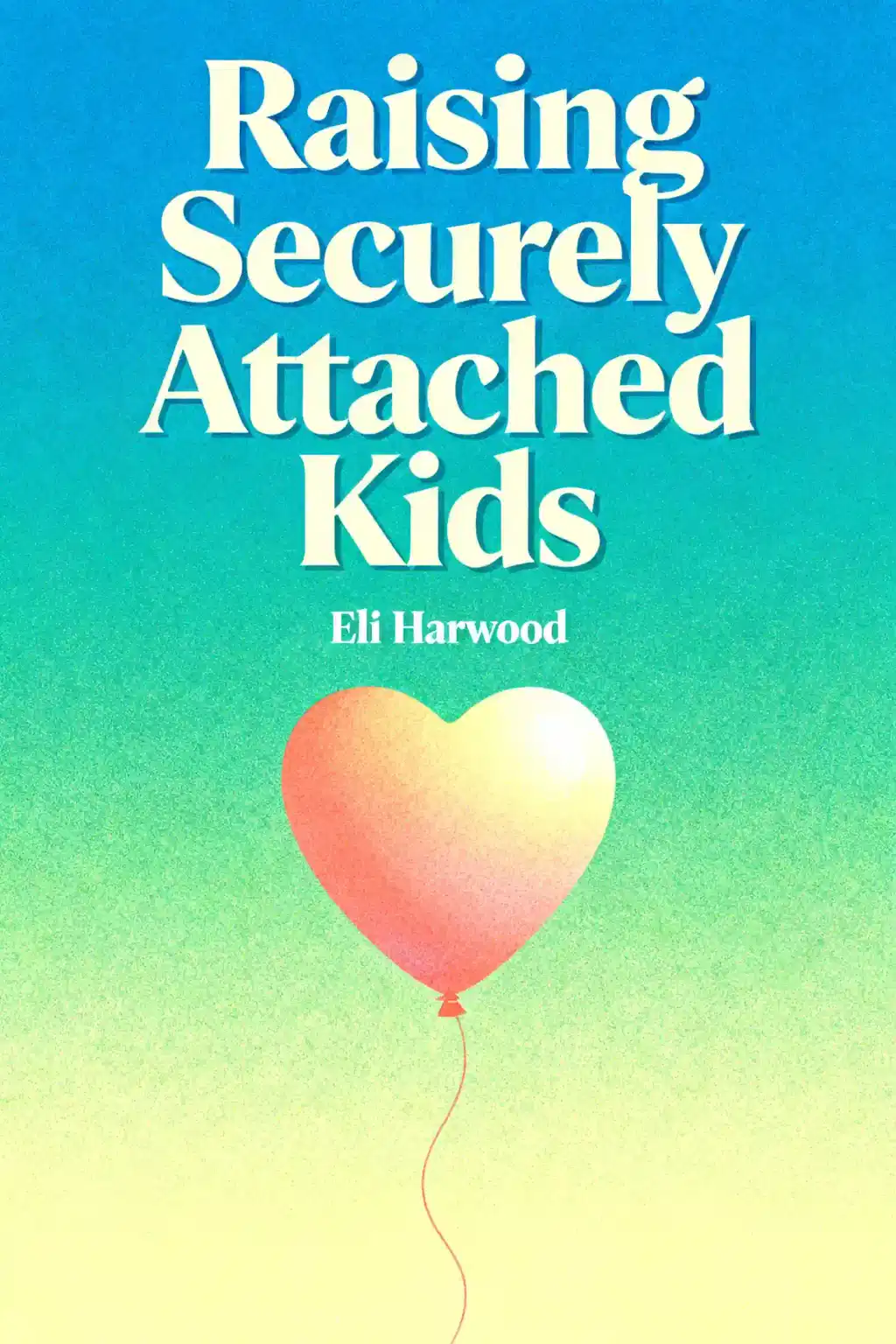
Raising Securely Attached Kids: Fostering Emotional Safety and Lifelong Intimacy by Eli Harwood Summary

Overview of Raising Securely Attached Kids
Discover the science of secure attachment with therapist Eli Harwood's USA TODAY bestseller. Endorsed by Hilary Swank for its "infectious-fun energy" and scientific grounding, this compassionate guide offers practical strategies for every parenting stage. What if better connection, not perfect parenting, is what children truly need?
- Connection-focused parenting builds secure attachment through empathy over punishment
- Parent self-awareness is the foundation of secure attachment bonds
- Replace punishment with compassionate boundary-setting to build emotional resilience
- Child-led play strengthens trust and emotional safety in relationships
- Prioritize emotional co-regulation over behavior correction for secure attachment
- Calm parental responses teach children self-regulation and emotional security
- Screen time boundaries preserve face-to-face connection in digital parenting
- Secure attachment requires being both a safe haven and launchpad
- Eli Harwood’s method transforms generational patterns through mindful reparenting
- Emotional availability during distress creates lifelong relationship blueprints
- “Secure base parenting” combines exploration support with consistent comfort
- Trauma-informed attunement helps children develop stress-resistant neural pathways
About the Author of Raising Securely Attached Kids
Eli Harwood, licensed therapist and bestselling author of Raising Securely Attached Kids: Using Connection-Focused Parenting to Create Confidence, Empathy, and Resilience, is a leading voice in attachment theory and relational healing. With over 17 years of clinical experience, Harwood specializes in helping families and individuals transform insecure attachment patterns into secure, nurturing relationships. Her work blends trauma-informed counseling techniques, including EMDR and Trust-Based Relational Intervention (TBRI), with actionable strategies for parents.
Harwood’s expertise extends to her widely followed platform, The Attachment Nerd, where she engages a community of nearly 1 million followers through social media, podcasts, and workshops. She is also the author of Securely Attached: Transform Your Attachment Patterns into Loving, Lasting Romantic Relationships, a guided workbook praised for its practical approach to adult attachment healing.
A Colorado-based therapist and mother of three, Harwood’s insights are rooted in both professional practice and personal experience. Her books have garnered acclaim for translating complex psychological concepts into accessible tools, with Raising Securely Attached Kids celebrated as an essential resource for connection-focused parenting.
FAQs About Raising Securely Attached Kids
What is Raising Securely Attached Kids about?
Raising Securely Attached Kids by Eli Harwood is a science-backed parenting guide that teaches caregivers how to build lifelong emotional security and resilience in children through connection-focused strategies. It emphasizes nurturing trust over control, addressing behavioral challenges empathetically, and fostering secure attachments from infancy through adulthood. The book blends attachment theory with practical tools like scripts, play-based bonding, and trauma-healing exercises.
Who should read Raising Securely Attached Kids?
This book is ideal for parents, caregivers, and educators seeking to replace punitive or permissive approaches with empathy-driven methods. It’s especially valuable for those navigating neurodivergent parenting, healing their own attachment traumas, or balancing technology’s role in family dynamics. Harwood’s accessible style suits both new and experienced parents.
Is Raising Securely Attached Kids worth reading?
Yes—praised by experts like Daniel J. Siegel and Kirkus Reviews, it offers actionable strategies grounded in 17+ years of clinical experience. Readers gain evidence-based tools to resolve conflicts calmly, reinforce trust, and break generational parenting patterns. Its focus on real-life scenarios and humor makes complex concepts relatable.
What are the main parenting concepts in Raising Securely Attached Kids?
Key ideas include:
- Connection over control: Prioritizing emotional safety through attuned responses.
- High structure, high nurture: Balancing clear boundaries with empathetic engagement.
- Ghost hunting: Addressing caregivers’ past traumas to avoid projecting them onto children.
- Play as bonding: Using child-led play to build trust and problem-solving skills.
How does the book advise handling child misbehavior?
Harwood encourages caregivers to replace anger with curiosity, viewing misbehavior as unmet emotional needs. Strategies include calm redirection, validating feelings, and collaborative problem-solving. For example, instead of punishing a tantrum, parents might say, “I see you’re upset—let’s figure this out together”.
What scientific research supports Raising Securely Attached Kids?
The book cites attachment theory, neurobiology (e.g., prefrontal cortex development), and studies like Edward Tronick’s “still face experiment.” Harwood explains how secure attachment boosts resilience by wiring children’s brains for emotional regulation and self-confidence.
Does Raising Securely Attached Kids address neurodivergent children?
Yes—Harwood provides tailored advice for parenting neurodivergent kids, emphasizing flexibility in attachment-building strategies. She highlights the importance of adapting communication styles and sensory-friendly bonding activities to meet unique needs.
Are there criticisms of Raising Securely Attached Kids?
Some reviewers note the approach may feel challenging for parents raised in authoritarian households. Others mention limited focus on systemic issues like racism or poverty. However, Harwood acknowledges these gaps and encourages readers to supplement with identity-specific resources.
How does Eli Harwood’s expertise inform the book?
As a licensed therapist and creator of the @attachmentnerd platform, Harwood draws from 17+ years of clinical work, trauma training (EMDR, TBRI), and teaching at the Denver Family Institute. Her blend of professional authority and relatable storytelling strengthens the book’s credibility.
How does this book compare to other parenting guides?
Unlike rigid discipline-focused manuals, Raising Securely Attached Kids prioritizes relational healing over quick fixes. It uniquely integrates trauma-informed care with attachment science, distinguishing it from books like The Whole-Brain Child while complementing their frameworks.
Can Raising Securely Attached Kids help with screen time challenges?
Yes—Harwood offers practical steps to balance technology use, like designated device-free bonding times and modeling healthy digital habits. She argues that consistent face-to-face interaction counters tech’s pull on emotional connection.
What quotes summarize the book’s message?
- “Connection is the antidote to control”—Harwood’s mantra for replacing power struggles with empathy.
- “Secure attachment isn’t about perfection—it’s repair”—highlighting the importance of repairing conflicts to rebuild trust.
Feel the book through the author's voice
Turn knowledge into engaging, example-rich insights
Capture key ideas in a flash for fast learning
Enjoy the book in a fun and engaging way
Key Themes in Raising Securely Attached Kids
Quotes from Raising Securely Attached Kids
You are secure with me.
Secure parenting isn't a quick fix.
We never truly 'fly their planes'.
Birth stories, like parenting journeys, inevitably involve unexpected elements.
Children rarely lie with malicious intent.
Characters in Raising Securely Attached Kids
Quick Summary Mode - Read or listen to Raising Securely Attached Kids Summary in 9 Minutes

Break down key ideas from Raising Securely Attached Kids into bite-sized takeaways to understand how innovative teams create, collaborate, and grow.

Flash Card Mode - Top 10 Insights from Raising Securely Attached Kids in a Nutshell

Distill Raising Securely Attached Kids into rapid-fire memory cues that highlight key principles of candor, teamwork, and creative resilience.

Fun Mode - Raising Securely Attached Kids Lessons Told Through 24-Min Stories

Experience Raising Securely Attached Kids through vivid storytelling that turns innovation lessons into moments you'll remember and apply.
Personalize Mode - Read or listen to Raising Securely Attached Kids Summary in 0 Minutes

Ask anything, pick the voice, and co-create insights that truly resonate with you.

From Columbia University alumni built in San Francisco
"Instead of endless scrolling, I just hit play on BeFreed. It saves me so much time."


"I never knew where to start with nonfiction—BeFreed’s book lists turned into podcasts gave me a clear path."


"Perfect balance between learning and entertainment. Finished ‘Thinking, Fast and Slow’ on my commute this week."
"Crazy how much I learned while walking the dog. BeFreed = small habits → big gains."
"Reading used to feel like a chore. Now it’s just part of my lifestyle."

"Feels effortless compared to reading. I’ve finished 6 books this month already."
"BeFreed turned my guilty doomscrolling into something that feels productive and inspiring."

"BeFreed turned my commute into learning time. 20-min podcasts are perfect for finishing books I never had time for."
"BeFreed replaced my podcast queue. Imagine Spotify for books — that’s it. 🙌"

"It is great for me to learn something from the book without reading it."
"The themed book list podcasts help me connect ideas across authors—like a guided audio journey."
"Makes me feel smarter every time before going to work"
From Columbia University alumni built in San Francisco
"Instead of endless scrolling, I just hit play on BeFreed. It saves me so much time."
"I never knew where to start with nonfiction—BeFreed’s book lists turned into podcasts gave me a clear path."
"Perfect balance between learning and entertainment. Finished ‘Thinking, Fast and Slow’ on my commute this week."
"Crazy how much I learned while walking the dog. BeFreed = small habits → big gains."
"Reading used to feel like a chore. Now it’s just part of my lifestyle."
"Feels effortless compared to reading. I’ve finished 6 books this month already."
"BeFreed turned my guilty doomscrolling into something that feels productive and inspiring."
"BeFreed turned my commute into learning time. 20-min podcasts are perfect for finishing books I never had time for."
"BeFreed replaced my podcast queue. Imagine Spotify for books — that’s it. 🙌"
"It is great for me to learn something from the book without reading it."
"The themed book list podcasts help me connect ideas across authors—like a guided audio journey."
"Makes me feel smarter every time before going to work"
"Instead of endless scrolling, I just hit play on BeFreed. It saves me so much time."
"I never knew where to start with nonfiction—BeFreed’s book lists turned into podcasts gave me a clear path."
"Perfect balance between learning and entertainment. Finished ‘Thinking, Fast and Slow’ on my commute this week."
"Crazy how much I learned while walking the dog. BeFreed = small habits → big gains."
"Reading used to feel like a chore. Now it’s just part of my lifestyle."
"Feels effortless compared to reading. I’ve finished 6 books this month already."
"BeFreed turned my guilty doomscrolling into something that feels productive and inspiring."
"BeFreed turned my commute into learning time. 20-min podcasts are perfect for finishing books I never had time for."
"BeFreed replaced my podcast queue. Imagine Spotify for books — that’s it. 🙌"
"It is great for me to learn something from the book without reading it."
"The themed book list podcasts help me connect ideas across authors—like a guided audio journey."
"Makes me feel smarter every time before going to work"
"Instead of endless scrolling, I just hit play on BeFreed. It saves me so much time."
"I never knew where to start with nonfiction—BeFreed’s book lists turned into podcasts gave me a clear path."
"Perfect balance between learning and entertainment. Finished ‘Thinking, Fast and Slow’ on my commute this week."
"Crazy how much I learned while walking the dog. BeFreed = small habits → big gains."
"Reading used to feel like a chore. Now it’s just part of my lifestyle."
"Feels effortless compared to reading. I’ve finished 6 books this month already."
"BeFreed turned my guilty doomscrolling into something that feels productive and inspiring."
"BeFreed turned my commute into learning time. 20-min podcasts are perfect for finishing books I never had time for."
"BeFreed replaced my podcast queue. Imagine Spotify for books — that’s it. 🙌"
"It is great for me to learn something from the book without reading it."
"The themed book list podcasts help me connect ideas across authors—like a guided audio journey."
"Makes me feel smarter every time before going to work"

Get the Raising Securely Attached Kids summary as a free PDF or EPUB. Print it or read offline anytime.