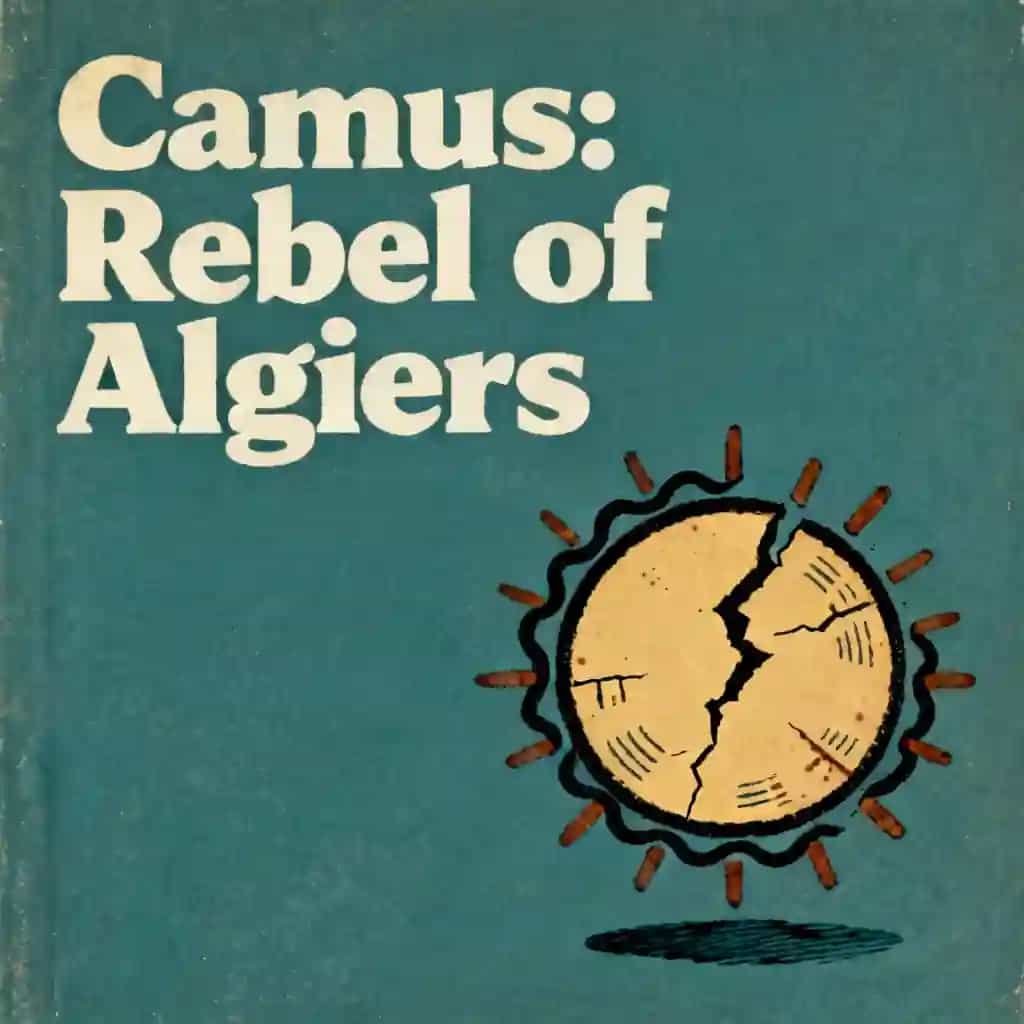
In "Brave Genius," two legends emerge from Nazi-occupied France: scientist Jacques Monod and philosopher Albert Camus. Their extraordinary journey from resistance fighters to Nobel laureates reveals how extreme adversity can spark revolutionary ideas that change the world. What genius might your own challenges unleash?
Sean B. Carroll is an award-winning evolutionary biologist and bestselling author of Brave Genius: A Scientist, a Philosopher, and Their Daring Adventures from the French Resistance to the Nobel Prize, merging rigorous scientific insight with gripping historical narrative.
A Distinguished University Professor at the University of Maryland and Howard Hughes Medical Institute Investigator, Carroll’s work explores themes of courage, intellectual resilience, and the interplay of science and society—themes amplified by his earlier acclaimed books like The Serengeti Rules and Remarkable Creatures (a National Book Award finalist).
As executive producer of Emmy-winning documentaries such as The Farthest and The Serengeti Rules, Carroll bridges academia and public engagement. His Lewis Thomas Prize-winning science writing for the New York Times and leadership in HHMI’s science education initiatives underscore his authority.
Brave Genius reflects Carroll’s signature blend of meticulous research and storytelling, cementing his reputation as a master of science-driven historical narratives.
Brave Genius chronicles the intertwined lives of Albert Camus (Nobel Prize-winning philosopher) and Jacques Monod (Nobel laureate biologist), tracing their WWII Resistance efforts, postwar friendship, and groundbreaking contributions to literature and science. The book highlights their courage under Nazi occupation, intellectual evolution, and shared insights into human resilience and creativity.
This book appeals to readers interested in WWII history, biopics of intellectual pioneers, or the intersection of science and philosophy. History enthusiasts, Camus or Monod admirers, and fans of narratives about resilience and genius will find it compelling.
Yes. Praised as “gripping” (The Washington Post), it combines meticulous research with vivid storytelling, offering fresh details about Camus and Monod’s wartime bravery, scientific breakthroughs, and philosophical legacies. Ideal for readers seeking a profound exploration of courage and innovation.
Key themes include resistance against oppression, the transformative power of adversity, the interplay between science and humanism, and the enduring impact of friendship. Carroll underscores how Camus and Monod’s wartime experiences shaped their later intellectual achievements.
The book reveals how Camus’ existentialist themes (e.g., absurdism in The Plague) and Monod’s molecular biology work (e.g., gene regulation) both grappled with human purpose and freedom. Their shared belief in rational inquiry bridged their disciplines.
Both Camus and Monod risked their lives in the Resistance: Camus as a journalist for Combat, Monod smuggling weapons and intelligence. Their clandestine activities forged their moral clarity and influenced their postwar ideologies.
Carroll depicts Camus as a principled thinker whose wartime experiences deepened his commitment to justice, evident in works like The Rebel. His friendship with Monod and ethical stance against totalitarianism are central to the narrative.
Monod’s Nobel-winning discovery of gene regulation mechanisms (the lac operon) is detailed, alongside his advocacy for scientific rigor. His postwar shift from biochemistry to public intellectualism, including critiques of Stalinism, is emphasized.
Yes. Camus won the 1957 Nobel in Literature for illuminating the “problems of the human conscience,” while Monod shared the 1965 Nobel in Physiology/Medicine for groundbreaking work on genetic control.
Carroll draws on unpublished letters, Resistance archives, and interviews to reconstruct their lives. The book’s depth stems from decades of research, offering new insights into their personal and professional journeys.
It acknowledges Camus’ feud with Sartre over Marxism and Monod’s controversial stance on Soviet science. Carroll contextualizes their debates, illustrating how their principles often clashed with contemporaries.
Yes. The book’s themes—resisting authoritarianism, ethical science, and intellectual courage—resonate in debates about climate change, AI ethics, and political dissent, underscoring Camus and Monod’s enduring relevance.
Unlike Carroll’s science-focused books (The Serengeti Rules), Brave Genius blends history and biography, showcasing his versatility. However, it retains his trademark emphasis on curiosity-driven discovery.
Sinta o livro através da voz do autor
Transforme conhecimento em insights envolventes e ricos em exemplos
Capture ideias-chave em um instante para aprendizado rápido
Aproveite o livro de uma forma divertida e envolvente
"In times of darkness, we are entitled to expect illumination."
"If I live, I will fight, wherever I must...until the enemy is defeated."
"All the Jews are being thrown out of our office."
France had fallen in just six weeks.
Divida as ideias-chave de Brave Genius em pontos fáceis de entender para compreender como equipes inovadoras criam, colaboram e crescem.
Destile Brave Genius em dicas de memória rápidas que destacam os princípios-chave de franqueza, trabalho em equipe e resiliência criativa.

Experimente Brave Genius através de narrativas vívidas que transformam lições de inovação em momentos que você lembrará e aplicará.
Pergunte qualquer coisa, escolha a voz e co-crie insights que realmente ressoem com você.

Criado por ex-alunos da Universidade de Columbia em San Francisco
"Instead of endless scrolling, I just hit play on BeFreed. It saves me so much time."
"I never knew where to start with nonfiction—BeFreed’s book lists turned into podcasts gave me a clear path."
"Perfect balance between learning and entertainment. Finished ‘Thinking, Fast and Slow’ on my commute this week."
"Crazy how much I learned while walking the dog. BeFreed = small habits → big gains."
"Reading used to feel like a chore. Now it’s just part of my lifestyle."
"Feels effortless compared to reading. I’ve finished 6 books this month already."
"BeFreed turned my guilty doomscrolling into something that feels productive and inspiring."
"BeFreed turned my commute into learning time. 20-min podcasts are perfect for finishing books I never had time for."
"BeFreed replaced my podcast queue. Imagine Spotify for books — that’s it. 🙌"
"It is great for me to learn something from the book without reading it."
"The themed book list podcasts help me connect ideas across authors—like a guided audio journey."
"Makes me feel smarter every time before going to work"
Criado por ex-alunos da Universidade de Columbia em San Francisco

Obtenha o resumo de Brave Genius como PDF ou EPUB gratuito. Imprima ou leia offline a qualquer momento.
In the autumn of 1957, Albert Camus received news of his Nobel Prize in Literature while dining in a Parisian restaurant. Rather than joy, the 44-year-old writer responded with anguish, fearing the award would distract him from his unfinished work. After the media storm subsided, Camus wrote a heartfelt letter to his friend Jacques Monod, a biologist whom he considered "the only true genius" he had known. Eight years later, Monod himself would receive the Nobel Prize in Physiology or Medicine. Their story reveals how ordinary lives transform during extraordinary times. Two men - one a struggling writer, the other an underachieving scientist - found their greatest purpose when civilization teetered on collapse. Their parallel journeys through Nazi occupation, resistance fighting, and intellectual breakthroughs demonstrate how catastrophe can forge both scientific innovation and moral courage. What makes someone risk everything for truth? And how does adversity shape our capacity for discovery? Their intertwined lives offer compelling answers to these questions that resonate far beyond their time.