Capítulo 1
Democracy Under Fire: The Authoritarian Assault on Truth
In January 2021, Rosanne Boyland left her Georgia home bound for Washington DC, captivated by a movement convinced the presidential election had been stolen. Despite courts and Trump's own Justice Department finding no evidence of fraud, she joined thousands storming the Capitol to "Stop the Steal." In the chaos, Boyland fell in a dangerous crush of bodies and died-one of nine lives lost that day. Even a year later, polls showed 68% of Republicans still believed the election was stolen. Former judge J. Michael Luttig warned this was merely a "dry run" for future election theft, calling Trump and his allies a "clear and present danger" to American democracy.
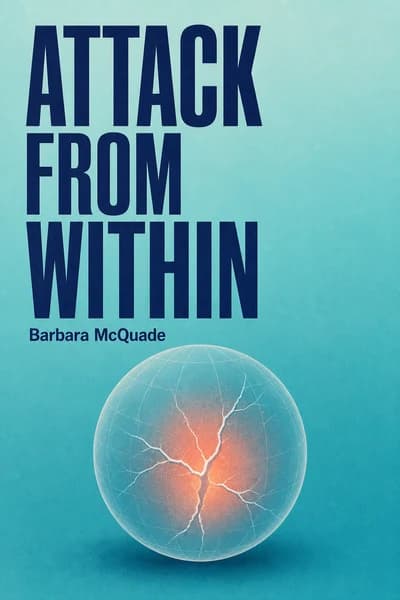
This book arrives at a critical moment when Barbara McQuade's expertise as a former federal prosecutor has never been more relevant. "Attack from Within" has garnered praise from constitutional scholars and security experts alike, with The Washington Post calling it "essential reading for anyone concerned about the future of American democracy." As disinformation continues reshaping our political landscape, this work stands as both warning and roadmap-a New York Times bestseller that has sparked crucial conversations about protecting truth in an age of manipulation.
Capítulo 2
The Authoritarian's Playbook: Manipulating Hearts and Minds
Disinformation forms the core of what historians call the "authoritarian playbook"-tactics used throughout history to control populations. As Hannah Arendt observed in 1951, strongmen manipulate people "to the point where they would, at the same time, believe everything and nothing, think that everything was possible and that nothing was true." These same tactics are being deployed in America today.
Joseph Stalin exemplifies how authoritarian leaders use communication to seize power. Starting as a writer who could simplify complex ideas into "binaries and folksy fables," Stalin ran Pravda (ironically meaning "Truth") before becoming Soviet dictator. He controlled messaging, conducted show trials, executed perceived enemies, and popularized the term "enemy of the people" to describe rivals.
Today's authoritarians follow this playbook by appealing primarily to emotion over reason. They exploit our natural inclination to "want to believe" by stoking anxieties about societal decline and external threats. Trump's "Make America Great Again" slogan perfectly encapsulates this strategy, implying past glory, current decline, and the promise of restoration. His inaugural address painted a bleak picture of "American carnage," describing a nation in ruins despite many objective improvements in American life. By convincing people the country is collapsing, authoritarians position themselves as the necessary strong leader to fix everything-even if certain democratic values must be sacrificed.
While democracies aim to unite citizens for common good, authoritarians deliberately exploit societal divisions to amass personal power. They present a binary world where you're either "with us or against us" and frame prosperity as a zero-sum game where gains for others mean losses for "us." The MAGA movement evolved from the Tea Party, which research showed was driven less by economic concerns than by cultural anxieties among predominantly white evangelicals who felt the country was "imperiled by the left, the young and the nonwhite."
Authoritarian leaders also create visual symbols to unify followers and cultivate loyalty, just as sports teams use uniforms to maintain identity with fans. Trump, a businessman who branded everything from casinos to steaks with his name, gave his supporters red MAGA caps as their unifying symbol. These simple visual brands reduce complex politics to tribal symbols that foster group loyalty.
Capítulo 3
Silencing the Watchdogs: Undermining Democratic Institutions
The third authoritarian strategy involves neutralizing critics and watchdogs who might challenge the leader's power. In democracies, the free press, government agencies, and civil service experts serve as checks on authority. Authoritarians undermine these institutions by portraying the media as "the enemy of the people," government agencies as "the deep state" subverting popular will, and experts as contemptuous "elites."
Stalin pioneered calling the press "enemy of the people," a tactic later adopted by dictators worldwide. Despite America's First Amendment protections, Trump consistently undermined press credibility by calling journalists "absolute scum," labeling unfavorable coverage "fake news" (180 times in his first year in office alone), and telling supporters, "what you're seeing and what you're reading is not what's happening." This anti-media sentiment has spread among Republicans, with Ron DeSantis criticizing "corporate press" and advocating for decreased First Amendment protections.
Authoritarians also target civil servants who challenge their power by discrediting them as the "deep state"-a term originally used to analyze foreign governments that suggests "propaganda, dirty tricks, and even violence." Trump's attacks on government officials went beyond policy disagreements to vicious personal attacks. When FBI Director James Comey refused to pledge loyalty, Trump fired and later called him "an untruthful slime ball." He labeled his own Attorney General Jeff Sessions "weak" and "disgraceful" and called the actions of Deputy AG Rod Rosenstein and FBI official Andrew McCabe "treasonous."
Most chillingly, Trump's 2020 "Schedule F" executive order threatened to strip employment protections from an estimated 50,000 federal employees with "policy-determining" roles, allowing them to be fired at presidential whim. Though Biden revoked this order, Trump has pledged to restore and expand it, declaring "the deep state must and will be brought to heel."
Authoritarians systematically undermine judicial independence to remove obstacles to executive power. Trump consistently framed unfavorable legal rulings as personal attacks rather than legitimate legal interpretations. After his 2023 Manhattan indictment, he labeled the assigned judge "highly partisan" and claimed the judge's family were "Trump haters." Similarly, he attacked Judge Tanya Chutkan in his federal election interference case as "VERY BIASED AND UNFAIR."
Capítulo 4
Violence as a Tool: From Rhetoric to Action
Authoritarians use violence to dominate populations and silence dissent. When people become desensitized to cruelty, they accept it as the cost of achieving their desired society. Violence works alongside disinformation by creating a chilling effect. People develop "hypervigilance" and instincts to conform rather than risk harm.
Trump's violent rhetoric spread to other politicians who followed his example. Eric Greitens, a Senate candidate, released an ad showing himself raiding a house with armed men, calling for "RINO hunting permits" with "no bagging limit." Representative Paul Gosar posted an animated video depicting himself killing colleague Alexandria Ocasio-Cortez with a sword, which his staff dismissed as "meme culture."
This normalization of violent rhetoric has led to actual violence. The "MAGA Bomber" sent pipe bombs to Democrats and media figures; Governor Whitmer faced a kidnapping plot; and Representatives Kinzinger, Upton, and Swalwell received death threats. In October 2022, Nancy Pelosi's husband was attacked by a hammer-wielding intruder demanding to know "Where is Nancy?"-following years of demonization including Marjorie Taylor Greene's suggestions that Pelosi deserved "a bullet to the head."
As political violence expert Robert Pape explains, this creates "a self-reinforcing spiral" where violent sentiments lead to actual violence. The threats not only endanger lives but create a chilling effect on critics, including journalists and public officials. By normalizing violence and intimidating critics, authoritarians tighten their grip on power.
Authoritarians employ a dual persona strategy-portraying themselves as both an everyday person and a superhuman savior. This dichotomy makes them relatable yet powerful. They cultivate personality cults through carefully crafted imagery of physical prowess-Putin photographed shirtless on horseback, Mussolini displaying his fitness. Trump supporters held signs depicting him as Superman or with John Wayne's body, and he tweeted images of his face on Rocky Balboa's physique.
This deification intertwines with disinformation because once supporters "believe in him," they stop questioning his falsehoods. As Trump himself boasted in 2016, "I could stand in the middle of Fifth Avenue and shoot somebody and I wouldn't lose any voters." This blind loyalty becomes essential for disinformation to flourish.
Capítulo 5
The Manipulation Toolbox: How Disinformation Works
Today's disinformation operations employ methodical psychological tactics designed to manipulate targeted populations. Whether people actually believe these messages matters less than the emotional reactions they trigger. Information scholar Donald Barclay explains that "salience bias" makes us pay attention to extraordinary things that evoke strong feelings-the more outrageous the message, the stronger our reaction.
Disinformation aims to "exacerbate existing tensions within the adversary's body politic" by mixing facts and fakes. This assault on truth leaves people paralyzed, unsure what to believe. Vladimir Putin, a former KGB agent, masterfully creates chaos so "you don't know what is the truth." When people cannot discern truth, no one can be held accountable. This provides what Bobby Chesney calls the "Liar's Dividend"-disinformation campaigns help authoritarians dismiss harmful reporting as "fake news," creating what Peter Pomerantsev calls a "fog of unknowability."
Hitler first described "the Big Lie" in Mein Kampf, noting that false claims become believable through their sheer audacity. People assume no one "could have the impudence to distort the truth so infamously." Most people tell small lies but find it unimaginable to tell colossal untruths, projecting this moral reluctance onto others. For MAGA Republicans, the "Big Lie" that the 2020 election was stolen justified their coup attempt and fueled the election-denier movement. By April 2022, 68% of Republicans still believed this disinformation despite numerous investigations finding no evidence.
Repetition makes fiction seem plausible. Hitler wrote that propaganda "must confine itself to a few points and repeat them over and over." Social science confirms that repetition reinforces belief in false statements. Simple chants like "Lock her up!" and "Stop the steal" reinforce false premises of misconduct. This "availability cascade" leads people to accept claims based on frequency rather than evidence.
Authoritarian regimes stay on offense, using outrageous statements to divert attention from their corruption or incompetence. Like a squid releasing ink to escape predators, Trump tosses provocations to divert from damaging stories. "Whataboutism" is another deflection strategy-responding to criticism by claiming others are worse. When questioned about Putin being "a killer," Trump replied, "You think our country is so innocent?" This creates moral equivalency: if nobody's perfect, there's license for imperfection.
Capítulo 6
Why We Fall for It: The Psychology of Belief
Even in an age of unprecedented information access, disinformation thrives because our emotions often overpower our rational thinking. The case of Dr. Farid Fata-who administered unnecessary chemotherapy to patients without cancer for profit-illustrates how people resist believing uncomfortable truths about those they trust. Despite overwhelming evidence against him, some patients initially defended him, unable to accept that their trusted doctor could commit such betrayal.
Global changes-from international conflicts to climate change, shifting demographics to demands for equality-create anxiety that authoritarians exploit through disinformation. Vladimir Putin, like many American Republicans, frames modern progress as an "overthrow of faith and traditional values" by "Western elites." While historian Doris Kearns Goodwin notes similar anxieties existed during the industrial revolution, today's authoritarians harness fear rather than embracing change optimistically as Theodore Roosevelt once did.
Humans are naturally drawn to conspiracy theories because we seek to simplify our complex world. Rather than accepting events as random or accidental, we prefer to see deliberate plans by powerful forces-a tendency rooted in our fundamental need for safety. Our brains evolved to identify patterns that might signal threats, but this same mechanism makes us susceptible to seeing connections between unrelated events.
Once we form a first impression, it becomes extraordinarily difficult to change our minds, even when faced with contradictory evidence. We easily spot weaknesses in others' arguments while remaining blind to flaws in our own-what cognitive scientists call "myside bias." Studies show we evaluate information differently based on our existing beliefs. In one Stanford study, students presented with identical fabricated data on capital punishment rated evidence supporting their pre-existing position as more credible, and afterward became even more convinced of their original views.
We naturally pay attention to evidence that supports our existing beliefs while ignoring contradictory facts. This tendency, which law enforcement officials are specifically trained to avoid, can lead to disastrous results. In one notorious case, an Oregon lawyer was wrongfully arrested as a terrorism suspect based on a fingerprint "match" that four experts confirmed. When no additional evidence emerged, the FBI retracted its conclusion, admitting that experts had focused on similarities while rationalizing away differences that should have ruled out the match.
We experience mental stress when encountering ideas that conflict with our own beliefs, triggering defense mechanisms that cause us to ignore contradictory information or delegitimize its messengers. This explains why Republican viewers abandoned Fox News after it reported Biden's 2020 election victory-the cognitive dissonance was too uncomfortable to bear.
Capítulo 7
Technology's Amplification: The Digital Disinformation Machine
Technology has transformed disinformation from a "slow-moving, highly skilled, labor-intensive" art into something "high-tempo, low-skilled, remote, and disjointed." Online falsehoods now spread six times faster than truth, amplified by social media platforms, messaging apps, and AI tools like ChatGPT that could potentially be abused to generate disinformation at scale.
Digital culture intensifies our feelings of fear and dread by bringing traumatic events directly to our devices in real time. Unlike previous media revolutions, today's technology makes us feel as if we're personally experiencing tragedies-from police killings like George Floyd's murder to civilian casualties in Ukraine. Studies show this constant exposure to traumatic content online can trigger PTSD and depression symptoms.
While social media represents a revolutionary advancement in global communication, it has created fertile ground for toxic messaging and disinformation. With nearly 5 billion users worldwide and more Americans getting news from social platforms than mainstream outlets, these spaces have become powerful tools for manipulation. The line between human and artificial content continues to blur, as demonstrated by AI chatbots defeating CAPTCHA tests and deepfake videos showing false arrests of political figures-what researchers call "anticipatory disinformation" that turns rumor into perceived reality.
Social media platforms enable users to post under pseudonyms or impersonate real people, creating opportunities for deception. This anonymity was weaponized by Russia's Internet Research Agency during the 2016 election, when it created convincing false personas with names like "Blacktivist" and "TEN_GOP" (posing as Tennessee Republicans) that attracted over 100,000 followers. These accounts mixed political content with mundane posts about hobbies or entertainment to appear authentic while spreading divisive messaging.
Unlike traditional media where editors and producers fact-check content before publication, social media lacks quality control mechanisms. Whether through honest mistakes or intentional deception, false information spreads rapidly without correction. Online manipulators use automated programs called "bots" to generate fictitious users and amplify messages. These "sock puppets" create the illusion of widespread support for ideas that may have little genuine backing.
Social media platforms deliberately amplify divisive content through algorithms that maximize engagement. Former Facebook data scientist Frances Haugen revealed that the company's internal documents acknowledged "misinformation, toxicity, and violent content are inordinately prevalent among reshares." This creates a cycle where content creators produce increasingly provocative material to gain visibility.
Capítulo 8
America's Vulnerability: Why We're Easy Targets
America's cherished freedoms make us uniquely vulnerable to disinformation. As Richard Stengel notes, "Our adversaries use our strengths-our openness, our free press, our commitment to free speech-against us." It's warfare by jujitsu, where opponents use our power against us.
The First Amendment's protection of speech and press is sacred in American democracy. Our system relies on the "marketplace of ideas" theory-that through free exchange, the best viewpoints will prevail. But in today's digital environment, this marketplace becomes distorted by fabrications that infiltrate our thinking. Content moderation faces challenges from those who view it as censorship, with states like Texas passing laws allowing lawsuits against platforms that remove political content-potentially forcing companies to host foreign propaganda and extremism alongside legitimate discourse.
Comparing social media to a traditional "town square" fundamentally misrepresents these platforms. Unlike physical public forums, social media permits anonymity, allowing anyone to pose as someone else-like Russian operatives masquerading as American interest groups to sow discord. Online spaces also create illusions of support through bots that like, share and amplify messages, making fringe content appear mainstream.
America's defamation laws, designed to protect free speech, inadvertently enable disinformation. Public figures must prove not only that claims are false but were made with "actual malice"-knowledge of falsity or reckless disregard for truth. This high standard, while protecting journalists making honest mistakes, leaves victims powerless when anonymous users post defamatory content that others unwittingly amplify.
The Supreme Court's decisions in Buckley v. Valeo and Citizens United have unleashed "dark money" in American politics, allowing corporations and special interests to fund political ads without transparency. Super PACs can spend unlimited amounts supporting candidates without coordination, creating misleading impressions about public sentiment. While television and radio political ads must disclose funding sources, online ads face no such requirements.
America's commitment to First Amendment protections makes prosecuting harmful speech extremely difficult. Under Brandenburg v. Ohio, speech can only be criminalized when it's intended to provoke immediate violence and is likely to succeed. The FBI's historical overreach through COINTELPRO, which targeted civil rights activists and Vietnam War protesters using disinformation tactics, led to important reforms that sometimes cause FBI agents to err on the side of caution when monitoring potential threats.
Capítulo 9
Democracy in the Crosshairs: The Real-World Impact
Disinformation poses an existential threat to democratic processes, functioning as information warfare to dominate political enemies without violence. Once enough minds are won over, combatants gain power to influence culture, society, and politics.
Despite America's resilience through numerous historical crises, our democracy remains vulnerable. While democracy represents the principle of citizen equality and keeps leaders accountable, it contains fault lines that skilled demagogues can exploit. As Plato noted, a tyrant first "sows fear among the people, and then represents himself as 'the people's protector.'" Our belief in American exceptionalism blinds us to the reality that democracies throughout history have fallen into authoritarian rule, often not through military coups but through subtler means.
Since 2010, online influence campaigns have increasingly targeted communities of color. Disinformation tactics have included exaggerated claims about migrant "caravans," Spanish-language content exploiting Latinx fears of socialism and Catholic values on abortion, fake mail-in ballots sent to Black voters in Georgia, misleading billboards in Wisconsin targeting formerly incarcerated citizens, and messaging Asian Americans with disinformation about Black-on-Asian crime alongside pro-gun propaganda.
Following the 2020 election, nineteen states passed thirty-four restrictive voting laws under the pretense of preventing fraud, despite no evidence of widespread fraud. Most bills were sponsored by lawmakers who promoted election disinformation. A lawyer defending Arizona's restrictive laws admitted the real motivation was partisan advantage: "Politics is a zero-sum game. Every extra vote they get... hurts us." These laws disproportionately impact minorities, students, and the poor-demographics that tend to vote Democratic.
Beyond voter suppression, states have enacted laws permitting partisan interference in elections based on 2020 fraud disinformation. Georgia's 2021 law allows the state board of elections to remove local election officials and take control of county election administration. The law also removed the Secretary of State as chair of the State Election Board-widely seen as retaliation against Brad Raffensperger for rejecting Trump's fraud claims-replacing him with a legislature appointee.
Capítulo 10
The Human Cost: Violence, Threats, and National Security
Disinformation poses an escalating danger to public safety and national security, fueling harassment, threats, and violence. When Michigan Secretary of State Jocelyn Benson was decorating for Christmas with her four-year-old son in December 2020, dozens of armed protesters surrounded her home, demanding she overturn the election based on false fraud claims.
Stochastic terrorism occurs domestically when prominent Americans use platforms to aggressively demonize others. On January 6, 2021, Trump's rhetoric to "fight like hell" incited violence at the Capitol. One convicted rioter testified he felt "obligated" to act because "the president's giving you almost an order." Another said he followed Trump's directions as if wearing "horse blinders."
Hate crimes rose steadily from 5,599 reported to the FBI in 2014 to 8,263 in 2020-the highest since 2001. Following Trump's 2016 election, counties that hosted Trump rallies saw hate crimes more than double. Between 2020 and 2022, researchers documented a steep spike in hate crimes against Asian Americans following Trump's offensive references to COVID-19 as the "China flu" or "kung flu."
Far-right disinformation falsely equating LGBTQ+ people with pedophilia has fueled hostile legislation and harassment. This "groomer" narrative led to Florida's "Don't Say Gay" bill and legislation attempting to criminalize gender-affirming care. Some linked this smear campaign to the 2022 Club Q mass shooting in Colorado Springs that killed five people.
Hate speech has fueled deadly mass killings targeting minority communities. In 2022, a gunman killed ten African Americans at a Buffalo supermarket, motivated by preventing "Black people from replacing white people." In 2019, a shooter drove 650 miles to El Paso to kill twenty-three people at Walmart, claiming to stop "the Hispanic invasion" of Texas. In 2018, an antisemitic attacker killed eleven Jewish worshippers at a Pittsburgh synagogue, telling police he wanted to "kill Jews" because they were "committing genocide."
Harassment, threats, and violence against local officials have risen dramatically, with 87 percent of local officials reporting increases in attacks and 81 percent experiencing harassment personally. Officials receive threats by phone, email, social media, and even at their homes. This intimidation creates mental and emotional fatigue that deters qualified candidates from seeking office and has a chilling effect on public discourse.
Capítulo 11
Reclaiming Truth: Solutions for a Democratic Future
To combat disinformation, we must regulate its supply while respecting First Amendment protections. Rather than banning content outright, we can regulate processes. The Aspen Institute recommends amending Section 230 to remove immunity for paid content and algorithms that amplify harmful material. Social media platforms could be regulated like utilities or natural monopolies, with government agencies setting standards to protect the public from information dangers.
Legislation could require social media companies to authenticate all users' identities, preventing people from posing as credible authorities. We should also ban bots-automated programs that amplify messages and create false impressions of popularity. Regulations should require disclosure of funding sources for paid online content, similar to FCC requirements for broadcast media.
Beyond addressing the supply of disinformation, we must focus on consumers who unwittingly believe and share false claims. Finland and Italy have invested in education to help citizens detect disinformation. U.S. public schools should teach media literacy, helping students recognize deceptive accounts, verify news across multiple sources, and use fact-checking resources like FactCheck.org and Snopes.
Public awareness campaigns appealing to integrity and patriotism could persuade people to be more diligent about what they post and share. Just as Mothers Against Drunk Driving changed attitudes about driving under the influence, similar messaging could highlight the harms of spreading disinformation and engaging in divisive online behavior.
Strengthening public resilience requires addressing increasing social alienation. We can strengthen civic engagement by joining organizations that bring together people with different political affiliations-faith communities, labor unions, Rotary clubs, nonprofit boards, book clubs, even trivia teams. These diverse interactions force us to defend our positions and expose us to different perspectives, promoting a shared sense of ownership in our democracy.
Beyond reducing disinformation's supply, we must blunt its impact by protecting voting rights. Federal legislation like the John R. Lewis Voting Rights Advancement Act could protect voters by requiring states to prove voter fraud before enacting restrictive voting rules, while the For the People Act would facilitate voting through automatic registration and making election day a federal holiday.
Elections administered by partisan elected officials create inherent conflicts of interest. States could implement nonpartisan models, perhaps following Michigan's Independent Citizens Redistricting Commission structure. Additionally, greater funding for election administration would provide adequate staffing, training, and security to minimize disruptions and protect workers from threats and harassment.
Capítulo 12
The Path Forward: Preserving Democracy Through Truth
Democracy thrives when leaders abide by unwritten democratic norms of "mutual toleration" (accepting opponents as legitimate) and "forbearance" (exercising restraint with power). To preserve democracy, we must commit to working together for the public good rather than allowing our system to die.
To solve real problems like climate change, racial injustice, and wealth inequality, we need leaders who bring us together with rational solutions rather than prey on our fears. Like FDR who told Americans "the only thing we have to fear is fear itself" during the Great Depression, we need leaders who unite us to face challenges with courage and optimism, starting from common ground to engage in meaningful debate.
In a democracy, citizens must recognize disinformation as a threat and vote for leaders who use facts rather than lies. We must hold candidates accountable by refusing to elect those who perpetuate false claims and divisive rhetoric. We need to verify facts, avoid sharing disinformation even when it benefits "our side," and exercise restraint with inflammatory online comments that exacerbate divisions.
Healing our divide requires offering olive branches to those with different views, seeing them as fellow Americans rather than enemies. People duped by lies won't change their minds through mockery but through openness and dialogue. Like Lincoln's plea for reconciliation after the Civil War-"With malice toward none, with charity for all"-we must fight disinformation as unpatriotic while making space for those still developing their views.
Only an unyielding commitment to truth can save American democracy from death by disinformation. As Liz Cheney warned during the January 6 Committee hearings, "We cannot abandon the truth and remain a free nation."