Capítulo 1
When the World Lost Its Way
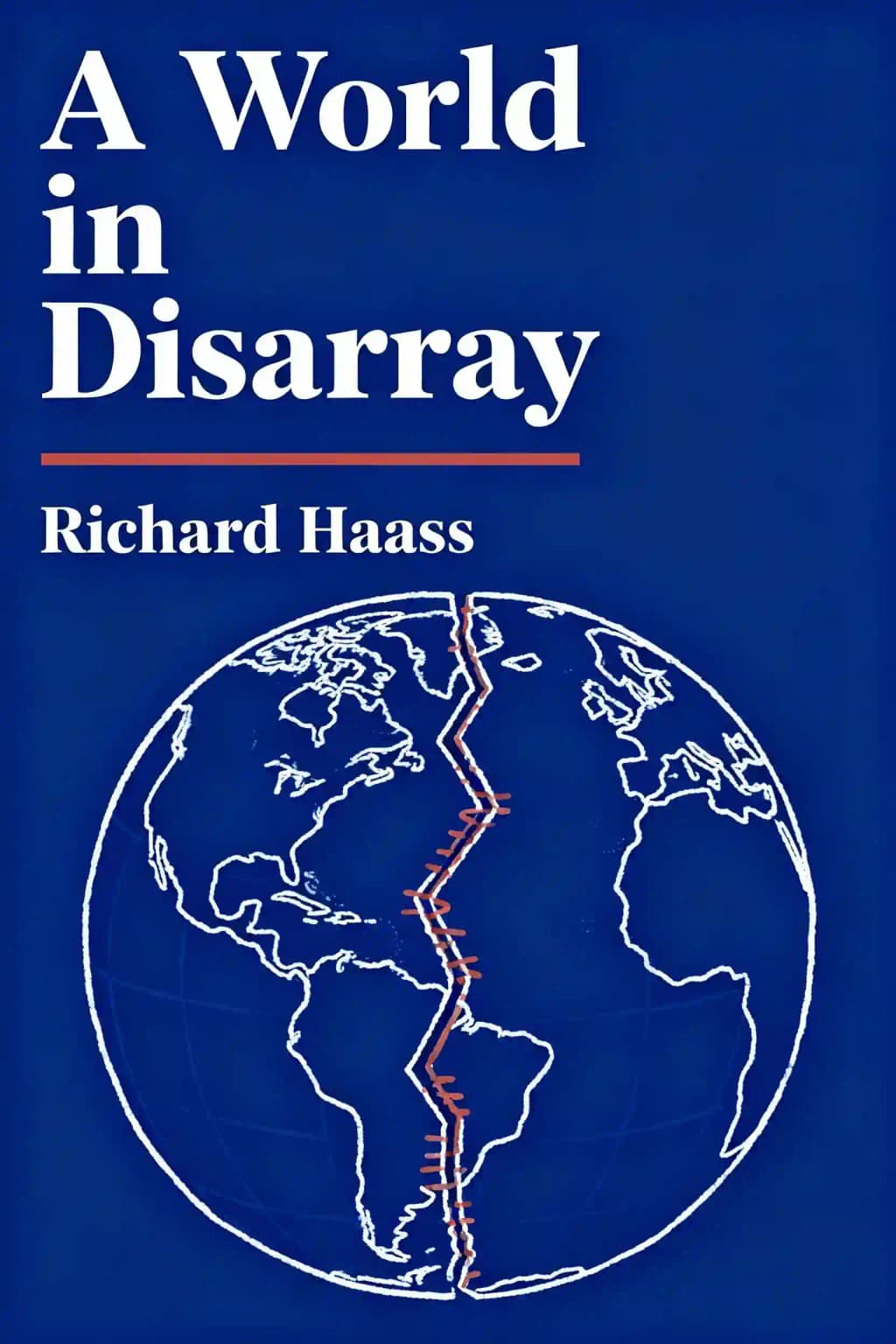
The 2016 Brexit vote and U.S. presidential election revealed a world at a crossroads. As Donald Trump's "America First" message resonated with millions and Britain chose to leave the European Union, the post-Cold War international order seemed to be crumbling before our eyes. Richard Haass's "A World in Disarray" arrived at this pivotal moment, offering a clear-eyed assessment of how we reached this point of global disorder. The book quickly became required reading in diplomatic circles and policy schools worldwide, with Barack Obama reportedly finishing it just before leaving office. Even celebrities like George Clooney cited it when discussing global affairs in interviews. What makes this work particularly significant is Haass's unique position as president of the Council on Foreign Relations and his extensive government service spanning multiple administrations. His analysis isn't just academic theory-it's informed by decades of firsthand experience navigating the complexities of international diplomacy.
Capítulo 2
The Evolution of World Order
The concept of "world order" isn't some idealized state of harmony but rather a neutral description of how international relations function at any given moment. Throughout history, order has always required two essential elements: legitimacy (agreement about acceptable behavior) and power (the capability to enforce rules).
The classical notion of international order emerged from the 1648 Treaty of Westphalia, which ended Europe's devastating Thirty Years War. This revolutionary agreement established a system where sovereign states interacted as formal equals within a common secular legal framework, regardless of size or internal governance. It marked a profound shift from a world dominated by religious empires to one of secular sovereign states with equal rights-at least in principle.
The Concert of Europe, established after the Napoleonic Wars through the Congress of Vienna (1814-1815), further refined these Westphalian concepts. This diplomatic system prioritized stability over justice through frequent high-level consultations among major powers. Despite the nineteenth century's problems, it maintained relative peace compared to the century that followed.
This Westphalian order began unraveling in the late nineteenth century due to two critical developments. First, new nation-states emerged (particularly Germany) that rejected the territorial status quo. Second, traditional powers like Austria-Hungary, Russia, and the Ottoman Empire were weakening or collapsing. The result? Two catastrophic world wars that demonstrated how quickly international order could disintegrate.
The aftermath of World War II differed fundamentally from that of World War I. Instead of imposing punitive peace terms, the victors implemented a transformational approach with Germany and Japan. Both defeated powers were occupied and remade into democratic societies with robust checks and balances. This represented a significant departure from Westphalian principles, recognizing that a country's internal governance affects international stability. Though partly motivated by idealism, this approach was primarily driven by Cold War realism-the West needed strong, non-Communist allies in Europe and Asia to counter Soviet influence. The experiment succeeded remarkably, with both nations becoming stable democracies, economic powerhouses, and pillars of the international order.
Capítulo 3
When Nuclear Weapons Changed Everything
Ironically, much of the international order in the second half of the twentieth century was forged with a nondemocratic adversary dedicated to defeating the United States-the Soviet Union. Despite their profound ideological differences, the Cold War remained remarkably restrained given the stakes involved.
This restraint stemmed from several factors. First, a military balance existed through NATO and the Warsaw Pact, making any European conflict costly and uncertain. Second, the United States strengthened potential Soviet targets through programs like the Marshall Plan and security alliances worldwide. Third, America demonstrated willingness to act when necessary, as shown in the Berlin Airlift, the Korean War, and Vietnam.
Most critically, nuclear weapons fundamentally altered great power competition. Both superpowers recognized that direct confrontation could escalate to nuclear exchange where costs would dwarf any gains. This nuclear deterrence, especially the doctrine of Mutually Assured Destruction (MAD), eliminated incentives for first strikes and dampened competition between the dominant powers.
Arms control agreements further bolstered stability. The SALT and START treaties limited weapon numbers while ensuring neither side could strike first with confidence. The Anti-Ballistic Missile Treaty of 1972 reinforced deterrence by severely limiting defensive systems, ensuring both sides remained vulnerable to retaliation. Transparency through monitoring mechanisms, satellites, and established communication channels like hotlines prevented misunderstandings and reduced risks during crises.
Despite being rivals, the superpowers maintained normal diplomatic relations through embassies, consulates, summits, trade, and cultural exchanges. Both sides demonstrated crucial restraint in their approaches to each other's spheres of influence. The US rejected early calls for "rolling back" Communism in Eastern Europe and remained circumspect during uprisings in Hungary (1956), Czechoslovakia (1968), and Poland (1970). Similarly, Soviet intervention in Latin America was limited primarily to intelligence, military assistance, and subsidies rather than direct military action.
This mutual restraint wasn't without close calls-the Cuban Missile Crisis of 1962 being the most dangerous-but even then, flexibility and face-saving compromises prevailed. The bipolarity of the international system itself contributed to stability, as managing a world with two principal centers of power proved simpler than today's diffuse power structure.
Capítulo 4
Building a Parallel World Order
The Cold War wasn't the only source of order after World War II. A parallel "post-World War II order" operated alongside it with economic, political, diplomatic and strategic dimensions. While the Cold War order largely disappeared with the Soviet Union's demise, this second order continues to influence international relations today.
The economic dimension aimed to promote trade, development, and monetary stability in the non-Communist world. The Bretton Woods system, created in 1944, established the World Bank to promote recovery and development while making the dollar the effective world currency, backed by gold. The International Monetary Fund provided temporary loans to governments with deficits. Trade issues were addressed through the General Agreement on Tariffs and Trade (GATT), which evolved over fifty years into the World Trade Organization.
The United Nations formed the centerpiece of the diplomatic dimension. It was designed as a global forum to prevent or resolve international disputes, with its Charter instructing parties to seek peaceful solutions. The UN could also authorize force under Chapter VII to maintain international peace and security, though it clearly discouraged force as a means of settling disagreements. The Security Council, with five permanent members holding veto power, was given "primary responsibility for the maintenance of international peace and security."
The strategic pillar aimed to forestall risks to peace through initiatives like the Treaty on the Non-Proliferation of Nuclear Weapons (NPT). This addressed the danger of nuclear proliferation through a series of bargains: nuclear states wouldn't transfer weapons technology and would work toward disarmament, while non-nuclear states wouldn't acquire weapons and would accept verification inspections.
In Europe, regional integration began with the European Coal and Steel Community, designed to bind Germany and France so closely that another war between them would become unthinkable. This evolved into the European Community and later the European Union, broadening membership and deepening policy coordination.
Decolonization was another crucial element. Both superpowers supported independence for colonies-the Soviets seeing opportunities to win converts, the Americans fearing colonial populations would turn to communism if denied independence. Ironically, while decolonization was viewed as necessary for order, it often created disorder. The British withdrawal from South Asia in 1947 triggered violent partition between India and Pakistan. Their departure from Palestine in 1948 led to Israel's establishment and immediate war.
The political dimension included the Universal Declaration of Human Rights (1948), which established that individuals, not just states, possessed rights. Though lacking enforcement mechanisms and often ignored by signatories, it represented an important principle. A final element was the legal order facilitating commerce, travel, communication and other interactions between people, corporations and countries.
Capítulo 5
The Paradox of Post-Cold War Stability
By historical standards, major power relations in the quarter century after the Cold War have been relatively good. Unlike previous centuries where competition between powers often led to devastating conflicts, direct confrontation between major powers has been largely absent. Yet paradoxically, we still live in a world in disarray.
This relative stability among great powers stems from several factors: pronounced U.S. military primacy that discouraged direct challenges; powers focusing more on internal economic development than external conquest; economic interdependence serving as a bulwark against conflict; and democratic alliances binding the U.S., Europe and Japan. China concentrated on economic growth while Russia, despite its concerns with maintaining territorial control, was not positioned for global confrontation.
The relationship between the United States as the dominant power and China as the rising challenger has defied historical patterns of inevitable conflict. Despite the "Thucydides Trap"-named after the ancient Greek historian who chronicled the war between rising Athens and established Sparta-Sino-American relations remained surprisingly good after the Cold War. Economic ties filled the vacuum left by their shared Soviet adversary, with two-way merchandise trade growing from $20 billion in 1990 to nearly $600 billion twenty-five years later.
China's post-Mao strategy required regional stability and good relations with America to achieve rapid economic development, while the United States sought access to China's massive market. Their economic interdependence created mutual vulnerability-China needed American markets and technology, while America relied on China to purchase its debt.
Recent years have seen deterioration in relations due to China's assertive regional behavior, military buildup, intellectual property theft, and persistent trade imbalances. China, meanwhile, resents American technology export restrictions, military support for Taiwan, and perceived double standards regarding territorial disputes. Many Chinese believe America deliberately obstructs China's emergence as a global power, as evidenced by U.S. resistance to the Chinese-led Asian Infrastructure Investment Bank (AIIB).
Relations with post-Soviet Russia were problematic from the outset. Though perhaps inevitable given Russia's diminished status-retaining a UN Security Council seat and nuclear arsenal but becoming a superpower in name only-American actions exacerbated the situation.
NATO enlargement proved one of the most consequential and controversial post-Cold War policies. Rather than disbanding after fulfilling its Cold War mission, NATO survived by adopting new roles: conducting operations in places like the Balkans and Afghanistan, while incorporating newly liberated Eastern European states seeking insurance against potential Russian resurgence.
Russia grew increasingly uneasy as NATO expanded eastward, first admitting the Czech Republic, Hungary and Poland in 1999, then seven more countries in 2004, while initiating membership talks with Georgia and Ukraine. The Ukraine crisis proved most damaging when Russia responded to political changes in Kyiv by annexing Crimea and supporting separatists in eastern Ukraine.
Capítulo 6
The Global Governance Gap
Order in international relations depends on three critical criteria: widely shared rules and principles, broadly accepted processes for applying these rules, and a balance of power. By these measures, the post-Cold War order has proven both incomplete and fragile, despite initial optimism following the Gulf War of 1990-1991.
The collapse of the Soviet Union's dual empires unleashed nationalist forces previously kept in check by Moscow. While some transitions proceeded smoothly, Yugoslavia's disintegration descended into violence. This highlighted tensions between competing principles of international order: self-determination versus state sovereignty. While self-determination for colonial peoples was widely accepted, applying this principle to groups within established nation-states threatened sovereignty itself.
Weak states presented another challenge, as demonstrated by Somalia, Haiti, and Rwanda. The Rwanda genocide, where nearly one million Tutsis were killed while the world stood by, profoundly shaped later views on humanitarian intervention. These crises highlighted the challenge of governments attacking or failing to protect their own citizens, leading to the 2005 "Responsibility to Protect" (R2P) doctrine. However, Syria became R2P's devastating failure, as the Assad regime's brutal response to 2011 protests evolved into civil war with hundreds of thousands killed and half the population displaced.
Nuclear proliferation represents another governance gap. The cases of Israel, India, North Korea, Pakistan, and Iran collectively represent a partial erosion of the global nonproliferation regime. U.S. influence was limited by determined nationalism in these countries and undercut by other governments with different priorities. American policymakers faced difficult trade-offs between nonproliferation and other strategic interests.
More troubling, recent history has taught dangerous lessons about nuclear weapons. Ukraine voluntarily relinquished its nuclear arsenal only to be invaded by Russia two decades later. Iraq was forced to abandon its nuclear program before being invaded in 2003. Libya gave up its program only to see its government toppled. Meanwhile, nuclear-armed North Korea remained protected from military intervention-powerful evidence that nuclear weapons provide security against foreign attack.
Climate change exemplifies globalization's reach-borders are irrelevant as local activities create global consequences. While there's broad agreement about its reality and human causes, consensus breaks down on solutions and responsibilities. The 2015 Paris approach showed creativity by setting overall temperature goals while letting each nation determine its own carbon reduction commitments.
Cyberspace presents governance challenges even more complex than nuclear technology. While nuclear programs require significant resources and are observable, cyberspace involves billions of actors with minimal barriers to entry. The internet's commercial importance makes restricting technology spread impossible, and attacks can be executed with disguised origins, undermining deterrence.
Capítulo 7
A World of Regions
The post-Cold War era had its first major test in the Middle East, with the United States leading a broad coalition to restore order by denying Iraq's bid to take Kuwait by force. This regional order largely continued until 2003, when the U.S. attacked Iraq to change the regime, ostensibly due to WMD concerns but also driven by the belief that a democratic Iraq would transform the Middle East.
The outcome proved disastrous-Iraq was less ready for democracy than anticipated, and U.S. decisions to dismantle the army and ostracize Ba'ath Party members fueled a civil war between Shia and Sunnis while enabling the rise of al-Qaeda in Iraq. The war's regional consequences were profound. Democracy was setback as it became associated with chaos. National identity in Iraq was superseded by sectarian and ethnic identities, while Sunni anger fueled terrorist recruitment. Iran emerged as the principal strategic beneficiary, no longer balanced by a strong hostile Arab regime.
The Arab Spring protests spread across the Arab world with each country experiencing different outcomes. In Egypt, thousands protested against Hosni Mubarak's regime, which had introduced economic reforms but little political change while corruption flourished. Elections eventually brought Mohammed Morsi and the Muslim Brotherhood to power, but their rule lasted only about a year until summer 2013, when General Abdel Fattah el-Sisi responded to public pressure and ousted a government many Egyptians feared would fundamentally change society.
Syria demonstrates how foreign policy inaction can prove as consequential as action. After protests began in March 2011 and were violently suppressed, President Obama called for Assad to step down in August without implementing policies to achieve this outcome. When the Assad regime used sarin gas in August 2013, killing approximately 1,500 civilians, the expected U.S. response faltered. This inaction emboldened Assad, demoralized the opposition, strengthened radical elements like ISIS and al-Qaeda, and damaged U.S. credibility globally.
The Asia-Pacific region's stability stands in remarkable contrast to the Middle East despite numerous unresolved territorial disputes. This stability persisted through extraordinary economic transformation and military buildups. Three factors explain this stability: economic interdependence creating a collective bulwark against conflict; strong national identities and governments with long traditions; and continued U.S. military presence that deterred aggression while dampening pressures for nuclear proliferation.
Europe's post-Cold War evolution centered on determining the appropriate degree of integration. The Maastricht Treaty of 1992 transformed the European Community into the European Union, adding a common foreign and security policy pillar and introducing a central banking system and common currency. However, many Europeans feared the loss of national identity and sovereign authority to Brussels bureaucracy. The last decade has seen Europe hamstrung by weak leadership, economic problems from lack of structural reform, and the mismatch between common monetary policy and nationally-determined fiscal policies.
Capítulo 8
Sovereign Obligation: A New Framework
The future of international order depends on whether major powers can develop common approaches to legitimacy. While sovereignty between states must remain central, an approach based solely on state sovereignty is increasingly inadequate in our interconnected world. Globalization means domestic events rarely stay local - whether financial crises, pandemics, or environmental disasters - necessitating a new concept: "sovereign obligation," which emphasizes not just the rights but the obligations states have toward other governments and their citizens.
This framework differs fundamentally from "Responsibility to Protect" (R2P), which concerns a government's responsibilities to its own citizens. While R2P focuses inward, sovereign obligation looks outward, stemming from the realist tradition in American foreign policy. It concentrates on what countries do beyond their borders rather than the idealist/Wilsonian tradition that emphasizes shaping internal conditions of other societies. For example, a country's management of its rivers affects downstream nations, its financial regulations impact global markets, and its environmental policies influence climate change worldwide.
Sovereign obligation represents realism updated for a globalized era. It maintains traditional respect for borders and the prohibition of territorial acquisition by force while acknowledging that interventions should be limited to genuine humanitarian purposes rather than regime change. The framework recognizes that self-determination should be considered as something granted rather than unilaterally asserted, with specific criteria including historical justification, demonstrable population support, and territorial viability. Recent cases like South Sudan and Kosovo illustrate both the possibilities and challenges of this approach.
Multilateralism needs fundamental reconfiguration to embrace sovereign obligation as central to legitimacy. First, "best practices" multilateralism should become the norm for domestic policies with global impact, as demonstrated in the 2015 Paris climate meeting where countries agreed to specific national commitments within a global framework. Second, pragmatism must guide collective challenges through "designer multilateralism" that brings together the most relevant and capable actors rather than favoring inclusion for its own sake - as seen in the P5+1 Iran nuclear negotiations or the Arctic Council's focused membership.
Third, relevant nonstate actors must participate in multilateral processes - from foundations and pharmaceutical companies in global health discussions to tech giants in cyberspace governance. The COVID-19 pandemic demonstrated this necessity, as private sector vaccine development and distribution became crucial to global response. Similarly, addressing cybersecurity threats requires cooperation between governments and major technology companies. This evolution reflects a world where state power alone cannot address transnational challenges effectively.
The sovereign obligation framework also demands new mechanisms for accountability and enforcement. International institutions need updating to reflect both traditional state authority and new forms of influence and responsibility. This might include expanded roles for regional organizations, new frameworks for technology governance, and innovative approaches to managing global commons like oceans and space.
Capítulo 9
America's Essential Role
The burden of creating and maintaining global order inevitably falls largely on the United States as the world's most powerful nation, since no other country or group has the capacity or mindset to build global order, and order never emerges automatically. This responsibility stems from America's unique combination of military might, economic strength, and diplomatic influence. While the European Union lacks unified foreign policy mechanisms, and China's regional ambitions generate mistrust, the U.S. maintains a global network of alliances and partnerships. Yet America faces numerous challenges: regional actors with incompatible interests, the need for alliances despite their limitations, and the reality that the U.S. cannot impose order unilaterally due to structural constraints and resource limits.
For America to lead effectively abroad, it must strengthen its domestic foundation. The mounting national debt-approaching $14 trillion and 75% of GDP-represents a "slow-motion crisis" that threatens America's flexibility and global standing. With nearly half of U.S. public debt held by foreigners, particularly China, America risks becoming vulnerable to financial pressure during geopolitical crises. This economic vulnerability could constrain U.S. options during international disputes or force compromises on key strategic interests.
To address these challenges, America needs comprehensive entitlement reform including raising retirement ages, means-testing Social Security, reforming Medicare and Medicaid, and avoiding false solutions like sequestration or debt ceiling standoffs. Defense spending must be maintained around 3% of GDP given global threats, from conventional military challenges to emerging cyber and space warfare domains. Trade policies should be pursued alongside robust programs to help displaced workers through retraining, portable benefits, and targeted assistance to communities affected by economic transformation. This balanced approach ensures America maintains both its economic competitiveness and social stability.
Political dysfunction remains the greatest obstacle to necessary reforms. The weakening of political parties, increasingly polarized media landscape, special interest influence, and procedural obstacles have made compromise increasingly difficult. The rise of social media echo chambers and decline of shared civic discourse further compounds these challenges. Presidential leadership through both insider negotiation and public education is essential, as inconsistent American policy would undermine global stability and embolden rivals seeking to exploit perceived weakness.
Disarray at home is thus inextricably linked to disarray in the world-a toxic combination that must be addressed before crisis forces change at an unacceptable cost. The doctrine of "sovereign obligation" represents a natural successor to containment, designed for a world where rivals are sometimes partners and collective efforts are required to meet common challenges like climate change, terrorism, and pandemic disease. This approach recognizes that American leadership must evolve beyond Cold War paradigms while maintaining core commitments to allies and global stability. Without American leadership grounded in domestic strength, the world will likely continue its slide toward greater disorder, with consequences that will eventually reach our shores in ways we cannot ignore, from economic disruption to security threats and environmental degradation.