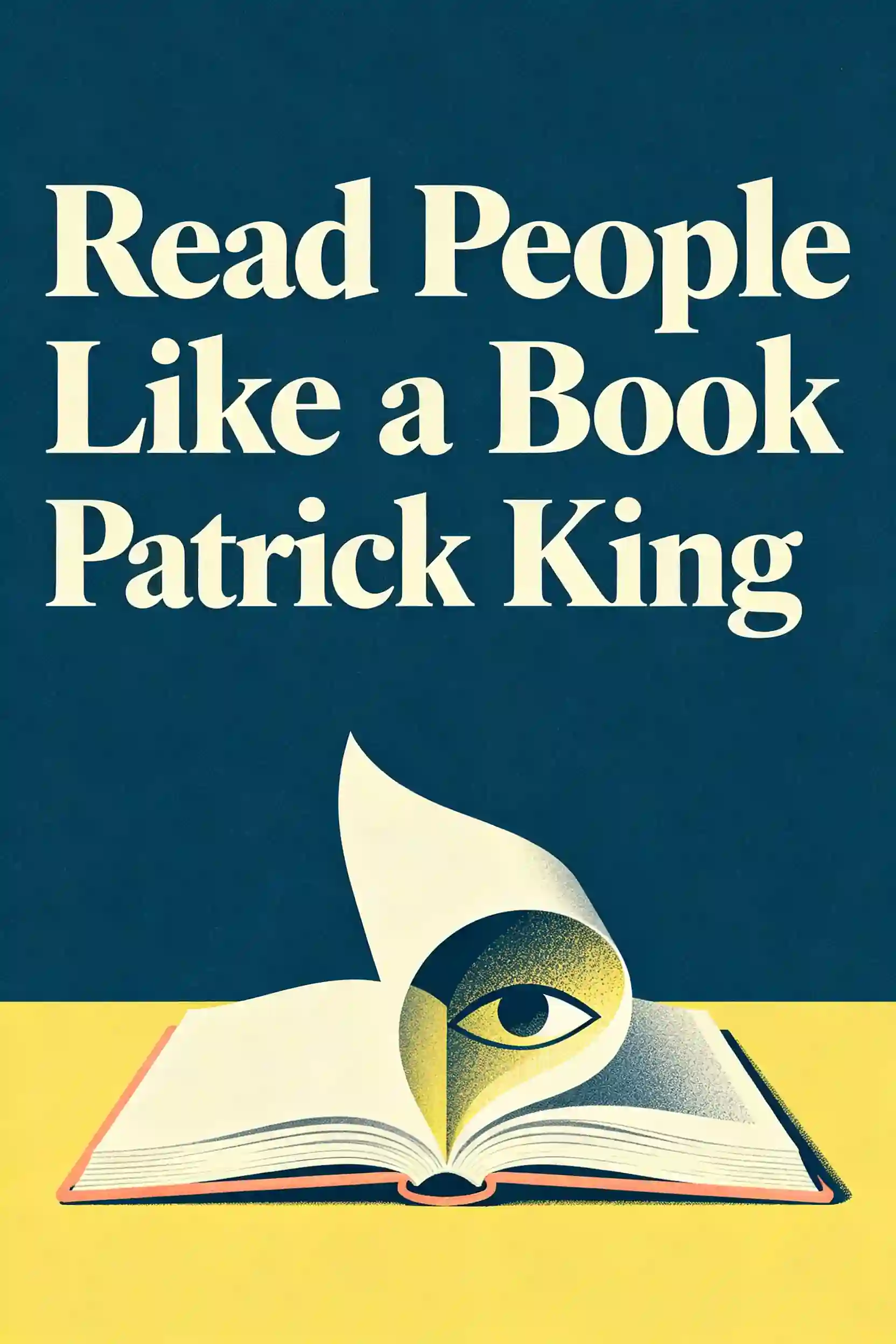
The Unspoken Word: Master Your Social Superpower
Discover how to decode the hidden language of the body to build trust and read any room. From honest feet to facial cues, learn to align your physical signals with your words for better communication.

Best quote from The Unspoken Word: Master Your Social Superpower
One gesture is a sentence fragment; a cluster is a full paragraph. You have to know what a person’s 'normal' looks like before you can interpret a change.
Generated by Ibrahim
How to talk and learn about body language

Frequently Asked Questions
According to the script, feet and legs are the most honest because they are governed by the limbic system, the brain's emotional center. While humans are taught from childhood to mask their facial expressions for social or professional reasons, the feet retain evolutionary survival instincts. For example, if someone is uncomfortable or wants to leave a conversation, their feet will often instinctively point toward the nearest exit even if their torso and face remain engaged with the speaker.
A baseline is a person's "normal" range of default poses, expressions, and habits when they are relaxed or socializing normally. Establishing a baseline is the "Golden Rule" of non-verbal communication because it allows you to identify meaningful shifts. For instance, if a person is naturally a fidgeter, their movement isn't necessarily a sign of stress; however, if they suddenly become still or their fidgeting intensifies, that deviation indicates a change in their internal state.
The Rule of Three is a safeguard against the "Single Cue Fallacy," which is the mistake of judging someone based on a single gesture. To accurately interpret someone's feelings, you should look for "clusters" of at least three related signals. For example, a person crossing their arms might simply be cold, but if they cross their arms while also tensing their jaw and pointing their feet away, those three cues together create a reliable "paragraph" of data suggesting they are defensive or unhappy.
A genuine smile, known as a Duchenne smile, involves the involuntary contraction of muscles around the eyes, creating "crow’s feet" wrinkles. In contrast, a "social" or fake smile only involves the mouth, leaving the eyes looking "dead" or static. Because the human brain is pre-wired to detect this lack of eye movement, fake smiles often feel "creepy" or untrustworthy to the observer.
Pacifying behaviors are physical actions the body uses to soothe the nervous system during times of stress or anxiety, similar to "petting" oneself. Common examples mentioned in the script include rubbing the neck, stroking an arm, or playing with jewelry. These actions, particularly touching the neck, help lower the heart rate and indicate that the person is experiencing a spike in internal tension or is processing a difficult emotion.
From Columbia University alumni built in San Francisco
"Instead of endless scrolling, I just hit play on BeFreed. It saves me so much time."


"I never knew where to start with nonfiction—BeFreed’s book lists turned into podcasts gave me a clear path."


"Perfect balance between learning and entertainment. Finished ‘Thinking, Fast and Slow’ on my commute this week."
"Crazy how much I learned while walking the dog. BeFreed = small habits → big gains."
"Reading used to feel like a chore. Now it’s just part of my lifestyle."

"Feels effortless compared to reading. I’ve finished 6 books this month already."
"BeFreed turned my guilty doomscrolling into something that feels productive and inspiring."

"BeFreed turned my commute into learning time. 20-min podcasts are perfect for finishing books I never had time for."
"BeFreed replaced my podcast queue. Imagine Spotify for books — that’s it. 🙌"

"It is great for me to learn something from the book without reading it."
"The themed book list podcasts help me connect ideas across authors—like a guided audio journey."
"Makes me feel smarter every time before going to work"
From Columbia University alumni built in San Francisco
"Instead of endless scrolling, I just hit play on BeFreed. It saves me so much time."
"I never knew where to start with nonfiction—BeFreed’s book lists turned into podcasts gave me a clear path."
"Perfect balance between learning and entertainment. Finished ‘Thinking, Fast and Slow’ on my commute this week."
"Crazy how much I learned while walking the dog. BeFreed = small habits → big gains."
"Reading used to feel like a chore. Now it’s just part of my lifestyle."
"Feels effortless compared to reading. I’ve finished 6 books this month already."
"BeFreed turned my guilty doomscrolling into something that feels productive and inspiring."
"BeFreed turned my commute into learning time. 20-min podcasts are perfect for finishing books I never had time for."
"BeFreed replaced my podcast queue. Imagine Spotify for books — that’s it. 🙌"
"It is great for me to learn something from the book without reading it."
"The themed book list podcasts help me connect ideas across authors—like a guided audio journey."
"Makes me feel smarter every time before going to work"
"Instead of endless scrolling, I just hit play on BeFreed. It saves me so much time."
"I never knew where to start with nonfiction—BeFreed’s book lists turned into podcasts gave me a clear path."
"Perfect balance between learning and entertainment. Finished ‘Thinking, Fast and Slow’ on my commute this week."
"Crazy how much I learned while walking the dog. BeFreed = small habits → big gains."
"Reading used to feel like a chore. Now it’s just part of my lifestyle."
"Feels effortless compared to reading. I’ve finished 6 books this month already."
"BeFreed turned my guilty doomscrolling into something that feels productive and inspiring."
"BeFreed turned my commute into learning time. 20-min podcasts are perfect for finishing books I never had time for."
"BeFreed replaced my podcast queue. Imagine Spotify for books — that’s it. 🙌"
"It is great for me to learn something from the book without reading it."
"The themed book list podcasts help me connect ideas across authors—like a guided audio journey."
"Makes me feel smarter every time before going to work"
"Instead of endless scrolling, I just hit play on BeFreed. It saves me so much time."
"I never knew where to start with nonfiction—BeFreed’s book lists turned into podcasts gave me a clear path."
"Perfect balance between learning and entertainment. Finished ‘Thinking, Fast and Slow’ on my commute this week."
"Crazy how much I learned while walking the dog. BeFreed = small habits → big gains."
"Reading used to feel like a chore. Now it’s just part of my lifestyle."
"Feels effortless compared to reading. I’ve finished 6 books this month already."
"BeFreed turned my guilty doomscrolling into something that feels productive and inspiring."
"BeFreed turned my commute into learning time. 20-min podcasts are perfect for finishing books I never had time for."
"BeFreed replaced my podcast queue. Imagine Spotify for books — that’s it. 🙌"
"It is great for me to learn something from the book without reading it."
"The themed book list podcasts help me connect ideas across authors—like a guided audio journey."
"Makes me feel smarter every time before going to work"