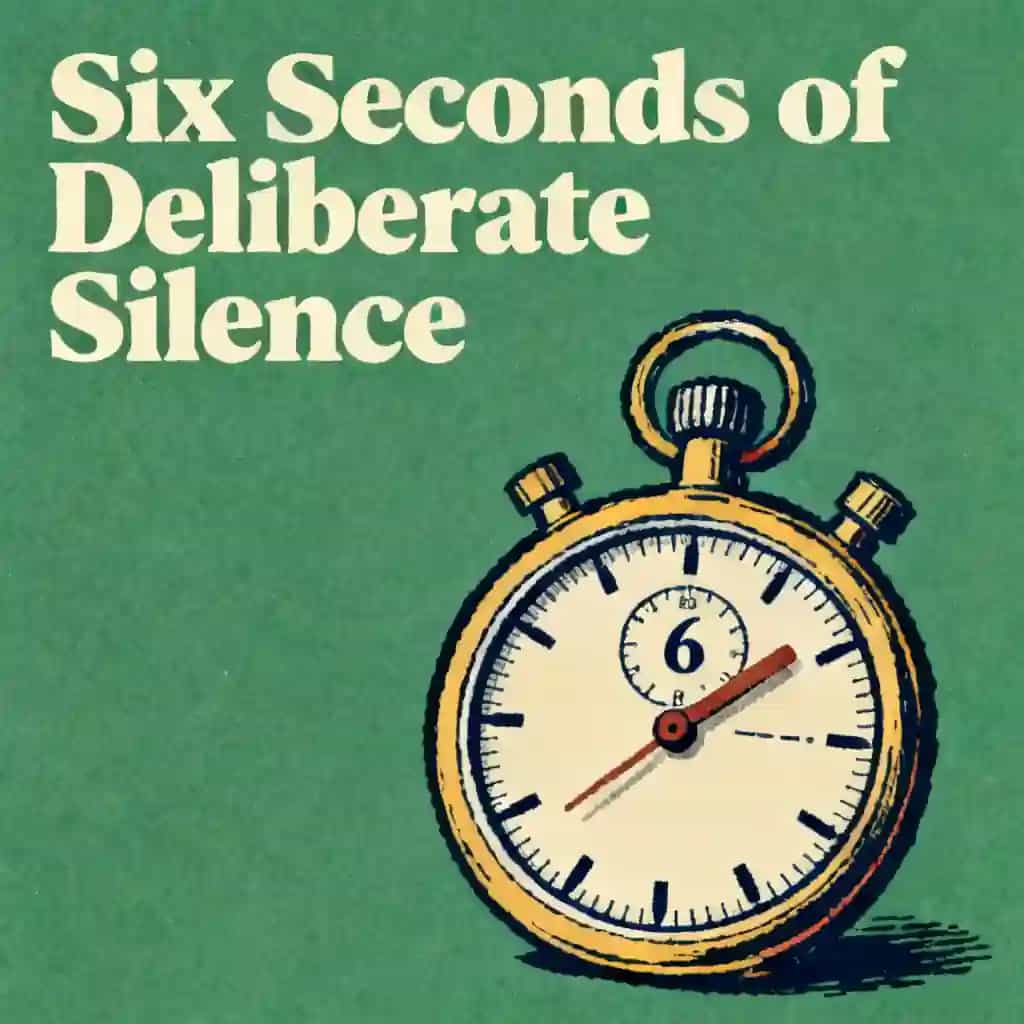
The Power of the Strategic Pause
Discover why silence is your most effective response to tension and how to use the 'quiet move' to regain control and outmaneuver conflict.

Best quote from The Power of the Strategic Pause
Silence isn't just a lack of reaction; it’s a strategic move. It’s like a 'blank page' where the other person starts writing their own fears and doubts because they don't have an answer from you.
Generated by Boy alone
How to respond with silence


Frequently Asked Questions
Taking a three-second pause before responding signals to the other person that you are actually absorbing and considering what they said, rather than just waiting for your turn to speak. This "one, two, three" count shifts your brain from a reactive state, where you are focused on crafting a "zinger" or a retort, to an analytical state. It makes the speaker feel heard and portrays you as a more considered, wise, and confident communicator.
The "stunned silence" move is a strategic response to aggressive demands or outrageous price anchors in a negotiation. Instead of arguing or protesting, you remain completely quiet, which forces the other person to reconsider their own position. This silence creates cognitive pressure, often leading the other party to start justifying their demand or even softening their offer just to break the uncomfortable tension you have created.
Research suggests that brief silences can shift a conversation from "fixed-pie" thinking—where parties fight over limited resources—to a "deliberative mindset." This pause acts as a mental reset button, moving participants out of reactive posturing and into intentional problem-solving. These moments of "incubation" allow the brain to activate its default mode network, which is responsible for creative breakthroughs and spotting nuances that were previously missed.
Strategic silence is a calm, attentive, and respectful tool used to process information, regulate emotions, or give others space to speak; it is intended to deepen communication. In contrast, the "silent treatment" is a punitive and manipulative tactic used to punish or control someone, which ultimately shuts down communication and damages trust. The key difference lies in intentionality: one is a choice to be present and reflective, while the other is a reactive attempt to hurt the other party.
Effective leaders use "enabling silence" to build psychological safety and autonomy within their teams. By asking a question and then waiting without "rescuing" the group by rephrasing or answering it themselves, leaders force the internal processing necessary for deeper insights. This practice encourages team members to voice risky or creative ideas and ensures that the leader is perceived as a calm authority who values the input of others before making a decision.
From Columbia University alumni built in San Francisco
"Instead of endless scrolling, I just hit play on BeFreed. It saves me so much time."


"I never knew where to start with nonfiction—BeFreed’s book lists turned into podcasts gave me a clear path."


"Perfect balance between learning and entertainment. Finished ‘Thinking, Fast and Slow’ on my commute this week."
"Crazy how much I learned while walking the dog. BeFreed = small habits → big gains."
"Reading used to feel like a chore. Now it’s just part of my lifestyle."

"Feels effortless compared to reading. I’ve finished 6 books this month already."
"BeFreed turned my guilty doomscrolling into something that feels productive and inspiring."

"BeFreed turned my commute into learning time. 20-min podcasts are perfect for finishing books I never had time for."
"BeFreed replaced my podcast queue. Imagine Spotify for books — that’s it. 🙌"

"It is great for me to learn something from the book without reading it."
"The themed book list podcasts help me connect ideas across authors—like a guided audio journey."
"Makes me feel smarter every time before going to work"
From Columbia University alumni built in San Francisco
"Instead of endless scrolling, I just hit play on BeFreed. It saves me so much time."
"I never knew where to start with nonfiction—BeFreed’s book lists turned into podcasts gave me a clear path."
"Perfect balance between learning and entertainment. Finished ‘Thinking, Fast and Slow’ on my commute this week."
"Crazy how much I learned while walking the dog. BeFreed = small habits → big gains."
"Reading used to feel like a chore. Now it’s just part of my lifestyle."
"Feels effortless compared to reading. I’ve finished 6 books this month already."
"BeFreed turned my guilty doomscrolling into something that feels productive and inspiring."
"BeFreed turned my commute into learning time. 20-min podcasts are perfect for finishing books I never had time for."
"BeFreed replaced my podcast queue. Imagine Spotify for books — that’s it. 🙌"
"It is great for me to learn something from the book without reading it."
"The themed book list podcasts help me connect ideas across authors—like a guided audio journey."
"Makes me feel smarter every time before going to work"
"Instead of endless scrolling, I just hit play on BeFreed. It saves me so much time."
"I never knew where to start with nonfiction—BeFreed’s book lists turned into podcasts gave me a clear path."
"Perfect balance between learning and entertainment. Finished ‘Thinking, Fast and Slow’ on my commute this week."
"Crazy how much I learned while walking the dog. BeFreed = small habits → big gains."
"Reading used to feel like a chore. Now it’s just part of my lifestyle."
"Feels effortless compared to reading. I’ve finished 6 books this month already."
"BeFreed turned my guilty doomscrolling into something that feels productive and inspiring."
"BeFreed turned my commute into learning time. 20-min podcasts are perfect for finishing books I never had time for."
"BeFreed replaced my podcast queue. Imagine Spotify for books — that’s it. 🙌"
"It is great for me to learn something from the book without reading it."
"The themed book list podcasts help me connect ideas across authors—like a guided audio journey."
"Makes me feel smarter every time before going to work"
"Instead of endless scrolling, I just hit play on BeFreed. It saves me so much time."
"I never knew where to start with nonfiction—BeFreed’s book lists turned into podcasts gave me a clear path."
"Perfect balance between learning and entertainment. Finished ‘Thinking, Fast and Slow’ on my commute this week."
"Crazy how much I learned while walking the dog. BeFreed = small habits → big gains."
"Reading used to feel like a chore. Now it’s just part of my lifestyle."
"Feels effortless compared to reading. I’ve finished 6 books this month already."
"BeFreed turned my guilty doomscrolling into something that feels productive and inspiring."
"BeFreed turned my commute into learning time. 20-min podcasts are perfect for finishing books I never had time for."
"BeFreed replaced my podcast queue. Imagine Spotify for books — that’s it. 🙌"
"It is great for me to learn something from the book without reading it."
"The themed book list podcasts help me connect ideas across authors—like a guided audio journey."
"Makes me feel smarter every time before going to work"