Section 1: The First Breath in the Primordial Void
Lena: Hey everyone, welcome to the show. It’s so good to have you with us today as we dig into something truly massive—we’re talking about the very first gods of ancient Egypt. I was thinking about this earlier, Miles—when we look at these ancient belief systems, we usually start with the famous ones like Anubis or King Tut’s treasures, but there is this whole cosmic "prequel" that most of us skip over.
Miles: You’re so right. It’s like starting a movie halfway through the second act. If you want to understand why the Egyptians built those incredible pyramids or why they were so obsessed with the afterlife, you have to go back to the beginning—and I mean the absolute beginning, before there was even a grain of sand .
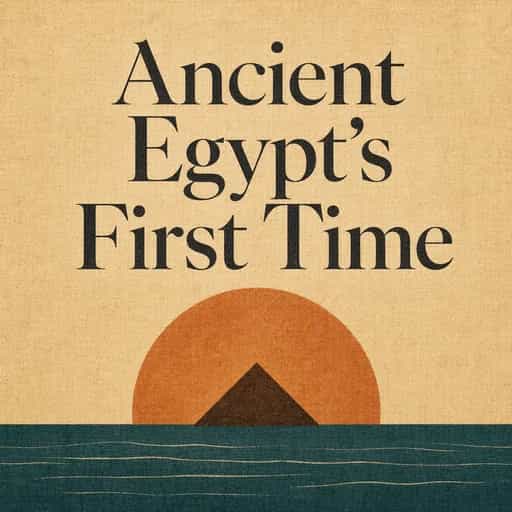
Lena: It’s wild to imagine. One of the most striking things I found in our research is that for the Egyptians, the world didn’t start with a "bang" so much as it started with a "mound." They called it the "First Occasion" .
Miles: Exactly. They believed that originally, there was just this infinite, watery abyss called Nu. It wasn’t a god in the way we think of a person, but more like a personified state of non-existence—total chaos . And then, out of that water, a single mound of earth emerged. Imagine the Nile flooding every year and then receding to leave behind these rich, black mud mounds—that’s the physical experience that shaped their whole view of creation .
Lena: I love that connection. It’s not just abstract philosophy—it’s based on what they saw in their own backyard every autumn. And sitting on that first mound was Atum, the "self-begotten" god who basically thought himself into existence .
Miles: Atum is a fascinating figure because his name actually comes from the word tm, which means "complete" or "finished" . He represented all matter concentrated into one point before it started "unfurling" into the universe we know. It’s an incredibly sophisticated way to look at the start of everything.
Lena: It really is. And the way he starts the family tree is—well, it’s definitely unique. But before we get into the "how," we really need to look at the "who." Because Atum wasn’t alone for long, and the group he founded—the Ennead—became the spiritual backbone of one of the most powerful cities in the ancient world. So, let’s dive into how this one god became nine.