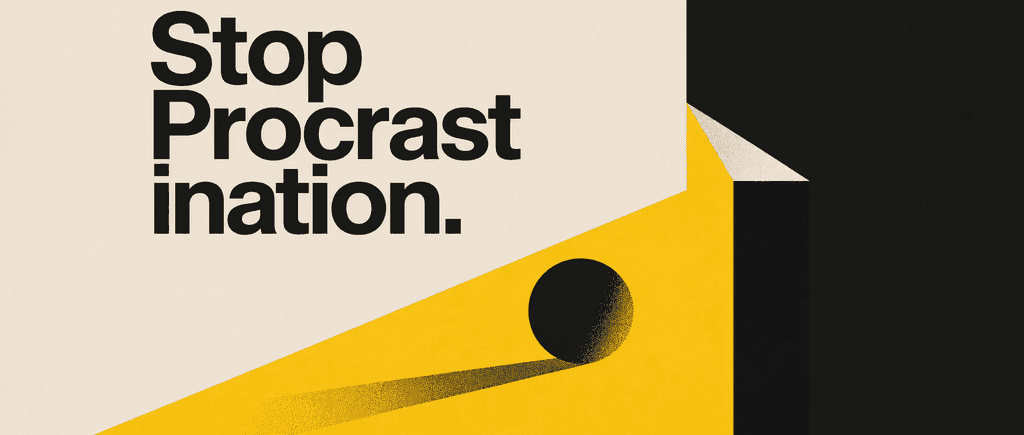
Stop the Slide: Reclaiming Your Goals and Health
Discover why your brain resists change and how to stop the downward spiral. Learn to reframe procrastination as emotional regulation to rebuild your mental and physical health with a sustainable, burnout-resistant playbook.

Best quote from Stop the Slide: Reclaiming Your Goals and Health
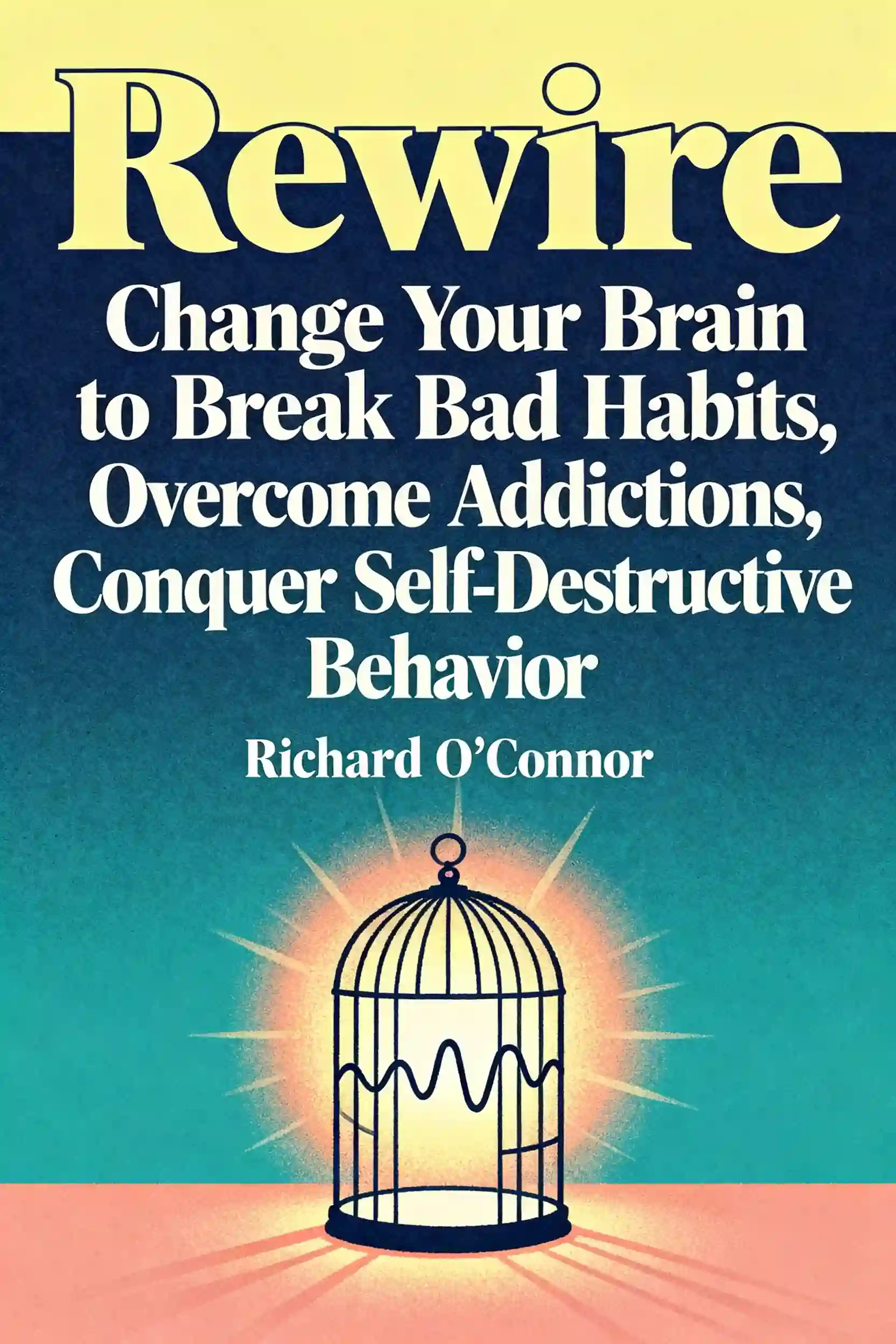
Procrastination is an emotion regulation problem, not a time management one. Burnout is what happens when you try to avoid being human for too long.
Generated by Freedee_F10ED62B
Hi me nowadays am getting so far from my goals and my mental physical health is going dowm so fast

Frequently Asked Questions
According to the script, procrastination is actually an emotion regulation problem rather than a time management issue. Research suggests that we often avoid tasks not because we are lazy, but because our brains are trying to protect us from discomfort, stress, or "identity threats." When we are overwhelmed, the brain enters a survival mode that prioritizes immediate safety and relief over long-term goals.
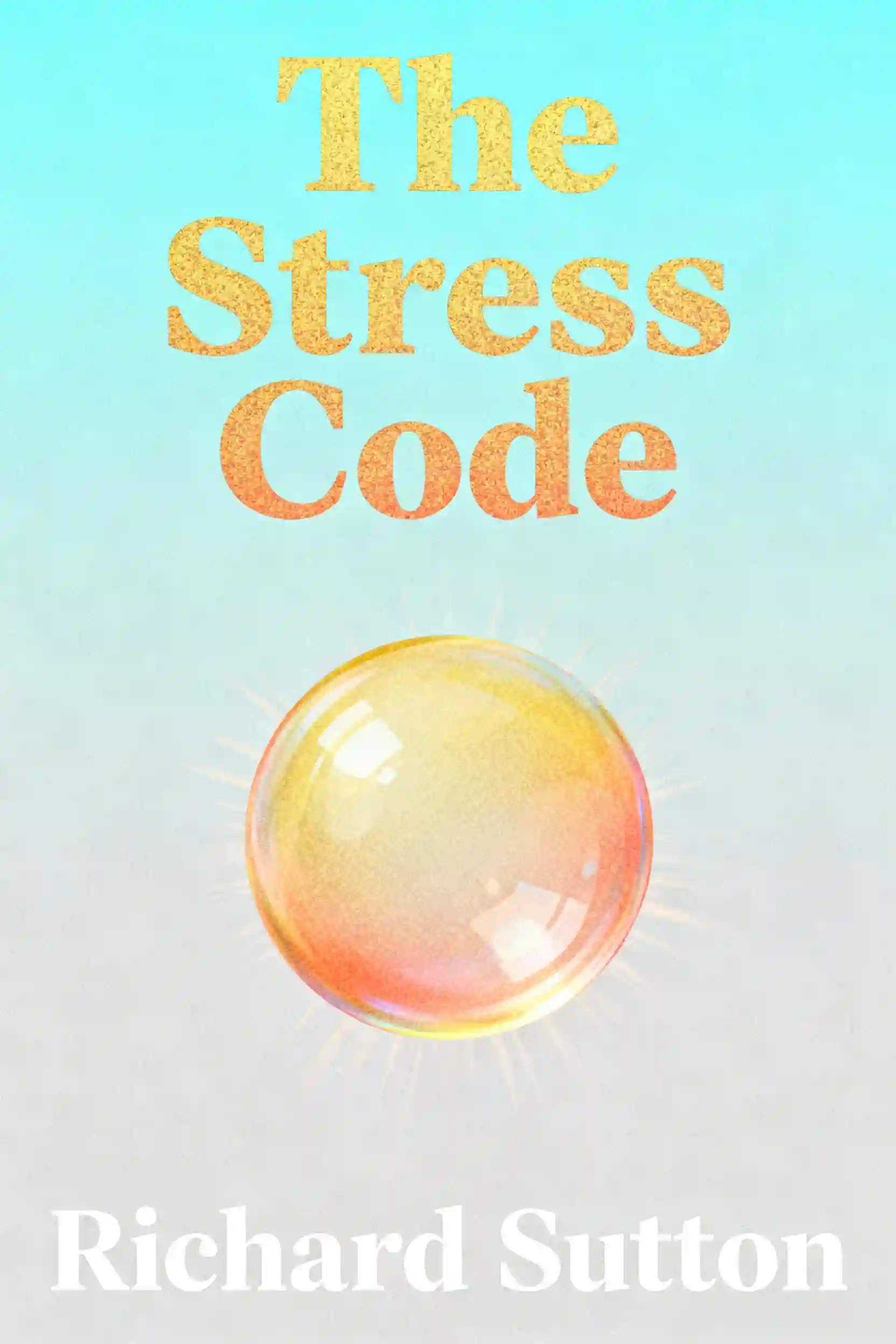
Stress is characterized by "too much"—too many deadlines and high pressure—which often leads to hyper-engagement and frantic energy. In contrast, burnout is characterized by "not enough"—a lack of energy, motivation, and meaning. Biologically, chronic stress keeps the body flooded with cortisol, which can eventually damage the prefrontal cortex, the area of the brain responsible for executive functions like planning and prioritizing.
These techniques act as a manual override for a stressed nervous system. A "cyclic sigh"—which involves a deep inhale, a tiny top-up inhale, and a long, slow exhale—physically signals the body to calm down. Similarly, taking "microbreaks" of just one to five minutes every hour has been shown to significantly reduce fatigue without hurting overall performance, helping to move the body out of a constant high-alert state.
A minimum viable boundary is the smallest possible action you can take to protect a sliver of your energy, such as turning off non-critical notifications after 6 PM or taking a 30-minute block of time where you are not "on call." These are essential because they signal to your nervous system that it is safe to downshift. For those in burnout, these small boundaries are more sustainable than attempting to completely restructure their entire lives at once.
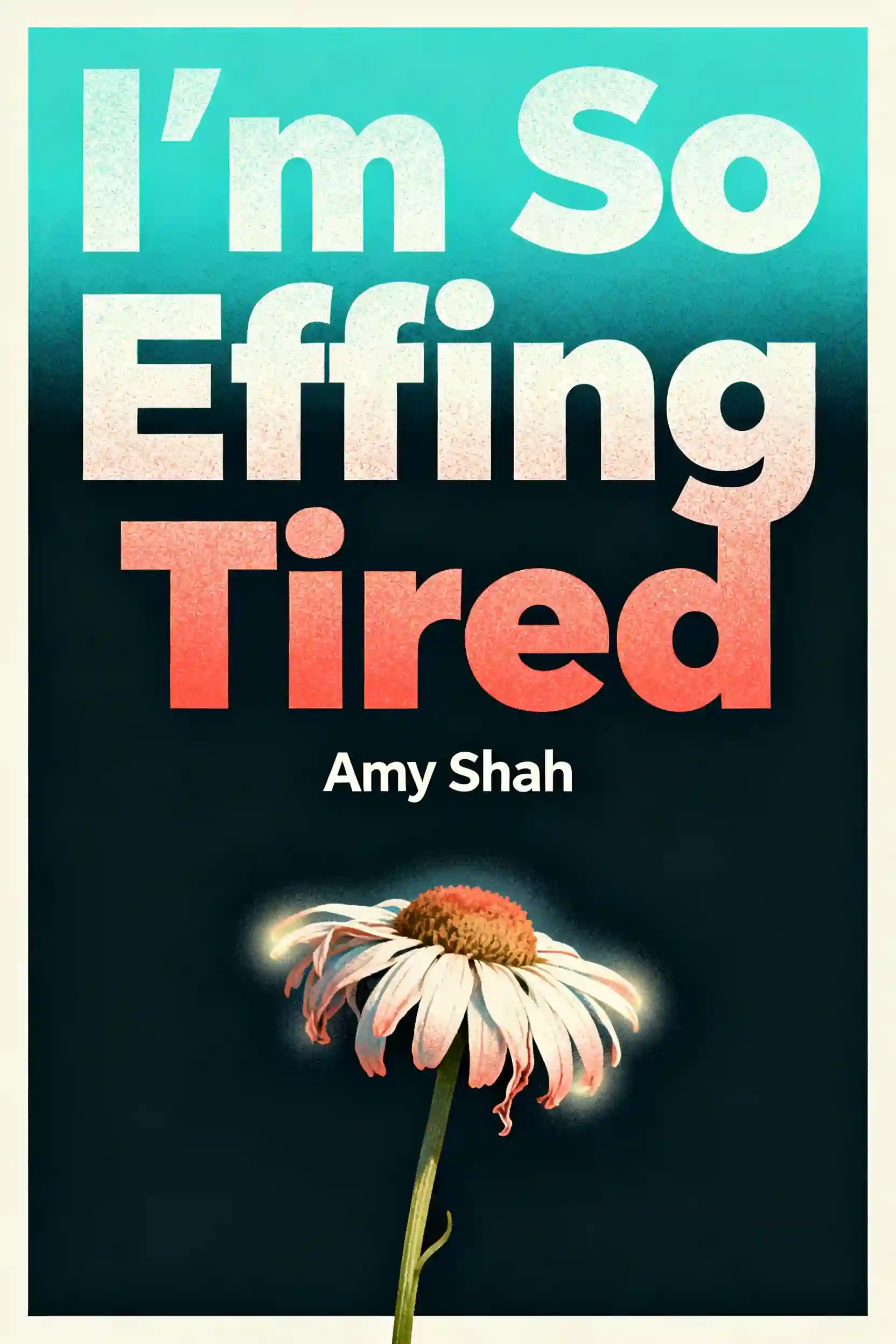
The script suggests that feeling "far from your goals" might actually be a biological signal for a course correction rather than a sign of failure. Burnout often occurs when our natural wiring or values clash with our current lifestyle. By reconnecting with your "why" and identifying your core values, you can determine if your goals need to be adjusted to better fit who you are now, shifting from "output obsession" to "capacity awareness."
From Columbia University alumni built in San Francisco
"Instead of endless scrolling, I just hit play on BeFreed. It saves me so much time."


"I never knew where to start with nonfiction—BeFreed’s book lists turned into podcasts gave me a clear path."


"Perfect balance between learning and entertainment. Finished ‘Thinking, Fast and Slow’ on my commute this week."
"Crazy how much I learned while walking the dog. BeFreed = small habits → big gains."
"Reading used to feel like a chore. Now it’s just part of my lifestyle."

"Feels effortless compared to reading. I’ve finished 6 books this month already."
"BeFreed turned my guilty doomscrolling into something that feels productive and inspiring."

"BeFreed turned my commute into learning time. 20-min podcasts are perfect for finishing books I never had time for."
"BeFreed replaced my podcast queue. Imagine Spotify for books — that’s it. 🙌"

"It is great for me to learn something from the book without reading it."
"The themed book list podcasts help me connect ideas across authors—like a guided audio journey."
"Makes me feel smarter every time before going to work"
From Columbia University alumni built in San Francisco
"Instead of endless scrolling, I just hit play on BeFreed. It saves me so much time."
"I never knew where to start with nonfiction—BeFreed’s book lists turned into podcasts gave me a clear path."
"Perfect balance between learning and entertainment. Finished ‘Thinking, Fast and Slow’ on my commute this week."
"Crazy how much I learned while walking the dog. BeFreed = small habits → big gains."
"Reading used to feel like a chore. Now it’s just part of my lifestyle."
"Feels effortless compared to reading. I’ve finished 6 books this month already."
"BeFreed turned my guilty doomscrolling into something that feels productive and inspiring."
"BeFreed turned my commute into learning time. 20-min podcasts are perfect for finishing books I never had time for."
"BeFreed replaced my podcast queue. Imagine Spotify for books — that’s it. 🙌"
"It is great for me to learn something from the book without reading it."
"The themed book list podcasts help me connect ideas across authors—like a guided audio journey."
"Makes me feel smarter every time before going to work"
"Instead of endless scrolling, I just hit play on BeFreed. It saves me so much time."
"I never knew where to start with nonfiction—BeFreed’s book lists turned into podcasts gave me a clear path."
"Perfect balance between learning and entertainment. Finished ‘Thinking, Fast and Slow’ on my commute this week."
"Crazy how much I learned while walking the dog. BeFreed = small habits → big gains."
"Reading used to feel like a chore. Now it’s just part of my lifestyle."
"Feels effortless compared to reading. I’ve finished 6 books this month already."
"BeFreed turned my guilty doomscrolling into something that feels productive and inspiring."
"BeFreed turned my commute into learning time. 20-min podcasts are perfect for finishing books I never had time for."
"BeFreed replaced my podcast queue. Imagine Spotify for books — that’s it. 🙌"
"It is great for me to learn something from the book without reading it."
"The themed book list podcasts help me connect ideas across authors—like a guided audio journey."
"Makes me feel smarter every time before going to work"
"Instead of endless scrolling, I just hit play on BeFreed. It saves me so much time."
"I never knew where to start with nonfiction—BeFreed’s book lists turned into podcasts gave me a clear path."
"Perfect balance between learning and entertainment. Finished ‘Thinking, Fast and Slow’ on my commute this week."
"Crazy how much I learned while walking the dog. BeFreed = small habits → big gains."
"Reading used to feel like a chore. Now it’s just part of my lifestyle."
"Feels effortless compared to reading. I’ve finished 6 books this month already."
"BeFreed turned my guilty doomscrolling into something that feels productive and inspiring."
"BeFreed turned my commute into learning time. 20-min podcasts are perfect for finishing books I never had time for."
"BeFreed replaced my podcast queue. Imagine Spotify for books — that’s it. 🙌"
"It is great for me to learn something from the book without reading it."
"The themed book list podcasts help me connect ideas across authors—like a guided audio journey."
"Makes me feel smarter every time before going to work"