The Ice Age Birds of Hohle Fels: Ancient Ivory Carvings
Discover 40,000-year-old ivory bird figurines from Germany’s Hohle Fels cave. Explore how these Ice Age carvings reveal insights into human cognitive evolution.
Best quote from The Ice Age Birds of Hohle Fels: Ancient Ivory Carvings
In archaeology, the distance between what we find and what we think it means is often filled with our own modern biases. To avoid overclaiming, you must learn how to distinguish between the hard evidence of the object itself and the myths we project onto the past.
Generated by Mpournis
Teach me a framework for reasoning from artifacts to ideas without overclaiming. Use the 40,000-year-old mammoth-ivory bird figurines found in Germany’s Hohle Fels cave as a case study, and give me 3 rules for separating evidence, inference, and myth.






Frequently Asked Questions
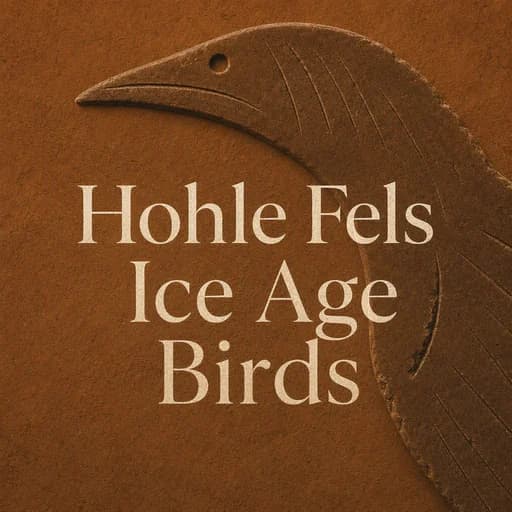
The Ice Age birds of Hohle Fels are tiny figurines carved from ivory, recently discovered during the 2025 excavation season in Germany. These delicate artifacts, no larger than a thumbnail, include depictions of a bird resting and another with wings outstretched in flight. Dating back forty millennia to a world of mammoths and ice, these carvings represent some of the earliest evidence of a massive cognitive leap in human history and Paleolithic art.
These ivory carvings serve as a significant case study for understanding human cognitive evolution and the deep history of creativity. By examining these 40,000-year-old objects, researchers can see the transition toward complex symbolic thought. The figurines demonstrate that early humans possessed the artistic skill and cognitive capacity to represent nature in miniature, marking a pivotal moment in how our ancestors processed and interacted with the world around them.
To interpret these artifacts accurately, it is essential to use a rigorous framework like the ladder of inference. This method helps distinguish between the hard evidence of the ivory objects and the modern myths or biases we might project onto the past, such as assuming they were toys or ritual objects. By staying grounded in the physical evidence found at the Hohle Fels cave, we can explore ancient ideas without making unsupported claims about the creators' original intentions.
From Columbia University alumni built in San Francisco
"Instead of endless scrolling, I just hit play on BeFreed. It saves me so much time."


"I never knew where to start with nonfiction—BeFreed’s book lists turned into podcasts gave me a clear path."


"Perfect balance between learning and entertainment. Finished ‘Thinking, Fast and Slow’ on my commute this week."
"Crazy how much I learned while walking the dog. BeFreed = small habits → big gains."
"Reading used to feel like a chore. Now it’s just part of my lifestyle."

"Feels effortless compared to reading. I’ve finished 6 books this month already."
"BeFreed turned my guilty doomscrolling into something that feels productive and inspiring."

"BeFreed turned my commute into learning time. 20-min podcasts are perfect for finishing books I never had time for."
"BeFreed replaced my podcast queue. Imagine Spotify for books — that’s it. 🙌"

"It is great for me to learn something from the book without reading it."
"The themed book list podcasts help me connect ideas across authors—like a guided audio journey."
"Makes me feel smarter every time before going to work"
From Columbia University alumni built in San Francisco
"Instead of endless scrolling, I just hit play on BeFreed. It saves me so much time."
"I never knew where to start with nonfiction—BeFreed’s book lists turned into podcasts gave me a clear path."
"Perfect balance between learning and entertainment. Finished ‘Thinking, Fast and Slow’ on my commute this week."
"Crazy how much I learned while walking the dog. BeFreed = small habits → big gains."
"Reading used to feel like a chore. Now it’s just part of my lifestyle."
"Feels effortless compared to reading. I’ve finished 6 books this month already."
"BeFreed turned my guilty doomscrolling into something that feels productive and inspiring."
"BeFreed turned my commute into learning time. 20-min podcasts are perfect for finishing books I never had time for."
"BeFreed replaced my podcast queue. Imagine Spotify for books — that’s it. 🙌"
"It is great for me to learn something from the book without reading it."
"The themed book list podcasts help me connect ideas across authors—like a guided audio journey."
"Makes me feel smarter every time before going to work"
"Instead of endless scrolling, I just hit play on BeFreed. It saves me so much time."
"I never knew where to start with nonfiction—BeFreed’s book lists turned into podcasts gave me a clear path."
"Perfect balance between learning and entertainment. Finished ‘Thinking, Fast and Slow’ on my commute this week."
"Crazy how much I learned while walking the dog. BeFreed = small habits → big gains."
"Reading used to feel like a chore. Now it’s just part of my lifestyle."
"Feels effortless compared to reading. I’ve finished 6 books this month already."
"BeFreed turned my guilty doomscrolling into something that feels productive and inspiring."
"BeFreed turned my commute into learning time. 20-min podcasts are perfect for finishing books I never had time for."
"BeFreed replaced my podcast queue. Imagine Spotify for books — that’s it. 🙌"
"It is great for me to learn something from the book without reading it."
"The themed book list podcasts help me connect ideas across authors—like a guided audio journey."
"Makes me feel smarter every time before going to work"
"Instead of endless scrolling, I just hit play on BeFreed. It saves me so much time."
"I never knew where to start with nonfiction—BeFreed’s book lists turned into podcasts gave me a clear path."
"Perfect balance between learning and entertainment. Finished ‘Thinking, Fast and Slow’ on my commute this week."
"Crazy how much I learned while walking the dog. BeFreed = small habits → big gains."
"Reading used to feel like a chore. Now it’s just part of my lifestyle."
"Feels effortless compared to reading. I’ve finished 6 books this month already."
"BeFreed turned my guilty doomscrolling into something that feels productive and inspiring."
"BeFreed turned my commute into learning time. 20-min podcasts are perfect for finishing books I never had time for."
"BeFreed replaced my podcast queue. Imagine Spotify for books — that’s it. 🙌"
"It is great for me to learn something from the book without reading it."
"The themed book list podcasts help me connect ideas across authors—like a guided audio journey."
"Makes me feel smarter every time before going to work"