1장
When Love Hurts: The Hidden Patterns of Relationship Addiction
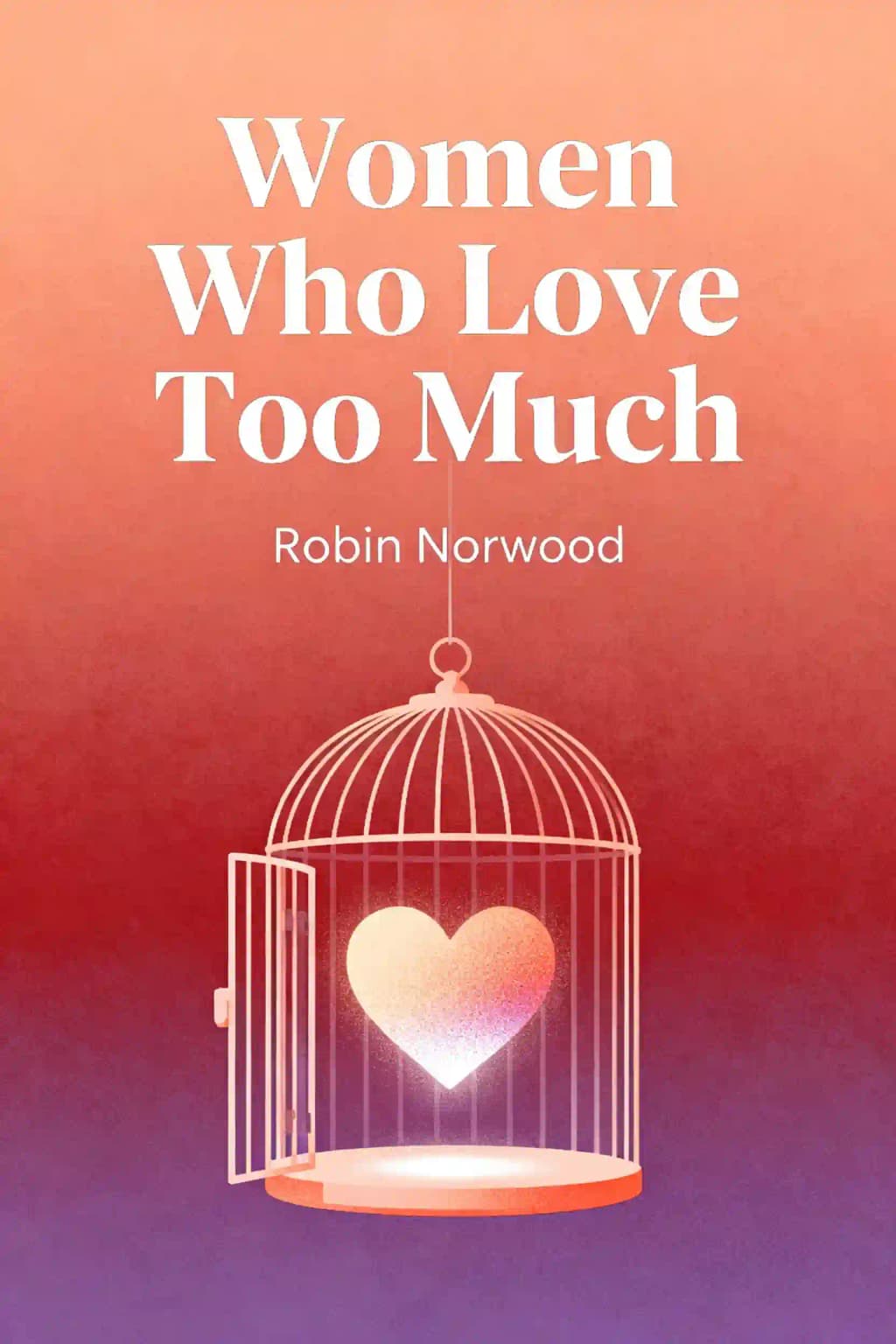
Have you ever found yourself desperately clinging to a relationship that causes more pain than joy? You're not alone. Robin Norwood's groundbreaking work "Women Who Love Too Much" has touched millions of lives across 25 countries since its publication in the 1980s. This cultural phenomenon resonated so deeply that celebrities like Oprah Winfrey have praised its insights, with countless women reporting the book "saved their lives." What makes this work so powerful is its unflinching examination of why intelligent, capable women repeatedly choose partners who can't or won't love them back. The book doesn't just identify a problem-it names a condition that affects countless women and offers a pathway to healing that has stood the test of time across cultures and generations. Whether you're checking your phone obsessively for a text or waiting by a landline like women did decades ago, the underlying pattern remains the same-and understanding it is the first step toward breaking free.
2장
The Anatomy of Loving Too Much
Loving too much isn't about loving too many men or loving too intensely. It's about obsessing over a man who is emotionally unavailable, allowing that obsession to control your emotions and behavior, and measuring love by the depth of your torment. Take Jill, a successful law student who became infatuated with Randy, an attorney she met while visiting friends. Despite his clear warnings not to pressure him, she called constantly and flew to see him twice, only to be ignored during her second visit while he drank beer and watched television. When questioned about his drinking, Jill realized she'd never seen him sober but had dismissed his vague, inconsistent communication as her fault for "boring him."
This pattern reveals the characteristic traits of women who love too much: they take responsibility for others' emotions, feel attracted to emotionally unavailable men, fear abandonment, have critically low self-esteem, and become addicted to emotional pain. These women consistently prioritize relationships over their own well-being, taking far more than 50% of blame while living in a fantasy of how things "could be" rather than accepting reality.
The roots of this pattern typically trace back to childhood experiences in dysfunctional homes. When Jill's father was emotionally unavailable, she blamed herself rather than recognizing his limitations. By believing she could win his love if only she changed enough, she maintained an illusion of control. This pattern continued in her marriage to Paul, who often disappeared for days and sometimes hit her when questioned. Even after Paul left her for another woman, Jill blamed herself rather than recognizing the addictive nature of her relationships with emotionally unavailable men.
Like drug addicts, women who love too much experience an initial euphoria believing their needs might finally be met, followed by increasing dependence as the relationship gives less satisfaction. Despite diminishing returns, they pursue harder, needing more reassurance while receiving less. When childhood experiences are particularly painful, we often unconsciously recreate similar situations throughout life, attempting to master them. We search for what's missing not where it might be found, but where we're compelled to look.
3장
The Paradox of Good Sex in Bad Relationships
Why do dysfunctional relationships often feature intense sexual connections? The answer lies in understanding how conflict and struggle can heighten sexual tension. For women who love too much, sex becomes another arena for giving rather than receiving, focusing on their partner's pleasure while neglecting their own needs and desires.
Trudi's story illustrates this dynamic perfectly. Growing up in an emotionally barren home with a workaholic father and angry mother, she learned to seek validation through giving herself sexually to unavailable men. After her parents' divorce, Trudi began dating frenetically, determined to win men through total devotion. Her pattern led to a devastating affair with Jim, a married policeman, followed by relationships with other unavailable men including a workaholic professor and a dedicated athlete.
Through therapy, Trudi had a breakthrough when she realized she'd been working desperately to make love to men who didn't want her. This insight helped her evaluate relationships as unrewarding rather than seeing herself as unlovable. By the end of therapy, she was dating casually without sleeping with anyone, learning to assess whether she enjoyed a man's company rather than focusing solely on pleasing him.
For women who love too much, sexual patterns follow predictable trends: focusing on how much a man needs them rather than their own feelings; using sex to manipulate partners; confusing anxiety with love; finding power struggles exciting; becoming restless without relationship challenges; fearing true emotional closeness; and taking excitement from their partner's excitement rather than their own feelings.
The intensity of sex in troubled relationships stems from several factors. Sexual climax releases both physical and emotional tension, making it temporarily gratifying even when the relationship is unhealthy. After conflicts, couples invest heavily in making sex "work" to repair their threatened bond. For women who love too much, the intensity of struggle contributes directly to sexual intensity, creating a powerful connection that seems to validate the relationship. Conversely, healthier relationships may seem sexually tame by comparison.
Our culture confuses two contrasting forms of love: Eros (passionate, all-consuming love characterized by yearning, obstacles, and suffering) and Agape (committed partnership based on shared values, mutual trust, and support). While passion requires continuing struggle, true intimacy requires both trust and vulnerability. For women who love too much, developing genuine intimacy can only come after recovery from their addiction to relationship suffering.
4장
The Suffering-Love Connection
"If I suffer for you, will you love me?" This unspoken question drives many women who love too much. Lisa, an artist who grew up with an alcoholic mother, exemplifies this pattern. As the middle child, Lisa developed an unhealthy caretaking role, idealizing her mother while actually mothering her. This caretaking pattern led to depression in her teenage years and ultimately shaped her approach to romantic relationships.
At nineteen, Lisa traveled to Mexico where she met a handsome, wealthy Mexican man who quickly proposed marriage, claiming he needed her. Desperate to escape her draining home life and attracted to being needed, Lisa married him hastily. After the wedding, she discovered his family hated her, and her husband frequently came home drunk smelling of other women's perfume. The breaking point came when she woke to find him drunk, wearing her nightgown and lipstick.
Five months after her mother got sober through AA, Lisa met Gary, a drug user whose slow, careful speech while stoned reminded her of her mother when drunk. Their six-year relationship followed a familiar pattern-Gary rarely worked, spent money on drugs rather than rent, and Lisa supported them both while excusing his behavior due to his difficult childhood. When he destroyed all her paintings during an argument, Lisa finally realized she deserved better than "the worst thing she could stand."
Lisa's deep childhood attachment to her mother and pattern of self-sacrifice prepared her for relationships based on suffering rather than fulfillment. People from dysfunctional homes often find themselves drawn to partners who replicate their painful early relationships, as these dynamics feel strangely "right" despite being harmful. Those with underlying depression use chaotic relationships as a distraction, making a difficult partner the equivalent of a drug-creating temporary escape that eventually deepens into addiction.
Being alone means facing the combined pain of past and present, which feels worse than any relationship suffering. Recovery requires breaking this addiction cycle through support groups and learning to find self-worth without depending on another person for happiness.
5장
The Compulsion to Rescue
People often wonder why women who love too much remain devoted to unrewarding relationships. The answer typically lies in childhood experiences where these women prematurely adopted adult responsibilities. Whether caring for siblings after a parent's absence, becoming confidantes to troubled parents, or managing household responsibilities beyond their years, they learned to deny their own needs while meeting everyone else's. Having pretended to be grown up for so long-asking for little while doing much-they continue seeking opportunities to nurture others rather than acknowledging their own fear, pain and unmet needs.
Melanie's story illustrates this pattern vividly. As a nursing student supporting three children while her unreliable artist husband Sean frequently left when his mother sent money, Melanie struggled to maintain her family. Despite Sean's infidelity and unreliability, Melanie remained loyal, sending him money during their brief separation and rejecting interested, supportive men because they lacked the attraction she felt for Sean.
As the middle child of five with a mentally ill mother who eventually committed suicide, Melanie became the family caretaker at a young age. Her childhood role formed her identity as a savior who rises above chaos, creating a pattern where she now needs crises to function and avoid her own buried feelings of being emotionally overwhelmed.
For Melanie, guilt became a driving force. Her childhood wish to have her father to herself was realized when her mother's mental illness led to her suicide, creating both conscious guilt about failing to prevent her mother's death and unconscious guilt about getting what she wished for. This generated a need for atonement through suffering, making her relationship with Sean-with all its pain and responsibility-oddly comfortable.
Their relationship wasn't a mistake but a perfect psychological fit, with Sean providing opportunities for Melanie to suffer, nurture, and avoid sexuality while exercising her caretaking skills. Like dancers performing complementary steps, whenever he abandoned responsibility, she picked it up; when she took on family burdens, he pirouetted away.
6장
The Dance of Mutual Dysfunction
How do women who love too much find men with whom they can continue their unhealthy childhood patterns? The attraction isn't simply finding someone like a parent, but rather finding someone with whom they can feel the same familiar feelings and face the same challenges from childhood. With these partners, they can replicate the atmosphere they know and use the maneuvers they've practiced. This familiarity creates a powerful sense of rightness and belonging, even when the patterns are uncomfortable or dysfunctional.
When a woman and man come together whose behavioral patterns fit like puzzle pieces, they experience compelling chemistry. If the relationship also offers an opportunity to grapple with and attempt to overcome childhood pain, the attraction becomes virtually irresistible-with more childhood pain creating a stronger drive to reenact and master that pain in adulthood.
Consider Chloe, who grew up hiding her father's violence toward her mother and siblings. At college, she met Roy, who expressed bitter misogyny. Sensing his pain, she immediately tried to prove women weren't all bad-setting herself up to make no demands in their relationship. Within months, she was financially supporting him while enduring emotional and eventually physical abuse. Her attraction to Roy stemmed from his embodiment of both her angry father and her victimized mother-loving him represented a chance to win her father's love and save her mother through her devotion.
Mary Jane was drawn to Peter's melancholy air and preoccupied demeanor at a Christmas party. While talking with him, she noticed how he never quite faced her directly, always slightly angled away and distracted. This dynamic instantly replicated her relationship with her absent father, whom she rarely saw growing up except when he was fixing things around the house. Just as she had tried to win her father's attention as a child, Mary Jane found herself magnetically drawn to Peter's emotional unavailability.
Peggy, raised by a hypercritical grandmother and emotionally unsupportive mother, met Baird-an elegant, arrogant man-and was instantly attracted despite feeling inadequate around him. Their relationship was fraught with tension; she constantly tried to please him while he remained cold and disapproving. Her attraction to him stemmed from her childhood pattern of seeking approval from those incapable of giving love.
Men who choose women who love too much also follow patterns. Tom, an alcoholic, was captivated by Elaine when she gracefully managed a situation where he embarrassed himself while drunk, showing concern rather than anger. This dynamic provided Tom with a sense of safety as his life became increasingly unmanageable. When Elaine later joined Al-Anon and stopped enabling Tom's addiction, he retaliated dramatically by finding another woman willing to continue the rescuing behavior Elaine now refused.
7장
Beauty and the Beast: The Myth of Transformation
The chapter explores how women who love too much are drawn to "help" troubled men, reflecting the cultural fairy tale of "Beauty and the Beast" where a woman's perfect love transforms a monster into a prince. This powerful belief that women can change men through love permeates society, appearing in women's magazines and advice columns. However, behind this seemingly virtuous helping impulse lies a deeper need for control, stemming from childhood experiences in dysfunctional families where overwhelming emotions required protective mechanisms.
Through denial-refusing to acknowledge both reality and feelings about that reality-these women learned to create more tolerable fantasies, losing the ability to make free choices as denial became automatic. This defense mechanism, coupled with attempts to control others, becomes their strategy for creating safety and avoiding painful feelings.
Connie grew up in a home where her parents constantly fought, developing a coping mechanism of using humor and charm to distract them. She learned to deny her feelings and maintain a cheerful facade at all costs. This pattern continued into her marriage with Kenneth, a man who was chronically unfaithful. For twelve years, Connie maintained perfect denial about his nightly absences, never questioning where he went. Her denial was so profound that even when her nine-year-old son attempted suicide, she tried to pass it off as a joke.
Pam grew up feeling fundamentally flawed, believing her mother didn't want her. Without a father, she found males "exotic animals, forbidding and fascinating," and developed a pattern of choosing men who needed her help. As a licensed psychologist, her entire approach to relationships-even with her sons-was helping, coaching and worrying. When her life collapsed after a failed affair, her son's probation officer suggested she focus on herself. Joining a support group of women with similar problems helped her stop trying to control others and begin healing.
Celeste estimates she's been with "more than a hundred impossible men" including younger men, con artists, addicts, and gay men. Growing up with a father who was an army chaplain-kind in public but "mean, demanding, critical, and selfish" at home-created intense family tension. Through counseling, she discovered she'd shut off her feelings as a child and needed drama to feel alive. Her recovery involves learning to love herself rather than seeking to control troubled men who serve as distractions from her own pain and isolation.
8장
The Intertwined Addictions
For women who love too much, recovery demands facing painful emotions they've tried to avoid. At our worst, we become "relationship addicts" or "man junkies" strung out on pain, fear, and yearning. Many develop additional dependencies on substances to block childhood feelings-alcohol, drugs, or most typically for women who love too much, food. We overeat, undereat, or both to tune out reality and numb emotional emptiness.
Not every woman who loves too much abuses substances, but for those who do, recovery from relationship addiction must coincide with recovery from substance abuse. These addictions feed each other in a vicious cycle: substance abuse increases feelings of guilt and shame, making us desperate for a relationship to provide reassurance; when relationships fail, we turn more frantically to our substance of choice. We use relationships and substances for the same purpose-to escape pain-while each addiction intensifies the other.
Brenda's eating disorder mirrored her father's alcoholism and mother's compulsive eating-all suffering from an allergy-addiction to substances they battled to control but that ultimately controlled them. Her family dynamic fostered isolation and secrecy, with an unspoken rule against expressing pain or truth. Despite maintaining a carefully controlled exterior appearance, Brenda's inner turmoil grew from malnutrition and suppressed emotions.
In college, she met Rudy in a religious group-he presented himself as reformed from a shady past, while she hid her eating disorder. Their relationship was built on mutual deception. After marriage, Rudy reverted to drinking and womanizing while Brenda cycled between weight gain and loss. Her perfectionism extended to obsessive housecleaning and shoplifting.
Brenda's recovery came through therapy, Al-Anon, and especially Overeaters Anonymous, where she finally practiced honesty and received acceptance. She learned to maintain distance from her triggering family and prioritize her health above relationships. Though still cautious with men, she no longer keeps secrets or tries to please others at her expense, understanding that her recovery must come first for her to have anything to offer others.
9장
The Path to Healing: Ten Steps to Recovery
Recovery from loving too much is possible for any woman willing to follow specific steps, regardless of how severe her problems may be. These ten steps provide a roadmap for breaking free from unhealthy relationship patterns and creating a fulfilling life.
First, go for help. This crucial initial action requires courage but must be taken genuinely for oneself-not as a manipulation tactic or threat to change one's partner. Find someone with expertise in your specific issue, preferably a therapist who understands relationship addiction as a progressive illness.
Second, make your own recovery your first priority. Redirect the energy you've spent trying to change your partner toward changing yourself instead. Recovery requires total commitment to yourself-perhaps the first time you've truly valued your own wellbeing. Your healing becomes the non-negotiable priority.
Third, find a support group of peers who understand. Regular attendance is essential-though your presence benefits others, you're there primarily for your own healing. By accepting others despite their flaws, you'll develop self-acceptance-vital for recovery.
Fourth, develop your spirituality through daily practice. Find what brings you peace and perspective beyond yourself, regardless of your religious beliefs. Whether you're an atheist who finds solace in nature or actively religious, commit at least half an hour daily to practices that bring you serenity.
Fifth, stop managing and controlling him. Cease to help, advise, and solve his problems. Assume this adult has the same capacity as you to find whatever he needs. When you take responsibility for his problems, you free him from accountability while setting yourself up to be blamed when your efforts fail.
Sixth, learn to not get hooked into the games. Relationship games are structured interactions used to avoid intimacy. Women who love too much often favor the rescuer role, finding comfort in taking care of others as a way to feel safe and earn self-acceptance. Avoiding games requires developing new communication patterns that demonstrate your willingness to take responsibility.
Seventh, courageously face your own problems and shortcomings. Write extensively about your present situation, past experiences, and areas of difficulty. Focus on recognizing patterns in your relationships and behaviors by creating thorough written histories of problematic areas.
Eighth, cultivate whatever needs to be developed in yourself. Make independent plans for your career, education, or personal growth without relying on your partner. Challenge yourself by doing things that you'd rather avoid-stand up for yourself, return unsatisfactory items, make difficult phone calls. Learn to care more for yourself and less for others.
Ninth, become selfish. For women who love too much, "selfish" doesn't mean becoming cruel or thoughtless-it means letting go of martyrdom. It means putting your well-being, desires, work and activities first instead of last. It means believing your needs matter and that meeting them is your responsibility.
Finally, share with others what you have experienced and learned. Like a recovering alcoholic, you could slip without vigilance. Working with newcomers keeps you connected to how sick you once were and how far you've come, preventing denial about your past struggles.
10장
Finding True Intimacy After Recovery
Recovery from loving too much is a lifelong process with distinct characteristics. A recovered woman accepts herself fully while continuing to grow, accepts others without trying to change them, stays connected to her feelings, and cherishes all aspects of herself. She validates herself rather than seeking validation through relationships, has sufficient self-esteem to enjoy others without needing to be needed, and can be open with appropriate people without fear of exploitation.
True intimacy requires being emotionally and spiritually naked, not just physically vulnerable. This terrifying dissolution of boundaries is why genuine connection is rare, yet only by revealing our true selves can we be truly loved. This vulnerability should only be practiced in relationships built on trust, respect, and reverence for shared humanity.
Trudi's struggle with intimacy illustrates the challenges that arise during recovery. Though engaged to Hal-a solid, trustworthy man with whom she had "great talks" but "no fireworks"-she found herself troubled by her lack of sexual response to this kind, considerate man who adored her. The therapist explained that this is common for recovering women who've previously used sexuality to manipulate unavailable men. Without the adrenaline rush of uncertainty and obsession, Trudi didn't know how to be sexual with a loving partner.
The therapist helped her understand that her discomfort stemmed from fear of true intimacy-being "known" completely. With Hal, sex becomes about deepening connection rather than avoiding it. Trudi realized her previous "wild abandon" was actually calculated manipulation, and now she must learn to simply be herself and accept being loved.
As recovery progresses, relationship patterns change, affecting friendships, family dynamics, and intimate partnerships. The fear of change, not pain, often prevents transformation. By joining forces with fellow travelers on the same journey, women who once loved too much can embrace a new way of living-one where love brings joy rather than pain, and where being truly known becomes the greatest gift rather than the greatest fear.