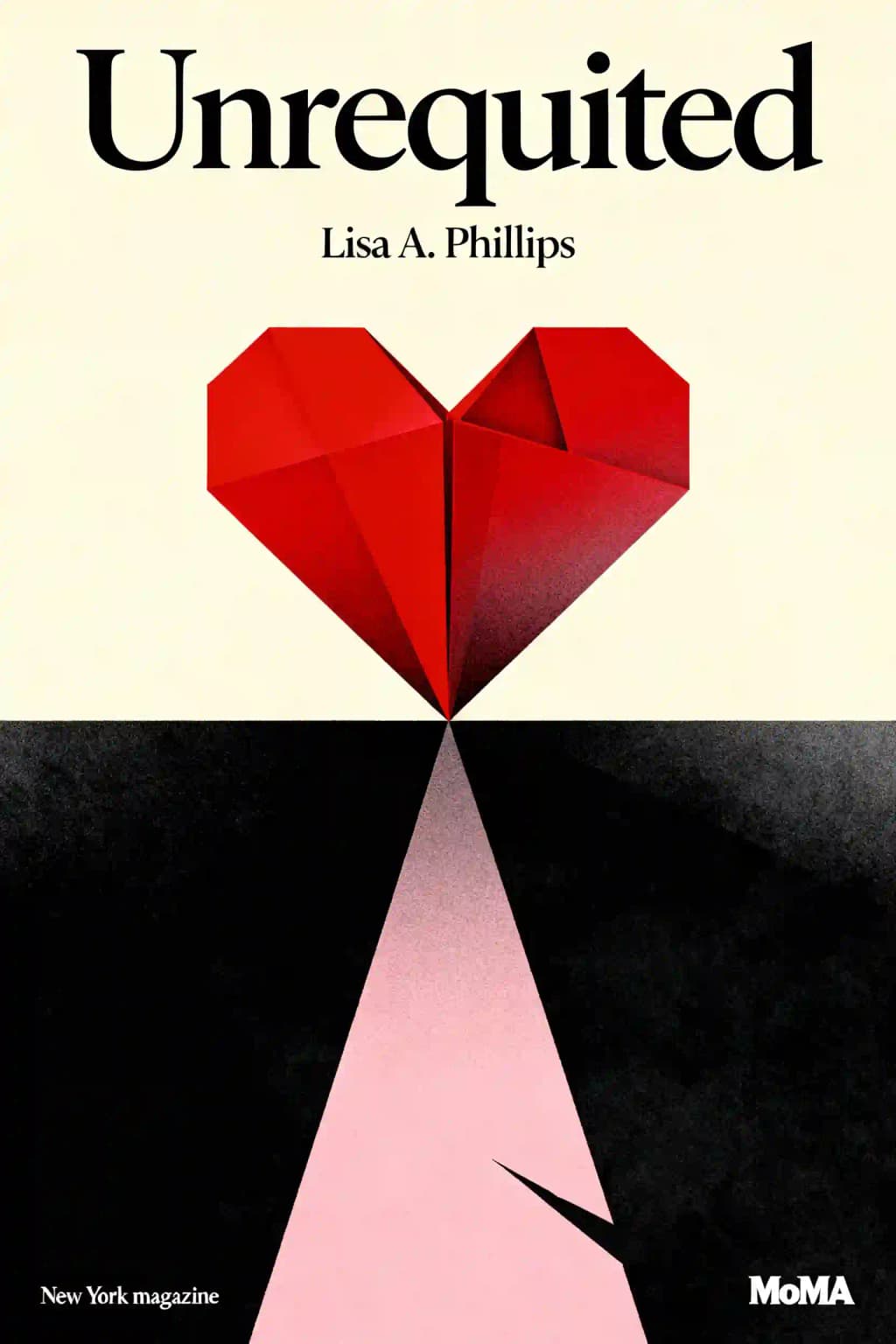
Unrequited love drives women to obsession - Lisa Phillips courageously explores this taboo through personal stories and cultural analysis. Featured in Psychology Today and NPR, this book validates the silent suffering millions experience. What dangerous line separates devotion from destruction?
Lisa A. Phillips, author of Unrequited: Women and Romantic Obsession, is an award-winning journalist and professor renowned for her expertise in relationships, mental health, and the psychology of love.
A former public radio reporter and four-time Edward R. Murrow Award winner, Phillips blends rigorous research with empathetic storytelling to explore themes of longing and emotional resilience. Her work has been featured in The New York Times, The Washington Post, and Psychology Today, and she regularly contributes insights on NPR and media outlets like Oprah Daily.
Phillips teaches journalism and a popular “Love and Heartbreak” seminar at SUNY New Paltz, where her interdisciplinary approach bridges academic research and real-world emotional challenges. She is also the author of Public Radio: Behind the Voices and the forthcoming guide First Love: Guiding Teens Through Relationships and Heartbreak.
Unrequited has been praised for its groundbreaking analysis of romantic obsession, drawing from Phillips’ decades of journalistic inquiry and her nuanced understanding of human behavior.
Unrequited examines one-sided romantic obsession through psychological, cultural, and historical lenses, blending memoir, case studies, and research. Lisa A. Phillips critiques societal perceptions of women’s obsessive love, exploring its roots in brain chemistry, gendered double standards, and literary tropes while offering insights into healing.
This book suits readers interested in psychology, gender studies, or relationship dynamics, as well as individuals navigating unrequited feelings. Mental health professionals and educators will find its analysis of obsession’s societal implications valuable for discussions on gender norms and emotional health.
Yes, for its thorough exploration of romantic obsession’s complexities. While some critics note its broad scope limits depth, it remains a compelling resource for understanding obsession’s psychological mechanisms and cultural context, particularly regarding women’s experiences.
Phillips interweaves interviews with women and their obsessions, revealing patterns like idealization, rejection trauma, and boundary-crossing. These narratives humanize the science, illustrating how societal pressures amplify emotional turmoil.
Some reviewers argue the book’s wide-ranging approach—covering history, literature, psychology, and self-help—results in surface-level analysis rather than deep dives. However, this breadth makes it accessible to general readers.
Phillips highlights societal biases: women’s obsession is often dismissed as “craziness,” while men’s similar behavior is normalized. She ties this to historic stereotypes (e.g., “hysterical” women) and modern media tropes.
The book suggests reframing obsession into self-reflection, setting boundaries, and seeking therapy. Phillips emphasizes acknowledging pain without letting it define self-worth, advocating for emotional resilience over fixation.
Unlike clinical guides, Unrequited blends memoir, cultural critique, and science, focusing specifically on women’s experiences. It complements works like Attached but stands out for its gendered analysis.
As a journalist and educator, Phillips combines rigorous research with narrative storytelling. Her public radio experience shines in the book’s interview-driven structure, adding authenticity to case studies.
In an era of social media and dating apps, the book’s insights into digital-age obsession (e.g., cyberstalking, idealized online personas) remain timely. It also addresses evolving conversations about consent and emotional health.
저자의 목소리로 책을 느껴보세요
지식을 흥미롭고 예시가 풍부한 인사이트로 전환
핵심 아이디어를 빠르게 캡처하여 신속하게 학습
재미있고 매력적인 방식으로 책을 즐기세요
Wanting, not having, generates the most powerful emotions.
Rejecters often indulge their admirers.
Unrequited의 핵심 아이디어를 이해하기 쉬운 포인트로 분해하여 혁신적인 팀이 어떻게 창조하고, 협력하고, 성장하는지 이해합니다.
Unrequited을 빠른 기억 단서로 압축하여 솔직함, 팀워크, 창의적 회복력의 핵심 원칙을 강조합니다.

생생한 스토리텔링을 통해 Unrequited을 경험하고, 혁신 교훈을 기억에 남고 적용할 수 있는 순간으로 바꿉니다.
무엇이든 물어보고, 목소리를 선택하고, 진정으로 공감되는 인사이트를 함께 만들어보세요.

샌프란시스코에서 컬럼비아 대학교 동문들이 만들었습니다
"Instead of endless scrolling, I just hit play on BeFreed. It saves me so much time."
"I never knew where to start with nonfiction—BeFreed’s book lists turned into podcasts gave me a clear path."
"Perfect balance between learning and entertainment. Finished ‘Thinking, Fast and Slow’ on my commute this week."
"Crazy how much I learned while walking the dog. BeFreed = small habits → big gains."
"Reading used to feel like a chore. Now it’s just part of my lifestyle."
"Feels effortless compared to reading. I’ve finished 6 books this month already."
"BeFreed turned my guilty doomscrolling into something that feels productive and inspiring."
"BeFreed turned my commute into learning time. 20-min podcasts are perfect for finishing books I never had time for."
"BeFreed replaced my podcast queue. Imagine Spotify for books — that’s it. 🙌"
"It is great for me to learn something from the book without reading it."
"The themed book list podcasts help me connect ideas across authors—like a guided audio journey."
"Makes me feel smarter every time before going to work"
샌프란시스코에서 컬럼비아 대학교 동문들이 만들었습니다

Unrequited 요약을 무료 PDF 또는 EPUB으로 받으세요. 인쇄하거나 오프라인에서 언제든 읽을 수 있습니다.
What drives a rational person to show up at someone's door before sunrise, uninvited and unwanted? This isn't a hypothetical question-it's a confession. That November morning, slipping past security and knocking persistently until he answered, baseball bat in hand, marked the moment of reckoning. The fear in his eyes wasn't just about an unwelcome visitor; it reflected back a stranger I'd become: the desperate woman who couldn't let go. This raw admission opens a larger truth about unrequited love that affects nearly all of us. Research reveals that 93 percent of people experience one-sided love at some point, yet we rarely discuss it honestly. Instead, we judge women who pursue unavailable partners far more harshly than men doing the same. While John Cusack holding a boombox outside his beloved's window becomes iconic cinema, women in similar positions become cautionary tales-pitiful neurotics or dangerous "bunny boilers." This double standard runs deep, from Hollywood to everyday conversations, revealing our profound discomfort with female desire and aggression. Yet within this painful experience lies unexpected potential for transformation, creativity, and self-discovery.