Managed Heart
Commercialization of Human Feeling
Managed Heart 개요
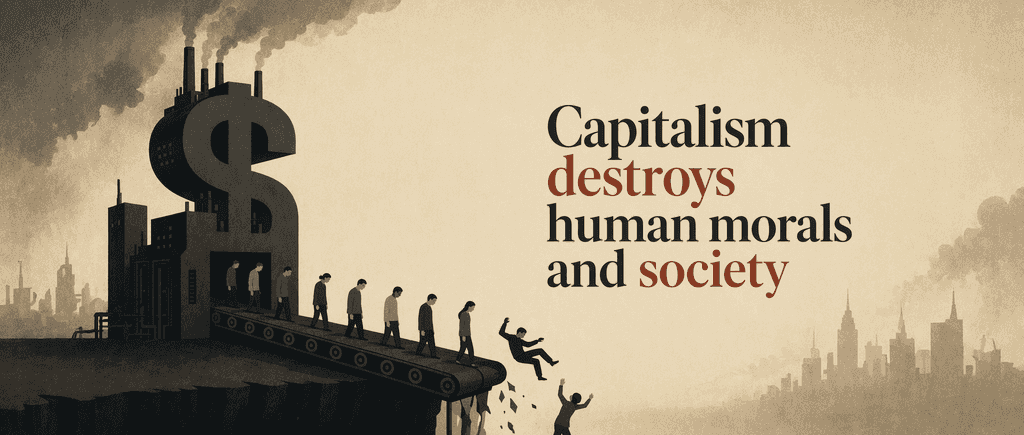
Hochschild's groundbreaking exploration of "emotional labor" revolutionized sociology, winning the Charles Cooley Award by exposing how our feelings become commodities in capitalism. What happens when your smile is no longer yours? Discover why this work remains essential across academic and professional spheres.

Managed Heart의 핵심 주제
- emotional labor
- commercialization of feeling
- surface and deep acting
- service industry alienation
- gendered emotion management
Managed Heart의 명언
Their smiles become 'on them but not of them'—extensions of makeup and uniform rather than genuine expressions.
Surface acting often leads to emotional exhaustion.
They reframe difficult passengers as scared 'children' to avoid anger.
Feeling rules reveal themselves in the gap between what we do feel and what we think we should feel.
Professional settings often expect emotional neutrality.
Managed Heart의 등장인물
- Arlie Russell HochschildAuthor and sociologist who studied emotional labor
- Delta Airlines recruitTrainee observed learning to manage her emotions
저자 소개
Managed Heart의 저자 소개
Arlie Russell Hochschild, author of The Managed Heart, is a pioneering sociologist and professor emeritus at the University of California, Berkeley, renowned for her groundbreaking work on emotional labor and the sociology of human emotions.
A seminal text in social psychology, The Managed Heart examines how workplaces commodify feelings, establishing Hochschild’s influential framework for understanding emotion management in service industries. Her research, shaped by decades of academic rigor and field studies, connects intimate personal experiences to systemic societal issues, a theme echoed in her other acclaimed works like The Second Shift (analyzing gender roles in domestic labor) and Strangers in Their Own Land (a National Book Award finalist exploring political polarization).
Hochschild’s expertise spans global care labor dynamics, as seen in her co-edited volume Global Woman, and workplace-family conflicts detailed in The Time Bind. A Guggenheim Fellow and recipient of the Ulysses Medal, her books have been translated into 17 languages and cited widely in media, including endorsements from figures like Barack Obama. Recognized as a “Rosetta stone” for decoding modern political divides, her work remains foundational in sociology and gender studies curricula worldwide.
Managed Heart 요약 다운로드
Managed Heart 요약을 무료 PDF 또는 EPUB으로 받으세요. 인쇄하거나 오프라인에서 언제든 읽을 수 있습니다.
이 책에 대한 FAQ
The Managed Heart explores the concept of emotional labor—the effort to manage feelings to meet workplace demands. Hochschild examines how industries like airlines and debt collection commodify emotions, requiring workers to suppress authentic feelings. The book critiques the psychological toll of this practice, blending sociology and psychology to reveal systemic impacts on gender roles and worker well-being.
This book is essential for sociologists, HR professionals, and students of gender studies or workplace dynamics. It appeals to readers interested in how emotions are exploited in service industries, offering insights into labor rights, mental health, and the intersection of personal identity and professional performance.
Yes—it’s a seminal work in sociology that coined the term “emotional labor,” influencing fields from psychology to labor studies. Hochschild’s groundbreaking research on Delta flight attendants and bill collectors remains critical for understanding modern workplace expectations, making it a must-read for analyzing systemic inequities.
Emotional labor refers to managed feelings sold for wages, such as a flight attendant’s forced cheerfulness or a bill collector’s strategic anger. Hochschild argues this labor creates dissonance between genuine emotions and performative roles, leading to burnout and alienation.
Hochschild studied Delta flight attendants (trained to project warmth) and bill collectors (encouraged to feign aggression). Her fieldwork revealed how corporations script emotional performances, prioritizing profit over workers’ psychological health. These case studies underscore systemic gender and class biases.
The book highlights how emotional labor disproportionately falls on women, perpetuating stereotypes of female caregivers. Hochschild ties this to unpaid domestic work (e.g., The Second Shift), arguing that gendered expectations in professions like nursing or teaching reinforce societal inequities.
- “Emotional labor requires one to induce or suppress feeling…”
- “The commercialization of human feeling distorts the very essence of selfhood.”
These lines critique the erosion of authenticity in profit-driven roles.
The book’s insights resonate in gig economy jobs (e.g., Uber drivers rated on friendliness) and remote work, where digital communication demands curated emotional performances. Hochschild’s framework helps analyze burnout in customer service and tech sectors.
Some scholars argue Hochschild overlooks intersectionality, focusing narrowly on gender without fully addressing how race, class, or LGBTQ+ identities shape emotional labor. Others note her 1980s data may underestimate today’s gig economy complexities.
While Strangers in Their Own Land examines political alienation, The Managed Heart focuses on privatized emotional struggles. Both tie personal experiences to systemic issues, but this book’s workplace lens offers a unique critique of capitalism.
She likens emotional labor to “acting on a stage”, where workers perform scripts written by employers. This metaphor underscores the dissonance between authentic self and professional persona.
As AI and remote work redefine human interaction, the book’s warnings about emotionally exploitative systems gain urgency. It provides a framework to advocate for policies protecting mental health in increasingly digital, service-oriented economies.