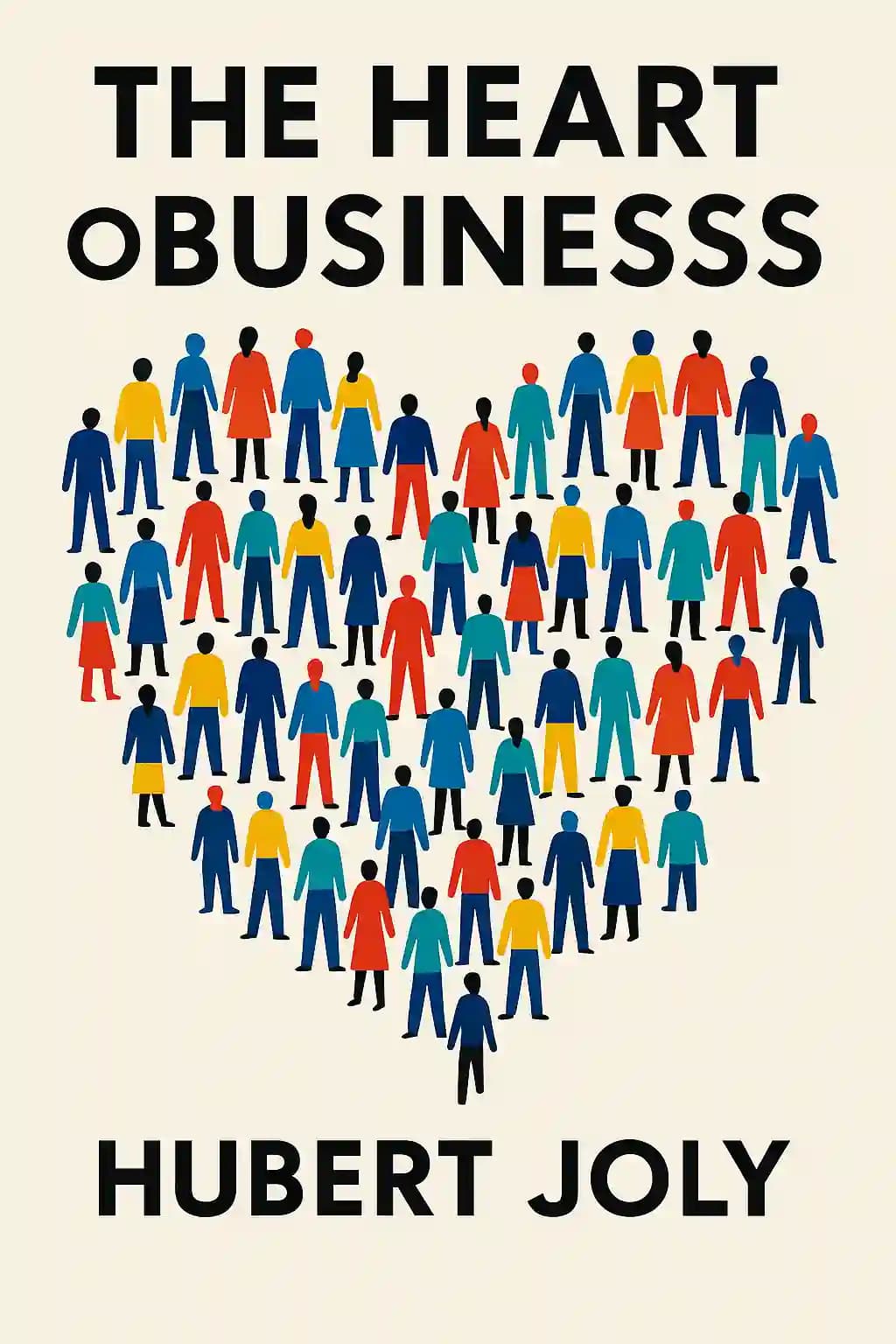
The Heart of Business
Leadership Principles for the Next Era of Capitalism
The Heart of Business 개요
From Best Buy's brink of collapse to Wall Street Journal bestseller, Hubert Joly's "Heart of Business" reveals how putting people first transformed a failing company. What if profit isn't the goal but the result of unleashing "human magic" in your organization?
The Heart of Business의 핵심 주제
- human-centric capitalism
- purpose-driven turnaround
- vulnerable leadership
- meaningful work
- growth mindset culture
The Heart of Business의 명언
The magic happens when we connect our work to a purpose bigger than ourselves.
Making a profit is not the noble purpose of a business. It is a result.
Work, properly understood, can be a path to meaning and fulfillment.
The quest for perfection can be deeply counterproductive.
Profit is a symptom of underlying conditions, not the condition itself.
The Heart of Business의 등장인물
- Hubert JolyFormer Best Buy CEO and author of the book
- Alan MulallyFormer Ford CEO used as a case study in leadership
- Father SamuelPriest who challenged Joly's quest for perfection
저자 소개
The Heart of Business의 저자 소개
Hubert Joly, author of The Heart of Business: Leadership Principles for the Next Era of Capitalism, is a globally recognized leadership expert and former Chairman and CEO of Best Buy, where he spearheaded one of the most celebrated corporate turnarounds in modern history. A senior lecturer at Harvard Business School, Joly combines decades of executive experience—including leadership roles at Carlson, Vivendi, and McKinsey—with a passion for reimagining capitalism through purpose-driven, human-centric strategies.
His book, a Wall Street Journal bestseller, blends practical insights from transforming Best Buy’s stock performance tenfold with philosophical rigor, advocating for profit as an outcome of ethical leadership rather than an end goal.
Joly’s authority is bolstered by his board positions at Johnson & Johnson and Ralph Lauren, as well as accolades such as being named one of Harvard Business Review’s “Best-Performing CEOs in the World.” A frequent speaker on revitalizing organizations, he emphasizes employee empowerment, customer-centric innovation, and sustainable growth.
The Heart of Business has been widely praised for its actionable framework, earning recognition as a roadmap for leaders seeking to align profit with purpose. The book’s principles are taught in top business schools and adopted by executives worldwide, solidifying Joly’s legacy as a visionary in 21st-century leadership.
The Heart of Business 요약 다운로드
The Heart of Business 요약을 무료 PDF 또는 EPUB으로 받으세요. 인쇄하거나 오프라인에서 언제든 읽을 수 있습니다.
이 책에 대한 FAQ
The Heart of Business redefines modern leadership by advocating for purpose-driven, human-centric organizations. Hubert Joly argues that businesses thrive by prioritizing noble purposes, empowering employees, and fostering stakeholder collaboration—with profit as an outcome, not the sole goal. The book draws on Joly’s experience revitalizing Best Buy, offering frameworks to replace outdated profit-first mentalities with values that create sustainable success.
This book is ideal for executives, managers, and entrepreneurs seeking to build ethical, resilient organizations. It’s particularly relevant for leaders navigating digital transformation, employee disengagement, or cultural restructuring. Readers interested in stakeholder capitalism, empathetic leadership, or corporate reinvention will find actionable strategies.
Yes—it combines theoretical rigor with real-world execution, using Best Buy’s turnaround as a case study. The book provides reflection questions, leadership principles, and step-by-step guidance to align business practices with human values. All proceeds support Best Buy Teen Tech Centers, adding social value to the read.
Joly’s framework includes:
- Pursuing a noble purpose
- Putting people at the center
- Creating environments to unleash “human magic”
- Embracing all stakeholders
- Treating profit as an outcome
These principles reject top-down control, emphasizing collaboration and purpose over short-term financial targets.
“Human magic” refers to untapped employee potential released when organizations prioritize trust, autonomy, and meaningful work. Joly credits Best Buy’s revival to fostering this energy through purpose-driven culture shifts, such as replacing sales quotas with customer-need consultations.
The book details Best Buy’s transformation from near-bankruptcy to a $42B revenue leader by 2019. Joly describes overhauling employee training to focus on customer relationships, eliminating predatory sales tactics, and aligning teams around enriching lives through technology.
Joly argues businesses must serve employees, customers, communities, and shareholders equally—a contrast to Milton Friedman’s shareholder-first model. Examples include Best Buy’s employee wellness programs and sustainability initiatives that drove long-term profitability.
Each chapter includes reflection questions like, “Does your company’s purpose inspire collective action?” and actionable steps such as redrafting mission statements with employee input. Joly also provides checklists for balancing stakeholder needs during decision-making.
Joly calls MBA programs’ profit-maximization focus “outdated,” sharing how his McKinsey training failed at Best Buy. He advocates teaching empathetic leadership, systems thinking, and purpose alignment instead of rigid financial modeling.
Profit becomes sustainable when it’s a byproduct of solving human problems—not the primary objective. Joly illustrates this through Best Buy’s shift from pushing products to helping customers navigate tech, which increased loyalty and sales.
Joly prioritizes listening to frontline workers and customers. At Best Buy, he implemented “listening tours” where leaders worked in stores, leading to innovations like free in-home tech consultations that boosted satisfaction.
Notable lines include:
- “The heart of business is pursuing a noble purpose, not profit”
- “Great leaders don’t have answers—they ask questions”
- “Human magic happens when you take the chains off”
Each emphasizes empathy, curiosity, and trust as growth drivers.