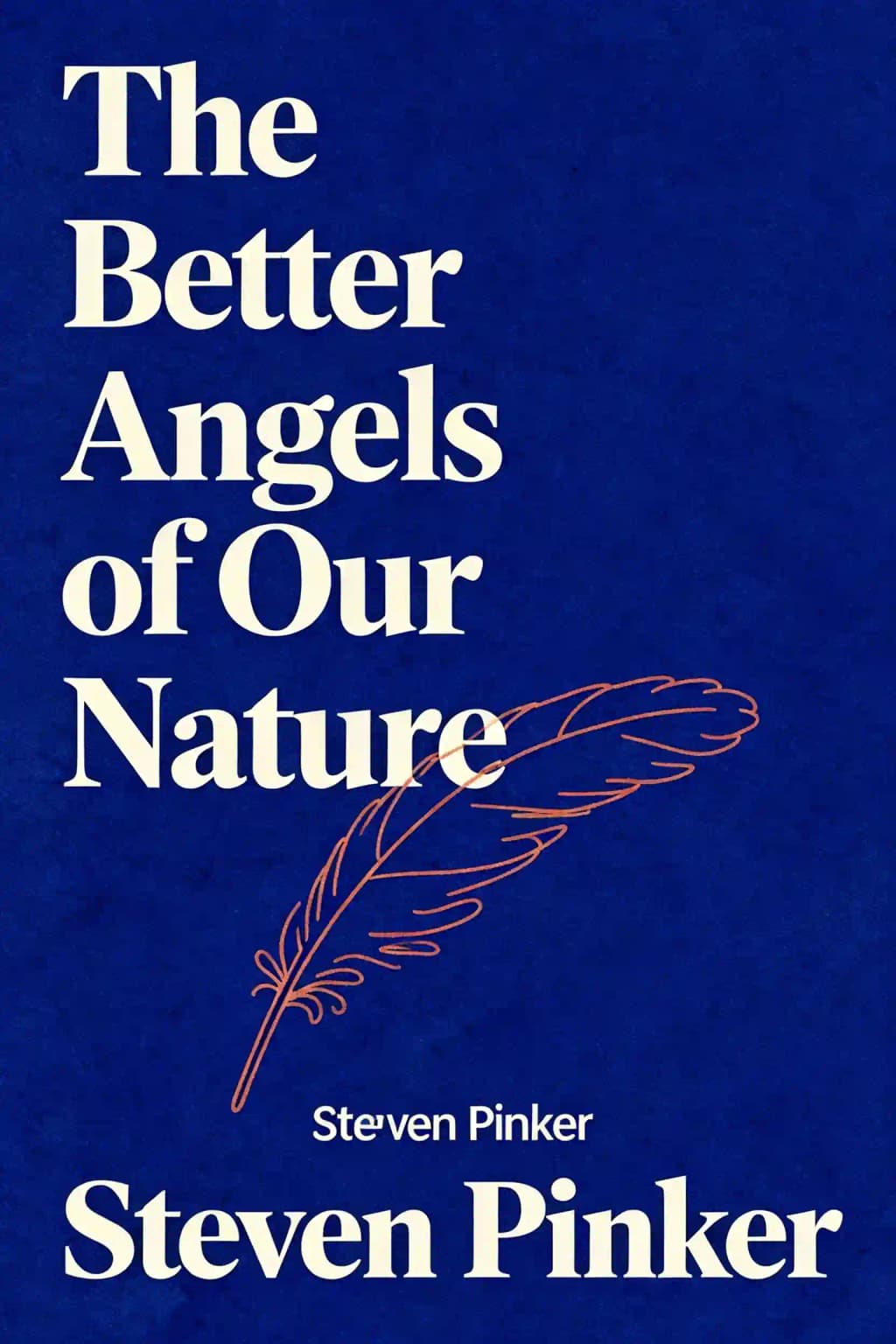
Violence is declining across human history. In "The Better Angels of Our Nature," Steven Pinker presents compelling data challenging our perception of increasing danger. Bill Gates called it "the most inspiring book I've ever read." What counterintuitive forces are actually making humanity safer?
Steven Arthur Pinker, bestselling author of The Better Angels of Our Nature: Why Violence Has Declined, is a cognitive psychologist and leading authority on language, human nature, and societal progress. Born in Montreal in 1954 and educated at McGill and Harvard, Pinker’s work bridges psychology, history, and Enlightenment philosophy, exemplified by his Pulitzer Prize-finalist explorations of violence reduction and rational optimism.
A Harvard professor and MIT alum, he’s shaped public discourse through groundbreaking books like The Language Instinct and Enlightenment Now, alongside TED Talks and columns for The New York Times.
The Better Angels of Our Nature synthesizes Pinker’s research on cognitive science with historical analysis to argue that humanity has grown less violent through reason and cooperation. His ideas have influenced figures like Bill Gates, who called it “the most inspiring book I’ve ever read.” Pinker’s other works, including How the Mind Works and The Blank Slate, further examine human behavior through evolutionary psychology.
Translated into over 30 languages, Pinker’s books have sold millions worldwide. The Better Angels of Our Nature remains a cornerstone of debates on human progress, cementing his reputation as a defining thinker of 21st-century intellectual culture.
The Better Angels of Our Nature by Steven Pinker argues that violence has significantly declined throughout human history due to cultural, institutional, and cognitive shifts. Pinker supports this thesis with data on trends like reduced warfare, homicide, and systemic oppression, attributing the change to the rise of governance, commerce, education, and Enlightenment values like reason and empathy.
This book is ideal for readers interested in historical trends, psychology, and societal progress. Historians, policymakers, and students of human behavior will find its data-driven analysis valuable, as will general audiences seeking a counter-narrative to perceived societal decline. Fans of Pinker’s interdisciplinary approach to language and cognition will also appreciate its scope.
Yes, Pinker’s rigorous research and accessible writing make it a compelling read. Bill Gates called it “one of the most inspiring books I’ve ever read,” praising its optimism and evidence-based perspective. The book challenges assumptions about human nature and offers actionable insights into fostering peace.
Pinker identifies four human motivations that reduce violence:
Pinker highlights six historical trends, including the “Humanitarian Revolution” and the “Long Peace” post-WWII. He credits declining violence to centralized states, trade interdependence, literacy, and the spread of Enlightenment ideals like human rights and rational problem-solving.
Critics argue Pinker oversimplifies complex historical events, understates modern violence (e.g., systemic racism), and overemphasizes Western progress. Some question his data interpretation, noting declines aren’t universal or irreversible. Pinker acknowledges these nuances but maintains the overall downward trend.
The title references Abraham Lincoln’s inaugural address. Key quotes include:
Amid global conflicts and technological disruptions, Pinker’s case for reason, cooperation, and incremental progress offers a framework for addressing challenges like AI ethics and climate change. His emphasis on data over anecdote counteracts doomist narratives.
Enlightenment Now expands on Pinker’s defense of reason, science, and humanism, applying similar themes to broader societal advancements. Both books champion empirical optimism but focus on different facets of progress—violence reduction versus overall human flourishing.
Yes, its insights into conflict resolution, collaboration, and cognitive biases can improve decision-making in workplaces. Understanding historical resilience helps navigate modern challenges like organizational change or ethical leadership.
He describes it as cultural shifts—like media literacy and feminist movements—that curb aggressive behaviors by promoting self-control and empathy.
Violence has declined not because humans evolved biologically, but because societal structures and Enlightenment values redirected innate tendencies toward cooperation. This progress, though fragile, underscores the potential for continued moral advancement.
저자의 목소리로 책을 느껴보세요
지식을 흥미롭고 예시가 풍부한 인사이트로 전환
핵심 아이디어를 빠르게 캡처하여 신속하게 학습
재미있고 매력적인 방식으로 책을 즐기세요
Violence has declined over long stretches of history, and today we may be living in the most peaceable era in our species’ existence.
The decline of violence may be the most significant and least appreciated development in the history of our species.
Sexual competition is particularly intense among males.
Hobbes was largely right: without a common power to keep people in awe, they live in continual fear, and danger of violent death.
The better angels of our nature의 핵심 아이디어를 이해하기 쉬운 포인트로 분해하여 혁신적인 팀이 어떻게 창조하고, 협력하고, 성장하는지 이해합니다.
The better angels of our nature을 빠른 기억 단서로 압축하여 솔직함, 팀워크, 창의적 회복력의 핵심 원칙을 강조합니다.

생생한 스토리텔링을 통해 The better angels of our nature을 경험하고, 혁신 교훈을 기억에 남고 적용할 수 있는 순간으로 바꿉니다.
무엇이든 물어보고, 목소리를 선택하고, 진정으로 공감되는 인사이트를 함께 만들어보세요.

샌프란시스코에서 컬럼비아 대학교 동문들이 만들었습니다
"Instead of endless scrolling, I just hit play on BeFreed. It saves me so much time."
"I never knew where to start with nonfiction—BeFreed’s book lists turned into podcasts gave me a clear path."
"Perfect balance between learning and entertainment. Finished ‘Thinking, Fast and Slow’ on my commute this week."
"Crazy how much I learned while walking the dog. BeFreed = small habits → big gains."
"Reading used to feel like a chore. Now it’s just part of my lifestyle."
"Feels effortless compared to reading. I’ve finished 6 books this month already."
"BeFreed turned my guilty doomscrolling into something that feels productive and inspiring."
"BeFreed turned my commute into learning time. 20-min podcasts are perfect for finishing books I never had time for."
"BeFreed replaced my podcast queue. Imagine Spotify for books — that’s it. 🙌"
"It is great for me to learn something from the book without reading it."
"The themed book list podcasts help me connect ideas across authors—like a guided audio journey."
"Makes me feel smarter every time before going to work"
샌프란시스코에서 컬럼비아 대학교 동문들이 만들었습니다

The better angels of our nature 요약을 무료 PDF 또는 EPUB으로 받으세요. 인쇄하거나 오프라인에서 언제든 읽을 수 있습니다.
Despite what your news feed suggests, we're living in the most peaceful era in human history. This remarkable claim forms the backbone of Steven Pinker's groundbreaking work, which has captivated minds from Bill Gates to Barack Obama. The evidence is overwhelming yet counterintuitive: violence has been in dramatic decline throughout human history. This isn't just academic theory - it's a profound reassessment of human progress with implications for how we understand ourselves and our future. The decline spans everything from war and genocide to intimate partner violence and cruelty to animals. What makes this transformation possible? And what does it tell us about human nature?