1장
The Art of Getting What You Want: Mastering the Chess Game of Negotiation
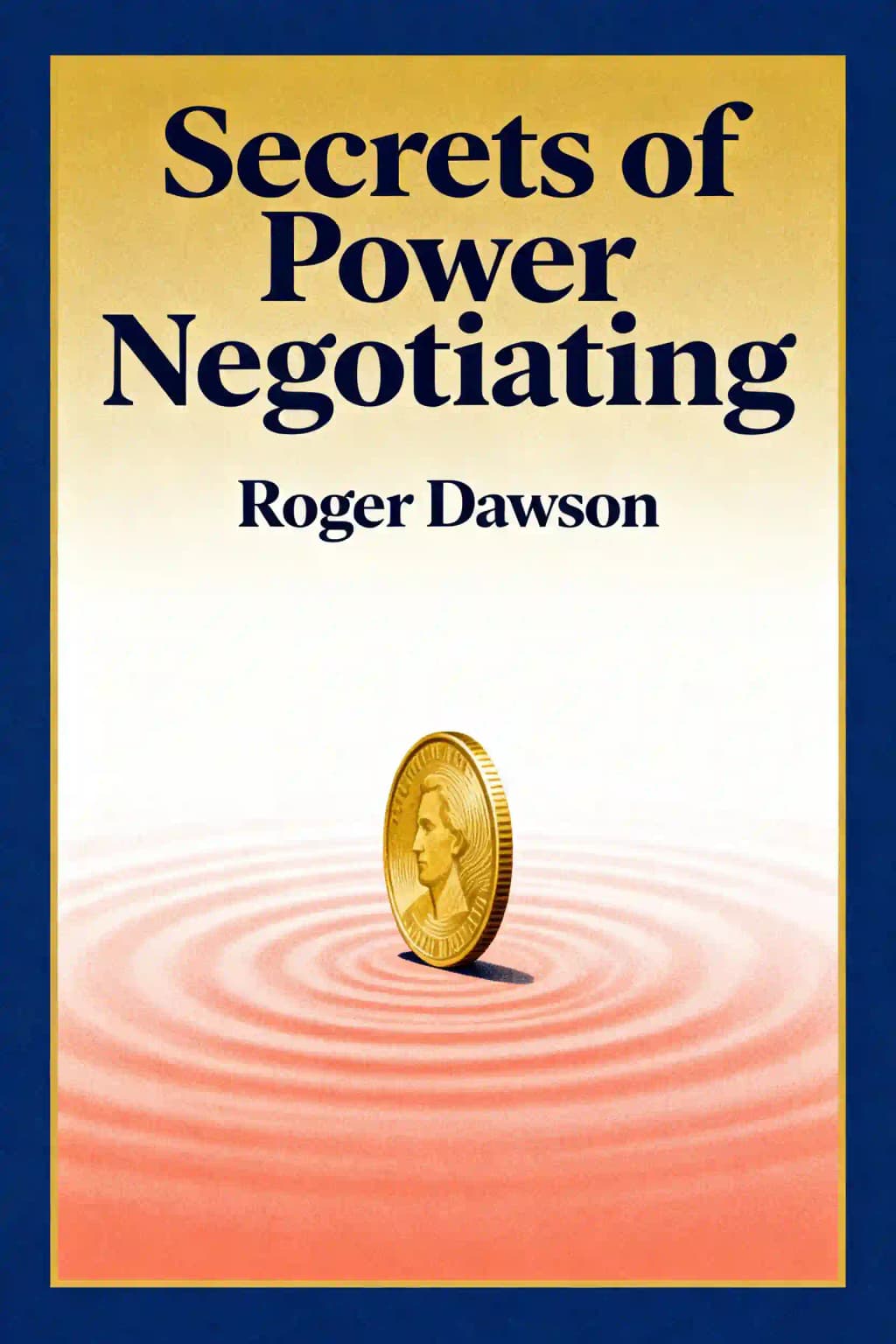
Have you ever watched someone negotiate a deal and wondered, "How did they pull that off?" You're not alone. Roger Dawson's "Secrets of Power Negotiating" has become the bible of effective negotiation for a reason-it transforms ordinary people into masterful deal-makers. This isn't just another business book; it's a cultural phenomenon that's sold over a million copies and been translated into 24 languages. Celebrities like Tony Robbins cite it as essential reading, and Fortune 500 companies make it required training for their executives. What makes this book so powerful is that it reveals negotiation not as an intimidating confrontation but as a strategic game with learnable rules. Like a chess grandmaster explaining opening moves to a novice, Dawson shows that success comes not from natural talent but from understanding the predictable patterns of human behavior. Whether you're haggling over a car, asking for a raise, or brokering international peace talks, these principles work universally-and mastering them might be the most valuable skill you ever develop.
2장
The Power of Asking for More Than You Expect to Get
One of the cardinal rules of negotiation is to always start with your Maximum Plausible Position (MPP)-the highest amount you could ask for while still maintaining credibility. This creates room to make concessions, prevents deadlock, and most importantly, might actually get you exactly what you ask for.
Think about it: have you ever been surprised when someone immediately accepted your first offer? That sinking feeling isn't coincidence-it's your brain telling you that you could have done better. By starting higher, you avoid this regret while simultaneously increasing the perceived value of what you're offering.
Many negotiators set their opening position too low out of fear of appearing ridiculous or unreasonable. This fear costs them dearly. I once consulted with a software company that routinely started negotiations at their "reasonable" price-only to discover through market research that competitors were starting 40% higher and still closing deals at prices well above my client's initial ask. By adjusting their MPP upward, they increased profits by millions without losing customers.
When establishing your MPP, remember to bracket your objective. If you want to sell your services for $5,000, and the buyer opens at $3,000, you should counter at $7,000. This positions your target price exactly in the middle, making it the natural landing spot if you "split the difference" later. This technique works in negotiations of all sizes-from giving your child allowance money to international loan negotiations worth billions.
The bracketing principle requires getting the other person to name their price first. When they ask, "How much do you want for this?" respond with, "Well, I'm not sure. What did you have in mind?" This gives you the advantage of positioning your counter-offer appropriately. As negotiations progress, you can make proportional concessions while keeping your target bracketed.
Remember: you can always come down in price, but you can never go up. By starting with your MPP, you give yourself room to make concessions that cost you nothing while making the other side feel they've won something significant.
3장
The Psychology of Negotiation: Never Say Yes to the First Offer
Even when presented with a dream offer that exceeds your expectations, saying "yes" immediately triggers two devastating psychological reactions in the other party: "I could have done better" and "Something must be wrong." This happens regardless of price point or context-whether you're buying a car or negotiating international treaties.
I once bought 100 acres of land for far less than market value, yet still found myself thinking I could have gotten it for less. This reaction is automatic and universal. We form mental pictures of how negotiations should unfold, and when they deviate by being too easy, suspicion immediately follows.
Consider what happens when a car seller immediately accepts your lowball offer. Instead of celebrating your negotiating prowess, you'll worry something's wrong with the vehicle. The same principle applies in business deals, family negotiations, and international diplomacy.
This psychological principle is so powerful that even experienced negotiators struggle to overcome it. Years ago, a magazine salesman offered me advertising space at $2,000. I quickly negotiated him down to $800, but couldn't shake the feeling I could go lower. Using the Higher Authority gambit (claiming my board needed to approve), I countered with $500, which he immediately accepted-leaving me feeling cheated despite getting a 75% discount!
Years later, that salesman heard me tell this story at a conference and thanked me for explaining how his tendency to jump at quick deals was undermining his credibility. By understanding this principle, you can avoid the same mistake.
The solution is simple but counterintuitive: even when receiving an excellent offer, express some reluctance. Take time to consider it. Ask for small additional concessions. This satisfies the other party's psychological need for a proper negotiation "dance" and prevents them from experiencing buyer's remorse.
Remember that while this is almost a universal rule, there are rare exceptions-like when someone's pointing a gun at you demanding your wallet! In normal circumstances, however, patience and restraint when receiving good offers will lead to better outcomes and more satisfied counterparts.
4장
Physical Reactions That Win Negotiations: The Power of the Flinch
Always flinch-react with shock and surprise-at the other side's proposals. This seemingly simple physical reaction can save you thousands of dollars in negotiations. When someone makes an offer, if you don't appear shocked, they'll immediately think they could have done better and keep pushing for more.
This works because approximately 70% of people are visual negotiators who believe what they see more than what they hear. Your physical reaction sends a powerful message that words alone cannot convey.
I've seen the flinch work countless times in real-world situations. Wine stewards drop prices by $5 when customers visibly react to menu prices. Car salespeople reduce costs by thousands simply from a visible reaction of surprise. Even over the phone, gasping in shock can be remarkably effective.
A speaker who attended my seminar tried this technique when offered $1,500 for a speech-he flinched and said he couldn't possibly do it for that amount. The training director immediately raised the offer to $2,500, giving him an extra $1,000 profit in just 15 seconds.
The flinch works because it creates doubt in the other person's mind about their offer. It makes them wonder if they've made a serious miscalculation, which often leads to immediate concessions without you having to say another word.
Don't dismiss this technique as childish or manipulative-it's simply an honest communication of surprise at terms you find unacceptable. Even sophisticated negotiators use it because it works across cultures and contexts. Japanese business executives might cover their reaction better than others, but they're still watching for your response to their proposals.
Practice your flinch until it becomes natural-raised eyebrows, sharp intake of breath, perhaps a slight backward movement. Use it consistently when presented with initial offers, and you'll find it becomes one of your most valuable negotiating tools, often earning you concessions before the real negotiation even begins.
5장
Creating Win-Win Solutions: The Art of Non-Confrontational Negotiation
What you say in the first moments of negotiation sets the climate for everything that follows. Many negotiations fail because they begin with confrontation rather than collaboration. Attorneys typically open with threats: "If you don't settle this case, we'll tie you up in court for years." This approach immediately triggers resistance.
Instead, when someone takes a position you disagree with, use the Feel, Felt, Found formula: "I understand exactly how you feel about that. Many other people have felt exactly the same way. But what we've found is..." This approach diffuses the competitive spirit because you're agreeing rather than arguing.
This works because of a fundamental human psychological principle: when someone pushes against you physically, you naturally push back-and the same happens in verbal confrontations. By first acknowledging their position, you prevent this defensive reaction.
The Feel, Felt, Found technique also gives you valuable thinking time when caught off-guard by hostility. For example, if a buyer says your price is too high, don't argue-say "I understand how you feel. Others felt the same way, but they found we offer the best value in the marketplace." This approach prevents the other person from becoming defensive about their position.
Creating win-win solutions requires keeping multiple issues on the table. When negotiations narrow down to a single issue (like price), someone must win and someone must lose. By maintaining several negotiable elements, you can make trade-offs that satisfy both parties.
During the Cold War, the Reagan administration broke a deadlock over exchanging a Soviet spy for an American journalist by introducing the additional release of Russian dissidents, allowing both sides to claim victory. If you find yourself deadlocked, try "expanding the pie" rather than slicing it by adding more issues to the negotiation.
Remember that people don't all value the same things. We tend to assume others prioritize what we prioritize, but this isn't true. The key question isn't "what can I get from them?" but "what can I give them that won't take away from my position?" When you give people what they want, they'll give you what you want.
6장
Strategic Gambits: Handling Authority and Making Concessions
One of the most frustrating negotiating situations is dealing with someone who claims they lack decision-making authority. This is actually a powerful negotiating tactic rather than a true limitation. When the author was a real estate company president, he regularly used his board of directors as a "higher authority" to extract additional concessions after seemingly finalizing deals.
Counter-intuitively, having complete decision-making authority actually puts you at a disadvantage in negotiations. When the other side knows you can make the final decision, they only need to convince you. However, when you claim to need approval from others, they must make an offer compelling enough that you'll enthusiastically champion it to your "higher authority."
To counter this gambit, first try removing it before negotiations begin by asking if they can decide today if your proposal meets their needs. If they still claim to need approval, follow three steps: appeal to their ego ("You seem like you have a lot of influence there"), get their commitment to recommend your proposal ("If I can meet your needs, will you recommend this to your committee?"), and use the qualified "subject to" close ("Let's agree on terms subject to final approval").
Another crucial strategy is the Trade-Off Gambit. Whenever the other side asks for a concession, automatically ask for something in return: "If we can do that for you, what can you do for us?" This stops the grinding-away process where people keep coming back for more concessions.
Even when you're eager to grant a request (like delivering forklifts early when they're already in your warehouse), still ask for something in return. They might offer valuable concessions like increased deposits, early payment, or future business. This gambit also elevates the value of your concession so you can reference it later: "Remember when I inconvenienced myself to help you?"
When making concessions, be careful not to establish predictable patterns. Avoid making equal-sized concessions (which encourages continued pushing), making a large final concession (which creates hostility), giving away your entire negotiating range upfront, or starting with small concessions that grow larger. The most effective approach is to start with a reasonable concession that might close the deal, then make progressively smaller concessions to signal you're reaching your limit.
7장
Time and Information: The Hidden Pressure Points of Negotiation
Time creates tremendous pressure in negotiations. Vilfredo Pareto's 80/20 principle reveals that 80 percent of concessions occur in the last 20 percent of available negotiation time. This pattern repeats across different contexts-from sales teams where 20 percent of people generate 80 percent of results to classrooms where 20 percent of students cause 80 percent of problems.
People naturally become more flexible as deadlines approach. Children instinctively understand this when asking parents for money at the last minute. In international diplomacy, the Vietnamese negotiators successfully exploited American time pressure during the 1968 Paris peace talks by deliberately wasting weeks discussing table shapes while Americans faced election deadlines.
Never reveal your deadlines to the other side-they'll delay substantive negotiations until your time runs short. After investing significant time in negotiations, your subconscious begins pushing you to reach agreement rather than walk away empty-handed. Power Negotiators disregard sunk costs and evaluate deals based on current terms, not past investment.
Equally important is information power. Just as governments invest billions in intelligence before arms talks, negotiators must gather information about the other side. Despite the obvious importance of information, most people jump into negotiations without adequate research about the other side's position, needs and intentions.
To gather information effectively:
1. Don't be afraid to admit what you don't know. Most people are reluctant to acknowledge knowledge gaps, which severely limits their negotiating power.
2. Ask direct questions, even uncomfortable ones. Good reporters ask questions they know might not be answered because the reaction itself provides information.
3. Use open-ended questions that can't be answered with yes/no to yield more information.
4. Choose your location strategically. Corporate headquarters, surrounded by trappings of power and chains of protocol, is the least effective place to gather information.
5. Talk to people who've done business with them before-even competitors will often share information if you're willing to trade some in return.
Remember that questions serve multiple purposes beyond information gathering: to criticize the other side, make them think, educate them about your strengths, declare your position, get commitments, or pull sides closer together.
8장
The Walk-Away Power: Your Ultimate Negotiation Strength
Of all negotiating pressure points, Walk-Away power is the most potent. The moment you pass the point where you're willing to walk away from negotiations, you've lost. Whether buying a car, hiring an employee, or selling a product, once you think "I must have this," you surrender your leverage.
My daughter Julia learned this lesson when buying her first car. She fell in love with it and wasn't prepared to leave without it. By teaching her to walk out twice during negotiations, we saved $2,000-essentially earning $1,000 per hour. Remember: the objective isn't actually walking away, but making the other side believe you will if necessary.
You develop Walk-Away power by creating alternatives. The side with the most options has the most power. Before making an offer on your dream home, find two others you'd like equally well. When buying a boat, identify three that would satisfy you. This doesn't mean you won't get your first choice-it means you'll negotiate from strength.
A real estate broker once demonstrated perfect Walk-Away power when I approached him to list my properties. Instead of eagerly accepting, he said "I might be prepared to represent you" and insisted I come to his office. During our meeting, he demanded a nine-month listing. When I balked, he simply closed his folders, stood up, and said "I guess we won't be doing business together." This immediately put me in the position of negotiating to keep him!
While projecting Walk-Away power is crucial, how you communicate it matters tremendously. Never use the antagonizing phrase "take it or leave it." Instead, use gentler expressions like "Sorry, but that has to be my walk-away price" or "We never deviate from our published price list."
The harsh approach even has a name-Boulwarism, after GE's labor relations head Lemuel Boulware, whose inflexible "take it or leave it" stance led to labor disputes and legal trouble in the 1960s. A better approach is using Higher Authority: "I'd love to do better, but the people at head office won't let me."
Remember that being willing to walk away is your most powerful negotiating position. It's not about actually leaving, but about having the confidence and alternatives that make walking away a viable option.
9장
Cross-Cultural Negotiation: Understanding Different Approaches
Americans often struggle when negotiating internationally because they focus intensely on "the deal" in ways that puzzle other cultures. Unlike societies that rely on community relationships and trust, Americans place their faith in legally binding contracts, constantly asking "Will it hold up in court?"
This deal-centric approach contrasts sharply with most non-Americans, who see contracts as merely expressions of relationships at a particular moment. Koreans might consider a six-month-old contract meaningless if conditions have changed. Arabs often view signing a contract as the beginning of negotiations rather than the conclusion.
Cultures vary in how much importance they place on relationships versus contractual details. High-context cultures (Asia, Middle East, Russia) prioritize relationships, while low-context cultures (United States, Scandinavia, Germany) focus on the deal itself. American English is distinctly low-context-words mean the same regardless of setting. When an American says "quite good," it clearly means very good, but when an Englishman says the same phrase, the meaning depends entirely on context.
Americans rush to business faster than anyone else, typically exchanging brief pleasantries before diving into deal details. Non-Americans may require days, weeks or months of relationship-building before feeling comfortable discussing business. Iranians might want to drink tea for hours while evaluating potential partners. Japanese business hosts sometimes socialize extensively, occasionally pushing visitors against time deadlines, forcing rushed negotiations in airport limousines.
When dealing with non-Americans, Americans should reverse their natural order: observe first, listen second, and speak last. Americans make two critical mistakes internationally: overemphasizing the deal rather than relationships, and rushing to business too quickly.
Understanding specific cultural negotiation styles is crucial:
• The English are extremely polite, value privacy, and avoid personal questions. Conversations with strangers begin with weather comments, and business moves at a more relaxed pace than in America.
• French businesspeople value eloquence and logical thinking over emotional appeals. Business discussions during meals are considered inappropriate-appreciate their cuisine instead.
• Germans are low-context negotiators who focus on detailed deals rather than relationships. They're punctual, formal, and maintain professional distance.
• Asians prioritize relationships over contracts, viewing agreements as beginnings rather than endings. Chinese follow the principle "He ging, he li, he fa"-first examine relationships, then what's right, then the law.
• Japanese are reluctant to say "no." When they say "it will be difficult," they mean no. They value group harmony (Wa) over individuality, with decisions made collectively rather than by individuals.
By understanding these cultural differences, you can adapt your negotiation style to build trust and achieve better outcomes across borders.
10장
The Personal Power Dynamics of Negotiation
Power, control, and influence lie at the heart of any interpersonal situation. In negotiating, the person with the most influence gains the most concessions. While power has earned a negative reputation (as Lord Acton noted, "Power tends to corrupt and absolute power corrupts absolutely"), it's not power itself but the abuse of power that corrupts.
Power Negotiators understand eight sources of personal power:
1. Legitimate Power comes from having a title or position. People are naturally more intimidated by someone with the title of vice president or doctor. Don't be intimidated by others' titles when negotiating-some titles are meaningless and shouldn't influence you.
2. Reward Power is the ability to provide benefits. When you convince others you can reward them, you gain influence. This explains why larger sales feel more intimidating than smaller ones-the potential reward is greater.
3. Coercive Power is the ability to punish. When someone can penalize you, they gain power over you. The most effective negotiators apply both Reward and Coercive Power subtly, implying potential unpleasantness if they don't get what they want, then quickly switching to showing gratitude when the other side concedes.
4. Reverent Power comes from having a consistent set of values that never waver. Like religious leaders who gain trust through unwavering principles, negotiators who stand firmly by their values earn deep respect. When someone says, "We don't do business that way-our founder established this policy 28 years ago," it's difficult to push back.
5. Charismatic Power is the ability to capture another person's imagination, inspiring their support and devotion. The essence of charisma isn't mysterious but consists of specific traits: a flair for the dramatic, effective rhetoric, visible personality, energy, and determination.
6. Expertise Power develops when you project greater knowledge in a particular area than others possess. We naturally defer to experts like doctors, mechanics, and plumbers. This form of power grows increasingly important as our world becomes more complex.
7. Situation Power emerges when someone normally powerless gains authority over you in a specific context-like the post office worker who can accept or reject your package.
8. Information Power operates through both sharing and withholding knowledge. Sharing information creates bonds, while withholding information creates mystery and intimidation.
Power Negotiators understand these dynamics and use them strategically. The most effective negotiators combine multiple power sources-like Reverent/Charismatic/Expertise Power-to create influence without intimidation. By understanding these power dynamics, you can both project your own power and avoid being unduly influenced by others.
11장
Becoming a Power Negotiator: Essential Characteristics and Attitudes
Power Negotiators possess five essential characteristics: the courage to probe for information, patience to outlast opponents, courage to ask for more than expected, integrity to seek win-win solutions, and willingness to listen effectively. These traits distinguish skilled negotiators from those who settle too quickly or miss crucial opportunities.
Like investigative reporters, Power Negotiators ask tough questions-even those they expect won't be answered-because reactions provide valuable insights. They verify information by asking the same question to different people or at different times to check consistency, never settling for only what the other side chooses to reveal.
Contrary to popular belief, good negotiators aren't tough and ruthless but patient people who refuse to let time pressure force poor decisions. The example of the Vietnam peace talks illustrates this-while the American negotiator rented a hotel suite week-to-week, his Vietnamese counterpart leased a countryside villa for two and a half years.
As Henry Kissinger noted, "Effectiveness at the conference table depends upon overstating one's demands." Fear of ridicule often prevents negotiators from making bold proposals, but Power Negotiators must overcome this fear to comfortably advance their maximum plausible position without apology.
Beyond these characteristics, Power Negotiators develop key attitudes that support their success:
1. Comfort with ambiguity - They relish entering negotiations without knowing if they'll emerge heroes or failures. This comfort with uncertainty comes naturally to people-oriented individuals but challenges those who prefer things to people.
2. Resilience - The ability to recover from damage, not merely withstand it, is crucial. Despite careful planning, negotiations rarely proceed as expected, requiring the capacity to bounce back from setbacks.
3. Competitive spirit - Good negotiators possess an intense desire to win, viewing negotiation as a game where they pit their skills against others. The more you approach negotiating as a competitive game, the more courageous and successful you'll become.
4. Comfort with conflict - Power Negotiators aren't restrained by needing to be liked. Since negotiation inherently involves managing conflict, those with an exaggerated need for acceptance make poor negotiators.
Finally, Power Negotiators embrace two fundamental beliefs that transform their approach:
1. Negotiating is always a two-way affair - We typically overestimate our weakness and underestimate the other party's needs. Each side only knows their own pressures, not the other's, creating a false impression of weakness.
2. "No" is simply an opening negotiating position - To Power Negotiators, the word "no" is never a refusal but simply a starting point. Children instinctively understand this concept-when parents firmly refuse something, children don't hear a final decision but merely an interesting opening position.
By developing these characteristics, attitudes, and beliefs, anyone can transform themselves into a Power Negotiator capable of achieving win-win outcomes in any situation.
12장
The Ultimate Win-Win Philosophy: Everyone Can Leave Happy
Throughout this journey into Power Negotiating, one principle remains paramount: successful negotiation isn't about dominating others but achieving wins for both sides. People give you what you want not when overpowered, but when you give them what they want. Every negotiation, regardless of subject, can result in both sides winning.
Win-win negotiating means moving beyond trying to dominate or trick the other party to instead develop mutually beneficial solutions. True win-win outcomes can occur even when both sides believe they've outmaneuvered the other-as long as neither wakes up later feeling cheated.
The most effective way to achieve this is to avoid narrowing negotiations down to a single issue. When only one issue remains (like price), someone must win and someone must lose. By keeping multiple issues on the table, you can make trade-offs that satisfy both parties.
Remember that different people value different things. We tend to assume others prioritize what we value, but this isn't true. Neophyte negotiators mistakenly believe price is always the dominant issue, when many other elements matter: quality, delivery timing, management supervision, payment terms, financial strength, and workforce support.
Don't be too greedy. Trying to get the last dollar off the table is expensive in the long run. A seminar attendee shared how he acquired a company because the competing buyer, after negotiating hard, made one final nibble asking the seller to put new tires on a pickup truck before transferring title. This small request pushed the frustrated seller over the edge, causing him to refuse the sale.
Put something back on the table when the negotiation is over. This doesn't mean offering additional discounts, but rather doing something more than promised. Give extra service or care more than required. The little extras they didn't have to negotiate for often mean more than everything they did negotiate for.
Five benchmarks indicate successful negotiations: everyone feels like a winner; both sides care about the other's objectives; the process was fair to both sides; the process was enjoyable enough that parties would negotiate together again; and both sides are eager to follow the agreement.
Remember the Power Negotiators' Creed: "The most important thought when negotiating is not 'what can I get them to give me?' but 'what can I give them that wouldn't take away from my position but may be of value to them?'"
By mastering these principles, you can transform every interaction into an opportunity for mutual gain. Everything you want is controlled by someone else, and these skills allow you to reach agreements advantageous to everyone while managing conflict effectively. In a world increasingly defined by conflict, these skills may be the most valuable you ever develop.