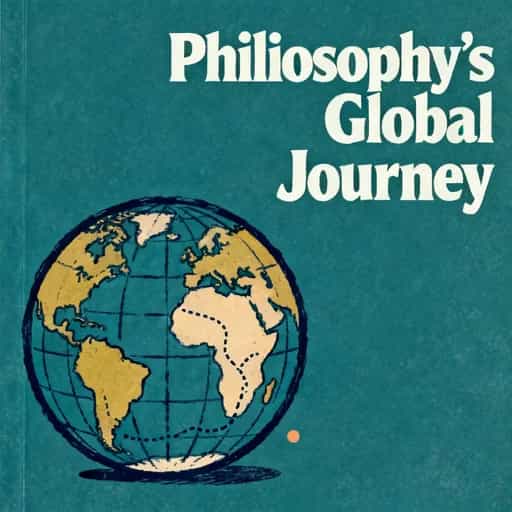
The restless spark of the first questions
In the sixth century BCE, in the sun-drenched coastal city of Miletus, a man named Thales looked at the world and did something radical—he stopped telling stories . Before him, if the sea raged, it was Poseidon’s temper; if the crops failed, Demeter was mourning. But Thales proposed a different kind of answer. He suggested that despite the dizzying variety of things we see—trees, clouds, stones, and skin—everything was actually made of one single, fundamental substance: water . He was wrong about the water, of course, but he was right about the possibility of a rational explanation. That moment marks the birth of Western philosophy, a tradition built on the "love of wisdom" or philosophia, which shifted our gaze from myth to reason . It matters to you because every time you ask "what is the truth here?" or "how should I actually live my life?" you are stepping into a stream that Thales started nearly three millennia ago .
This journey is more than a list of dead names—it is the story of how we learned to think about ourselves. From those early Pre-Socratics who obsessed over what the world was made of, to the massive "plot twist" of Socrates, who turned the lens inward to ask what it means to be a good person, philosophy has always been a restless, human pursuit . You’ll find that the history of Western thought isn't just a straight line; it is a series of internal ruptures and fragments where one era tries to "ruthlessly break" with the one before it . In this episode, we are going to trace that evolution, seeing how the ancient foundations gave way to the tension between faith and reason in the Middle Ages, the explosive individual liberty of the Enlightenment, and finally the skeptical, fragmented world of the contemporary philosophy we inhabit today .
It is a journey that moves from the certainty of universal truths to a place where we question if "truth" even exists in the way we once thought . Understanding this arc helps you see the invisible architecture of your own mind—the hidden assumptions about law, science, and morality that you’ve inherited from people who lived thousands of years ago . So, let's start at the very beginning, with three men in ancient Greece who built the mountain that every philosopher since has been trying to climb.
















![A Brief Outline of the World's Philosophies [33+ Schools of Thought] - Philosophy Buzz](/_next/image?url=https%3A%2F%2Fd1y2du6z1jfm9e.cloudfront.net%2Fassets%2Fpodcast%2Fpurple.png&w=1024&q=50)