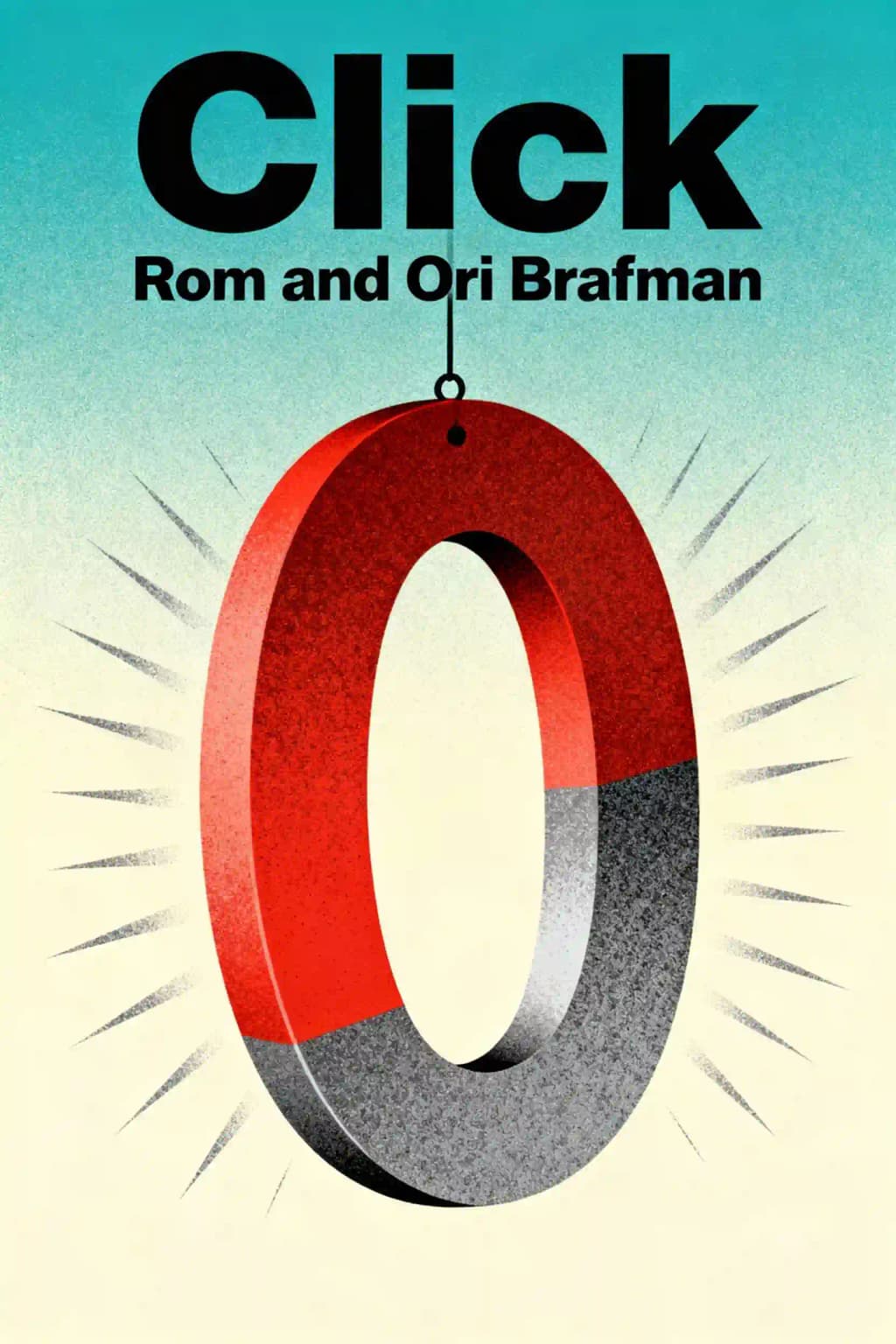
Click
the magic of instant connections
Overview of Click
Discover why "Click" unlocked the science behind those rare, magnetic moments when strangers instantly connect. The Brafman brothers reveal the psychological triggers behind chemistry that's transformed team-building strategies worldwide. What invisible force makes some people "click" immediately while others never connect? The answer might change your relationships forever.

Key Themes in Click
- instant rapport
- vulnerability paradox
- neurological chemistry
- social reciprocity
- interpersonal synergy
Quotes from Click
Connection feels so rewarding.
Vulnerability invites reciprocity.
Clicking elevates our personal abilities.
Isolation causes genuine physical distress.
Vulnerability actually transforms relationships.
Characters in Click
- Jim WestPhysicist at Bell Labs who co-invented the mic
- Gerhard SesslerGerman immigrant and physicist at Bell Labs
- Greg SancierPolice officer who used vulnerability in a crisis
- NadiaWoman who experienced an instant romantic connection
About the Author
About the Author of Click
Rom and Ori Brafman, authors of Click: The Magic of Instant Connections, are acclaimed experts in behavioral psychology and organizational dynamics. Ori, a Stanford MBA graduate and New York Times bestselling author, has written seminal works like The Starfish and the Spider—a foundational text on decentralized organizations adopted by the U.S. military and Fortune 500 companies—and Radical Inclusion, named among The Washington Post’s top leadership books of 2018.
Rom, a psychologist, brings clinical expertise to their collaborations, including Sway: The Irresistible Pull of Irrational Behavior, which explores decision-making biases through social psychology and economics. Their books have been featured in The Wall Street Journal, NPR, and Harvard Business Review and blend rigorous research with actionable insights into human behavior.
Click delves into the science of spontaneous connections, drawing on their combined backgrounds in psychology and organizational strategy. The brothers’ work has been translated into over 20 languages and cited in blockchain development, military strategy, and corporate training programs. The Starfish and the Spider alone has informed leadership frameworks worldwide, solidifying their reputation as pioneers in adaptive, human-centric systems.
Download Summary of Click
Get the Click summary as a free PDF or EPUB. Print it or read offline anytime.
FAQs About This Book
Click explores the science behind instant, meaningful connections (“click moments”) and identifies psychological factors like vulnerability, shared purpose, and environmental triggers that foster these bonds. The book combines research and real-world examples—such as hostage negotiators building trust through personal stories—to explain how rapid rapport impacts relationships and success.
This book suits professionals in networking roles, therapists, and anyone seeking deeper personal or workplace relationships. It’s ideal for readers interested in psychology, communication strategies, or improving social dynamics through science-backed methods.
Yes, Click offers actionable insights for fostering meaningful connections, supported by engaging stories and research. Its blend of psychology and practical advice makes it valuable for improving interpersonal skills, teamwork, and empathy in diverse settings.
The authors highlight five accelerators: proximity (shared environments), vulnerability (mutual openness), similarity (common ground), shared activities, and emotional resonance. These factors create conditions for rapid trust and engagement, as seen in examples like corporate teams bonding during collaborative projects.
Sharing personal struggles or emotions—like a negotiator discussing a family loss—builds trust quickly. This reciprocal openness breaks down barriers, enabling deeper rapport than superficial conversations.
Yes, the Brafmans argue that environments encouraging authenticity (e.g., team retreats) or asking probing questions (“What’s meaningful to you?”) can spark connections. Intentional vulnerability and active listening are key.
Notable examples include a hostage negotiator bonding with a criminal through shared stories, a basketball team improving via dorm-based camaraderie, and coworkers marrying after one dinner. These cases show how accelerators operate in high-stakes or everyday scenarios.
The book suggests fostering “click moments” through collaborative tasks, open communication, and team-building activities. Such strategies enhance trust, creativity, and productivity, as seen in companies that prioritize emotional resonance among employees.
Shared spaces (e.g., dorms, offices) naturally boost proximity and collaborative opportunities. The book emphasizes designing environments that reduce social friction, such as open-office layouts or structured icebreakers.
While Sway examines irrational decision-making, Click focuses on purposeful connection-building. Both blend behavioral research with narratives, but Click offers more practical tools for improving relationships.
Some reviewers note the concepts may oversimplify complex social dynamics. However, most praise its actionable advice and relatable examples, making it a popular choice for readers seeking tangible interpersonal strategies.
In an era of remote work and digital communication, Click’s insights on intentional rapport-building remain vital. Its strategies help bridge gaps in virtual teams and combat the isolation linked to modern tech-driven lifestyles.