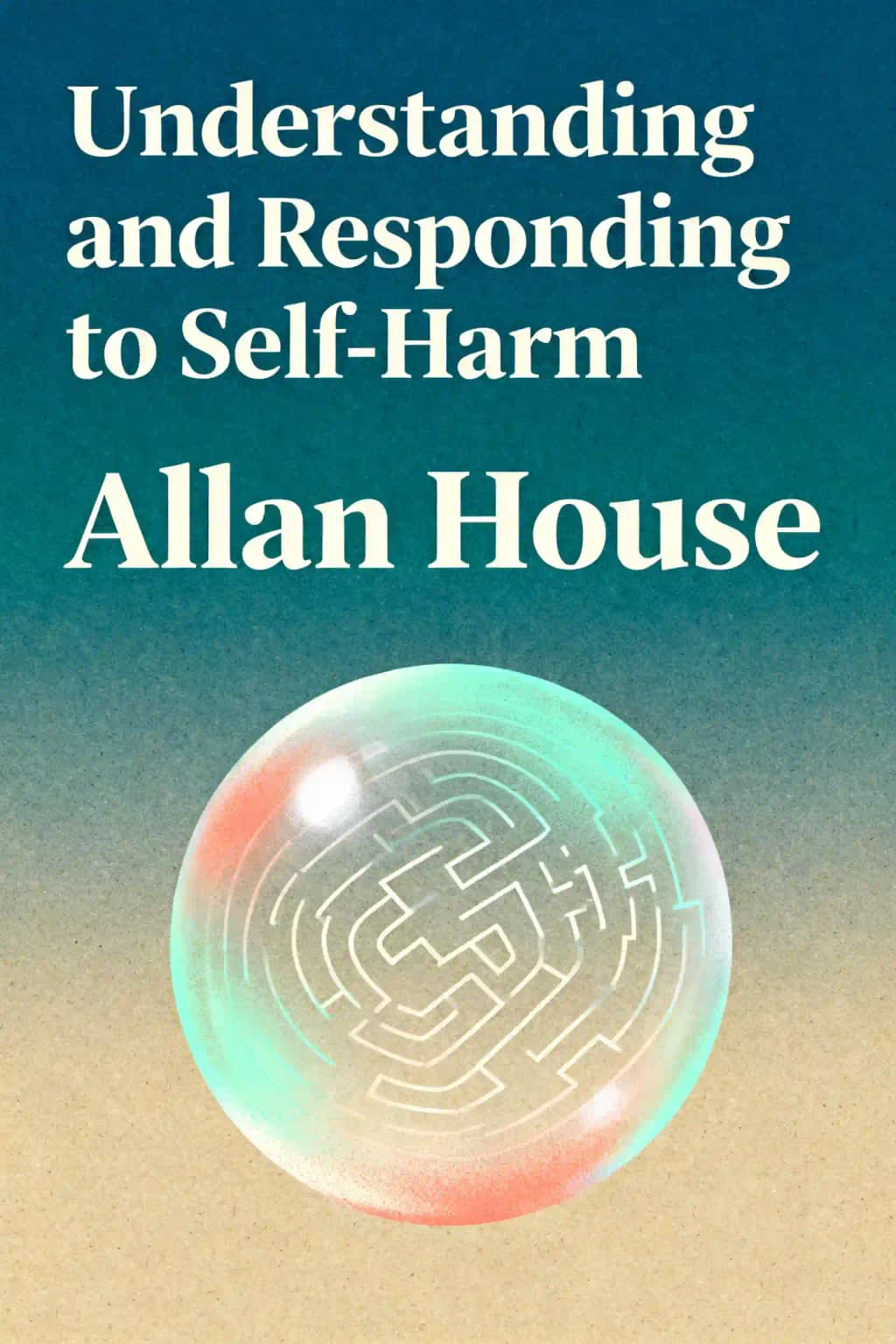
Understanding and Responding to Self-Harm : The One Stop Guide
Practical Advice for Anybody Affected by Self-Harm
Overview of Understanding and Responding to Self-Harm : The One Stop Guide
Allan House's groundbreaking guide demystifies self-harm beyond stereotypes, offering evidence-based strategies that mental health professionals widely endorse. Did you know it's transforming how we distinguish self-harm from suicide attempts? Discover why this compact 192-page resource has become essential for caregivers navigating this complex issue.

Key Themes in Understanding and Responding to Self-Harm : The One Stop Guide
- emotional regulation strategies
- non-suicidal self-injury
- distress tolerance
- coping mechanism development
- mental health stigma
Quotes from Understanding and Responding to Self-Harm : The One Stop Guide
Self-harm is an action, not an identity.
Don't assume whether someone who has self-harmed intended to die.
Self-harm remains a deeply personal response to genuine emotional pain.
Black-and-white thinking eliminates middle-ground possibilities.
Hopeless thinking limits one's ability to envision positive change.
Characters in Understanding and Responding to Self-Harm : The One Stop Guide
- Allan HousePsychiatrist and author with clinical experience
About the Author
About the Author of Understanding and Responding to Self-Harm : The One Stop Guide
Allan House is the author of Understanding and Responding to Self-Harm: The One Stop Guide and a respected authority in mental health literature. His work focuses on practical strategies for addressing self-harm, blending clinical insights with accessible guidance for both professionals and individuals affected by the issue.
House’s expertise is rooted in his dedication to demystifying complex psychological topics, making them actionable for diverse audiences. He has authored multiple books on mental health, including Reference Manual and House Physiology of Fertilization, which further establish his credibility in bridging academic research with real-world application.
Though details about his professional background are limited in public sources, his contributions to mental health education highlight a commitment to compassionate, evidence-based approaches. Understanding and Responding to Self-Harm has garnered significant attention, with a strong reception on platforms like Goodreads, where it holds a 3.89-star rating from over 140 readers.
House’s work remains a trusted resource for those seeking to navigate the challenges of self-harm with empathy and clarity.
Download Summary of Understanding and Responding to Self-Harm : The One Stop Guide
Get the Understanding and Responding to Self-Harm : The One Stop Guide summary as a free PDF or EPUB. Print it or read offline anytime.
FAQs About This Book
Understanding and Responding to Self-Harm by Allan House offers evidence-based guidance on self-harm, explaining its forms, root causes, and practical strategies for individuals, families, and professionals. It combines research with real-life case studies, addressing crisis management, healthcare navigation, and societal perceptions.
This book is essential for individuals struggling with self-harm, their loved ones, educators, and healthcare providers. It’s tailored for those seeking actionable advice on supporting others or managing their own distress, with sections specifically addressing primary care professionals like GPs.
Yes, it’s praised for its clear, jargon-free approach and practical tools like crisis-management checklists and communication strategies. The inclusion of anonymized patient quotes and clinician insights makes it a trusted resource for understanding self-harm beyond stereotypes.
House identifies self-harm as a coping mechanism for overwhelming emotions, a way to regain control, or a response to trauma. He notes that while often linked to distress, it can paradoxically provide temporary relief or a sense of empowerment for some individuals.
Key recommendations include:
- Avoiding judgment or pressure to stop immediately.
- Offering empathy and open communication.
- Encouraging professional help while respecting autonomy.
- Creating a safety plan with distraction techniques and emergency contacts.
While acknowledging overlap, House clarifies that self-harm often serves as a survival strategy rather than a suicide attempt. The book provides guidelines to assess risk and respond appropriately to both scenarios.
Strategies include:
- Using sensory distractions (e.g., ice cubes, elastic bands).
- Delaying actions with timed intervals.
- Reaching out to trusted contacts.
- Documenting triggers in a journal.
House challenges stigmatizing myths, emphasizing that self-harm spans all demographics and isn’t limited to “attention-seeking.” He advocates for compassionate public discourse and healthcare systems that prioritize holistic support over punitive measures.
Yes, it includes specific advice for GPs on conducting non-judgmental assessments, creating “visit checklists” for patients, and collaborating with mental health services. House draws from his liaison psychiatry expertise to bridge clinical and patient perspectives.
As a liaison psychiatry professor, House merges physical and mental healthcare insights. His focus on evidence-based, patient-centered strategies reflects decades of research into suicide prevention and medically unexplained symptoms.
It lists crisis hotlines, peer-support groups, and organizations like Samaritans and Mind. House also provides templates for safety plans and scripts to navigate healthcare consultations effectively.
Unlike purely academic texts, House prioritizes accessibility with actionable steps and relatable examples. It stands out for addressing both personal and systemic challenges, making it a versatile tool for diverse audiences.





