第1章
Saying No: The Forgotten Superpower of Our Time
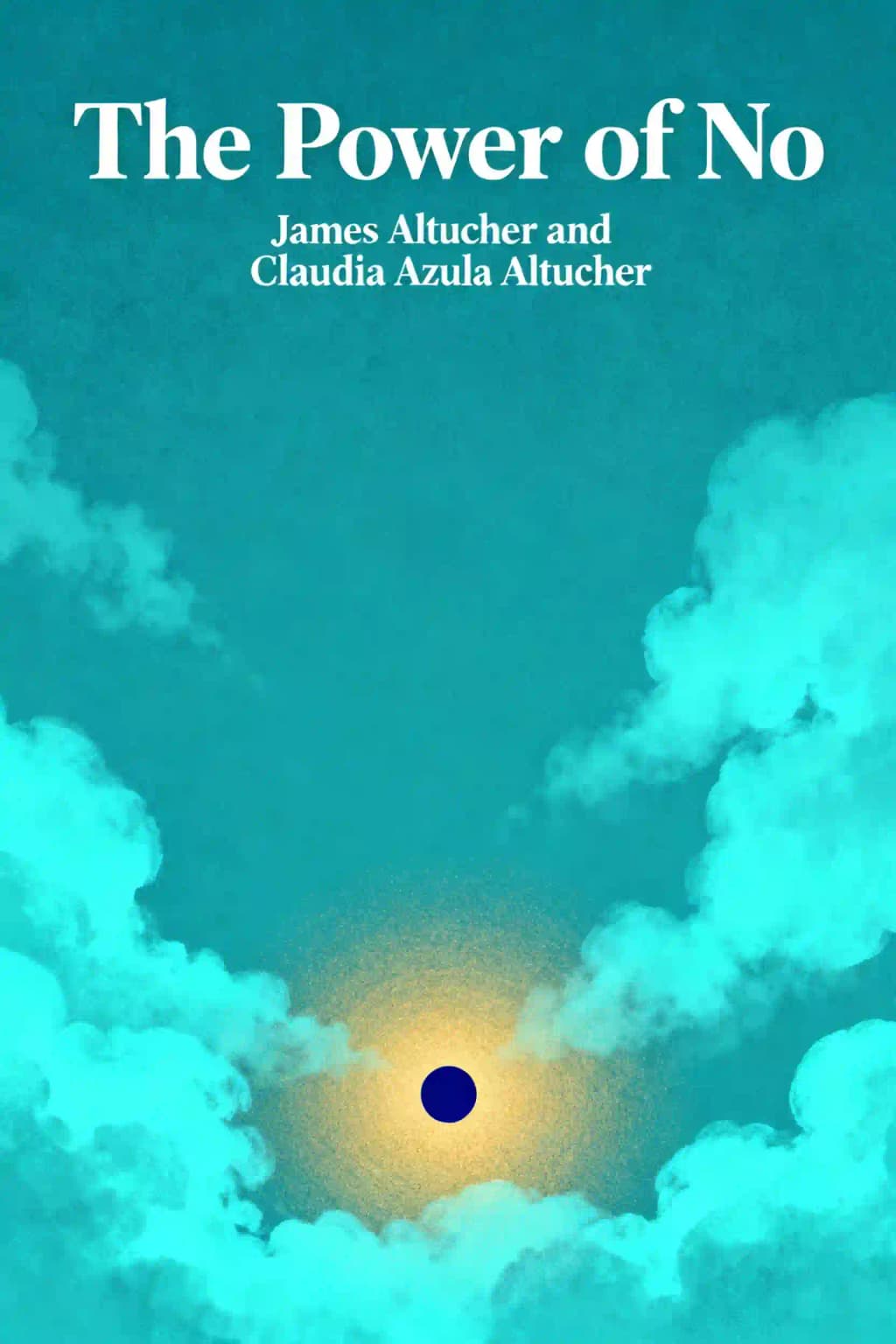
In a world that constantly demands our attention, energy, and resources, the most powerful word you can learn is "No." James and Claudia Altucher's transformative book has become a secret weapon for high-performers across industries, from tech CEOs to Hollywood actors. While most self-help literature focuses on what to say "yes" to, this revolutionary approach argues that true abundance only emerges when we first master rejection-of toxic relationships, unfulfilling careers, limiting beliefs, and even our own destructive patterns. The book's counterintuitive wisdom has garnered a cult following among those who've discovered that boundaries aren't selfish-they're the foundation of an authentic, purposeful life. As Arianna Huffington noted, "Learning when to say no might be the most important skill for thriving in today's overwhelming world."
第2章
Your Personal Bill of Rights: The Foundation of a Meaningful Life
Saying "no" often feels uncomfortable, even painful. We worry about disappointing others, missing opportunities, or appearing selfish. But what if rejecting certain things is actually your fundamental right as a human being? What if saying "no" is the very foundation upon which a meaningful life is built?
This is precisely what the Altuchers argue-that we all possess an inherent "Bill of Rights" that grants us permission to decline what doesn't serve us. These rights include defending your life from harm, choosing healthy relationships, allowing abundance by using your talents, asserting what you want, and choosing which stories to believe.
Think about it: how often have you agreed to something you didn't want to do, only to feel resentment building inside you like a slow-burning fire? How many times have you stayed in relationships, jobs, or situations that drained your energy because saying "no" seemed too difficult?
The power to decline isn't just about rejection-it's about protection. When you say "no" to what depletes you, you simultaneously say "yes" to what nourishes you. You create space for opportunities aligned with your authentic self rather than filling your life with obligations that leave you empty.
This power comes from a spiritual core within you-a wellspring of wisdom that knows what you truly need versus what others demand from you. By tapping into this source, you access an incredible reservoir of strength that can bring abundance, love, and ultimately peace when you say "no" to life's endless noise and distractions.
Remember: There is nobody you need to impress. There is no authority who can prevent you from exercising these rights. The journey begins with a single, powerful "no"-and leads exactly where you need to go, one step at a time.
第3章
The Life-Saving Power of Rejection
Have you ever been at a point where everything seemed hopeless? Where the weight of your circumstances felt so crushing that continuing seemed impossible? This is precisely when the power of "no" becomes not just important but literally life-saving.
James shares a profound moment when, after losing everything-his money, his family, his home-he contemplated ending his life. What saved him was a simple interaction with his daughter, who had awakened from a nightmare. He advised her to list things she was grateful for instead of counting sheep. Taking his own advice, he began cataloging what he was grateful for himself.
This practice became his bridge between nightmares and freedom, between delusion and creativity-the power that transforms death to life, poverty to wealth, and anger to compassion. By saying "no" to ending his existence, he discovered a pathway back to living.
The life-saving power of "no" extends beyond these extreme circumstances. It applies to everyday choices about health and longevity. Instead of adding more tasks to your life for "success" or "motivation," consider a simpler approach: don't do things that will cause you to die. Rather than focusing on complex anti-aging regimens, say "no" to the primary causes of death-smoking, high blood pressure, sedentary lifestyle, poor diet, obesity, excessive alcohol, and too much salt.
You don't need to eliminate everything at once-start with one thing, then add more. This approach can apply to any area of life-money, relationships, career. Instead of chasing ideals, make a list of things to avoid that would create your worst nightmares.
Even our mental state requires this protective power. Negative mental chatter becomes a constant commentary of doubts, anger about past wrongs, and anxiety about the future. Learning to say "no" to these thought patterns creates space for healing. When you catch yourself spiraling into negativity, treat yourself with the same love you'd show someone else, and extend that compassion to others.
This practice helps overcome lifelong programming about what's "right" and "wrong," creating space for abundance, wealth, love, and creativity-all starting with trust in your own inner wisdom and the courage to say "no" to self-destruction.
第4章
Boundaries in Love: The Path to Authentic Connection
Why do sex and love appear early in a book about saying "no"? Because being selective about relationships is crucial for accessing our creative forces. Without proper boundaries around sex and love-often influenced by Hollywood ideals-we risk derailing our creative lives and becoming inauthentic, changing ourselves to please others.
When our "no's" aren't in place, we become vulnerable to abuse and seek distractions like sex or misguided relationships when hurt. Filtering who we allow into our lives may be the most important factor determining happiness, as the wrong people drain us, preventing abundance and creativity.
Claudia shares her experience falling for Tim, a piano virtuoso who played Liebestraum for her. She projected qualities onto him that she wished she had herself while feeling creatively unfulfilled. Despite Tim's pattern of disappearing for months between their rare dates, she clung to delusions of marriage. After four encounters over two years, she finally found the strength to say "no" when he called again, hanging up despite her doubts.
This taught her three crucial lessons: if someone doesn't mean it the first time, they never will; to attract the best partner, she needed to become her best self; and to become her best self required uncovering her own creative talents. Years later, hearing Liebestraum while editing a yoga video of herself felt like cosmic validation of her growth and self-worth.
Through support groups, Claudia discovered the power of speaking desires aloud with witnesses present. After finding sobriety from love addiction, she told her group she was ready for a genuine relationship based on mutual love and respect. One month later, she met James through online dating, and they quickly recognized they were meant to be together.
This "big secret"-that vulnerability in expressing desires before witnesses creates space for higher power to enter-transformed her approach to relationships. With the right inner "no" to addiction, the "yes" we seek manifests naturally.
Sobriety from love addiction also enabled Claudia to recognize warning signs early in relationships. When meeting Jake for an online date, his confusing "joke" about canceling immediately signaled danger. Despite his attempts to make her feel guilty, she remained firm, explaining: "It's only when I haven't followed my intuition that things have gone completely wrong."
She advises that when someone reveals who they are through disrespectful or manipulative behavior, believe them the first time. Early warning signs typically indicate patterns that will continue. The key is recognizing these signals and honoring your gut feelings rather than ignoring them.
第5章
Freeing Yourself From False Narratives
We must reject the false narratives others impose on us to find our authentic path. Everyone-from scientists to economists to family members-is frequently wrong about what's best for us, yet they confidently plan our lives. Rather than wasting energy arguing with them, we can simply choose not to listen and follow our own unique journey instead.
When we agree to do things we don't want to do, we develop resentment that burns inside us like a fire. Family relationships-often our greatest earthly challenge-are where we first practice our assertive "no." Though family will fight our boundaries with emotional, mental, and even spiritual manipulation, every major religious tradition contains stories of individuals who had to reject family expectations to find their true path.
The fundamental rule is simple: don't do anything you don't want to do. Standing up for what's right for you in this moment is how you discover who you truly are.
Most people are modern slaves, working jobs where their freedom is severely limited. Your salary goes to mortgages, student loans, and basic needs, leaving little for yourself. You wake early, work hard, come home late, and feel stuck. The workplace regulates your behavior, speech, dress, and creativity. You can't even ask for more money without fear.
But there are alternatives. You can make more money by offering services independently. Start exploring what parts of your life you can reclaim. Work on ideas daily by listing interests and reading about them. Exercise your idea muscle by writing down ten ideas every day. Don't waste energy being angry at coworkers-they're slaves too. Study those who've broken free, and plot your own escape to freedom and ownership of your time, work, and thoughts.
I have a tendency to agree to too many things, but I've learned to follow the "three No's and one Yes" rule. The first "No" is because you never have enough information initially. The second "No" comes when you know the person but not all the details. The third "No" gives you time to decide if you actually like this person. Only then should you consider saying "Yes."
This isn't about making people desperate-it's about reclaiming your power and ensuring relationships have proper respect. If someone walks away after any of your "No's," then a "Yes" would never have worked long-term anyway. The times I've lost money, become desperate, or damaged relationships were when I said yes too quickly, giving away my personal power.
第6章
The Compassionate No: Beyond Self-Protection
When Claudia's mother jumped to her death, a police officer blocked her from entering the scene. When she demanded entry, instead of enforcing authority, the officer's stance softened as he whispered, "You don't want to see this." His compassionate "No," delivered with honesty and understanding, saved her from deeper trauma.
This fourth level of "No" comes from honesty and recognizing our shared humanity. It's the "No" that makes us truly human-the bridge between animal and divine nature. It builds on the previous three levels: the first patched our wounds, the second redirected energy from addictions toward creativity, and the third helped us become individuals. Now our hearts are opening as we learn not to resist truth but flow with it, finding true abundance.
Before sleep, take five deep breaths and picture someone you're in conflict with. Remember we're all brothers and sisters here for a short time. Mentally ask for their forgiveness, and picture forgiveness in their face-this is actually forgiving yourself, since everything in your imagination reflects you. Through self-forgiveness, you learn to speak truth, which becomes powerful armor. Truth is the primal force behind nature and all our needs.
Rather than living as if it's your last day, which can lead to selfish behavior, try treating everyone else as if it's their last day. This simple shift makes you kinder, more attentive, and less likely to speak badly of others. You'll truly listen without interrupting, try to reduce others' stress, and help fulfill their dreams. Each person becomes an angel sent to teach you something, helping you escape mindless selfishness and notice others in a new light.
When you embrace honesty, unexpected changes occur. Some friends and family might stop speaking to you-a good sign you're transforming into your authentic self. People might question your sanity, asking if you're "killing yourself" because truth-telling seems so radical in our mask-wearing society. But speaking truth makes you stronger.
Over time, you'll attract a new tribe who recognize your authenticity. Others might call you names out of fear, but you'll be operating at a higher vibration. Eventually, people return because authenticity stands out, and they'll seek your advice as a source of integrity.
James grew up believing he needed to lie to be liked-thinking he needed achievements like getting into a good college or having money to hide his perceived flaws. He told elaborate lies to impress others, including claiming he stole money from his parents to gamble on horses when he actually spent it on movies and chess.
These lies stemmed from never feeling good enough while always wanting more, believing happiness waited on the next rung of the ladder. When a CEO later told him everyone thought he'd had a nervous breakdown, James realized that what looked like a breakdown to others was actually him shedding the facades and lies that had buried him. He wasn't nervous, broke, or down anymore-he was finally authentic.
第7章
Embracing Abundance: Saying No to Scarcity
James explains that the true power of an alchemist isn't turning dust into gold, but shifting perception from lack to abundance despite desperation and defeat. For 400,000 years, humans lived with scarce resources, but we've evolved beyond this mentality. The shift to abundance requires practice-noticing when scarcity thinking constricts your heart, then counting your blessings instead.
Claudia shares how after being fired with mortgage payments, car payments, debt and no savings, she stayed with her feelings, remained positive and accepted what was happening as exactly what she needed. The serenity prayer applies perfectly: accepting what can't be changed while having courage to change what can.
James describes feeling trapped in a corporate job with a rigid routine-struggling to get out of bed, playing chess all day, taking multiple coffee breaks, and arriving hours late to work. He explains that when we feel stuck, we often make destructive choices to shake things up-affairs, stealing, cutting corners, or backstabbing.
Instead, he offers a nine-step guide to getting unstuck: (1) List your complete routine in detail, (2) Change one thing in that routine daily, (3) Write a "things-I-did" list instead of a to-do list to recognize accomplishments, (4) Research something you were passionate about as a kid, (5) Network daily with someone new to learn about different routines, (6) Create something daily-even just a four-line poem or finger painting, (7) Practice the Daily Practice addressing all four bodies (physical, emotional, mental, spiritual), (8) Identify and face your fears, and (9) Read this chapter again tomorrow.
We have a love affair with luck, sometimes chasing it, sometimes being teased by it. Among chess players, poker players, and Wall Street traders, there's a saying: "Only the good players are lucky." People cursed with bad luck often accuse others of winning only through luck.
But luck isn't magic-it's earned through a formula: diversification plus persistence. Diversification means generating thousands of ideas and implementing the best 1-2%. Persistence means enduring failures punctuated by occasional successes.
To generate ideas requires energy, which comes from physical, emotional, mental, and spiritual health. This health depends on how much you control your own life versus how much others control you. When you respond to angry comments, stay in unhappy relationships, or engage in imaginary arguments, you sacrifice health, can't generate ideas, can't persist, get unlucky, and lose freedom.
In conversation, silences are good and pauses mean love. Rushing words shows fear and an inability to be present. Awkward silences create space for new things to happen, dissolving our prewritten scripts. The authors embrace silences despite occasional embarrassment, seeing them as vulnerable moments that reveal whether we can be at peace with someone without words. In our overly talkative society, silence offers refreshing space.
第8章
The Sacred Power of Silence
The static between radio stations comes from energy permeating the universe, leftover from the Big Bang. Similarly, our lives are bombarded with noise-negativity, fearful news, complaints, gossip, and aggression. We all want to tune to the right frequency where we can both listen to and create our own music, but this requires learning to block out the noise.
We can't eliminate noise completely-like the static from the Big Bang, it's always in the background. But awareness of its destructive power helps transform it into positive energy. We choose what information we let in and how we communicate, using words carefully because "words cast spells." Our purpose now is to cut out noise so divine whispers can enter through silence.
From silence, we move toward a higher-frequency life lived as a prayer-teaching by example, showing instead of telling, adding instead of detracting. James shares Gandhi's story of refusing to tell a boy to stop eating sugar until he himself had stopped for a week, demonstrating the importance of ensuring our own words are pure and true before asking others to change.
Claudia shares her transformative practice of sitting in silence for one hour daily, a discipline prescribed by an Eastern medicine practitioner when she was battling depression. Despite initial resistance, she committed to this practice after hearing about another patient with cancer who was advised to sit for eight hours daily.
She emphasizes that silence isn't meditation or yoga-it's medicine. Through consistent practice, she's discovered various yogic techniques to deepen silence: grounding visualizations that direct energy opposite to breath flow, allowing old feelings to surface and release, flushing the lungs through complete exhalation, clearing the subconscious through trataka (staring at a black dot), and kapalabhati (skull-shining breathing). These are tools, but the essence remains simply sitting in silence and being present.
Claudia recounts meeting Thich Nhat Hanh in New York, where she experienced profound emotional healing. During the event, monks and nuns first connected with their own pain before channeling "mother love" toward the audience. This vulnerability created a powerful shared experience of compassion as attendees allowed their emotional wounds to surface.
Claudia realized that without healing ourselves, we cannot help heal others. Walking through Thich Nhat Hanh's exhibition afterward, she was struck by his paintings with messages like "Flow like a river" and "One Buddha is not enough." She acknowledges her wish to truly understand that she is not her thoughts, recognizing that healing her wounds in silence is the path forward-where "deepest caves get flooded with universal light."
James redefines minimalism beyond material reduction to include "noise surroundings"-the sounds we hear, words we speak, and thoughts louder than actions. True minimalism means keeping our infinite inner space clean. Silence brings professional benefits-doctors, lawyers, and psychiatrists maintain confidentiality as a mark of professionalism. The silent professional stands at the pyramid's top, with experience underneath.
第9章
The Ultimate Surrender: Beyond the Self
There is no you, and there is no me-there is only one of us here. At higher levels of awareness, "No" means "clear discrimination"-the ability to distinguish when we're being pulled by ego into chatter, jealousy and judgment versus when we're being directed by the divine toward our calling.
We're all invited and wanted here. At the mountain's peak, delusions vanish, energy flows properly, creativity flourishes, and our actions bring deep satisfaction. Our talents serve humanity while our directives emerge from silence. We can't say yes until we experience the deepest No. This freedom comes from independence from others' opinions, flowing gently down the river of divine wisdom, detached from outcomes yet fully trusting.
Surrendering to live a life directed by divine forces is the ultimate goal of a person whose energy has risen. Inhale the entire world-your past, your future, everything. Exhale and let it all go. You have arrived.
When overwhelmed by life's challenges-debts, failed relationships, missed opportunities-we might feel like giving up. But this isn't surrender; it's actually the opposite, based on the illusion that we ever had control. We can't control the weather, who likes us, the moment of our death or birth, or what opportunities appear.
True surrender isn't passive resignation or trying to guilt-trip the universe into providing for us. It only works after you've said no to everything you're entitled to reject. Surrender begins with taking care of yourself-eating well, sleeping well, caring for your body, and refusing what harms you. This allows your creativity to roam free, your spirit to relax, and your body to have more energy. Surrender means giving yourself to the higher part of you that knows better.
Surrender exercises are clever tricks because your mind resists letting go of control. Our brains evolved with the singular mission of DNA replication and survival, not happiness. While we've created a technologically sophisticated world, our brains haven't caught up evolutionarily, leading to widespread unhappiness.
Meditation and silence help bypass the brain's control, allowing us to surrender to pure energy that knows what to do. Like trusting a road will take you to your destination while still taking each step yourself, surrender means giving up control of your story-your history, upbringing, possessions, dramas, and relationships-while continuing to move forward.
第10章
From No to Yes: The Path to Reinvention
After mastering the power of no, you're ready to deliver your unique energy to the world. The journey requires patience, as true reinvention typically takes five years and involves constant motion, either forward or backward. No matter your past accomplishments, reinvention starts from scratch, requiring mentorship through direct guidance, books, and learning to see everything as a teacher.
Reinvention begins with flailing exploration, progresses through networking and daily practice, leads to initial income by year three, a sustainable living by year four, and wealth by year five. The process requires patience, developing your "idea muscle" by writing ideas daily until creativity flows naturally, and starting immediately rather than waiting for perfect conditions.
Success comes from putting in 5,000-7,000 hours to become among the top few hundred people in any field. Follow your genuine interests-whatever you'd read 500 books about-and embrace both success and failure as teachers. Choose freedom over others' expectations, carve out time despite obligations, and understand that the highest creativity often comes from being an outsider looking in.
For those feeling stuck, practice gratitude to bridge your world with creative ideas; for networking, work through concentric circles from family to mentors; for those lacking skills, read extensively; for the shy, turn introversion into a strength; for the depressed, sit in silence daily; and for those surrounded by negativity, learn to say no to people who try to stop your reinvention.
The journey requires persistence-if something isn't working, keep going, as you can't see the end of the road in the fog, but you can always see the next step.
Death brings clarity-like the last day of school, it offers relief from all the things we no longer need to worry about. The beauty of autumn leaves, like dying words, can set our minds on fire with wisdom. We don't need to wait until death's door to access this perspective.
By practicing a "rebirth" exercise-imagining our own death, listing what we'll no longer worry about, loving ourselves for the life we've lived, and feeling the relief of the finish line-we can tap into profound wisdom right now. This isn't morbid; it's a way to access the clarity that comes when we strip away anxieties, regrets, and fears.
By regularly practicing this perspective, we make room for miracles that get crowded out by everyday concerns. In those moments of clarity, we become the wisdom of the universe.
第11章
The Ultimate Yes: A Life of Authentic Power
This book isn't about negativity-it's about you and the good things that happen when you learn to say no. By protecting yourself from harmful people and situations, shielding yourself from controlling stories and myths, and rejecting unhelpful inner conditioning, you open yourself to a new world filled with love, innovation, abundance, and creativity. This is the world you say yes to.
Claudia has noticed that whenever she's hurt herself, there was always a "no" she didn't respect. James has often said yes before being ready-to relationships he wasn't mature enough for or opportunities he squandered. Such premature yeses can lead to sickness, wasted energy, depression, and failure.
The Power of No is about building your power from the core outward, becoming a spiritual battery filled with creativity, abundance, maturity, and love. Then when you say yes, it's like dropping a pebble in the ocean-the ripples will change both the world and you.
James Altucher is a successful entrepreneur, chess master, spiritual teacher, and writer who has started and run more than 20 companies-some failed, several sold for large exits. He inspires people through events, books, and weekly Q&A Twitter sessions, addressing topics like stress, fear, anxiety, business, love, money, and relationships.
Claudia Azula Altucher is an author and teacher of yoga, meditation, and ancient spiritual principles. She authored 21 Things to Know Before Starting an Ashtanga Yoga Practice and writes for outlets like Thought Catalog, Mantra Yoga + Health magazine, and Elephant Journal. She also runs yoga and spiritual retreats throughout the country.
Together, they've created a powerful framework for reclaiming your life through the simple yet profound act of saying "no" to what doesn't serve your highest good-and in doing so, opening yourself to the infinite possibilities that await when you finally say "yes" to your authentic self.