第1章
The Art of Saying No Without Burning Bridges
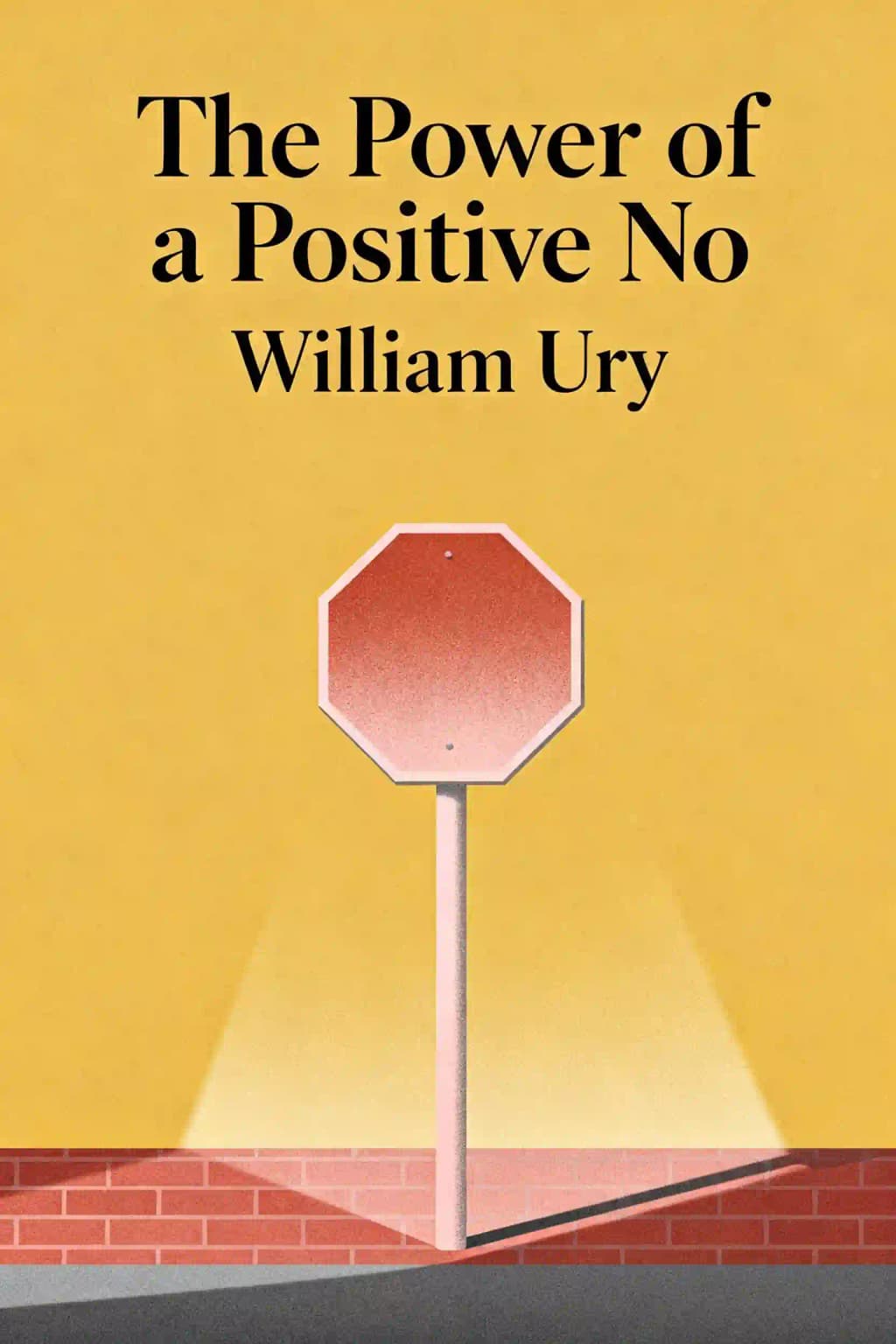
When was the last time you struggled to say No? Perhaps it was to a demanding boss, a persistent friend, or a child's unreasonable request. In those moments, did you feel trapped between preserving relationships and protecting your own needs? William Ury's "The Power of a Positive No" offers a revolutionary framework for this universal dilemma. As a Harvard negotiation expert who helped end civil wars and resolve corporate standoffs worth billions, Ury discovered that effective negotiation isn't just about getting to Yes-it's about knowing when and how to say No.
The book has become required reading in leadership programs at companies like Google and Amazon, with Warren Buffett crediting its principles for his investment success. Oprah Winfrey featured it on her "Books That Help Me Through" list, noting how it transformed her ability to set boundaries without guilt. What makes this approach so powerful is its counterintuitive premise: the most effective No comes from a deeper Yes to something more important. Let's explore how this simple yet profound insight can transform your personal and professional relationships.
第2章
The Three-A Trap: Why Saying No Is So Difficult
Why is saying No so challenging? Ury explains that we face a fundamental tension between exercising power (protecting our interests) and maintaining relationships (staying connected to others). This dilemma typically leads us into what he calls the "three-A trap":
We Accommodate, saying Yes when we should say No. Like the executive who remained silent about a $150 million deal he knew would fail, we sacrifice our interests to preserve relationships. This leads to resentment, burnout, and often poor outcomes for everyone involved.
We Attack, using power without concern for relationships. Like the state government and corporation whose mutual attacks destroyed $50 million in potential value, this approach often leads to destructive conflict and mutual loss.
We Avoid, saying nothing at all, hoping problems will disappear. This damages both personal health and organizational wellbeing as issues fester until they become crises.
Most commonly, we cycle between these approaches-accommodating until resentment builds, then attacking, then feeling guilty and retreating to avoidance-creating a destructive pattern. The Royal Dutch Shell oil reserves scandal of 2004 exemplifies how this trap operates in organizations, where executives avoided confronting misleading reporting practices until they exploded into public scandal.
The way out is the Positive No-a method that challenges the assumption that we must choose between power and relationship. Instead, we can use both simultaneously through constructive, respectful confrontation following a "Yes! No. Yes?" structure.
第3章
Uncovering Your Yes: The Foundation of a Powerful No
The first step in creating a Positive No is counterintuitive: instead of focusing on what you're against, root your No in what you're for-your core interests and values. This shift from reactive to proactive thinking provides both clarity and power.
Our biggest obstacle to saying No successfully isn't others but ourselves-our tendency to react emotionally without clear purpose. We accommodate out of fear and guilt, attack out of anger, or avoid out of fear. The Japanese story of the samurai and fisherman illustrates how stopping to reflect before reacting can be lifesaving. The samurai learned not to strike in anger, which later prevented him from mistakenly killing his wife and mother when he found them with another man (who turned out to be his son).
To uncover your Yes, start by "going to the balcony"-mentally stepping back from the situation to gain perspective. This creates space to listen to your emotions without being controlled by them. As Ury notes from mediating between Russian and Chechen leaders, taking a mental step back during accusations helped him stay focused on the peace process rather than becoming defensive.
Next, keep asking "Why?" to reveal your deeper interests. While your position is what you don't want, your interests are what you would like to say Yes to. Beneath our everyday wants lie fundamental needs-safety, life necessities, belonging and love, respect and meaning, and freedom. By continually asking why about your interests, you reach these bedrock needs.
Values-the principles guiding your life-provide powerful motivation for saying No. Standing for something larger than yourself often feels easier than defending personal needs. Ury cites Sherron Watkins, the Enron whistleblower who wrote to CEO Kenneth Lay about unethical accounting practices. Though her warning went unheeded, her courage in saying No to corruption was a Yes to her values of honesty and integrity.
After uncovering your interests, needs, and values, distill them into a powerful Yes!-your intention to protect what matters most. This crystallized intention provides the strength needed to deliver your No effectively.
第4章
Empowering Your No: Developing Your Plan B
Saying No requires confidence to stand up for yourself and power to follow through if others don't respect your boundaries. This means developing a Plan B-your best course of action if the other doesn't accept your No.
Plan B transforms fear into confidence by ensuring you're not dependent on the other's cooperation. Joan's marital situation illustrates this-by accepting separation as a possible Plan B, she gained the confidence to stop nagging her husband about their lack of communication. This new approach, expressing her needs without neediness, actually saved their marriage as her husband responded by opening up.
Jim Wier, CEO of Snapper lawn mowers, demonstrates the power of a solid Plan B when facing Wal-Mart's demands for price reductions that would compromise product quality. His Plan B was selling exclusively through independent dealers who understood and valued the product, enabling him to recover most of the business while preserving the brand's core values.
When your Plan B seems weak or nonexistent, take it as motivation to improve it. A U.S. company locked in a ten-year contract with an uncooperative European supplier initially felt helpless until they brainstormed alternatives. By discovering a closed Midwest plant with the necessary technology that could be purchased, they developed a viable Plan B. This contingency plan transformed their negotiating posture from demoralized to confident, ultimately helping them reach an agreement without even revealing their backup plan.
After developing your Plan B, reassess whether you should say No by asking three questions: Do I have the interest? (Is this worth the potential struggle?) Do I have the power? (Can I sustain my No with a sound Plan B?) Do I have the right? (While contracts may limit this in some cases, saying No is ultimately your fundamental birthright as a human being.)
第5章
Respect Your Way to Yes: Preparing Others to Accept Your No
The challenge after preparing yourself to say No is preparing the other to say Yes to your No. Most Nos are received as personal rejection, with the other hearing "You and your interests don't count." This often leads to closed ears and destructive responses.
Respect is the secret to preparing others to say Yes. Terry Dobson's story on a Tokyo train illustrates this power-an elderly Japanese man defused a violent drunk not through force but through respectful engagement, paying attention, listening, and acknowledging the man as a fellow human being.
Self-respect creates the emotional space needed to truly see others. By first paying attention to your own emotions, interests, and needs, you develop the capacity to extend respect to others. This fundamental respect isn't earned but given to all humans simply because they are human-even Winston Churchill maintained formal politeness when declaring war on Japan.
The simplest way to show respect is through attentive listening-hearing what others are trying to communicate and understanding their underlying interests and needs. Even when you don't feel like listening, especially if the other person is behaving offensively, listening prepares them to hear and understand your message.
Acknowledgment goes beyond listening to recognize the other person as a fellow human being with needs and rights. This doesn't mean agreeing with them or making concessions-it simply means treating them as a "somebody" rather than a "nobody." Bob Iger demonstrated this principle when he became Disney CEO by personally acknowledging Roy Disney's concerns and affirming his value to the company, effectively ending a shareholders' revolt that had plagued his predecessor.
Starting with acknowledgment sets a constructive tone for difficult conversations. When saying No, don't assume others will understand your constructive intentions-begin positively. A customer who prefaced rejection with "You did a great job putting together that presentation" made the recipient feel appreciated despite the No.
第6章
Expressing Your Yes: The First Step in Delivering Your No
Delivering a Positive No follows a three-part structure: an affirmation (Yes!), establishing a limit (No), and ending with a proposal (Yes?). For example, when declining a speaking invitation: "It is good to hear from you and good to hear of all the valuable work the center is doing. For family reasons, I am not taking on any additional commitments at this time. Next year, if you're still interested, I'd be happy to consider it."
Beginning with Yes sets up your No for success. A heartfelt, reflective No rooted in personal values, like the Air Force cadet who left the Academy because it wouldn't prepare him for his desired life, is more effective than an unexplained rejection. Your initial Yes serves two purposes: it affirms your intention and explains your No to others.
When addressing inappropriate behavior or unwanted demands, avoid accusatory you-statements that make others defensive. Instead, use the-statements that focus on facts without blame: "The product got delayed as a result of the many changes that were made" rather than "Your team took too long."
I-statements describe your experience rather than the other's shortcomings, making them harder to challenge. Combine them with the-statements: describe facts ("When situation X happens"), express feelings ("I feel Y"), and explain interests ("Because I want Z").
When concerned your No might appear selfish, expand from "me" to "we" by appealing to shared interests or principles. Rather than telling a customer "I can't customize because it would cut profits," say "To maintain low prices all our customers expect, we can't offer customization."
When your Yes comes from a deep, principled place, it transforms how others receive your No. Sports agent Bob Woolf was asked by a committee from Larry Bird's hometown what he would charge to represent the basketball star. Despite pressure to give a specific figure, Bob refused, explaining that he treats all clients the same way-determining fees after negotiations conclude. Though warned he might lose the opportunity, Bob stood firm on his principles. Surprisingly, the committee chose him precisely because he demonstrated the integrity to stand up for his values.
第7章
Asserting Your No: Setting Clear Boundaries
No is the essential boundary-setting word that protects what matters most. A Positive No flows naturally from your deeper Yes, drawing a clean line and creating a firm boundary without aggression. The power of No extends beyond protection to defining identity and individuality-without No, you cannot have a distinct brand or self.
Saying No is fundamental to life-every living cell has a membrane that allows certain nutrients in while repelling threats. No provides clarity, structure, and discipline, as seen in the Ten Commandments where eight are framed as Nos. Children discover the power of No during development, using it not just for protection but to define their emerging identity.
A natural No is simple, straightforward, and flows effortlessly from your Yes. When saying No, keep your Yes-the core interest or value you're protecting-at the forefront. Like the mother who firmly but respectfully insisted her special-needs daughter remain in class, your No should flow naturally from what matters most.
Unlike a negative No that creates distance, a Positive No brings you closer through respect. A Spanish bank demonstrates this by having owners personally deliver funding rejections to important clients over elaborate meals at family estates-treating the No with the same care as celebrating successful deals.
When saying No to demands, several effective phrases can help. The simplest approach is "No" or "No thanks"-direct yet graceful, as Gandhi demonstrated with reporters. Framing your No as a policy ("I have a policy") signals resolve while depersonalizing the rejection. Phrases like "I have plans" or "I have another commitment" affirm your priorities without damaging relationships.
When saying No to inappropriate behaviors, you become the "demandeur" or asker, requiring a slightly different approach. For immediate intervention, "Stop/No!" provides clarity and power. Be precise about what behavior must stop, as vague statements like "Stop doing that!" invite confusion. Gentler interruptions like "Hold on!" or "Whoa!" can slow problematic behaviors without harming relationships.
第8章
Proposing a Yes: Opening New Doors
The third essential part of a Positive No is a Yes? that invites a positive outcome. Just as a Positive No begins with a Yes!, it ends with a Yes? As you close one door with your No, you open another with your second Yes. This is perhaps the most commonly overlooked aspect of saying No-people often state what they won't do but fail to say what they will do.
Opening a new door after closing one with No can strengthen rather than weaken your message. During the civil rights movement, Diane Nash demonstrated this when she asked Mayor Ben West if lunch counters should be desegregated, inviting him to say Yes after others had only confronted him with No. This approach redirects attention to positive outcomes rather than frustrating the other person.
When saying No to inappropriate demands, especially when relationships matter, consider saying "What about another option instead?" This creates a solution addressing their needs while meeting yours. Rather than assuming an either-or solution where only one person can be satisfied, harness your creativity to generate both-and solutions.
When saying No to someone's behavior, clarity about the specific change you want is essential. Without a positive request, people often miss the point-like the woman whose husband responded to her complaint about working late by signing up for golf! A constructive request should be clear, feasible, positively framed, and respectful.
Ending your No on a positive note strengthens relationships. Simple gestures of respect cost nothing but pay dividends: "Thank you, but we don't take phone solicitations. Have a good day." Express confidence in future possibilities: "I appreciate your thinking of me, but my current commitments prevent me from serving. I hope we'll have other chances to work together."
第9章
Staying True to Your Yes: Managing Reactions to Your No
Having delivered your Positive No, you now face the challenge of following through effectively. Receiving a No is difficult for most people, and their reactions can be challenging-from pretending not to hear, to pleading, threatening, or even blackmailing.
People naturally go through emotional stages when confronted with a No, similar to Kubler-Ross's stages of grief: avoidance, denial, anxiety, anger, bargaining, sadness, and acceptance. While you can't prevent these emotional reactions, understanding them helps you guide the other person toward acceptance.
The moment after delivering your No is when you're most vulnerable to wavering-feeling guilty or fearing the other's reaction. The alternative reaction-counterattacking when met with anger-is equally problematic. The Challenger disaster provides a tragic example of yielding under pressure: engineers recommended against launch due to O-ring concerns, but when NASA officials expressed displeasure, managers reversed the No to Yes, resulting in catastrophe.
When facing strong reactions to your No, listen respectfully just as you did before saying No. Show respect not because of who they are but because of who you are. Watch out for feelings of guilt-you're not responsible for their reaction. Let them experience natural disappointment without weakening.
Like trees that bend with wind without breaking, we must show firmness and flexibility when someone resists our No. Despite President Johnson's manipulations, Dick Goodwin stayed true to his intention, resigned, and took his fellowship. Though LBJ initially retaliated, he eventually accepted Goodwin's decision, writing him with "deep and mixed emotions" and later inviting him back to write his State of the Union address.
第10章
Underscoring Your No: When Persistence Is Needed
When someone refuses to respect your No, you have a third option beyond submission or outright war: underscore your Positive No. This means emphasizing patiently and persistently that No means No, without destroying the possibility of a deal or healthy relationship.
Emily Wilson, housekeeper for economist John Kenneth Galbraith, demonstrated remarkable persistence when President Johnson called demanding to speak with Galbraith during his nap. Despite presidential pressure, she firmly maintained her No: "I work for Mr. Galbraith, not for you." Her consistency impressed Johnson so much he later told Galbraith he wanted her working for him.
When facing relentless pressure, having a simple, prepared "anchor phrase" helps maintain your No when your mind might go blank. Phrases like "This doesn't work for me," "No thanks," or "I'm not comfortable doing that" serve as concise, essential statements that avoid unnecessary details others might use to derail your boundary.
If repetition fails, the next step is education about consequences-not with you as teacher, but letting reality itself teach. Rather than telling others about consequences, asking questions that prompt self-reflection often proves more effective: "What will happen if we cannot reach agreement?" or "Have you thought about how this will affect our relationship?"
A warning educates rather than dictates. While threats focus on punishment ("If you don't do what I want, I'll make you pay"), warnings objectively predict inherent consequences: "If you choose not to respect my legitimate interests, I'll need to meet them another way."
If warnings fail, it's time to implement your Plan B without wavering. Even when implementing Plan B, exercise restraint. Power easily breeds vengeance and disrespect, undermining potential future agreement. Implement consequences with respect and even regret-not with anger but with sadness.
第11章
Negotiating to Yes: Building a Golden Bridge
The final step in the Positive No process aims not just to say No, but to say No while still reaching Yes. A positive outcome protects your core interests while taking several possible forms: an agreement satisfying both parties' interests, a healthy authentic relationship allowing both sides to be true to themselves, or sometimes an amicable separation.
Following Sun Tzu's ancient advice to "build a golden bridge for your opponent to retreat across," the author suggests building a bridge for others to advance toward positive solutions. Three obstacles prevent others from saying Yes: unmet needs, stakeholder concerns, and relationship strain.
A wise agreement addresses both sides' interests without compromising your essentials. When your proposal is rejected, discover why by asking: "Help me understand your concerns. Where does this proposal not meet your needs?" The author illustrates this with a business acquisition where the parties were stuck on price-the seller wanted 10% more than market value. By discovering the seller's underlying interest (funding an environmental foundation), the buyer offered him presidency of their global environmental council instead of the price premium, satisfying his core need without compromising on price.
To test if your proposal will gain acceptance, imagine the other party giving a speech to their constituents explaining why they should support it. If you can't envision them delivering this speech persuasively, revise your proposal to make it more defensible without compromising your essentials.
After saying No, pay more attention to the relationship, not less. The Spanish banker who invites his client to a special lunch at his hacienda before declining a deal exemplifies this approach. If your relationship has been strained by saying No, work to repair it-like a broken bone, it can grow back stronger. A sincere acknowledgment or expression of regret can be powerful.
第12章
The Marriage of Yes and No: A Path to Authenticity and Connection
The Positive No represents a marriage of language's two most fundamental words. Today's problem is that we've divorced our Yeses from our Nos. Yes without No is appeasement, while No without Yes is war. Yes without No destroys self-satisfaction, while No without Yes destroys relationships. We need both together: Yes for community and connection, No for individuality and protection; Yes for peace, No for justice.
Even simple examples like a hotel's "No Smoking" sign can demonstrate the Positive No structure: affirming the underlying Yes ("to accommodate the pleasure of all our guests"), stating the No matter-of-factly ("This is a non-smoking room"), and offering a constructive Yes ("smoke in our smoking room, the great outdoors"), ending with respect ("Thank you").
Saying No positively is a gift to ourselves-creating time and space for what we want, protecting what we value, and changing situations for the better while maintaining relationships. It's also a gift to others, who often prefer a clear answer, even if negative, over continued indecision. A Positive No can bring us closer in more authentic relationships, as speaking our truth prevents unspoken issues from creating distance.
Imagine a world where Positive Nos were the norm: parents would set respectful limits for children, marriages would have better chances of succeeding, organizations would stay strategically focused, and people would stand up for what's right in productive ways. While delivering a Positive No requires courage, vision, empathy, and persistence, it's within everyone's reach. By rehabilitating No and marrying it with Yes, we can build better lives and a better world based on integrity, dignity, and mutual respect.