第1章
The Freedom to Reclaim Your Authentic Self
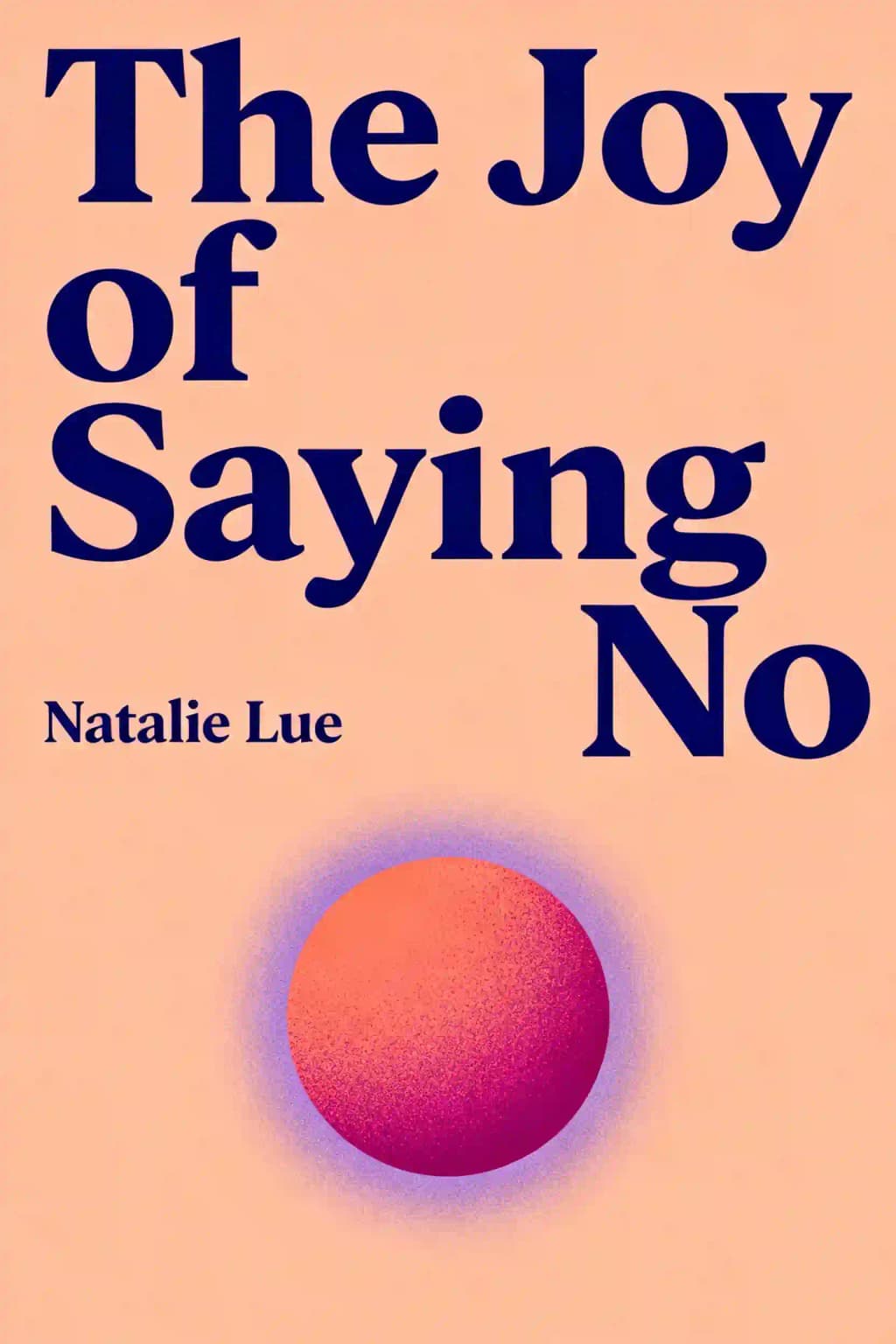
Ever feel that gnawing resentment after saying "yes" to something you desperately wanted to decline? Natalie Lue's groundbreaking book has struck a chord with millions of chronic people-pleasers worldwide, becoming a phenomenon among celebrities like Glennon Doyle and Brene Brown who have praised its transformative approach. Since its 2022 release, "The Joy of Saying No" has sparked a cultural conversation about the hidden costs of always putting others first. What makes this work particularly powerful is Lue's personal journey-how a life-threatening autoimmune disease forced her to finally say "no" after decades of self-sacrifice. This watershed moment not only led to her physical recovery but transformed every aspect of her life from career to relationships. As burnout rates reach epidemic proportions and the "Great Resignation" reshapes workplaces, Lue's message couldn't be more timely: your boundaries aren't just personal preferences-they're essential survival tools.
第2章
The People-Pleasing Pandemic: How We Got Here
People pleasing isn't something we consciously choose-it develops in childhood through socialization, conditioning, and self-protective responses. Most of us were raised during what Lue calls "the Age of Obedience," when raising children centered on making them "good" through unconditional compliance with authority. Unlike modern parenting that involves two-way dialogue, previous generations experienced one-way communication where children were expected to be seen and not heard. This era of parenting emphasized external validation and conformity over emotional intelligence and authentic self-expression. Children learned quickly that their worth was tied to their ability to meet others' expectations and keep the peace.
The toll of people pleasing is severe and manifests in multiple dimensions of health and wellbeing. As Lue's acupuncturist explained, we're all born with similar stress thresholds, but chronic people pleasing keeps us in a constant fight-flight-freeze state while flooding our systems with cortisol. This isn't just psychological-it manifests physically through a cascade of stress-related symptoms. It's no coincidence that many people pleasers experience tinnitus, anxiety, IBS, panic attacks, migraines, and mysterious illnesses that conventional medicine struggles to diagnose. The constant state of hypervigilance required to anticipate and meet others' needs creates a physiological burden that can lead to chronic inflammation, disrupted sleep patterns, and compromised immune function.
What makes breaking these patterns so challenging is that our subconscious doesn't tell time-it's stuck in our early years, operating on outdated survival strategies. We mistakenly assume our reactions are based in the present, treating our feelings and stories about them as facts when they're actually outdated programming from our formative years. As Lue puts it, "Just as you wouldn't expect a five-year-old to perfectly organize your home or business files, you shouldn't rely on mental files that haven't been updated since childhood." These emotional patterns become deeply ingrained neural pathways that automatically activate in situations that remind us of past experiences, even when the current context is entirely different.
We adopt roles in response to childhood dynamics that become our everyday masks, creating a complex web of learned behaviors and expectations. Some roles are explicitly imposed ("You're the eldest, so set an example!" or "Don't upset your father!"), while others we assume to cope with family dysfunction or emotional needs. Common roles include the peacemaker, the achiever, the invisible child, or the family hero. These roles become our identities, and we play them even as adults in entirely different circumstances, from workplace relationships to romantic partnerships. This explains why breaking people-pleasing patterns feels wrong-it's outside your comfort zone and feels disloyal to both your learned identity and family system. You wonder, "Who am I without people pleasing?" The answer: yourself - an authentic individual capable of healthy boundaries and genuine relationships based on mutual respect rather than obligation.
第3章
The Five Faces of People Pleasing: Recognizing Your Pattern
People pleasing manifests in five distinct styles, each representing different ways we try to influence others, meet our needs indirectly, and process past hurts. While we might identify with multiple styles, one or two typically dominate our patterns.
Gooders are image-focused people pleasers centered on reputation management. They perform as "good people" to control others' perceptions and earn the right to have needs met. Gooders typically develop their pattern from environments where appearances were prioritized or goodness was modeled as self-protection. They hide their true selves behind performances of goodness, following rules and maintaining facades even when they feel differently inside. Gooders avoid saying no because it might make them appear ungrateful, difficult, or bad. They often tell people what they think others want to hear, feel strongly obligated and guilty, and believe they deserve rewards for being good.
Efforters use achievement, perfectionism, and excessive effort to create self-worth and earn acceptance. They typically were the eldest, only, unnoticed, or most responsible children in their families. Many experienced enmeshed relationships where their performance determined their parent's emotional state. Efforters learned that their value lies in productivity, that effort equals goodness, and that their efforts should insulate them against life's disappointments. They focus primarily on using effort to be the "Best" or to prove themselves, avoid saying no for fear of appearing lazy or incompetent, and push themselves beyond limits to meet unrealistic expectations.
Avoiders use evading, hiding, merging, and blending to please others and meet needs. Unlike other styles, they're primarily driven by avoiding discomfort rather than maintaining appearances or proving themselves. Many experienced significant family events like divorce, death, or trauma where topics became off-limits. Avoiders learned that silence was safer than truth. They're driven by minimizing conflict, criticism, and others' discomfort, and they tell people what they want to hear because they're unsure of their own feelings or fear being wrong.
Savers try to be the solution to others' problems by taking on their responsibilities to feel needed and valuable. They typically grew up where being of service was emphasized, often shouldering adult responsibilities prematurely. Some mimicked a parent who modeled saving behavior, while others stepped in where adults couldn't or wouldn't take responsibility. Savers learn to deny themselves, feeling guilty about their own needs while becoming enmeshed in others' problems. They make themselves indispensable in relationships, often choosing "fixer-upper" partners they can rehabilitate.
Sufferers use self-dislike and deliberately put themselves in positions of hardship to appear "good," control others' behaviors, and signal unmet needs. They use their pain as proof of worthiness, ironically needing to suffer to feel secure. Sufferers typically grew up in environments where suffering was equated with goodness, or where their problems were ignored or minimized. They learned that positive self-talk was boastful, while martyrdom and tolerating mistreatment were modeled as virtues. Their primary pleasing strategy is proving worth through pain and need.
第4章
Reclaiming Your Right to Say No: The First Steps
Breaking free from people pleasing begins with getting to know your pleaser habit-because you can't change what you don't know, and until you know your no, you can't know your yes. Lue recommends a two-week experiment to build awareness of where you spend your bandwidth.
In the first week, gather data about where you experience discomfort, what energizes or drains you, where you automatically say yes, what causes rumination or self-criticism, and what triggers anxiety. Review the data daily to notice themes in your feelings, thoughts, actions, and choices.
In the second week, test your no by attempting to cut your yes in half. You won't necessarily achieve 50 percent, but by identifying opportunities and attempting to say no, you'll gain a fuller picture of your pleaser habit. Notice where saying no feels fine and nothing bad happens, where you feel compelled to justify your no with elaborate stories, where you're tempted to reverse your decision to avoid tension, and who seems entitled to your yes.
When practicing saying no, Lue offers practical alternatives to saying the word directly: "I don't have the bandwidth," "I'm unavailable," "I can't make it," "I already have plans," "That's not going to work for me," or "Thank you for thinking of me, but I won't be able to attend."
People pleasing is fundamentally about anxiety. When you recognize your pleaser emerging, acknowledge what you're anxious about: not being liked, letting people down, being hurt, or getting in trouble. This awareness helps you tap into your authentic needs rather than believing you're just "pleasing" someone. Behind this anxiety often lies old anger that needs processing.
What you say no to defines what you can say yes to. Your bandwidth is personal and fluctuates daily based on sleep, stress, and self-care. Don't compare yourself to others who seem to do "more"-you don't know the toll their choices take. Sometimes saying no is just the first step that gives you breathing room to figure out what you actually want.
第5章
Unpacking Your Emotional Baggage
Understanding our emotional baggage is crucial because it drives our people-pleasing behaviors and prevents us from creating healthier boundaries. Rather than confronting our emotional baggage, we build walls instead of boundaries through people-pleasing. We mistakenly think we're being boundaried when warning others about past hurts, but we're actually saying, "I'm still hurt, so if I please you, maybe you won't disappoint me."
Each people-pleaser style reveals specific baggage questions to explore: Gooders must ask who taught them that keeping up appearances ensures getting what they want; Efforters need to identify whose validation they still crave; Avoiders should question who taught them not to make things harder for others; Savers must recognize who they failed to save or who they're trying to outdo; and Sufferers need to identify who they're covering for or trying to get to acknowledge their pain.
For boundaries to be effective, they must be mutual. When you don't say no to what isn't working, your options remain limited to suffering silently, battling over who's right, or cutting people off. When you clean up your side regardless of what others do, your options expand to engaging from a more boundaried place-either continuing the relationship with distance, opting out temporarily, or opting out permanently.
Boundaries are for you, not for controlling others. Others know the line when you know the line. Your boundaries aren't contingent on whether others have them, but you must stop depleting yourself by doing for others what you won't give yourself. Fear of boundaries means you have a problem both having and respecting them. Getting a no isn't punishment; it's simply no.
Even people with similar baggage experience things individually, so avoid projecting your feelings onto them. With family, establish clear differentiation between past and present by being consistently boundaried. And remember: if you don't say no or express your true feelings with someone, you're not as close as you think-no boundaries, no intimacy.
第6章
Reparenting Your Inner Child
When we disconnect from our true selves through people-pleasing, our younger selves remain unsettled and fearful. Like Russian nesting dolls, we contain versions of ourselves at every age, and when our adult boundaries don't reflect our needs, our bodies believe we're still in threatening situations from the past. These past versions continue to influence our present behaviors, often manifesting in unconscious patterns of accommodation and anxiety.
Reparenting means connecting with these younger aspects driving our pleaser patterns so we can give ourselves what we need, fill the void, and stop trying to right past wrongs. It's about regaining the ability to speak our feelings to ourselves through compassion, honesty, and presence. As adults, we've already been parenting ourselves-just with poor boundaries and self-criticism. This process involves learning to comfort ourselves during stress, setting healthy limits, and providing the emotional validation we may have missed.
Your inner child emerges whenever you play roles and avoid saying no. You'll recognize their presence when you're feeling and acting like a younger version of yourself-being compliant, following senseless rules, experiencing people-pleaser emotions after avoiding "no," using childlike reasoning, feeling inexplicably insecure, repeating ineffective behaviors, being passive-aggressive, or acting out from your ego. Common signs include feeling overwhelmed in social situations, automatically saying yes without considering your needs, or experiencing disproportionate emotional reactions to minor conflicts.
Each people-pleaser style needs specific reparenting approaches. Gooders need freedom from rigid rules and appearance focus, learning to embrace imperfection and authenticity. Efforters need relief from constant performance pressure and permission to rest without guilt. Avoiders need permission to ask questions and be curious, developing trust in their judgment. Savers need permission to ask for help and release responsibility, understanding that others' problems aren't always theirs to solve. Sufferers need to feel heard and cared for, learning to validate their own experiences without seeking external approval.
It's essential to distinguish between your inner critic and your inner voice. Your inner critic is the negative chatter that tries to keep you in your comfort zone by exaggerating past mistakes and attempting to control the uncontrollable. It sounds repetitive, negative, and often resembles significant figures from your past, using phrases like "you should" or "you always." Your inner voice, by contrast, is calm, neutral, and present-focused, offering guidance rather than judgment and speaking with wisdom rather than fear.
Acknowledging our parents' humanness isn't about denying our experiences or justifying what happened. Rather, embracing boundaries is fundamentally an act of forgiveness-primarily for ourselves. When we evolve our boundaries and stop suppressing our needs and desires, we forgive our younger selves and grant permission to grow. This process involves recognizing that our parents did the best they could with their own limitations while honoring our right to heal and develop healthier patterns. Through consistent reparenting practices, we can gradually replace old survival mechanisms with conscious choices that reflect our authentic needs and values.
第7章
From Obligation to Authentic Choice
As we become more aware of our people-pleasing patterns, we often struggle with knowing when to say no and identifying what we genuinely want. Having spent our lives prioritizing others' needs and expectations, trusting our own feelings can feel foreign and even threatening. Many find themselves automatically saying "yes" before even processing the request, a habit formed from years of putting others first. The key insight: if we don't say yes authentically, we say it resentfully or fearfully, creating more problems than if we'd said no initially. This reactive pattern often leads to burnout, damaged relationships, and a diminished sense of self.
We must either "make it a desire, or say no"-the gap between what we want and what others expect creates tension and resentment. For example, if a friend asks you to help them move on your only free weekend, you either need to genuinely want to help them (perhaps because you value the friendship and enjoy being helpful) or decline honestly. The solution lies in noticing how we feel before agreeing to something-does it feel like a genuine desire or an obligation? Physical cues like tension in your shoulders, a knot in your stomach, or immediate anxiety can signal when you're acting from obligation rather than authentic choice.
To test your motives, ask yourself: "If I didn't get the hoped-for response, would I still want to do this?" If no, revise your motivations or communicate your expectations clearly. For instance, if you're organizing a group event hoping for specific praise or recognition, you're likely acting from people-pleasing rather than genuine desire. Consider whether you're trying to get or avoid something in a way that reflects your people-pleasing habits rather than healthy boundaries. Are you volunteering for extra work to avoid disapproval? Are you agreeing to social plans to prevent feeling guilty?
Taking even a brief pause interrupts habitual responses and allows you to recognize your surroundings and remember you're not a helpless child anymore. When someone makes a request, pause for at least ten seconds to check in with your feelings. "Let me get back to you" is a magic phrase that creates space to consider your bandwidth and true desires. This simple buffer can prevent the automatic "yes" that often leads to overcommitment and resentment.
True giving is a full transfer without expectations - like a gift freely given with no strings attached. If you have expectations of what someone should be, do, think or feel in return, it's not giving but rather a hidden agenda to influence others' feelings and behavior. While humans naturally desire recognition and appreciation, having specific expectations oversteps boundaries and becomes manipulation. For example, doing a favor for someone while secretly expecting them to reciprocate in a specific way transforms the gesture from generosity to transaction. Even when making sacrifices for loved ones, doing so consciously and without keeping score transforms it from sacrifice to autonomous giving. This might mean caring for an aging parent while accepting they may not express gratitude in the way you'd prefer, or supporting a friend through crisis without expecting them to do the same for you later.
第8章
Direct Communication: The End of Hinting
People-pleasing often involves indirect communication-showing others how to behave through "being good" rather than directly expressing needs and expectations. This creates an unspoken debt we expect others to repay, including mind-reading our unexpressed desires.
Different people-pleaser types hint in characteristic ways: Gooders continue behaving well while secretly fuming; Efforters try to do the "right thing" or visibly show their strain; Avoiders use subtle passive aggression while denying anything's wrong; Savers sacrifice through helping then display their strain; and Sufferers highlight their suffering to draw attention to their needs.
People hint because it feels safer than direct communication-we hope others will understand our needs without our vulnerability. This approach aims to reach a tipping point where our people-pleasing finally pays off with the reward we seek.
To navigate boundary-setting effectively, Lue offers five landmarks for boundaried communication: 1) Compassion-including ourselves in our compassion through vulnerability, empathy and kindness; 2) Congruency-ensuring our words align with our intentions and actions; 3) Clarity-being direct rather than ambiguous; 4) Ownership-communicating as a grown-up and taking responsibility for our feelings; and 5) Grace-expressing our truth with respect, seeing boundaries as relationship-building tools rather than ways to control others.
Lue distinguishes between "hard" and "soft" nos. A hard no is clear and concise, cutting to the chase without being harsh. A soft no typically includes more detail or padding to soften the rejection. Hard nos work best when clarity is needed, when the person prefers directness, when soft nos haven't worked previously, or when requests are inappropriate. Soft nos work with people who consistently respect boundaries.
When dealing with difficult people who resist boundaries, sticking to facts is essential. Like "garlic to vampires," facts protect against gaslighting and manipulation. For persistent boundary-pushers who won't accept your initial no, the "broken record" technique helps you maintain your position calmly and respectfully. This involves clearly stating your position, then repeating and evolving it as needed when the other person continues to push.
第9章
Embracing the Journey: Learning from Setbacks
Recovery from people pleasing isn't a one-time event but an ongoing journey where we'll face common traps: expecting to say no just once, anticipating immediate gratitude for our boundaries, or believing self-work should prevent all future problems.
Suppressing yourself is like an overheated pressure cooker-eventually, you'll either implode (internal crisis, bodily shutdown) or explode (uncharacteristic behavior). When eruptions happen, many make the mistake of blaming themselves, seeing it as proof that boundaries don't work rather than recognizing it as the inevitable consequence of suppression.
Instead of dwelling in shame, ask yourself about the baggage behind your eruption and what you truly need. This difficult experience is actually helping you feel more alive by reconnecting with yourself. You might need to say no to certain commitments, recognize where you've gone past your limits, identify self-exploitation, and examine how you've numbed yourself against feelings. Remember: "You've got to feel to heal, and when you don't let yourself feel, you erupt."
As a recovering people pleaser, you'll likely be self-critical when challenges arise, thinking "It's not fair. I did all the things." But challenges-both wanted and unwanted situations that test your character and bandwidth-are opportunities to strengthen your boundaries and take better care of yourself.
Through challenges, you confront what you've been avoiding and identify things you need. While gratitude has its place, immediately labeling difficult experiences as "blessings in disguise" bypasses your genuine emotions. You can't skip from rage straight to joy-you must experience the full spectrum of feelings.
Life forces us to say no when we avoid doing it ourselves, often through others' boundaries or accumulated consequences that demand change. Through life events-births, deaths, achievements, failures-we learn where we need boundaries. These experiences clarify who we are and test our stated values and priorities.
Though we'll occasionally slip into people-pleasing, we'll learn from these moments. By approaching boundaries with compassion, challenges become opportunities to level up. People will feel what they feel regardless of our efforts to please them-we might as well be authentically ourselves from a place of love and respect.
"Being you" means being everything you would be and do if you weren't so busy trying to please everyone else and should-ing yourself. When you give yourself permission to show up more authentically, you become open to letting others do that too and helping break the cycle of shame and compliance.









![Facing Codependence [ABRIDGED]](/_next/image?url=https%3A%2F%2Fd3lvzgn0lx7rb2.cloudfront.net%2Fcovers%2F1d91cc59-653c-487c-bb06-0a03ac09820d%2Fimage_resized.webp&w=1024&q=50)