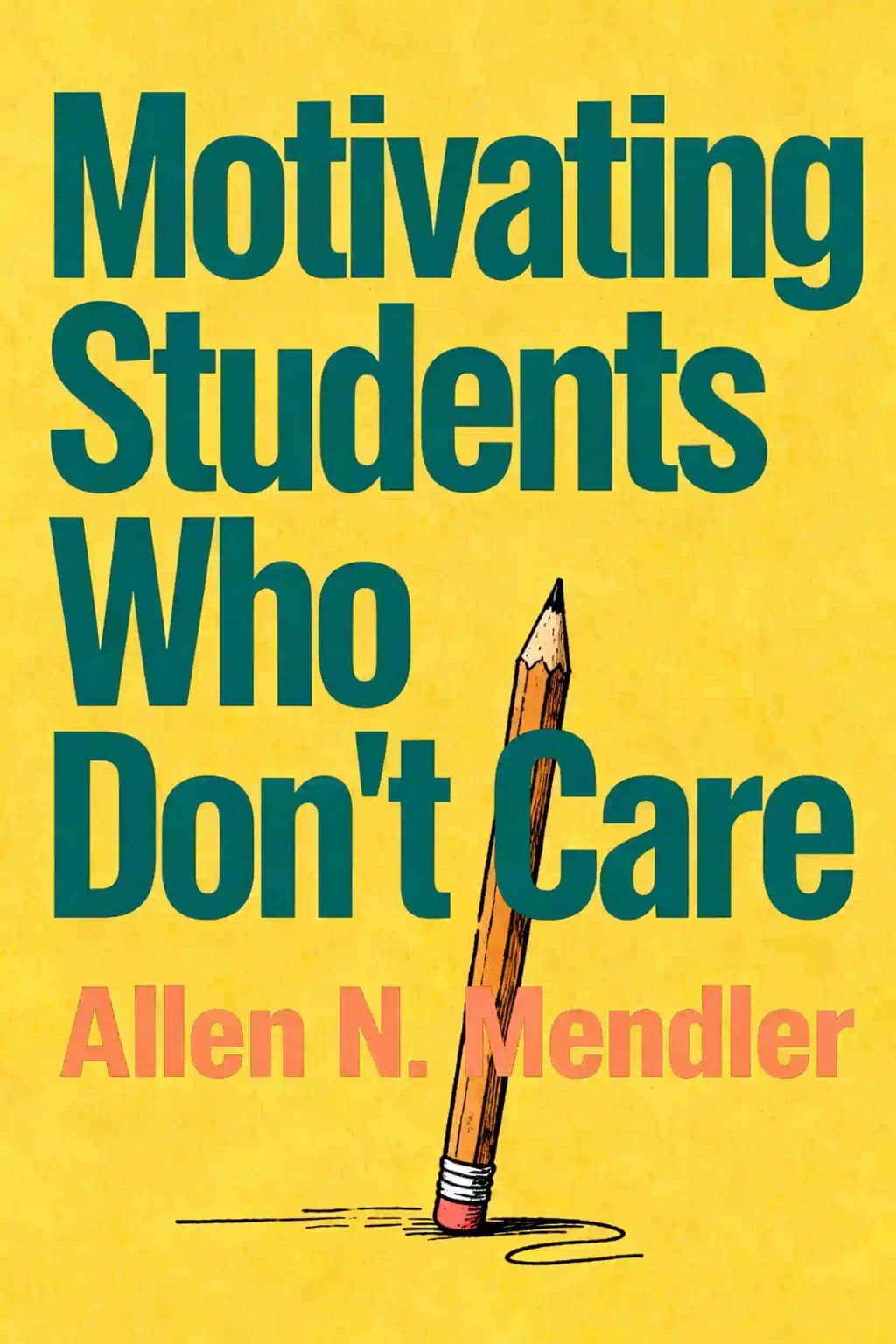
Discover why educators call "Motivating Students Who Don't Care" a "treasure trove of ideas" for reigniting classroom enthusiasm. Updated post-pandemic, Dr. Mendler's acclaimed strategies bridge the gap between disengagement and curiosity, transforming reluctant learners through psychological insight rather than punishment.
著者の声を通じて本を感じる
知識を魅力的で例が豊富な洞察に変換
キーアイデアを瞬時にキャプチャして素早く学習
楽しく魅力的な方法で本を楽しむ
Picture a classroom where half the students have their heads down, earbuds in, completely checked out. The teacher pleads, cajoles, threatens-nothing works. This isn't an isolated incident in a struggling school; it's become the daily reality in classrooms everywhere. What's happened to the natural curiosity every child is born with? That toddler who couldn't stop asking "why?" has transformed into a teenager who can't be bothered to lift a pencil. The shift isn't mysterious-it's the result of a culture that increasingly values instant gratification over earned achievement, possessions over character, and entertainment over engagement. But here's the truth that changes everything: students aren't born unmotivated. They learn to be unmotivated after repeated experiences of failure, powerlessness, and disconnection. Which means motivation can be relearned when we understand what extinguished it in the first place. When a student says "I don't care," they're rarely telling the truth. That indifference is armor, carefully constructed to protect something vulnerable underneath. Some students refuse to try because trying and failing feels worse than not trying at all-at least then they can tell themselves they could have succeeded if they'd wanted to. Others have discovered that refusal is power. In a world where adults control nearly everything, "you can't make me" becomes a twisted form of autonomy. Then there's the invisible crisis: depression and anxiety in children. One in five kids experiences a mental health challenge in any given year, yet most receive no treatment. These internal struggles manifest as academic disengagement long before anyone recognizes them as psychological distress. The "lazy" student might be battling intrusive thoughts; the "defiant" one might be using anger to mask overwhelming sadness. Understanding this psychology changes everything. When we see refusal as protection rather than defiance, we can respond with strategies that address the underlying need. The student who won't complete assignments isn't rejecting learning-they're protecting themselves from feeling stupid, powerless, or overwhelmed.
『Motivating Students Who Don't Care』の核心的なアイデアを分かりやすいポイントに分解し、革新的なチームがどのように創造、協力、成長するかを理解します。
『Motivating Students Who Don't Care』を素早い記憶のヒントに凝縮し、率直さ、チームワーク、創造的な回復力の主要原則を強調します。

鮮やかなストーリーテリングを通じて『Motivating Students Who Don't Care』を体験し、イノベーションのレッスンを記憶に残り、応用できる瞬間に変えます。
何でも質問し、声を選び、本当にあなたに響く洞察を一緒に作り出しましょう。

"Instead of endless scrolling, I just hit play on BeFreed. It saves me so much time."
"I never knew where to start with nonfiction—BeFreed’s book lists turned into podcasts gave me a clear path."
"Perfect balance between learning and entertainment. Finished ‘Thinking, Fast and Slow’ on my commute this week."
"Crazy how much I learned while walking the dog. BeFreed = small habits → big gains."
"Reading used to feel like a chore. Now it’s just part of my lifestyle."
"Feels effortless compared to reading. I’ve finished 6 books this month already."
"BeFreed turned my guilty doomscrolling into something that feels productive and inspiring."
"BeFreed turned my commute into learning time. 20-min podcasts are perfect for finishing books I never had time for."
"BeFreed replaced my podcast queue. Imagine Spotify for books — that’s it. 🙌"
"It is great for me to learn something from the book without reading it."
"The themed book list podcasts help me connect ideas across authors—like a guided audio journey."
"Makes me feel smarter every time before going to work"

Motivating Students Who Don't Careの要約をPDFまたはEPUBで無料でダウンロード。印刷やオフラインでいつでもお読みいただけます。