

Overview of Planet of Viruses
Dive into a microscopic world that shapes our existence. Carl Zimmer's acclaimed "A Planet of Viruses" reveals how these tiny entities - comprising 8% of our DNA - rule ecosystems from oceans to our bodies. Updated with COVID-19 insights that transformed our understanding of invisible threats.
- Viruses shape Earth’s oxygen levels through ancient photosynthetic gene transfers in marine bacteria.
- Human DNA contains more viral remnants than human genes—proof of millennia-long coevolution.
- Influenza’s “genetic reassortment” acts as viral sex, accelerating pandemic-potential strain development.
- Phage therapy targets antibiotic-resistant bacteria, offering a post-antibiotic era medical breakthrough.
- Smallpox eradication proves targeted vaccination campaigns can eliminate human-specific pathogens.
- Zika and West Nile viruses reveal globalized travel’s role in insect-borne pandemics.
- Mimivirus challenges life definitions with bacterial-like complexity in a virus’s structure.
- Retroviruses blur species boundaries by permanently integrating into host genomes.
- Coronaviruses’ spillover from animals underscores zoonotic disease risks in wildlife trade.
- Viral “virosphere” dominates oceans, outnumbering all marine life 15-to-1.
- HPV’s rabbit horn experiments uncovered cancer links to persistent viral infections.
- Ancient Egyptian texts document cold viruses, proving humanity’s enduring viral coexistence.
About the Author of Planet of Viruses
Carl Zimmer, acclaimed science journalist and author of A Planet of Viruses, is a leading voice in exploring the intersection of biology, evolution, and microbiology. A New York Times columnist since 2013 and adjunct professor at Yale University’s Department of Biophysics and Biochemistry, Zimmer distills complex scientific concepts into compelling narratives.
His expertise in virology and microbial life builds on decades of reporting, including notable works like Parasite Rex (hailed by the Los Angeles Times as “quietly revolutionary”) and She Has Her Mother’s Laugh, a 2018 New York Times Notable Book and winner of the National Academies of Science Communication Award.
Zimmer’s writing regularly appears in National Geographic, The Atlantic, and his science blog, and he has been featured on NPR’s Fresh Air and This American Life. His books, translated into over 20 languages, blend rigorous research with accessible storytelling. A Planet of Viruses reflects his signature focus on unseen biological forces shaping life, a theme echoed in his other works like Microcosm: E. coli and the New Science of Life. Over 500,000 copies of his books are in circulation worldwide, cementing his reputation as a bridge between scientific discovery and public understanding.
FAQs About Planet of Viruses
What is A Planet of Viruses by Carl Zimmer about?
A Planet of Viruses explores the hidden world of viruses, detailing their profound impact on ecosystems, human health, and evolution. Carl Zimmer examines viruses like influenza, HIV, and SARS-CoV-2, revealing their roles in shaping life on Earth—from influencing ocean ecosystems to embedding DNA in human genomes. The book blends scientific rigor with accessible storytelling, highlighting viruses’ dual nature as both pathogens and essential biological actors.
Who should read A Planet of Viruses?
This book is ideal for science enthusiasts, students, and general readers curious about microbiology and public health. Zimmer’s engaging prose makes complex virology concepts accessible, while his focus on historical pandemics (e.g., smallpox eradication) and modern crises (e.g., COVID-19) appeals to those interested in epidemiology or science communication.
Is A Planet of Viruses worth reading in 2025?
Yes—Zimmer’s insights remain critically relevant, especially post-COVID. The updated third edition includes COVID-19 coverage and underscores viruses’ ongoing threats and ecological roles. Praised for its clarity and depth, the book is a New York Times Notable Book and has been lauded by experts like Rebecca Skloot.
What are the key viruses discussed in A Planet of Viruses?
Zimmer spotlights:
- Rhinovirus: Common cold origins and evolutionary adaptability.
- Papillomavirus: Links to cancer and vaccine development.
- HIV: Case study in zoonotic transmission and global spread.
- Bacteriophages: Viruses that infect bacteria, crucial to ocean ecosystems.
How does Carl Zimmer explain viruses’ role in ecosystems?
Viruses regulate microbial populations, such as marine algae responsible for 10% of Earth’s oxygen. They also exchange genes with hosts—Synechococcus bacteria acquired light-harvesting genes from viruses, enhancing photosynthesis. Zimmer argues viruses are indispensable to ecological balance.
What is unique about Carl Zimmer’s writing style in this book?
Zimmer uses narrative-driven vignettes, blending history (e.g., Felix d’Herelle’s phage therapy) with cutting-edge research. His approach balances scientific accuracy with storytelling, making topics like viral evolution or genomic invasion engaging for non-experts.
How do viruses influence human evolution, according to Zimmer?
Up to 8% of human DNA originates from ancient viral infections, shaping immunity and brain development. Zimmer details how retroviruses like HIV mutate rapidly, driving evolutionary arms races between pathogens and hosts.
What historical pandemic does A Planet of Viruses analyze?
The book chronicles smallpox eradication via vaccination, from Edward Jenner’s 18th-century experiments to the WHO’s 1980 campaign. Zimmer also examines the 2002 SARS outbreak and the discovery of West Nile virus in New York.
What criticisms exist about A Planet of Viruses?
Some readers note the brevity of certain topics (e.g., phage therapy) and a focus on human-centric viruses over environmental ones. However, Zimmer’s updates in later editions address emerging research, maintaining the book’s scientific relevance.
How does A Planet of Viruses relate to COVID-19?
The third edition adds a chapter on coronaviruses, explaining their zoonotic origins and global spread mechanisms. Zimmer contextualizes COVID-19 within broader virology principles, like mutation rates and vaccine challenges.
What makes A Planet of Viruses different from other virology books?
Unlike technical textbooks, Zimmer emphasizes storytelling and interdisciplinary connections (e.g., viruses in art, history). The book’s compact, essay-style structure allows focused deep dives into specific viruses and their societal impacts.
How does Carl Zimmer’s background inform A Planet of Viruses?
Award-winning science journalist and Yale adjunct professor, Zimmer leverages 30+ years of experience. His work at Discover and The New York Times refined his ability to distill complex science, evident in the book’s balance of detail and readability.
What are key quotes or concepts from A Planet of Viruses?
- “Viruses are the world’s smallest stealth agents”: Highlights their ability to hijack host cells.
- “We are part virus”: Reflects viral DNA’s role in human evolution.
- “Oceans are viral soup”: Underscores viruses’ abundance in marine ecosystems.
How does A Planet of Viruses compare to The Coming Plague by Laurie Garrett?
While Garrett focuses on emerging infectious diseases, Zimmer emphasizes viruses’ ecological and evolutionary roles. Both books explore pandemic preparedness, but Zimmer’s narrower virology scope offers deeper insights into microbial mechanics.
Why is A Planet of Viruses still relevant in 2025?
With climate change accelerating zoonotic spillovers and antibiotic resistance rising, understanding viruses is critical. Zimmer’s work preemptively frames debates on pandemic response, vaccine equity, and virus-driven biodiversity.
Feel the book through the author's voice
Turn knowledge into engaging, example-rich insights
Capture key ideas in a flash for fast learning
Enjoy the book in a fun and engaging way
Characters in Planet of Viruses
- Carl ZimmerAuthor and science journalist
- Martinus BeijerinckDutch scientist who identified viruses in 1898
- Adolph MayerScientist who investigated tobacco mosaic disease
- Frederick TwortCo-discoverer of bacteriophages in 1915
- Felix d'HerelleCo-discoverer of bacteriophages in 1917
Key Themes in Planet of Viruses
- viral evolution
- human genome history
- microbial ecology
- virology history
- host-parasite relationships
Quotes from Planet of Viruses
Earth is truly a planet of viruses.
Antibiotics...are completely ineffective against viruses.
Rhinoviruses are masterpieces of evolutionary efficiency.
Explore Your Way of Learning
 Quick Summary Mode
Read or listen to Planet of Viruses Summary in 10 Minutes
Break down key ideas from Planet of Viruses into bite-sized takeaways to understand how innovative teams create, collaborate, and grow.

 Fun Mode
Planet of Viruses Lessons Told Through 20-Min Stories
Experience Planet of Viruses through vivid storytelling that turns innovation lessons into moments you'll remember and apply.
 Personalize Mode
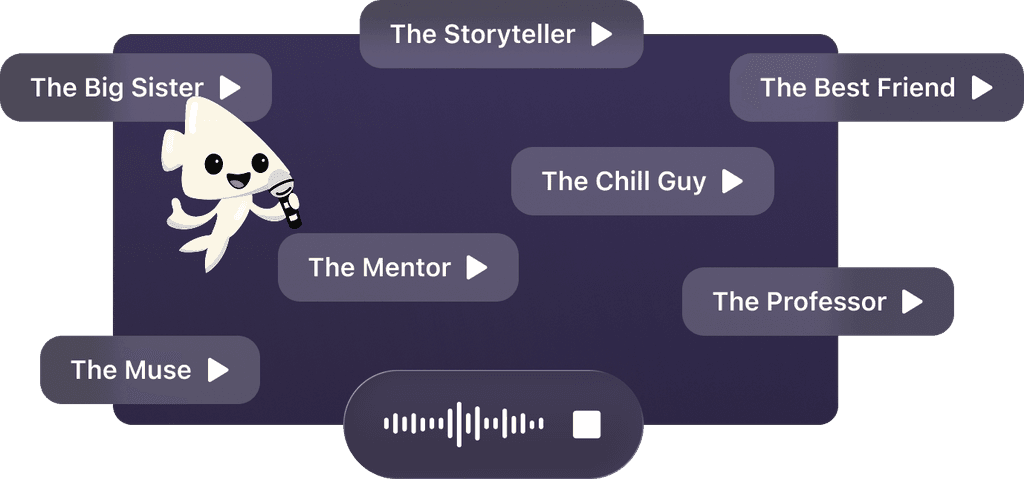
Experience Planet of Viruses in your own learning style
Ask anything, choose your learning style, and co-create insights that truly resonate with you.
From Columbia University alumni built in San Francisco
"Instead of endless scrolling, I just hit play on BeFreed. It saves me so much time."


"I never knew where to start with nonfiction—BeFreed’s book lists turned into podcasts gave me a clear path."


"Perfect balance between learning and entertainment. Finished ‘Thinking, Fast and Slow’ on my commute this week."
"Crazy how much I learned while walking the dog. BeFreed = small habits → big gains."
"Reading used to feel like a chore. Now it’s just part of my lifestyle."

"Feels effortless compared to reading. I’ve finished 6 books this month already."
"BeFreed turned my guilty doomscrolling into something that feels productive and inspiring."

"BeFreed turned my commute into learning time. 20-min podcasts are perfect for finishing books I never had time for."
"BeFreed replaced my podcast queue. Imagine Spotify for books — that’s it. 🙌"

"It is great for me to learn something from the book without reading it."
"The themed book list podcasts help me connect ideas across authors—like a guided audio journey."
"Makes me feel smarter every time before going to work"
From Columbia University alumni built in San Francisco
"Instead of endless scrolling, I just hit play on BeFreed. It saves me so much time."
"I never knew where to start with nonfiction—BeFreed’s book lists turned into podcasts gave me a clear path."
"Perfect balance between learning and entertainment. Finished ‘Thinking, Fast and Slow’ on my commute this week."
"Crazy how much I learned while walking the dog. BeFreed = small habits → big gains."
"Reading used to feel like a chore. Now it’s just part of my lifestyle."
"Feels effortless compared to reading. I’ve finished 6 books this month already."
"BeFreed turned my guilty doomscrolling into something that feels productive and inspiring."
"BeFreed turned my commute into learning time. 20-min podcasts are perfect for finishing books I never had time for."
"BeFreed replaced my podcast queue. Imagine Spotify for books — that’s it. 🙌"
"It is great for me to learn something from the book without reading it."
"The themed book list podcasts help me connect ideas across authors—like a guided audio journey."
"Makes me feel smarter every time before going to work"
"Instead of endless scrolling, I just hit play on BeFreed. It saves me so much time."
"I never knew where to start with nonfiction—BeFreed’s book lists turned into podcasts gave me a clear path."
"Perfect balance between learning and entertainment. Finished ‘Thinking, Fast and Slow’ on my commute this week."
"Crazy how much I learned while walking the dog. BeFreed = small habits → big gains."
"Reading used to feel like a chore. Now it’s just part of my lifestyle."
"Feels effortless compared to reading. I’ve finished 6 books this month already."
"BeFreed turned my guilty doomscrolling into something that feels productive and inspiring."
"BeFreed turned my commute into learning time. 20-min podcasts are perfect for finishing books I never had time for."
"BeFreed replaced my podcast queue. Imagine Spotify for books — that’s it. 🙌"
"It is great for me to learn something from the book without reading it."
"The themed book list podcasts help me connect ideas across authors—like a guided audio journey."
"Makes me feel smarter every time before going to work"
"Instead of endless scrolling, I just hit play on BeFreed. It saves me so much time."
"I never knew where to start with nonfiction—BeFreed’s book lists turned into podcasts gave me a clear path."
"Perfect balance between learning and entertainment. Finished ‘Thinking, Fast and Slow’ on my commute this week."
"Crazy how much I learned while walking the dog. BeFreed = small habits → big gains."
"Reading used to feel like a chore. Now it’s just part of my lifestyle."
"Feels effortless compared to reading. I’ve finished 6 books this month already."
"BeFreed turned my guilty doomscrolling into something that feels productive and inspiring."
"BeFreed turned my commute into learning time. 20-min podcasts are perfect for finishing books I never had time for."
"BeFreed replaced my podcast queue. Imagine Spotify for books — that’s it. 🙌"
"It is great for me to learn something from the book without reading it."
"The themed book list podcasts help me connect ideas across authors—like a guided audio journey."
"Makes me feel smarter every time before going to work"

Download Summary of Planet of Viruses
Get the Planet of Viruses summary as a free PDF or EPUB. Print it or read offline anytime.


