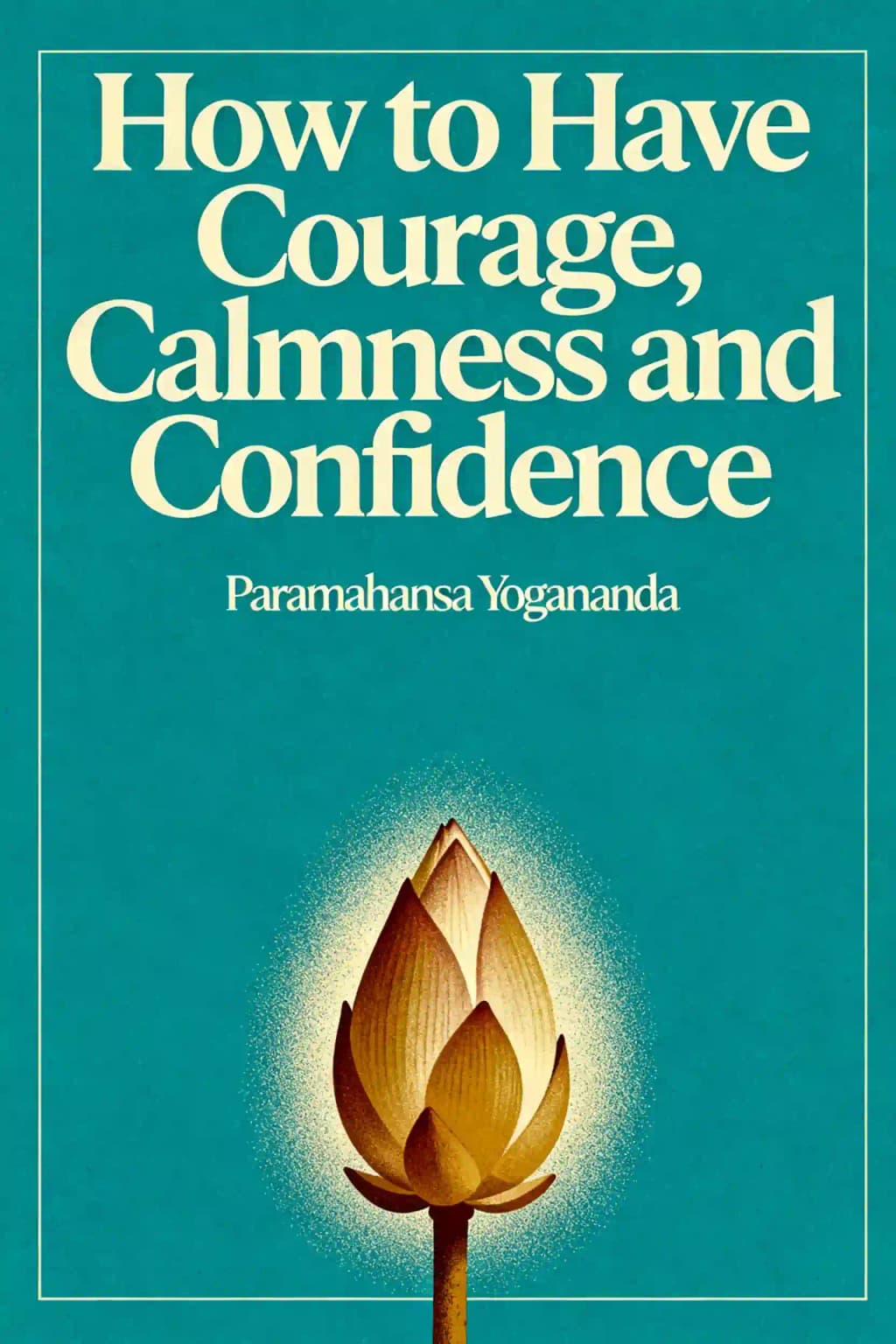
How to Have Courage, Calmness and Confidence
The Wisdom of Yogananda
Overview of How to Have Courage, Calmness and Confidence
Discover Yogananda's transformative guide to inner strength - a spiritual manual that captivated Steve Jobs and countless seekers worldwide. Can ancient meditation techniques really rewire your nervous system for unshakeable confidence? This slim volume holds the key to mastering life's inevitable storms.

Key Themes in How to Have Courage, Calmness and Confidence
- inner power awakening
- spiritual willpower
- karmic law mastery
- divine affirmation
- mental conquest
Quotes from How to Have Courage, Calmness and Confidence
Tears on life's battlefield are, as Yogananda poetically states, "liquid cowardice."
Karma is best worked out by meeting life's tests cheerfully rather than with resistance or complaint.
Success, health, and wisdom aren't distant goals to be achieved through struggle-they are your soul's natural attributes.
The true devotee must banish faint-heartedness and move forward with unshakable faith.
Calmness isn't merely the absence of agitation-it's a dynamic power that gives you mastery over life's circumstances.
Characters in How to Have Courage, Calmness and Confidence
- Paramahansa YoganandaAuthor and spiritual teacher of inner power
About the Author
About the Author of How to Have Courage, Calmness and Confidence
Paramahansa Yogananda (1893–1952), author of How to Have Courage, Calmness, and Confidence, was a renowned spiritual teacher and Kriya Yoga master who bridged Eastern wisdom with Western spirituality. Born in Gorakhpur, India, he pioneered the global dissemination of meditation techniques through his Self-Realization Fellowship, founded in 1920.
His works, including the seminal Autobiography of a Yogi—translated into 34 languages—explore themes of self-mastery, inner peace, and divine union, rooted in his rigorous training under guru Swami Sri Yukteswar.
Yogananda’s influential commentaries on the Bhagavad Gita (God Talks With Arjuna) and the Gospels (The Second Coming of Christ) established him as a visionary interpreter of universal truths. Known for his practical yet profound approach to spiritual growth, his teachings remain foundational in yoga and mindfulness practices worldwide.
Autobiography of a Yogi has inspired millions, including Steve Jobs, who requested it be distributed at his memorial service.
Download Summary of How to Have Courage, Calmness and Confidence
Get the How to Have Courage, Calmness and Confidence summary as a free PDF or EPUB. Print it or read offline anytime.
FAQs About This Book
How to Have Courage, Calmness and Confidence by Paramahansa Yogananda teaches readers to access innate soul qualities like courage and resilience through meditation, affirmations, and spiritual practices. It provides actionable steps to overcome fear, worry, anger, and nervousness while emphasizing alignment with one’s divine nature. The book blends yogic philosophy with practical self-help tools to transform mental and emotional patterns.
This book is ideal for individuals seeking emotional resilience, spiritual growth, or stress management. It resonates with fans of Yogananda’s Autobiography of a Yogi, mindfulness practitioners, and those struggling with anxiety, fear, or self-doubt. The concise, accessible advice makes it suitable for both newcomers and seasoned students of Eastern spirituality.
Yes, for its timeless wisdom on overcoming fear and cultivating inner strength. Readers praise its practicality, though some note its occasional simplicity. The book’s focus on meditation, affirmations, and soul-centered living offers actionable strategies for emotional well-being, making it a valuable resource for personal growth.
Yogananda teaches that fear arises from identifying with the body’s limitations rather than the soul’s immortality. By meditating on courage, practicing concentration, and affirming divine strength, readers dissolve fear. The book emphasizes meeting challenges as opportunities to grow, stating, “Every day is a fresh opportunity to gather more exploits of heroism.”
The book prescribes affirmations like “I am the Prince of Peace sitting on the throne of Poise” to reprogram negative thinking. These phrases, repeated with concentration, aim to align the mind with soul qualities, fostering calmness and confidence. Yogananda argues that consistent affirmation practice rewires subconscious patterns.
Meditation is central to accessing inner courage and calmness. Yogananda advocates daily practice to dissolve anxiety, strengthen focus, and connect with divine energy. Techniques include concentrating on spiritual ideals (e.g., fearlessness) and withdrawing attention from bodily limitations to realize one’s omnipresent soul nature.
- “Calmness is more dynamic than peace”: Highlights inner steadiness as a source of power.
- “Meet every circumstance with the courage of a hero”: Encourages embracing challenges as growth opportunities.
- “The soul has everything it needs to meet every test of life”: Stresses self-reliance through spiritual attunement.
Some readers find certain sections overly simplistic or heavily religious, noting a lack of depth in practical application. Critics suggest pairing the book with Yogananda’s broader works for context. However, most praise its clarity and transformative potential for beginners.
While Autobiography of a Yogi chronicles Yogananda’s spiritual journey, this book focuses on actionable techniques for emotional mastery. Both emphasize Kriya Yoga and meditation, but Courage, Calmness and Confidence offers structured exercises, making it a practical companion to his autobiographical classic.
Amid rising global stress and AI-driven uncertainty, the book’s tools for cultivating inner stability remain vital. Its emphasis on meditation and affirmations aligns with modern mental health trends, while its spiritual framework addresses existential challenges unique to the digital age.
- Soul-centered living: Prioritize connection to divine inner qualities.
- Affirmation practice: Use targeted phrases to reprogram negativity.
- Meditative focus: Cultivate concentration to dissolve fear and worry.
- Heroic mindset: View challenges as opportunities for growth.
Yes, organizations like Ananda and Expanding Light offer retreats teaching Yogananda’s techniques. These programs focus on meditation, self-inquiry, and applying the book’s principles to daily life, often including Kriya Yoga practices for deeper implementation.