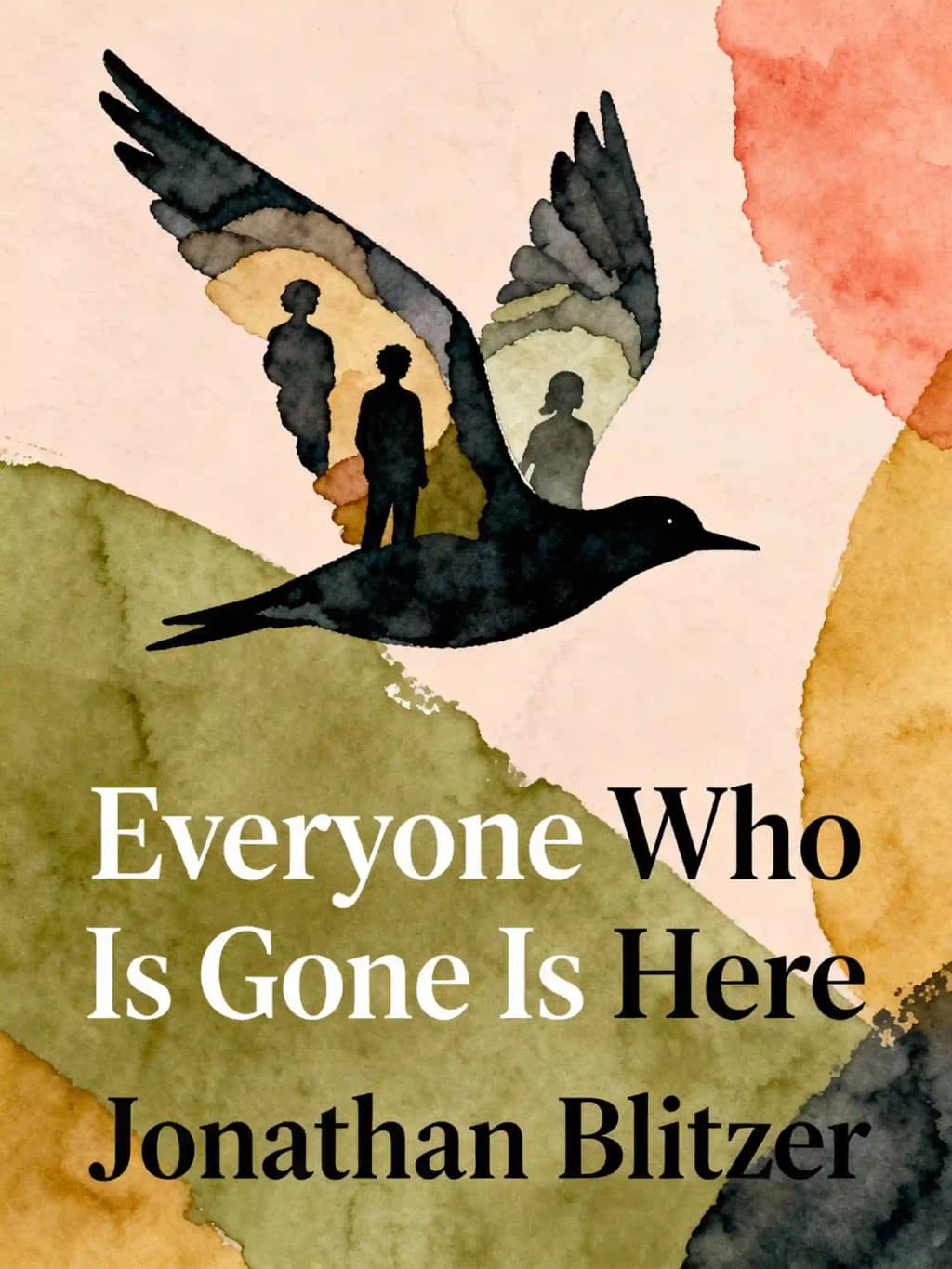
Blitzer's masterful chronicle unveils how U.S. policies shaped Central America's migration crisis through unforgettable human stories. Praised by Jill Lepore for its "devastatingly sharp relief," it reveals what one migrant called "una cucharita de justicia" - a little spoonful of justice long overdue.
Jonathan Blitzer, acclaimed author of Everyone Who Is Gone Is Here: The United States, Central America, and the Making of a Crisis, is a staff writer at The New Yorker and a leading voice on immigration policy and humanitarian crises.
Blitzer’s narrative non-fiction work traces the roots of Central American migration to the U.S., blending political history with firsthand reporting from El Salvador, Guatemala, and Honduras. His expertise stems from over a decade of investigative journalism, including award-winning coverage of deportation policies, gang violence, and climate-driven displacement.
A 2021 Emerson Fellow at New America, Blitzer has received the Edward R. Murrow Award, the Immigration Journalism Prize, and a National Award for Education Reporting. His writing has appeared in The Atlantic, The New York Times, and The Nation, with notable stories profiling figures like Stephen Miller and analyzing migration’s intersection with climate change.
Everyone Who Is Gone Is Here has been widely praised for its searing insights into America’s border crisis and was named a finalist for the 2024 Helen Bernstein Book Award for Excellence in Journalism.
Everyone Who Is Gone Is Here by Jonathan Blitzer examines the U.S.-Central America immigration crisis through personal stories of migrants and policymakers. It traces decades of political conflict, corruption, and misguided U.S. policies that fueled displacement, while highlighting the human cost of border struggles. Blitzer connects historical events like 1980s civil wars to modern-day crises, offering a comprehensive look at systemic failures.
Jonathan Blitzer is a New Yorker staff writer and award-winning journalist specializing in immigration. He received the 2018 Immigration Journalism Prize and a National Award for Education Reporting. His work blends investigative rigor with narrative storytelling, drawing from years of reporting on Central American migration and U.S. policy impacts.
This book is essential for policymakers, historians, and readers seeking to understand immigration’s root causes. It appeals to those interested in Central American history, human rights advocacy, or U.S. foreign policy. Blitzer’s blend of personal narratives and political analysis makes it accessible for both academic and general audiences.
Yes—it’s lauded as an “urgent, extraordinary” account (Patrick Radden Keefe) and named a New York Times Best Book of 2024. Barack Obama included it in his 2024 reading list. The book’s depth and empathy make it critical for understanding ongoing border debates and humanitarian challenges.
Blitzer details the 1980s Salvadoran/Guatemalan civil wars, U.S. Cold War interventions, 1990s mass deportation policies, and Honduras’ 2000s anti-crime crackdowns. These events destabilized Central America, creating conditions for gang proliferation and mass migration—a direct link to today’s border crises.
It identifies U.S.-backed military regimes, economic inequality, and corruption as key drivers. For example, Salvadorans fleeing U.S.-funded death squads in the 1980s faced deportation, while later policies turned street gangs into transnational cartels—forcing new waves of displacement.
Blitzer argues U.S. interventions—from Reagan-era support for authoritarian regimes to Obama/Trump-era deportations—directly destabilized Central America. Policies like mass incarceration and family separations exacerbated trauma, creating cycles of violence and migration.
Yes, including Juan Romagoza, a Salvadoran doctor tortured by U.S.-backed forces, and John Fife, an Arizona minister aiding refugees. These accounts humanize statistics, showing migrants’ resilience amid bureaucratic indifference.
He condemns detention centers as inhumane and counters that deporting gang members without context strengthened cartels. The book highlights how enforcement-first approaches ignore systemic causes, perpetuating crises.
Blitzer advocates for addressing root causes: reducing corruption, investing in Central American economies, and reforming U.S. asylum processes. He emphasizes cross-border cooperation over militarized enforcement.
It contextualizes Trump-era policies within a 40-year history of bipartisan failures. Blitzer shows how immigration became a populist tool, with rhetoric overshadowing humanitarian realities—a pattern persisting in 2025 debates.
The book was longlisted for the Baillie Gifford Prize, named a New York Times Best Book of 2024, and endorsed by Jon Stewart and Sally Hayden. It’s praised for its “masterful” synthesis of policy and human experience.
Senti il libro attraverso la voce dell'autore
Trasforma la conoscenza in spunti coinvolgenti e ricchi di esempi
Cattura le idee chiave in un lampo per un apprendimento veloce
Goditi il libro in modo divertente e coinvolgente
the conditions driving migration remain more terrifying than any punishment at the border.
Romero enlisted Juan and other medical students as his 'eyes and ears'
This is so that you will never practice medicine again.
dismissing the reports as 'guerrilla propaganda' despite overwhelming evidence.
operating as 'pro bono coyotes'
Scomponi le idee chiave di Everyone Who Is Gone Is Here in punti facili da capire per comprendere come i team innovativi creano, collaborano e crescono.
Vivi Everyone Who Is Gone Is Here attraverso narrazioni vivide che trasformano le lezioni di innovazione in momenti che ricorderai e applicherai.
Chiedi qualsiasi cosa, scegli il tuo stile di apprendimento e co-crea intuizioni che risuonano davvero con te.

Creato da alumni della Columbia University a San Francisco
"Instead of endless scrolling, I just hit play on BeFreed. It saves me so much time."
"I never knew where to start with nonfiction—BeFreed’s book lists turned into podcasts gave me a clear path."
"Perfect balance between learning and entertainment. Finished ‘Thinking, Fast and Slow’ on my commute this week."
"Crazy how much I learned while walking the dog. BeFreed = small habits → big gains."
"Reading used to feel like a chore. Now it’s just part of my lifestyle."
"Feels effortless compared to reading. I’ve finished 6 books this month already."
"BeFreed turned my guilty doomscrolling into something that feels productive and inspiring."
"BeFreed turned my commute into learning time. 20-min podcasts are perfect for finishing books I never had time for."
"BeFreed replaced my podcast queue. Imagine Spotify for books — that’s it. 🙌"
"It is great for me to learn something from the book without reading it."
"The themed book list podcasts help me connect ideas across authors—like a guided audio journey."
"Makes me feel smarter every time before going to work"
Creato da alumni della Columbia University a San Francisco

Ottieni il riassunto di Everyone Who Is Gone Is Here in formato PDF o EPUB gratuito. Stampalo o leggilo offline quando vuoi.
Ten Honduran migrants bow their heads in prayer at a Mexican housing complex called Solidarity 2000. It's August 2019, and they're thousands of miles from home but still hundreds from their destination. They share stories, swap memories of American detention centers, and pass around keepsakes-scraps of paper with phone numbers, faded photographs, rosaries blessed by priests they'll never see again. This scene captures something essential about modern migration: it's no longer about single men crossing borders for work. It's about families fleeing conditions so desperate that no wall, no policy, no threat of separation can stop them. Despite a century of enforcement efforts and billions spent on deterrence, people keep coming because what they're running from is worse than anything they'll face at the border. Juan Romagoza wanted to heal people, not become a revolutionary. Growing up in rural El Salvador, he watched his grandfather die waiting for medical care-an image that drove him toward medicine. But medical school in the late 1970s coincided with political awakening. El Salvador's grotesque inequality, where twenty-five families controlled ninety percent of the nation's wealth, was cracking open. When Juan saw soldiers execute a wounded student protester in his hospital in February 1980, everything changed. He found himself drawn to Archbishop Oscar Romero, the "voice of the voiceless" whose radio sermons condemned government violence. Romero enlisted Juan and other medical students as his eyes and ears, gathering evidence of torture that he cited in broadcasts heard across the nation. When Romero was assassinated while celebrating mass in March 1980, any hope for peaceful resolution died with him. Juan continued treating torture victims, learning to recognize the signature patterns of electric shocks and cigarette burns. Then his name appeared on a death squad list. Captured in December 1980, Juan endured twenty-four days of systematic torture-electric shocks, sexual assault, suspension by his fingers. His torturers shot through his left forearm, telling him he'd never practice medicine again. They were wrong, but Juan's personal nightmare reflected a larger tragedy: the Reagan administration was pouring hundreds of millions into supporting the very forces committing these atrocities, all in the name of fighting communism.
When thirteen Salvadorans died crossing Arizona's Organ Pipe Cactus National Monument in July 1980, activists like Margo Cowan and Presbyterian pastor John Fife initially worked within the system. But as immigration authorities systematically rejected applications, Quaker activist Jim Corbett proposed something radical: become "pro bono coyotes," secretly moving refugees through safe house networks. Invoking the underground railroad and the church's failure to protect Jews during the Holocaust, Corbett convinced Fife to launch the sanctuary movement. The 1980 Refugee Act anticipated 5,000 asylum seekers annually. Weeks later, 125,000 Cubans arrived during the Mariel boatlift. The government's contradictions were stark: Cubans fleeing communism received immediate admission; Haitians fleeing dictatorship faced detention and twenty-minute deportation interviews without lawyers. While twenty-five percent of asylum seekers overall won approval, Salvadorans and Guatemalans faced rejection rates of ninety-eight to ninety-nine percent. The sanctuary movement's strategy wasn't winning individual cases but overwhelming the system through delays. By summer 1981, they'd secured release for 150 asylum seekers, requiring over $16,000 in bonds and $175,000 in property collateral - grassroots resistance revealing the gap between American ideals and Cold War realities.
Juan arrived at Los Angeles' MacArthur Park, where Salvadorans had grown from 30,000 to 300,000 during the civil war. When a haggard man confessed nightmares of his brother-in-law's execution, Juan simply said, "Something similar happened to me, too." As conversation turned to mutual acquaintances killed or disappeared, others sought him out. Someone asked about his imprisonment, and he calmly recounted his torture. In San Francisco, Juan organized therapy groups in Dolores Park for homeless Salvadorans, forming CRECE, the Central American Refugee Committee. He arranged food from church kitchens, organized clothing drives, and coordinated legal consultations and healthcare referrals. With UC Berkeley psychology students, he learned about the emerging PTSD diagnosis. Known as "Doctor" in the Mission District, he became a community elder despite his youth. Asked if he feared deportation given his public activism, he replied, "Part of the therapy is shedding our fear." His transformation from torture survivor to community healer embodied the resilience defining a generation of Central American immigrants.
Eddie Anzora navigated LA's gang landscape-Bloods, Harpys, and Mara Salvatrucha-before being sent to El Salvador for a year after multiple arrests. Returning in 1993, his graffiti crew ATR had evolved into something darker. By 2001, his attorney warned him not to appear in court-he'd face immediate deportation. As fugitive "Fast Eddie," he built a surprisingly successful life: buying a house, opening recording studios, launching Above Ground Entertainment, and becoming a Latino heavyweight in hip-hop. In January 2007, ICE agents caught him. That September, he was deported-one of nearly 22,000 Salvadorans sent back that year. Landing in San Salvador, stripped of everything, Eddie confronted his reality: "This is my life right now?" His story illustrated American immigration policy's cruel irony-people raised in the United States, shaped by its culture and struggles, expelled to countries they barely knew, carrying the very gang culture American streets had cultivated.
In June 2002, Juan testified against Jose Guillermo Garcia and Carlos Eugenio Vides Casanova-El Salvador's former defense minister and National Guard head-who'd lived comfortably in the U.S. since the late 1980s. Attorney Shawn Roberts recruited Juan in 1999 for a landmark civil case. Despite family objections, Juan agreed. For two days, he recounted his journey from medical training to witnessing hospital killings to enduring torture-suspension by his fingers, sexual assault, the bullet through his forearm. The generals remained emotionless. The trial became a community event. Juan flew to Washington on weekends to update fellow Salvadorans, bonding with survivors and creating humorous lyrics mocking the generals' denials. As the trial concluded, Juan and Neris Gonzalez showed their scars to the jury-a powerful moment connecting Juan to all who'd died. The jury ordered the generals to pay $54 million, including $20 million to Juan. Beyond money, they'd forced accountability-a public reckoning with American complicity in Central American violence, proving U.S.-funded torturers could no longer hide behind diplomatic immunity.
When sanctuary activists faced trial in Arizona, the judge barred them from explaining their motivations. The prosecutor used testimony from the very refugees they'd helped, like Alejandro Rodriguez, jailed and tortured in El Salvador. Convictions came quickly, though sentences were only probation. Doris Meissner, a rising INS official, compiled a report documenting asylum approval disparities and was told to "deep six it." She resigned in 1986. By 2020, little had changed. The Trump administration's Migrant Protection Protocols enrolled 64,000 asylum seekers by March-only 517 received relief. When COVID-19 emerged, Stephen Miller invoked Title 42 to close the border entirely to asylum seekers, including unaccompanied children. Deportation flights spread the virus throughout Central America. Guatemala's health minister confirmed that fifty to seventy-five percent of deportees on certain flights were infected, calling the United States "the Wuhan of the Americas." In April 2021, Keldy Mabel Gonzales Brebe de Zuniga, separated from her children during family separation, received unexpected news-she would cross into El Paso on May 4. The Philadelphia reunion brought tears and embraces, a small victory against a system designed to break families apart.
In April 2022, the author met Juan in Usulutan. Now seventy, he was preparing to sell his family's home, in their possession since 1824. "The one thing that's been constant in all my years practicing medicine is that people want to talk. Their symptoms are only half of it," he reflected. In the garden stood the mango tree where Juan had hidden before fleeing in 1981. The tree had witnessed everything-Juan's childhood, the violence that shattered El Salvador, his escape, and his return. Looking at that tree, you could see the entire arc of Central American migration compressed into one life, one family, one piece of land that survived wars and dictatorships but couldn't survive twenty-first-century economic pressures. The United States and Central America share a destiny forged through intervention, migration, and deportation. Reagan's support for Salvadoran death squads created the 1980s refugee crisis. American deportation policies exported gang culture to Central America, destabilizing entire nations and creating new asylum waves. Yet within this trauma emerges remarkable resilience-people like Juan rebuilding communities, activists creating underground railroads, survivors confronting torturers in American courtrooms. The border may close and reopen, but people will continue coming because what they're fleeing remains worse than anything they'll face heading north.