Good to Great
Why Some Companies Make the Leap...And Others Don't
Panoramica di Good to Great
Why do some companies transform from average to exceptional? "Good to Great" reveals Jim Collins' groundbreaking 6-year study of 28 companies that achieved greatness. Endorsed by Coca-Cola executives and selling 4+ million copies, it introduces the revolutionary concepts of Level 5 Leadership and the Hedgehog Principle.
Temi chiave in Good to Great
- level 5 leadership
- hedgehog concept
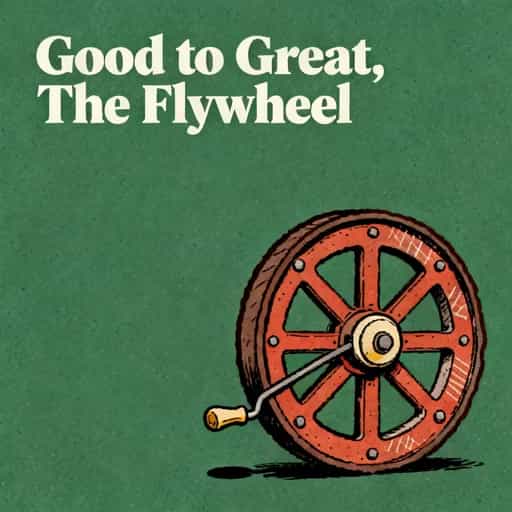
- flywheel effect
- organizational excellence
- disciplined culture
Citazioni da Good to Great
Those who built the good-to-great companies were not flashly visionaries; they were Level 5 leaders.
You must maintain unwavering faith that you can and will prevail in the end, regardless of the difficulties, AND at the same time, have the discipline to confront the most brutal facts of your current reality, whatever they might be.
Get the right people on the bus, the wrong people off the bus, and the right people in the right seats.
A company should limit its growth based on its ability to attract enough of the right people to seize opportunities.
Personaggi di Good to Great
- Jim CollinsAuthor and lead researcher of the study
- Darwin SmithFormer CEO of Kimberly-Clark and Level 5 Leader
- David MaxwellFormer CEO who transformed Fannie Mae
Sull'autore
Sull'autore di Good to Great
Jim Collins, bestselling author of Good to Great: Why Some Companies Make the Leap… and Others Don’t, is a globally recognized authority on business strategy and organizational excellence.
A Stanford-trained researcher and former faculty member at Stanford Graduate School of Business, Collins has dedicated over 25 years to studying what separates enduring companies from their competitors. His work blends rigorous analysis with actionable frameworks like the "Hedgehog Concept" and "Level 5 Leadership," cementing Good to Great as a cornerstone of modern management literature.
Collins’ other influential works, including Built to Last and Great by Choice, explore themes of visionary leadership and sustained success in turbulent markets. His concepts are taught in top MBA programs and implemented by Fortune 500 executives, military leaders, and social sector pioneers.
Recognized by Forbes as one of the "100 Greatest Living Business Minds," Collins founded a management laboratory in Boulder, Colorado, where he continues advising CEOs. Good to Great has sold over 10 million copies worldwide and been translated into 32 languages, solidifying its status as a transformative business classic.
Scarica il riassunto di Good to Great
Ottieni il riassunto di Good to Great in formato PDF o EPUB gratuito. Stampalo o leggilo offline quando vuoi.
FAQ su questo libro
Good to Great analyzes how companies transition from mediocrity to sustained excellence. Through a 30-year study of 28 companies, Jim Collins identifies principles like Level 5 Leadership, the Hedgehog Concept, and a culture of discipline as key drivers of long-term success. The book emphasizes strategic focus, disciplined teams, and aligning passion with economic viability.
Business leaders, entrepreneurs, and professionals seeking organizational transformation will benefit from this book. Its research-backed frameworks are particularly valuable for executives aiming to build enduring companies, scale startups, or instill disciplined growth strategies.
Yes. Its principles remain relevant for navigating modern challenges like market volatility and leadership development. The focus on humility-driven leadership and strategic simplicity transcends trends, making it a timeless resource for organizational excellence.
Level 5 Leaders combine intense professional will with personal humility. They prioritize organizational success over ego, fostering sustainable growth through team empowerment rather than charismatic authority. Examples include CEOs who credit teams for wins and take responsibility for losses.
This framework guides strategy through three intersecting circles:
- What you can be best in the world at
- What drives your economic engine
- What you’re deeply passionate about
Companies like Walgreens used this to outperform competitors by focusing on convenience over product breadth.
Collins argues that hiring disciplined, self-motivated people precedes defining vision or strategy. With the right team, companies adapt faster to change, as seen in Abbott Laboratories’ turnaround by prioritizing talent over rigid plans.
It involves combining entrepreneurial freedom with systematic accountability. Great companies avoid bureaucracy by aligning teams around core objectives, exemplified by Kimberly-Clark’s focused shift from paper mills to consumer products.
Small, consistent improvements compound into breakthroughs over time. Unlike drastic overhauls, this approach builds organic growth, as demonstrated by Circuit City’s decade-long rise to dominance before later missteps.
Some argue its focus on large corporations limits applicability to startups, though Collins addressed this in Great by Choice. Others note 11 of 28 studied companies later declined, highlighting the challenge of sustaining greatness.
While Built to Last examines enduringly great companies, Good to Great focuses on transitions from good to exceptional performance. The latter introduces new frameworks like Level 5 Leadership missing from Collins’ earlier work.
- “Good is the enemy of great.”
- “Get the right people on the bus, then figure out where to drive it.”
These emphasize avoiding complacency and prioritizing talent recruitment.
By adopting the Hedgehog Concept early to identify niche strengths and cultivating Level 5 Leadership traits in founders. The study found smaller companies share the same success factors as large corporations when scaling.
Complacency with short-term success and lack of disciplined focus often prevent the transition. Collins’ research shows greatness requires confronting brutal facts while maintaining faith in eventual breakthrough.