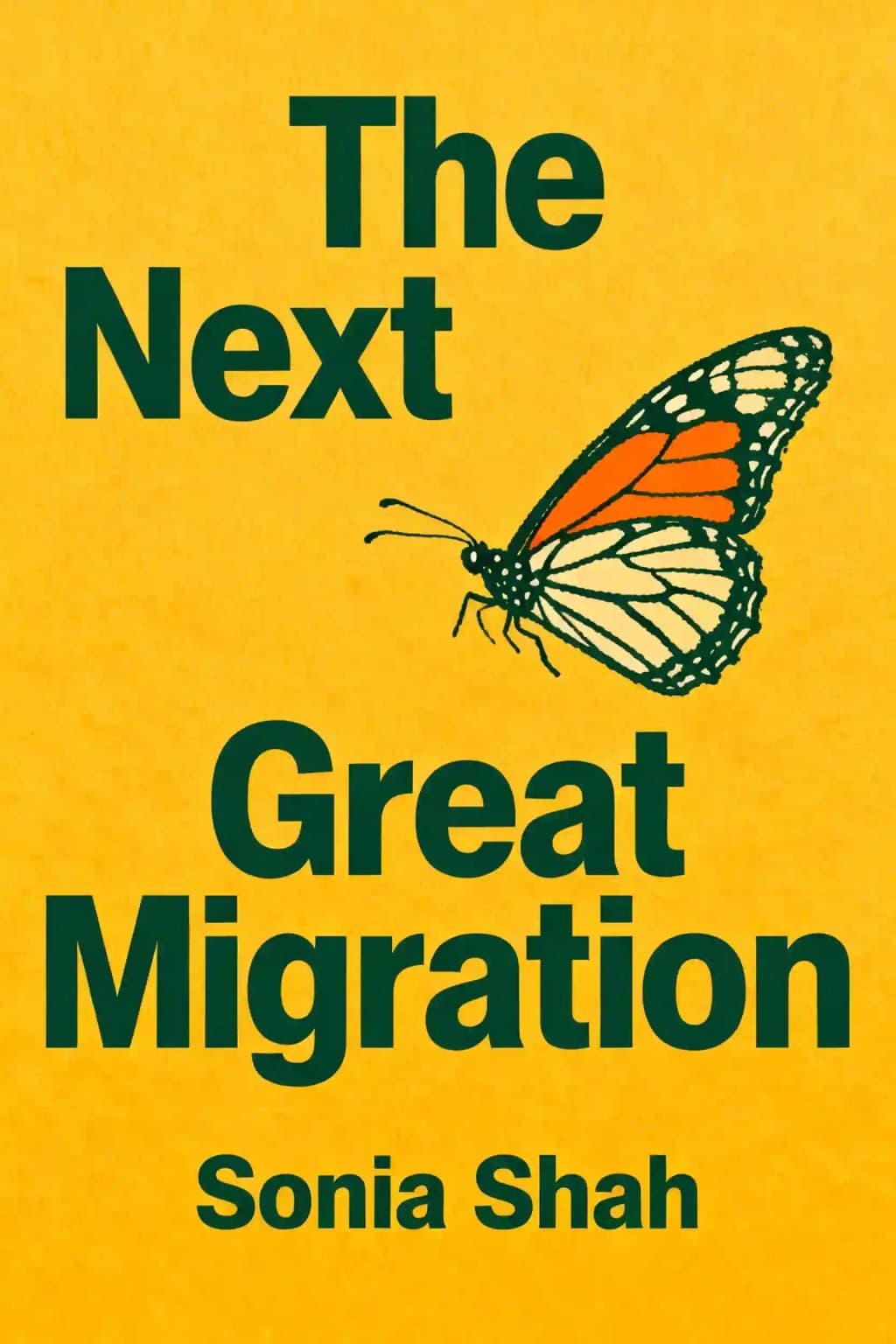
Sonia Shah's groundbreaking exploration reveals migration as nature's solution, not crisis. Praised by Naomi Klein as "dazzlingly original," this myth-busting journey challenges centuries of xenophobic science. What if movement - not stability - is humanity's most powerful survival strategy?
Senti il libro attraverso la voce dell'autore
Trasforma la conoscenza in spunti coinvolgenti e ricchi di esempi
Cattura le idee chiave in un lampo per un apprendimento veloce
Goditi il libro in modo divertente e coinvolgente
Walk into any museum of natural history and you'll find dioramas frozen in time-lions prowling African savannas, polar bears stalking Arctic ice, butterflies perched on native flowers. These exhibits whisper a seductive lie: that nature exists in perfect stasis, each creature locked in its rightful place. But step outside and look up during spring or fall. Those dark clouds moving across the sky? They're not storm systems-they're millions of migrating birds, detected by the same radar technology that once mistook them for invading bombers during World War II. The truth is, nearly half of all tracked species are already on the move, shifting their ranges as the planet warms. And humans? We're not watching this exodus from the sidelines. We're part of it-and always have been. In California's sun-scorched hills, a small butterfly called Edith's checkerspot revealed something scientists didn't want to see. Instead of dying out as temperatures rose, these creatures simply moved-northward and upward, following the climate they needed to survive. When researcher Camille Parmesan published her findings in 1996, it wasn't an anomaly. It was a pattern playing out everywhere. Forests in the Himalayas are climbing nineteen meters per decade. Red foxes are pushing into Arctic territory. Parasites are appearing in Alaska for the first time. Marine species are relocating even faster than land animals, racing toward the poles at seventy-five kilometers per decade. Meanwhile, humans are moving too. Tibetan refugees cross mountain passes. Climate disasters displace families from their homes. By 2045, desertification could force 60 million people from sub-Saharan Africa alone, with rising seas potentially adding 180 million more by 2100. Yet despite this mounting evidence, we cling to the idea that migration is abnormal-a crisis, a threat, an invasion. Where did this belief come from? The answer lies not in nature, but in the stories we've told ourselves about it.
Scomponi le idee chiave di The Next Great Migration in punti facili da capire per comprendere come i team innovativi creano, collaborano e crescono.
Distilla The Next Great Migration in rapidi promemoria che evidenziano i principi chiave di franchezza, lavoro di squadra e resilienza creativa.

Vivi The Next Great Migration attraverso narrazioni vivide che trasformano le lezioni di innovazione in momenti che ricorderai e applicherai.
Chiedi qualsiasi cosa, scegli la voce e co-crea spunti che risuonino davvero con te.

Creato da alumni della Columbia University a San Francisco
"Instead of endless scrolling, I just hit play on BeFreed. It saves me so much time."
"I never knew where to start with nonfiction—BeFreed’s book lists turned into podcasts gave me a clear path."
"Perfect balance between learning and entertainment. Finished ‘Thinking, Fast and Slow’ on my commute this week."
"Crazy how much I learned while walking the dog. BeFreed = small habits → big gains."
"Reading used to feel like a chore. Now it’s just part of my lifestyle."
"Feels effortless compared to reading. I’ve finished 6 books this month already."
"BeFreed turned my guilty doomscrolling into something that feels productive and inspiring."
"BeFreed turned my commute into learning time. 20-min podcasts are perfect for finishing books I never had time for."
"BeFreed replaced my podcast queue. Imagine Spotify for books — that’s it. 🙌"
"It is great for me to learn something from the book without reading it."
"The themed book list podcasts help me connect ideas across authors—like a guided audio journey."
"Makes me feel smarter every time before going to work"
Creato da alumni della Columbia University a San Francisco

Ottieni il riassunto di The Next Great Migration in formato PDF o EPUB gratuito. Stampalo o leggilo offline quando vuoi.
