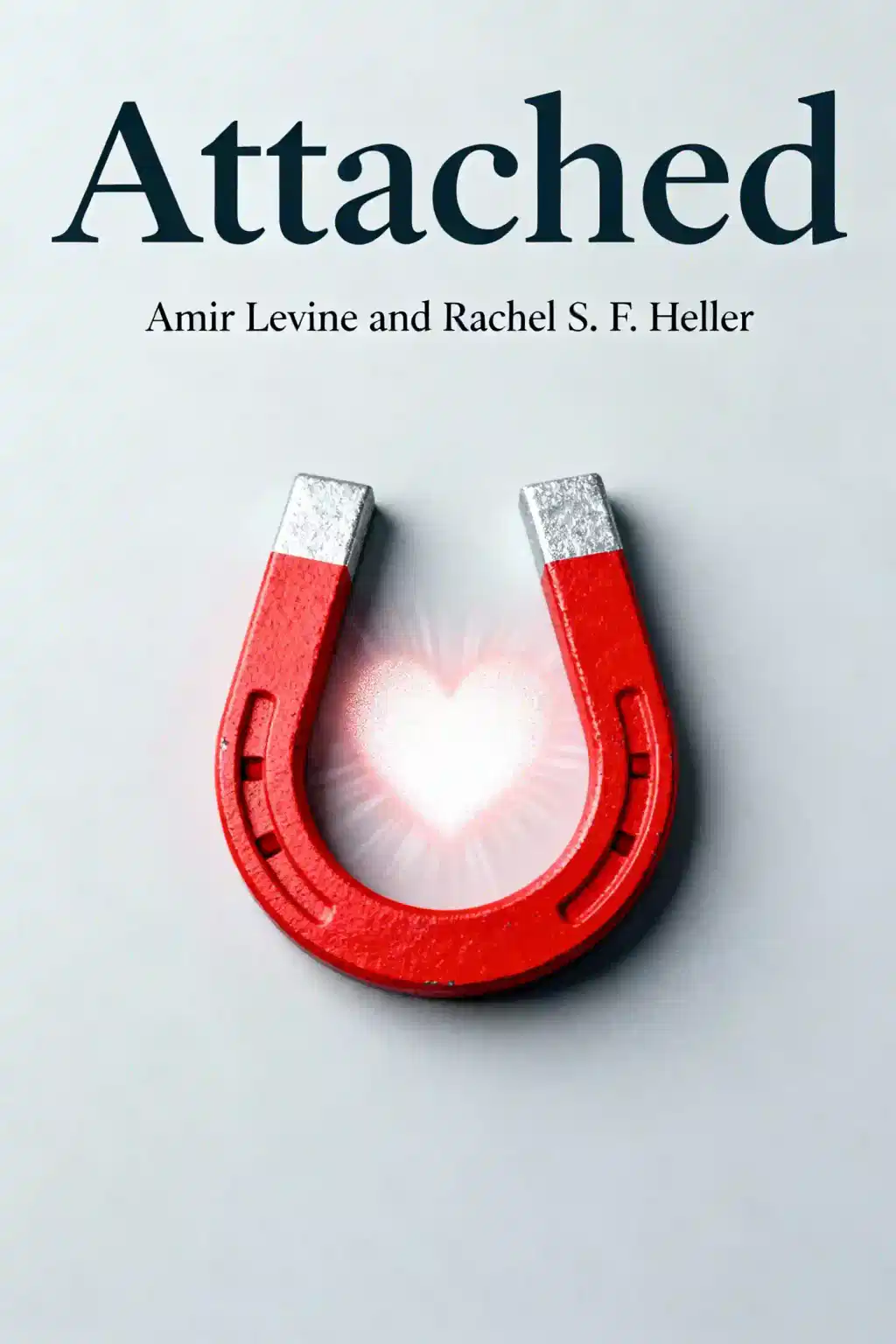
Attached: The New Science of Adult Attachment and How It Can Help YouFind - and Keep - Love by Amir Levine and Rachel S. F. Heller Summary

Overview of Attached
Discover why your relationship patterns aren't random. "Attached" revolutionized dating psychology by revealing how childhood bonds shape adult love. Endorsed by relationship guru John Gray, this bestseller explains why neediness isn't weakness - it's biology. Ready to decode your attachment style?
- Secure attachment styles strengthen relationships through emotional availability and responsiveness.
- Dependency is biologically wired, not a sign of weakness or neediness.
- Anxious attachment triggers protest behaviors like excessive texting to seek reassurance.
- Avoidant partners often prioritize independence over intimacy, creating emotional distance.
- Effective communication resolves conflicts faster by stating needs without blame.
- Choosing a secure partner reduces relational stress and fosters personal growth.
- Attachment systems activate automatically during threats, seeking proximity to loved ones.
- Relationships thrive when both partners prioritize each other’s emotional well-being.
- Incompatible attachment styles cause recurring conflicts despite love or commitment.
- Self-awareness of your attachment style prevents destructive relationship patterns.
- Secure bonds enhance autonomy by providing a reliable emotional base.
- Amir Levine’s research proves attachment needs are universal, not negotiable.
About the Author of Attached
Amir Levine, M.D., is a psychiatrist, neuroscientist, and co-author of the bestselling relationship guide Attached: The New Science of Adult Attachment and How It Can Help You Find—and Keep—Love. He merges clinical expertise with cutting-edge neuroscience. A Columbia University graduate trained under Nobel laureate Eric Kandel, his work at New York Presbyterian Hospital and therapeutic nursery programs grounds the book’s insights into attachment theory’s real-world applications.
Rachel S. F. Heller, M.A., is a psychologist and social psychology scholar who brings decades of private practice experience with couples and families to this transformative exploration of adult bonding patterns.
Their collaboration bridges hard science and actionable relationship strategies, positioning Attached as a seminal text in modern psychology and self-help genres. The book distills Levine’s neuroscience research and Heller’s therapeutic frameworks into accessible tools for navigating anxious, avoidant, and secure attachment styles. Featured in The New York Times and embraced globally, Attached has been translated into 30+ languages, cementing its status as a cornerstone of contemporary relationship literature.
FAQs About Attached
What is Attached by Amir Levine about?
Attached explores attachment theory in adult romantic relationships, explaining how three primary attachment styles—secure, anxious, and avoidant—shape relationship dynamics. The book argues that dependency on a partner is natural and beneficial, debunking myths about emotional independence. It combines neuroscience research with practical strategies to help readers build healthier relationships by understanding their attachment needs.
Who should read Attached?
This book is ideal for singles, couples, or anyone seeking to improve their romantic relationships. It’s particularly useful for those navigating dating challenges, communication issues, or emotional conflicts. Therapists and psychology enthusiasts will also value its science-backed insights into human attachment behaviors.
Is Attached worth reading?
Yes. The book provides actionable advice grounded in attachment theory and neuroscience, making it a valuable resource for improving relationship satisfaction. Critics praise its research-based approach, though some note it focuses more on binary dynamics (e.g., anxious-avoidant pairs) than complex scenarios.
Who is Amir Levine?
Amir Levine, MD, is a Columbia University psychiatrist, neuroscientist, and co-author of Attached. He specializes in attachment-based therapy and trains therapists globally. His work bridges clinical practice and neurobiology, offering evidence-based strategies for relationship health.
What are the three attachment styles in Attached?
The styles are secure (comfortable with intimacy), anxious (craves closeness but fears abandonment), and avoidant (prioritizes independence over emotional connection). These styles influence how partners communicate, handle conflict, and seek support, impacting relationship longevity.
How does Attached explain dependency in relationships?
The book reframes dependency as a biological need, not a weakness. Secure attachments strengthen emotional resilience, while mismatched styles (e.g., anxious-avoidant pairings) create instability. Levine argues that embracing healthy dependency fosters security and fulfillment.
What strategies does Attached recommend for different attachment styles?
- Secure: Model open communication and consistency.
- Anxious: Practice self-soothing and seek secure partners.
- Avoidant: Recognize deactivating strategies (e.g., distancing) and prioritize emotional availability.
How do avoidant partners behave according to Attached?
Avoidants often withdraw during conflict, minimize emotional needs, and prioritize self-reliance. They may use “deactivating strategies” like focusing on a partner’s flaws to avoid intimacy. The book advises avoidants to acknowledge these patterns to build trust.
What are the main criticisms of Attached?
Some critics argue the book oversimplifies attachment dynamics, particularly in non-binary or non-traditional relationships. Others note it focuses heavily on anxious-avoidant pairings, with less guidance for secure individuals navigating complex scenarios.
How can Attached help improve communication in relationships?
The book emphasizes “effective communication” as key to resolving attachment-related conflicts. Examples include using clear, non-blaming language and addressing needs directly (e.g., “I feel worried when you don’t respond”) to foster security.
Why is attachment theory important for romantic relationships?
Attachment styles dictate how partners connect, handle stress, and resolve conflicts. Understanding these patterns helps couples break destructive cycles, build trust, and create a “secure base” for emotional growth.
Is Attached relevant to modern dating in 2025?
Yes. Despite being published in 2010, its insights into communication, emotional needs, and compatibility remain applicable—especially in an era where dating apps and shifting social norms amplify attachment anxieties.
Feel the book through the author's voice
Turn knowledge into engaging, example-rich insights
Capture key ideas in a flash for fast learning
Enjoy the book in a fun and engaging way
Key Themes in Attached
Quotes from Attached
Avoidant people equate intimacy with a loss of independence and constantly try to minimize closeness.
Our need for emotional connection isn't a weakness but a biological imperative.
The more effectively dependent people are on one another, the more independent and daring they become.
Humans are wired for connection from birth.
Self-reliance is the ultimate virtue.
Characters in Attached
Quick Summary Mode - Read or listen to Attached Summary in 8 Minutes

Break down key ideas from Attached into bite-sized takeaways to understand how innovative teams create, collaborate, and grow.

Flash Card Mode - Top 11 Insights from Attached in a Nutshell

Distill Attached into rapid-fire memory cues that highlight key principles of candor, teamwork, and creative resilience.

Fun Mode - Attached Lessons Told Through 22-Min Stories

Experience Attached through vivid storytelling that turns innovation lessons into moments you'll remember and apply.
Personalize Mode - Read or listen to Attached Summary in 0 Minutes

Ask anything, pick the voice, and co-create insights that truly resonate with you.

From Columbia University alumni built in San Francisco
"Instead of endless scrolling, I just hit play on BeFreed. It saves me so much time."


"I never knew where to start with nonfiction—BeFreed’s book lists turned into podcasts gave me a clear path."


"Perfect balance between learning and entertainment. Finished ‘Thinking, Fast and Slow’ on my commute this week."
"Crazy how much I learned while walking the dog. BeFreed = small habits → big gains."
"Reading used to feel like a chore. Now it’s just part of my lifestyle."

"Feels effortless compared to reading. I’ve finished 6 books this month already."
"BeFreed turned my guilty doomscrolling into something that feels productive and inspiring."

"BeFreed turned my commute into learning time. 20-min podcasts are perfect for finishing books I never had time for."
"BeFreed replaced my podcast queue. Imagine Spotify for books — that’s it. 🙌"

"It is great for me to learn something from the book without reading it."
"The themed book list podcasts help me connect ideas across authors—like a guided audio journey."
"Makes me feel smarter every time before going to work"
From Columbia University alumni built in San Francisco
"Instead of endless scrolling, I just hit play on BeFreed. It saves me so much time."
"I never knew where to start with nonfiction—BeFreed’s book lists turned into podcasts gave me a clear path."
"Perfect balance between learning and entertainment. Finished ‘Thinking, Fast and Slow’ on my commute this week."
"Crazy how much I learned while walking the dog. BeFreed = small habits → big gains."
"Reading used to feel like a chore. Now it’s just part of my lifestyle."
"Feels effortless compared to reading. I’ve finished 6 books this month already."
"BeFreed turned my guilty doomscrolling into something that feels productive and inspiring."
"BeFreed turned my commute into learning time. 20-min podcasts are perfect for finishing books I never had time for."
"BeFreed replaced my podcast queue. Imagine Spotify for books — that’s it. 🙌"
"It is great for me to learn something from the book without reading it."
"The themed book list podcasts help me connect ideas across authors—like a guided audio journey."
"Makes me feel smarter every time before going to work"
"Instead of endless scrolling, I just hit play on BeFreed. It saves me so much time."
"I never knew where to start with nonfiction—BeFreed’s book lists turned into podcasts gave me a clear path."
"Perfect balance between learning and entertainment. Finished ‘Thinking, Fast and Slow’ on my commute this week."
"Crazy how much I learned while walking the dog. BeFreed = small habits → big gains."
"Reading used to feel like a chore. Now it’s just part of my lifestyle."
"Feels effortless compared to reading. I’ve finished 6 books this month already."
"BeFreed turned my guilty doomscrolling into something that feels productive and inspiring."
"BeFreed turned my commute into learning time. 20-min podcasts are perfect for finishing books I never had time for."
"BeFreed replaced my podcast queue. Imagine Spotify for books — that’s it. 🙌"
"It is great for me to learn something from the book without reading it."
"The themed book list podcasts help me connect ideas across authors—like a guided audio journey."
"Makes me feel smarter every time before going to work"
"Instead of endless scrolling, I just hit play on BeFreed. It saves me so much time."
"I never knew where to start with nonfiction—BeFreed’s book lists turned into podcasts gave me a clear path."
"Perfect balance between learning and entertainment. Finished ‘Thinking, Fast and Slow’ on my commute this week."
"Crazy how much I learned while walking the dog. BeFreed = small habits → big gains."
"Reading used to feel like a chore. Now it’s just part of my lifestyle."
"Feels effortless compared to reading. I’ve finished 6 books this month already."
"BeFreed turned my guilty doomscrolling into something that feels productive and inspiring."
"BeFreed turned my commute into learning time. 20-min podcasts are perfect for finishing books I never had time for."
"BeFreed replaced my podcast queue. Imagine Spotify for books — that’s it. 🙌"
"It is great for me to learn something from the book without reading it."
"The themed book list podcasts help me connect ideas across authors—like a guided audio journey."
"Makes me feel smarter every time before going to work"

Get the Attached summary as a free PDF or EPUB. Print it or read offline anytime.