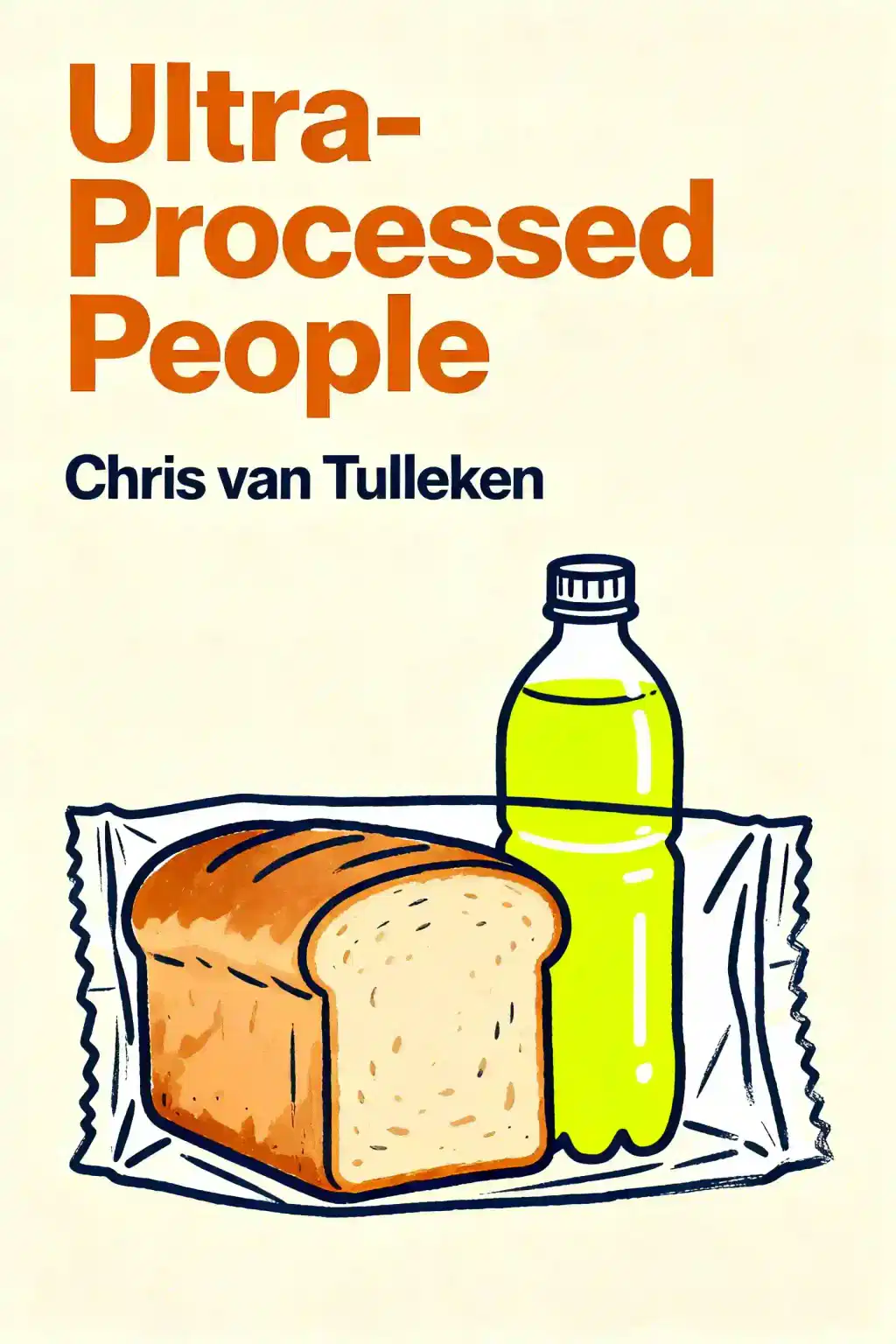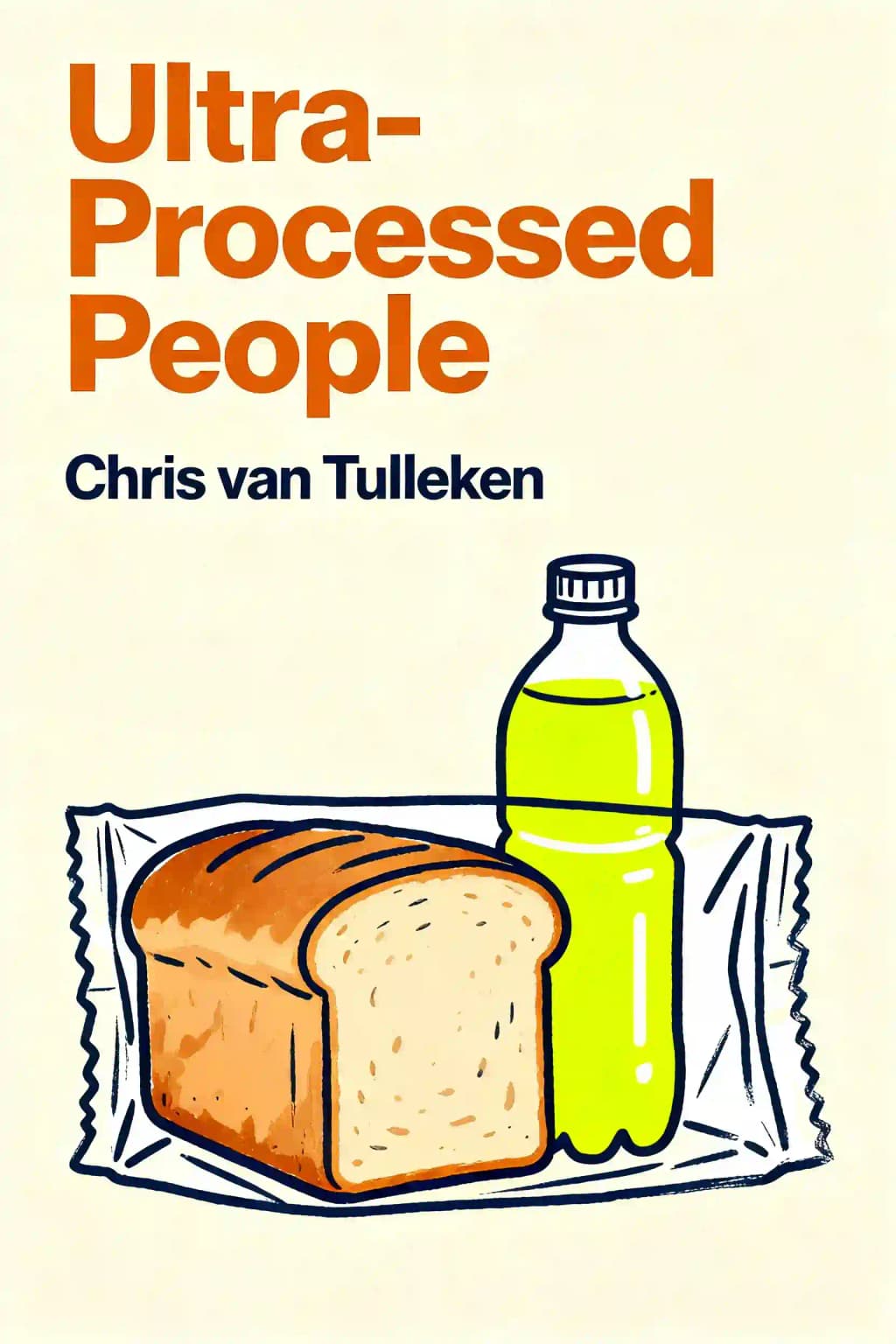
Ultra-Processed People
The Third Age of Eating
Overview of Ultra-Processed People
Discover why ultra-processed foods dominate our diets in this incendiary expose that sparked global debate. Dr. Chris van Tulleken's shocking self-experiment gained praise from Michael Mosley and Tim Spector, revealing why these engineered "foods" are destroying both our health and environment.

Key Themes in Ultra-Processed People
- industrial food engineering
- evolutionary biology mismatch
- hyperpalatable food addiction
- corporate food systems
- metabolic health crisis
Quotes from Ultra-Processed People
Our bodies are battlegrounds in an ancient evolutionary conflict.
Humans have become prey in a corporate competition for profit.
UPF consumption directly damages human health.
We're becoming fundamentally different beings—ultraprocessed people.
Industrial food production can prioritize efficiency over humanity.
Characters in Ultra-Processed People
- Chris van TullekenAuthor, physician, and infectious disease expert
- Carlos MonteiroScientist who developed the NOVA classification
- Hippolyte Mege-MouriesChemist who created the first margarine
- Napoleon IIIFrench leader who commissioned a butter substitute
About the Author
About the Author of Ultra-Processed People
Dr. Chris van Tulleken, bestselling author of Ultra-Processed People: Why Do We All Eat Stuff That Isn’t Food… and Why Can’t We Stop?, is an NHS infectious diseases physician, University College London academic, and award-winning science broadcaster.
Blending medical expertise with public health advocacy, his work explores the intersection of nutrition, corporate influence, and global food systems. The book—a New York Times bestseller—exposes the health and environmental crises driven by industrialized food, informed by van Tulleken’s clinical experience and research in molecular virology.
A familiar face on BBC programs like Trust Me, I’m a Doctor and Horizon, he co-created the CBBC series Operation Ouch! and authored Secrets of the Human Body. His 2024 Royal Institution Christmas Lectures, The Truth About Food, further cemented his role as a leading voice in nutrition science.
Translated into over 20 languages, Ultra-Processed People has sparked global discourse, combining rigorous analysis with actionable insights to redefine our relationship with modern diets.
Download Summary of Ultra-Processed People
Get the Ultra-Processed People summary as a free PDF or EPUB. Print it or read offline anytime.
FAQs About This Book
Ultra-Processed People examines how industrially manufactured food-like substances dominate modern diets, linking them to obesity, metabolic diseases, and environmental harm. Chris van Tulleken, an infectious diseases doctor, blends scientific research with investigative journalism to expose corporate practices that prioritize profit over health, while advocating for systemic changes to food production and consumption.
This book is ideal for health-conscious individuals, nutrition professionals, policymakers, and environmental advocates. It offers critical insights for anyone seeking to understand the hidden impacts of ultra-processed foods (UPFs) on personal health, societal inequality, and global ecosystems.
Yes—van Tulleken’s rigorous analysis of peer-reviewed studies, combined with accessible storytelling, makes this a standout resource. It has garnered praise for exposing how UPFs hijack our biology and contribute to chronic diseases, earning recognition as a top science book.
UPFs are industrial formulations made with ingredients rarely found in home kitchens, such as emulsifiers and artificial flavors. Van Tulleken argues they are “edible substances” designed for profit, not nourishment, and often lack nutritional value despite being calorie-dense.
UPFs correlate with obesity, type 2 diabetes, cardiovascular diseases, and certain cancers. They disrupt gut health, promote overeating, and may alter brain chemistry, creating dependency-like cravings.
Companies engineer UPFs for maximized addictiveness and shelf stability while investing heavily in marketing and lobbying. Van Tulleken compares their tactics to tobacco industries, emphasizing profit-driven disregard for public health.
The book ties UPF production to deforestation (e.g., soy farming for livestock), biodiversity loss, and carbon emissions. Roughly 80% of global farmland sustains animal agriculture, exacerbating climate change.
- “It’s not food. It’s an industrially produced edible substance.”
- “The ultimate goal is not to feed people but to make money.”
These lines underscore the book’s critique of UPFs’ profit-over-health paradigm.
Unlike diets focused on macronutrients, van Tulleken highlights UPFs’ processing level as the critical issue. Even plant-based or “low-sugar” UPFs can harm health due to additives and minimal whole-food content.
Some argue the book oversimplifies dietary choices in low-income communities or understates individual responsibility. However, van Tulleken stresses systemic change—not personal blame—as the solution.
- Prioritize whole, unprocessed foods.
- Read ingredient labels to avoid industrial additives.
- Advocate for stricter food labeling regulations and corporate accountability.
As UPFs dominate global food systems, the book remains critical for understanding ongoing health crises and policy debates. Its 2025 reprint reflects updated data on UPFs’ societal costs and emerging regulatory efforts.