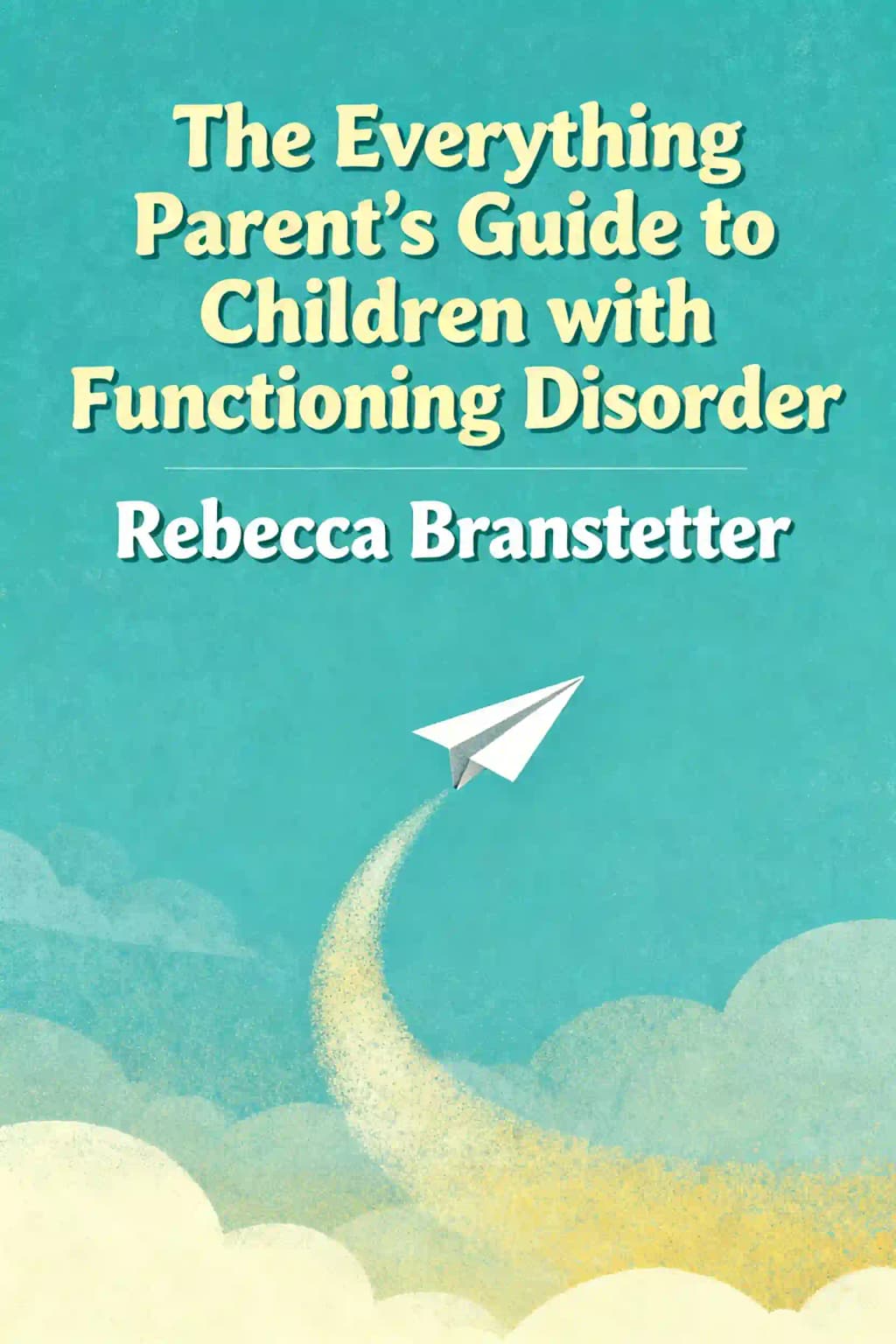
The everything parent's guide to children with executive functioning disorder
strategies to help your child achieve the time management skills, focus, and organization needed to succeed in school and life
Overview of The everything parent's guide to children with executive functioning disorder
Struggling with your child's organization, focus, or time management? Psychologist Rebecca Branstetter's practical guide transforms executive functioning challenges with step-by-step strategies and ready-to-use checklists. What if the solution isn't more discipline, but understanding how your child's brain actually works?

Key Themes in The everything parent's guide to children with executive functioning disorder
- executive function coaching
- impulse control strategies
- working memory support
- task initiation techniques
- childhood self-regulation
Quotes from The everything parent's guide to children with executive functioning disorder
Repetition comes before problems occur, while nagging happens after problems start.
Today's "new marshmallow" is technology.
Organization involves maintaining order in personal spaces and keeping track of belongings.
Children respond better to being told they're "the boss"
Characters in The everything parent's guide to children with executive functioning disorder
- Rebecca BranstetterAuthor and expert on executive functioning
- Dr. Ross GreenePsychologist who recommends the book's approach
About the Author
About the Author of The everything parent's guide to children with executive functioning disorder
Rebecca Branstetter, Ph.D., is a school psychologist and the bestselling author of The Everything Parent’s Guide to Children with Executive Functioning Disorder. She combines two decades of experience supporting neurodiverse learners with evidence-based strategies for families.
A licensed school psychologist and founder of The Thriving Students Collective, she specializes in translating complex psychological concepts into practical tools for parents and educators. Her work has been featured in Parents Magazine, NPR, and CNN.
Branstetter's work addresses executive functioning, ADHD, and student mental health through a lens of empowerment and accessibility. Her other books, including The Conscious Parent’s Guide to Executive Functioning Disorders and The Thriving School Psychologist, further establish her as a trusted voice in educational psychology.
She regularly contributes to the Greater Good Science Center at UC Berkeley and hosts professional development courses embraced by school districts nationwide. Her guides are widely recommended by mental health professionals and educators, with frameworks adopted in over 500 U.S. school systems.
Download Summary of The everything parent's guide to children with executive functioning disorder
Get the The everything parent's guide to children with executive functioning disorder summary as a free PDF or EPUB. Print it or read offline anytime.
FAQs About This Book
The Everything Parent's Guide to Children with Executive Functioning Disorder provides actionable strategies to help children develop skills like task initiation, focus, time management, and emotional regulation. Written by school psychologist Dr. Rebecca Branstetter, it combines explanations of executive functioning challenges with checklists, real-life examples, and step-by-step solutions for improving organization and self-regulation.
This book is ideal for parents of children with ADHD, autism, or executive functioning (EF) challenges, as well as educators and therapists seeking practical tools. It’s designed for caregivers who need evidence-based methods to address issues like forgotten homework, emotional outbursts, or poor planning.
Dr. Branstetter breaks down eight core EF skills: task initiation, response inhibition, focus, time management, working memory, flexibility, self-regulation, and organization. The book offers targeted advice for each, such as breaking tasks into smaller steps or using visual schedules to improve time management.
Unlike purely theoretical guides, this book emphasizes hands-on strategies with checklists and troubleshooting templates. It focuses on real-world applications, like helping children transition between tasks or complete assignments, and integrates Dr. Branstetter’s 20+ years of experience in school psychology.
Key tools include:
- Checklists to track progress on skills like organization or impulse control.
- Scripts for discussing challenges with teachers or children.
- Customizable routines for homework, mornings, and bedtime.
- Techniques to build working memory through games and reminders.
The book provides specific advice for school settings, such as collaborating with educators on IEP/504 plans, modifying assignments for better focus, and creating systems to ensure homework is turned in. It also covers classroom accommodations like preferential seating or extended time.
Yes—it offers strategies adaptable to any child struggling with organization, time management, or emotional regulation. Dr. Branstetter emphasizes that EF challenges exist on a spectrum, and her tools are designed for both diagnosed and undiagnosed children.
- Executive functioning skills can be taught through consistent practice.
- Environmental modifications (e.g., visual schedules) reduce overwhelm.
- Positive reinforcement works better than punishment for EF-related mistakes.
- Parent-child collaboration fosters long-term self-reliance.
While both books address EF challenges, Dr. Branstetter’s guide offers more structured checklists and school-focused strategies, whereas Late, Lost, and Unprepared delves deeper into emotional impacts. The Everything Guide is often praised for its immediate applicability to daily routines.
Yes—Dr. Branstetter includes self-care tips for caregivers, stressing that calm, consistent parenting is key to modeling EF skills. Techniques include reframing setbacks as learning opportunities and prioritizing progress over perfection.
While focused on school-aged children (5-18), many strategies apply to younger kids developing foundational skills or adults with EF challenges. The book adapts approaches based on developmental stages, such as using picture charts for preschoolers vs. digital planners for teens.
Chapters are divided by skill type (e.g., focus, flexibility), with clear headings, bulleted lists, and gray “tip” boxes highlighting quick strategies. A troubleshooting index helps parents quickly locate solutions for issues like morning meltdowns or missed deadlines.