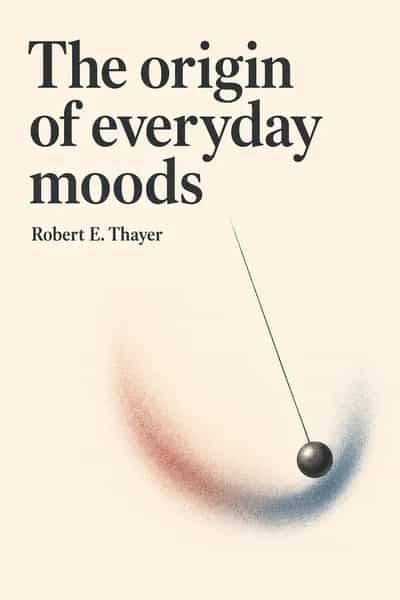
The origin of everyday moods: managing energy, tension, and stress

Overview of The origin of everyday moods
Discover why your mood changes aren't just "in your head." Oxford-published "The Origin of Everyday Moods" reveals the biological truth behind energy and tension states, offering science-backed strategies to transform your daily well-being. Featured in "50 Psychology Classics" for its revolutionary approach to mood management.
- Robert Thayer’s energy-tension framework explains 90% of mood fluctuations
- Calm-energy boosts productivity while reducing stress-related health risks
- Tense-energy drives short-term focus but escalates chronic anxiety long-term
- Moods aren’t random—blood sugar and circadian rhythms direct energy levels
- Walking beats caffeine for converting tense-energy to calm-energy states
- Addictive behaviors often stem from misguided attempts to regulate tension
- Calm-tiredness aids creativity through relaxed, diffuse-attention states
- Morning energy management predicts afternoon willpower and decision quality
- Chronic stress converts calm-energy into tense-tiredness within 3-6 months
- Food timing impacts mood more dramatically than food composition
- Self-monitoring energy-tension patterns reveals personal stress triggers
- Mood recovery requires matching activities to current energy-tension state
About the Author of The origin of everyday moods
Robert E. Thayer (1935–2014), author of The Origin of Everyday Moods: Managing Energy, Tension, and Stress, was a pioneering psychologist and internationally recognized expert in biopsychology and mood research. A professor at California State University, Long Beach, for over 50 years, Thayer dedicated his career to studying the biological roots of human emotion, particularly the interplay between energy, tension, and arousal. His groundbreaking work introduced the Activation-Deactivation Adjective Check List (AD ACL), a widely used tool for assessing mood states.
Thayer’s research bridged academia and practical application, emphasizing how exercise, diet, and daily rhythms shape emotional well-being. His insights were featured in media outlets like NPR’s Fresh Air, where he discussed mood regulation strategies. In addition to The Origin of Everyday Moods, he authored multiple books exploring the science of emotion, cementing his reputation as a leading voice in psychological literature.
Known for practicing his principles—like walking extensively to boost mood—Thayer’s work remains foundational in psychology curricula and resilience-training programs. His legacy endures through ongoing citations in academic research and its influence on stress-management frameworks worldwide.
FAQs About The origin of everyday moods
What is The Origin of Everyday Moods by Robert E. Thayer about?
The Origin of Everyday Moods explores the biological and psychological roots of everyday emotions, arguing that moods arise from two interconnected arousal systems: energy-tiredness and calm-tension. Thayer identifies "calm-energy" as the optimal state and offers science-backed strategies like exercise, diet, and self-observation to manage mood fluctuations. The book blends neuroscience insights with practical advice for improving well-being.
Who should read The Origin of Everyday Moods?
This book is ideal for readers interested in psychology, self-improvement, or understanding how biological factors like sleep, nutrition, and exercise impact emotions. It’s particularly relevant for professionals in mental health, educators, or anyone seeking actionable methods to regulate stress and enhance daily productivity.
Is The Origin of Everyday Moods worth reading?
Yes—Thayer’s research-backed framework for mood management remains relevant for its actionable insights. While some critics note its academic tone, the book’s focus on practical strategies like exercise’s dual role in boosting energy and reducing tension makes it valuable for readers seeking science-based self-help tools.
What are the main concepts in The Origin of Everyday Moods?
Key ideas include:
- Calm-energy: The ideal mood state balancing low tension and high vitality.
- Mood regulation: Matching activities to natural energy rhythms (e.g., tackling demanding tasks during high-energy periods).
- Biopsychology: How neurotransmitters, diet, and sleep shape moods.
How does Robert E. Thayer suggest improving moods?
Thayer emphasizes lifestyle adjustments:
- Exercise: The most effective method to increase energy and reduce tension.
- Diet: Avoiding sugary snacks that cause tension spikes.
- Self-observation: Tracking daily energy cycles to optimize task timing.
What is the “calm-energy” concept in The Origin of Everyday Moods?
Calm-energy refers to a state of low tension and high vitality, enabling peak productivity and emotional balance. Thayer contrasts this with less optimal states like tense-tiredness (high stress, low energy) and argues that aligning activities with natural energy rhythms sustains this ideal mood.
How does The Origin of Everyday Moods compare to other psychology books?
Unlike anecdotal self-help guides, Thayer’s work grounds mood management in biopsychology and empirical research. It complements books like Atomic Habits by focusing on biological drivers of behavior but stands out for its specific framework linking physiology to emotional states.
What criticisms exist about The Origin of Everyday Moods?
Some reviewers note the book’s academic tone and limited exploration of neurochemical mechanisms. Others suggest its reliance on self-observation may oversimplify mood management for those with clinical disorders.
How does Thayer’s research apply to modern stress management?
Thayer’s insights on exercise’s mood-enhancing effects and the dangers of chronic tension align with contemporary wellness practices. His emphasis on aligning work with natural energy cycles mirrors today’s focus on circadian rhythm optimization.
What quotes summarize The Origin of Everyday Moods?
Notable ideas include:
- “Exercise is nature’s mood stabilizer.”
- “Calm-energy is the foundation of effective decision-making.”
- “Moods are not just feelings—they are biological events.”
How does Robert E. Thayer’s background influence the book?
As a renowned biopsychologist, Thayer integrates decades of mood research into accessible frameworks. His work on the Activation-Deactivation Adjective Check List (AD ACL) underpins the book’s analysis of energy and tension dynamics.
Can The Origin of Everyday Moods help with anxiety?
While not a substitute for clinical treatment, Thayer’s strategies—like reducing caffeine, prioritizing sleep, and rhythmic breathing—offer practical tools for managing everyday anxiety. His focus on tension reduction through exercise is particularly supported by modern research.
Feel the book through the author's voice
Turn knowledge into engaging, example-rich insights
Capture key ideas in a flash for fast learning
Enjoy the book in a fun and engaging way
Characters in The origin of everyday moods
- Robert E. ThayerAuthor and psychologist specializing in mood
- WatsonResearcher who identified dimensions of mood
- TellegenResearcher who identified dimensions of mood
Key Themes in The origin of everyday moods
- circadian rhythms
- biopsychological mood regulation
- energy and tension
- biological clock
- mood-food connection
Quotes from The origin of everyday moods
Moods aren't primarily reactions to events but biological states.
Energy serves as the cornerstone of positive affect.
Energy indicates physical and psychological health.
Thoughts influence mood in complex ways.
Tension arises when situational requirements exceed our perceived resources.
Explore Your Way of Learning
 Quick Summary Mode
Read or listen to The origin of everyday moods Summary in 10 Minutes
Break down key ideas from The origin of everyday moods into bite-sized takeaways to understand how innovative teams create, collaborate, and grow.

 Fun Mode
The origin of everyday moods Lessons Told Through 22-Min Stories
Experience The origin of everyday moods through vivid storytelling that turns innovation lessons into moments you'll remember and apply.
 Personalize Mode
Experience The origin of everyday moods in your own learning style
Ask anything, choose your learning style, and co-create insights that truly resonate with you.

From Columbia University alumni built in San Francisco
"Instead of endless scrolling, I just hit play on BeFreed. It saves me so much time."


"I never knew where to start with nonfiction—BeFreed’s book lists turned into podcasts gave me a clear path."


"Perfect balance between learning and entertainment. Finished ‘Thinking, Fast and Slow’ on my commute this week."
"Crazy how much I learned while walking the dog. BeFreed = small habits → big gains."
"Reading used to feel like a chore. Now it’s just part of my lifestyle."

"Feels effortless compared to reading. I’ve finished 6 books this month already."
"BeFreed turned my guilty doomscrolling into something that feels productive and inspiring."

"BeFreed turned my commute into learning time. 20-min podcasts are perfect for finishing books I never had time for."
"BeFreed replaced my podcast queue. Imagine Spotify for books — that’s it. 🙌"

"It is great for me to learn something from the book without reading it."
"The themed book list podcasts help me connect ideas across authors—like a guided audio journey."
"Makes me feel smarter every time before going to work"
From Columbia University alumni built in San Francisco
"Instead of endless scrolling, I just hit play on BeFreed. It saves me so much time."
"I never knew where to start with nonfiction—BeFreed’s book lists turned into podcasts gave me a clear path."
"Perfect balance between learning and entertainment. Finished ‘Thinking, Fast and Slow’ on my commute this week."
"Crazy how much I learned while walking the dog. BeFreed = small habits → big gains."
"Reading used to feel like a chore. Now it’s just part of my lifestyle."
"Feels effortless compared to reading. I’ve finished 6 books this month already."
"BeFreed turned my guilty doomscrolling into something that feels productive and inspiring."
"BeFreed turned my commute into learning time. 20-min podcasts are perfect for finishing books I never had time for."
"BeFreed replaced my podcast queue. Imagine Spotify for books — that’s it. 🙌"
"It is great for me to learn something from the book without reading it."
"The themed book list podcasts help me connect ideas across authors—like a guided audio journey."
"Makes me feel smarter every time before going to work"
"Instead of endless scrolling, I just hit play on BeFreed. It saves me so much time."
"I never knew where to start with nonfiction—BeFreed’s book lists turned into podcasts gave me a clear path."
"Perfect balance between learning and entertainment. Finished ‘Thinking, Fast and Slow’ on my commute this week."
"Crazy how much I learned while walking the dog. BeFreed = small habits → big gains."
"Reading used to feel like a chore. Now it’s just part of my lifestyle."
"Feels effortless compared to reading. I’ve finished 6 books this month already."
"BeFreed turned my guilty doomscrolling into something that feels productive and inspiring."
"BeFreed turned my commute into learning time. 20-min podcasts are perfect for finishing books I never had time for."
"BeFreed replaced my podcast queue. Imagine Spotify for books — that’s it. 🙌"
"It is great for me to learn something from the book without reading it."
"The themed book list podcasts help me connect ideas across authors—like a guided audio journey."
"Makes me feel smarter every time before going to work"
"Instead of endless scrolling, I just hit play on BeFreed. It saves me so much time."
"I never knew where to start with nonfiction—BeFreed’s book lists turned into podcasts gave me a clear path."
"Perfect balance between learning and entertainment. Finished ‘Thinking, Fast and Slow’ on my commute this week."
"Crazy how much I learned while walking the dog. BeFreed = small habits → big gains."
"Reading used to feel like a chore. Now it’s just part of my lifestyle."
"Feels effortless compared to reading. I’ve finished 6 books this month already."
"BeFreed turned my guilty doomscrolling into something that feels productive and inspiring."
"BeFreed turned my commute into learning time. 20-min podcasts are perfect for finishing books I never had time for."
"BeFreed replaced my podcast queue. Imagine Spotify for books — that’s it. 🙌"
"It is great for me to learn something from the book without reading it."
"The themed book list podcasts help me connect ideas across authors—like a guided audio journey."
"Makes me feel smarter every time before going to work"

Download Summary of The origin of everyday moods
Get the The origin of everyday moods summary as a free PDF or EPUB. Print it or read offline anytime.