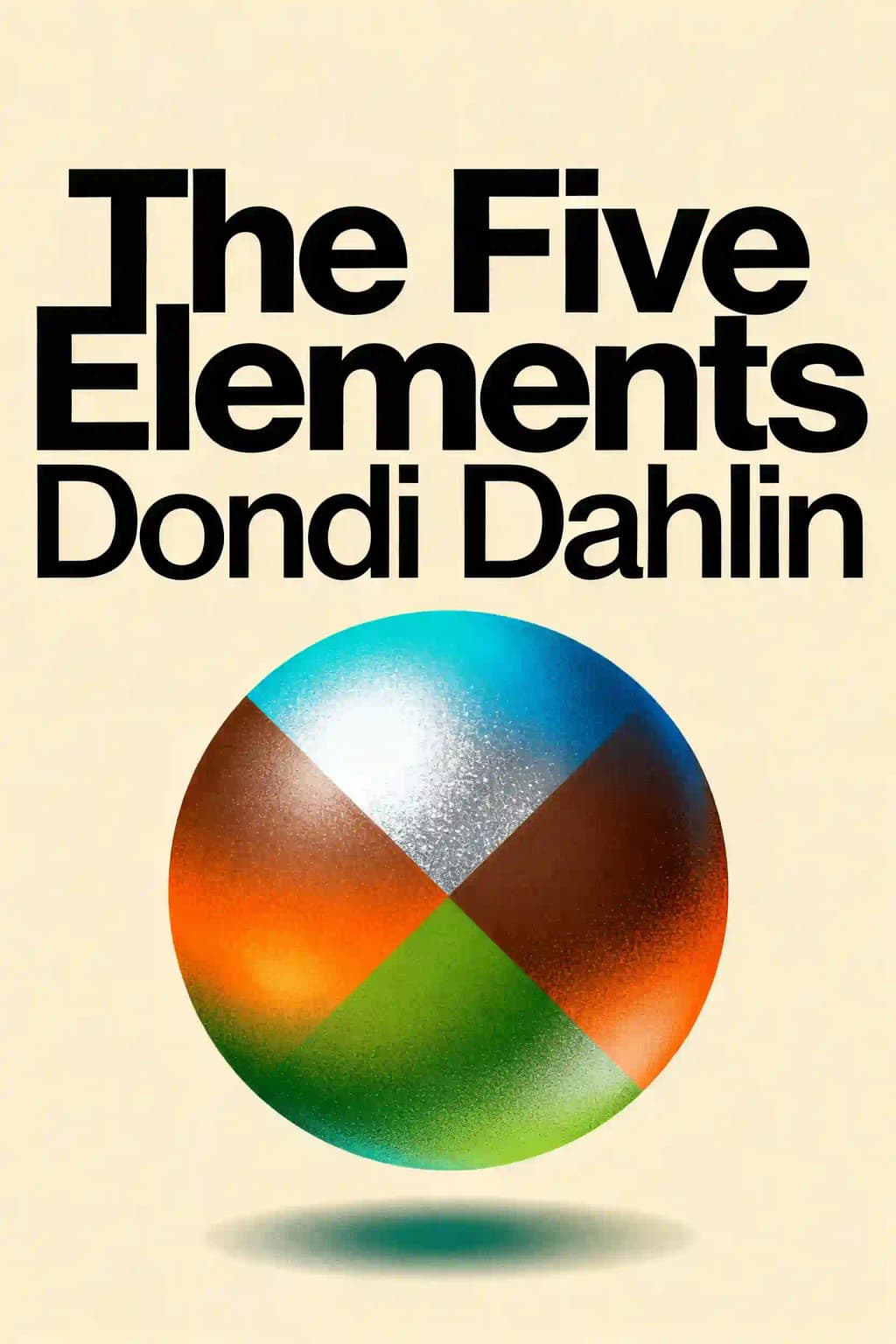
Decode your personality through ancient Chinese wisdom. "The Five Elements" reveals how Water, Wood, Fire, Earth, and Metal energies shape relationships and health. Endorsed by wellness pioneer Donna Eden, this bestselling framework has transformed conflict into compassion at Hay House workshops worldwide.
Dondi Dahlin, award-winning author of The Five Elements and internationally acclaimed energy medicine teacher, blends traditional Chinese medicine with modern personality psychology in this transformative guide to the Five Elements system.
As the daughter of Donna Eden, a pioneer in energy healing, Dahlin co-authored The Little Book of Energy Medicine and has taught at OMEGA Institute, Feathered Pipe Ranch, and Eden Energy Medicine certification programs since the 1990s. A Screen Actors Guild member and “Belly Dancer of the Universe” titleholder, she performed in over 30 countries with Miles Copeland’s Belly Dance Superstars, integrating performance arts into her teachings.
Her work has been featured by Hay House, Mindvalley, and ACEP, earning recognition as an international bestseller used in energy medicine trainings worldwide. Dahlin’s unique approach—rooted in her dual background in historic preservation advocacy and decades of stage experience—makes The Five Elements a cornerstone text for understanding personality types through ancient healing frameworks, now a required resource in energy medicine certification curricula.
The Five Elements explores ancient Chinese philosophy’s Wood, Fire, Earth, Metal, and Water elements as frameworks for understanding personality, behavior, and relationships. Dondi Dahlin combines energy medicine principles with modern self-help, offering self-assessment tools and practical advice for emotional balance and interpersonal harmony. The book blends personal anecdotes, celebrity examples, and actionable strategies to decode how elemental forces shape decision-making and communication.
This book suits readers interested in holistic self-discovery, energy healing, or personality typology. It’s valuable for those seeking to improve relationships, manage stress, or explore alternative wellness approaches. Fans of Donna Eden’s energy medicine work or accessible philosophical guides will find it particularly engaging.
Yes, for readers open to blending ancient wisdom with modern psychology. While some criticize its anecdotal style, it provides a unique lens for self-awareness and emotional growth. Dahlin’s background in performance arts ensures an engaging, approachable tone, making complex concepts digestible for newcomers to energy medicine.
Dahlin links these to emotional triggers, communication styles, and stress responses, offering tailored strategies for each type.
Dahlin integrates her mother Donna Eden’s energy medicine techniques, such as meridian tracing and acupressure, with elemental theory. The book suggests physical exercises and mindfulness practices to balance elemental energies, positioning it as a bridge between traditional Chinese medicine and contemporary wellness trends.
Some reviewers find the celebrity anecdotes and Buzzfeed-style quizzes distracting. Critics note it prioritizes accessibility over academic depth, making it less suited for readers seeking rigorous philosophical analysis. However, its practical focus appeals to casual self-help audiences.
Unlike Myers-Briggs or Enneagram systems, Dahlin’s approach ties personality to physiological energy patterns. It shares similarities with Traditional Chinese Medicine (TCM) guides but stands out for its storytelling and self-assessment tools. For deeper TCM analysis, readers might pair it with Peter Deadman’s A Manual of Acupuncture.
Yes. By identifying one’s dominant element and others’, the book provides scripts for conflict resolution and empathy-building. For example, Earth types may need reassurance, while Water types thrive with reflective dialogue. Real-world scenarios illustrate how elemental compatibility impacts friendships and partnerships.
Dahlin references personalities like Jimmy Buffett (Fire’s spontaneity) and historical figures to illustrate elemental traits. These anecdotes aim to make abstract concepts relatable, though some readers find them name-droppy. Her dance career insights, including work with Belly Dance Superstars, enrich the narrative.
The book encourages embracing non-dominant elements to foster balance. A Water-dominant person might adopt Wood’s decisiveness, while a Metal type could cultivate Earth’s empathy. Dahlin includes exercises like journal prompts and energy-balancing routines to support this transformative process.
While her earlier The Little Book of Energy Medicine (co-authored with Donna Eden) focuses on techniques, The Five Elements merges memoir, personality theory, and wellness. It reflects her dual expertise in performance arts and energy healing, offering a more narrative-driven approach compared to her instructional guides.
Dahlin offers online courses through LearnTheFiveElements.com, including video tutorials and community workshops. These resources expand on the book’s concepts with interactive exercises, making them ideal for readers seeking hands-on learning or group discussion.
Siente el libro a través de la voz del autor
Convierte el conocimiento en ideas atractivas y llenas de ejemplos
Captura ideas clave en un instante para un aprendizaje rápido
Disfruta el libro de una manera divertida y atractiva
What makes us different isn't wrong—it's essential to our authentic nature.
Waters move through life at an unhurried pace.
Woods speak their truth without filters, valuing honesty over politeness.
Understanding these patterns cultivates genuine compassion.
Woods are fearless, determined individuals.
Desglosa las ideas clave de The Five Elements en puntos fáciles de entender para comprender cómo los equipos innovadores crean, colaboran y crecen.
Experimenta The Five Elements a través de narraciones vívidas que convierten las lecciones de innovación en momentos que recordarás y aplicarás.
Pregunta cualquier cosa, elige tu estilo de aprendizaje y co-crea ideas que realmente resuenen contigo.

Creado por exalumnos de la Universidad de Columbia en San Francisco
"Instead of endless scrolling, I just hit play on BeFreed. It saves me so much time."
"I never knew where to start with nonfiction—BeFreed’s book lists turned into podcasts gave me a clear path."
"Perfect balance between learning and entertainment. Finished ‘Thinking, Fast and Slow’ on my commute this week."
"Crazy how much I learned while walking the dog. BeFreed = small habits → big gains."
"Reading used to feel like a chore. Now it’s just part of my lifestyle."
"Feels effortless compared to reading. I’ve finished 6 books this month already."
"BeFreed turned my guilty doomscrolling into something that feels productive and inspiring."
"BeFreed turned my commute into learning time. 20-min podcasts are perfect for finishing books I never had time for."
"BeFreed replaced my podcast queue. Imagine Spotify for books — that’s it. 🙌"
"It is great for me to learn something from the book without reading it."
"The themed book list podcasts help me connect ideas across authors—like a guided audio journey."
"Makes me feel smarter every time before going to work"
Creado por exalumnos de la Universidad de Columbia en San Francisco

Obtén el resumen de The Five Elements como PDF o EPUB gratis. Imprímelo o léelo sin conexión en cualquier momento.
Why do some people drain your energy while others light you up? What if the key to understanding these differences wasn't in modern psychology textbooks, but in a 2,000-year-old Chinese medical text? While we obsess over Myers-Briggs types and Enneagram numbers, an ancient framework has quietly guided human understanding since before Freud was born. The Five Elements system-rooted in Water, Wood, Fire, Earth, and Metal-offers something our modern personality tests don't: a lens that transforms judgment into compassion. When Oprah and Deepak Chopra quietly incorporate this wisdom into their teachings, perhaps we should pay attention. This isn't about putting people in boxes; it's about understanding why we all need different boxes to thrive.
Five forces shape human temperament. Water (kidneys/bladder) governs fear and wisdom through winter's introspection. Wood (liver/gallbladder) channels anger into vision like spring's growth. Fire (heart/small intestine) transforms anxiety into joy with summer's energy. Earth (stomach/spleen) converts worry into nurturing through late summer's harvest. Metal (lungs/large intestine) alchemizes grief into transcendence like autumn's release. J.R. Worsley brought Five Element acupuncture West in the 1950s, discovering that addressing someone's core elemental imbalance could resolve seemingly unrelated issues. Chairman Mao tried suppressing this knowledge-brave practitioners preserved it underground, recognizing that our differences aren't defects but essential variations. This framework reveals stress patterns. Waters withdraw into isolation. Woods explode in confrontation. Fires scatter into distraction. Earths collapse into worried caretaking. Metals freeze into perfectionism. Your Water colleague isn't being difficult-they're drowning in overthinking. Your Wood boss isn't cruel-they're expressing natural directness. Suddenly, everyone makes sense.
Waters move slowly, deliberately, absorbed in depths others miss. Their bodies reflect this-soft, unhurried, often disheveled because comfort trumps fashion. They crave solitude and need abundant water. Two Water types exist: philosophers who generate brilliant ideas they rarely implement, and wonderment babies who maintain childlike curiosity and sweet naivete. Both struggle with follow-through and isolation. Their greatest danger? Getting stuck in their heads until depression sets in. They need movement, laughter, and Fire friends to drag them back to life's surface. Woods are Waters' opposite-unstoppable forces meeting every immovable object. Stocky, muscular, walking with determined strides, they lead with unbreakable will. When balanced, they're fierce advocates. When stressed, they're angry bulldozers. They speak blunt truth, value control, and bypass fear entirely. Wood women face unique persecution. History punished pioneering Woods like Mary Wollstonecraft and Rosa Parks for assertiveness society celebrates in men. Today, Wood women get labeled "difficult" for traits making Wood men "natural leaders." When imbalanced, Woods experience muscle spasms, migraines, and autoimmune issues. They desperately need yoga and meditation but resist most. Yet flexibility-physical and mental-is precisely what would balance their relentless drive.
Fires live entirely in the present moment-yesterday and tomorrow barely exist. They're Gene Kelly dancing with a 103-degree fever, Robin Williams sacrificing everything for laughter, Tom Cruise jumping on Oprah's couch because joy cannot be contained. Their bodies reflect this energy: slim, bouncy, hair like flames, always moving. Governed by heart, pericardium, triple warmer, and small intestine, Fires panic over small problems because their present-focus makes it impossible to see beyond current crises. Conversations feel like racquetball-fast, bouncing everywhere, occasionally leaving bruises. They respond to energy in real-time, sometimes agreeing before their true feelings emerge. Earths are humanity's warm blanket-the hot cocoa, homemade pie, unconditional acceptance we all crave. Like Mister Rogers, they want to bring people together as loving neighbors. Their round, soft bodies sway when they walk, and food becomes their substitute for unconditional love, especially carbohydrates that comfort their stomach and spleen. Earths excel at nurturing others but struggle to nurture themselves. They resist asking for help, suspend their own needs, and gravitate toward people who need fixing. Their worry becomes paralyzing-they ruminate endlessly, unable to decide for fear of hurting someone. Their greatest lesson? Learning that receiving care matters as much as giving it.
Metals embody autumn's essence-letting go, completion, transcendence. Guided by high values and spiritual awareness, they maintain stoic composure while carrying underlying sorrow. Switzerland exemplifies Metal nationally: neutral, composed, mediating rather than participating. Their tall, svelte bodies move slowly and smoothly, as if floating above earth. High cheekbones, sculpted features, slightly stiff posture-they prefer simple clothing in muted colors, especially white. Governed by lungs and large intestine, grief is their primary emotion. They seek spiritual enlightenment through release and surrender, pursuing transcendence beyond ego and fear. Metals thrive on structure, schedules, and rules. They speak mechanically, valuing information over entertainment. Barack Obama exemplifies Metal through his stillness, dignity, and eyes that search beyond the commonplace. When balanced, Metals inspire others with their sublime divine connection. They excel at Tai Chi and yoga but need cardiovascular exercise for circulation and deeper breathing. Their greatest challenge? Pushing beyond comfortable detachment into genuine emotional connection. Their perfectionism can become rigid imprisonment. Yet when they soften their edges, Metals bring wisdom and refinement that elevates everyone around them.
We're never purely one element-we lead with one but express others contextually. Understanding these combinations reveals why relationships flow or feel like constant friction. "Flow cycle" pairings create harmony: Water inspires Wood, Wood energizes Fire, Fire warms Earth, Earth nurtures Metal, Metal completes Water. "Control cycle" pairings create tension: Water dampens Fire's enthusiasm, Fire overwhelms Metal's detachment, Metal clashes with Wood's force, Wood crushes Earth, Earth enables Water's indecision. These aren't doomed relationships-they're growth opportunities requiring conscious effort. Same-element relationships are rare but fascinating. Two Waters create philosophical depth without action. Two Woods achieve productivity without play. Two Fires generate fun while neglecting practicalities. Two Earths nurture beautifully but avoid responsibilities. Two Metals exude elegance but risk emotional distance. Children cycle through all five elements daily until age seven, when their primary element emerges. Understanding your child's element helps provide specific support-quiet sanctuary for Waters, physical outlets for Woods, routine for Fires, risk encouragement for Earths, playfulness permission for Metals.
This ancient wisdom offers permission to be different. Waters need solitude for their depth. Fires shouldn't suppress their joy-it connects communities. Woods can stop apologizing for directness-their leadership requires truth-telling. Earths must learn boundaries aren't selfish-nurturing requires self-care. Metals can soften perfectionism-refinement doesn't require rigidity. Recognizing imbalance changes everything. Overthinking Waters need movement and laughter. Angry Woods need flexibility and releasing control. Scattered Fires need grounding and routine. Worrying Earths need to receive care, not just give it. Perfectionistic Metals need to embrace messiness and emotion. In relationships, this framework transforms judgment into curiosity. Your Wood-Metal partnership isn't incompatible-it's vision meeting precision. Your Fire-Water friendship isn't exhausting-it's depth balancing enthusiasm. Your Earth child isn't weak-they're expressing their elemental nature. We live in a world that pathologizes difference. The Five Elements remind us these aren't personality quirks to correct-they're essential variations that make communities whole. Which element do you lead with? Where are you out of balance? Perhaps the most radical act is embracing your elemental truth and honoring others' right to do the same.