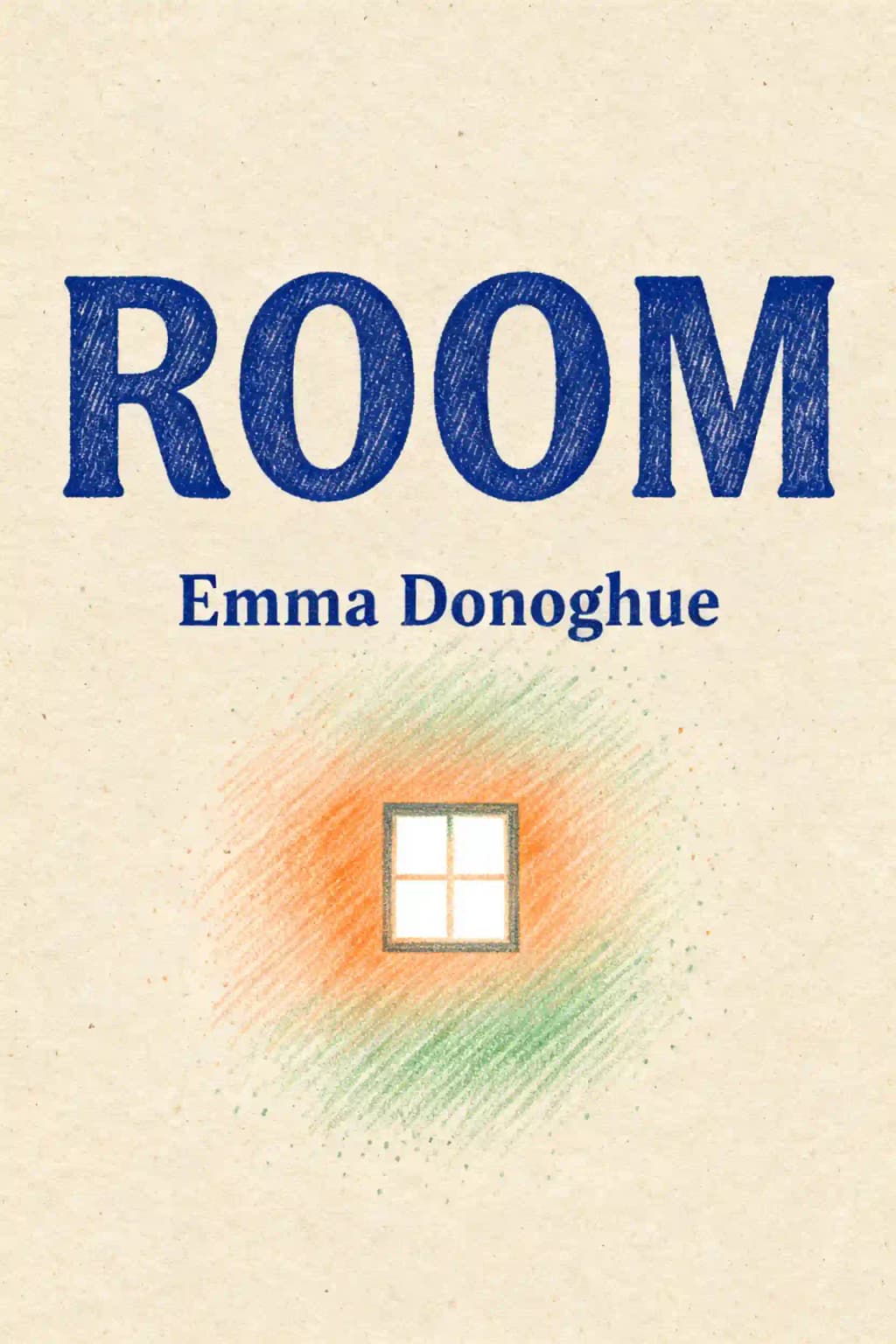
Told through five-year-old Jack's eyes, "Room" explores captivity and freedom with heartbreaking innocence. This Booker-shortlisted phenomenon inspired an Oscar-winning film. What would you do if your entire world was just one room - and you didn't know anything else existed?
Emma Donoghue is an award-winning Irish-Canadian novelist, screenwriter, and playwright best known for Room, her internationally acclaimed 2010 psychological drama exploring themes of captivity, maternal love, and resilience through a five-year-old boy's perspective.
Born in Dublin in 1969 as the youngest of eight children of literary critic Denis Donoghue, she brings literary heritage and deep emotional insight to contemporary fiction.
Room, Donoghue's seventh novel, was shortlisted for the prestigious Man Booker Prize and won the Commonwealth Writers' Prize, among other major honors. The book has sold nearly three million copies worldwide and was adapted into an Oscar-winning film for which Donoghue wrote the screenplay herself. The 2015 film earned four Academy Award nominations including Best Picture and won Best Actress for Brie Larson, bringing Donoghue's powerful story to a global audience.
Room by Emma Donoghue is a 2010 novel narrated by five-year-old Jack, who lives in captivity with his mother in an 11x11 soundproofed shed. Jack's mother, Ma, was kidnapped at age 19 and has been imprisoned for seven years by a man called Old Nick. Jack believes only Room is real and the outside world exists only on television, until Ma devises a daring escape plan that changes everything.
Emma Donoghue is an Irish-Canadian author, screenwriter, and playwright born in Dublin who wrote Room in 2010. She adapted her novel into an Academy Award-nominated screenplay that won Brie Larson the Oscar for Best Actress in 2016. Donoghue has written numerous novels, short story collections, and historical fiction works, establishing herself as a versatile literary voice exploring themes of captivity, resilience, and mother-child bonds.
Room by Emma Donoghue is ideal for readers interested in psychological thrillers, trauma narratives, and literary fiction with unique perspectives. The novel appeals to those who appreciate child narrators, stories about resilience and motherhood, and emotionally challenging reads. It's also suitable for book clubs and readers who enjoyed works like The Boy in the Striped Pyjamas or novels exploring captivity and survival.
Room by Emma Donoghue is widely considered worth reading, having been shortlisted for the 2010 Booker Prize and winning the 2011 Commonwealth Writers' Prize. The novel's unique child narrator perspective creates emotional depth and tension while exploring themes of captivity, innocence, and maternal love. Critics praise Donoghue's attention to detail and ability to make an 11x11 space feel vivid and terrifyingly real, though some readers find Jack's narration style challenging initially.
The main theme of Room by Emma Donoghue is resilience and the power of maternal love under extreme circumstances. The novel explores how Ma creates normalcy and protects Jack's innocence despite their captivity, examining concepts of reality, freedom, and identity. Additional themes include the psychological impact of trauma, the contrast between perceived and actual reality, and the challenges of adapting to the outside world after prolonged isolation.
Room by Emma Donoghue uses five-year-old Jack as narrator to create a unique lens on captivity and trauma. Jack's limited understanding of the world makes the horrific situation both more innocent and more heartbreaking—he capitalizes words like "Room," "Door," and "Wardrobe" because they're his entire universe. This narrative choice allows Donoghue to convey violence and abuse indirectly while exploring how children construct reality from limited information, making the story simultaneously more bearable and more devastating.
In Emma Donoghue's Room, the 11x11 shed symbolizes both imprisonment and safety, creating a complex dual meaning. For Ma, Room represents seven years of captivity, rape, and stolen freedom. For Jack, Room is his entire world—a safe, predictable universe where Ma protects him. The contrast between these perspectives highlights how environment shapes perception and how love can create normalcy even in horrific circumstances, while also exploring themes of adaptation and psychological survival.
Room by Emma Donoghue ends with Jack and Ma's successful escape after Jack pretends to be dead, wrapped in a rug. Old Nick removes Jack from Room, allowing him to escape and alert police who rescue Ma. The second half follows their adjustment to freedom in a mental hospital, Ma's reunion with her family, and their struggle to adapt to the outside world. Jack eventually revisits Room to say goodbye, finding it smaller and less significant than he remembered.
Emma Donoghue was inspired to write Room after hearing about the Fritzl case, where Josef Fritzl imprisoned his daughter Elisabeth in a basement for 24 years and fathered seven children with her. Donoghue was particularly struck by Felix Fritzl, a five-year-old boy born into captivity who had never seen the outside world. The novel also draws parallels to cases like Natacha Kampusch and Jaycee Lee Dugard, though Donoghue focuses on the mother-child bond rather than the captor.
Common criticisms of Room by Emma Donoghue include finding Jack's five-year-old narration annoying or difficult to read initially, with his unique speech patterns and capitalization choices. Some readers feel the novel's second half, set after their escape, lacks the tension and intimacy of the first half in captivity. Others question whether the story exploits real-life trauma cases for entertainment, though Donoghue emphasizes her focus on resilience rather than victimhood.
The 2015 Room film adaptation, also written by Emma Donoghue, stays remarkably faithful to the novel while making necessary visual adjustments. Brie Larson won the Academy Award for Best Actress as Ma, and Jacob Tremblay delivered a powerful performance as Jack. The film was shot largely in chronological order and received four Oscar nominations including Best Picture. Both versions excel at conveying the claustrophobic intimacy of captivity and the emotional complexity of their escape and adjustment.
In Room by Emma Donoghue, Ma creates structured routines to keep Jack physically and mentally healthy despite their 11x11 prison. She conducts "Phys Ed" classes for exercise, maintains strict mealtimes and hygiene practices, and limits television watching. Ma teaches Jack through games that are actually survival strategies—
She protects his innocence by letting him believe only Room is real until she plans their escape.
Siente el libro a través de la voz del autor
Convierte el conocimiento en ideas atractivas y llenas de ejemplos
Captura ideas clave en un instante para un aprendizaje rápido
Disfruta el libro de una manera divertida y atractiva
Scared is what you're feeling. Brave is what you're doing.
TV "rots our brains" and turns people into zombies.
Room is simultaneously a prison and a home.
These routines aren't merely habits - they're survival mechanisms.
Ma mutes the sound because they "mush our brains even faster".
Desglosa las ideas clave de Room en puntos fáciles de entender para comprender cómo los equipos innovadores crean, colaboran y crecen.
Experimenta Room a través de narraciones vívidas que convierten las lecciones de innovación en momentos que recordarás y aplicarás.
Pregunta cualquier cosa, elige tu estilo de aprendizaje y co-crea ideas que realmente resuenen contigo.

Creado por exalumnos de la Universidad de Columbia en San Francisco
"Instead of endless scrolling, I just hit play on BeFreed. It saves me so much time."
"I never knew where to start with nonfiction—BeFreed’s book lists turned into podcasts gave me a clear path."
"Perfect balance between learning and entertainment. Finished ‘Thinking, Fast and Slow’ on my commute this week."
"Crazy how much I learned while walking the dog. BeFreed = small habits → big gains."
"Reading used to feel like a chore. Now it’s just part of my lifestyle."
"Feels effortless compared to reading. I’ve finished 6 books this month already."
"BeFreed turned my guilty doomscrolling into something that feels productive and inspiring."
"BeFreed turned my commute into learning time. 20-min podcasts are perfect for finishing books I never had time for."
"BeFreed replaced my podcast queue. Imagine Spotify for books — that’s it. 🙌"
"It is great for me to learn something from the book without reading it."
"The themed book list podcasts help me connect ideas across authors—like a guided audio journey."
"Makes me feel smarter every time before going to work"
Creado por exalumnos de la Universidad de Columbia en San Francisco

Obtén el resumen de Room como PDF o EPUB gratis. Imprímelo o léelo sin conexión en cualquier momento.
Imagine waking up every morning in the same eleven-by-eleven-foot space-not just today or yesterday, but for your entire life. This is Jack's reality on his fifth birthday. To him, Room isn't a prison; it's the entire universe. Everything here has a proper noun and personality: Bed, Wardrobe, Table, Plant, and his favorite utensil, Meltedy Spoon, "who's not the same as the others." These aren't just objects; they're characters in his life story. The morning unfolds with carefully structured rituals-counting "one hundred cereal pieces" for breakfast, playing "Hum" where they guess songs like "Macarena," taking vitamins to avoid "going back to Heaven." Ma has transformed mere survival into something resembling normalcy through exercises, story time, and educational games that give their days purpose. Jack waters Plant with her nine leaves (plus one tiny new one), secretly admires Spider's "extra-thin silver" web that Ma would brush away as dirty, and transforms Room's dimensions into a playground where Bed becomes an island and the space between Wardrobe and Wall turns into a racetrack for toy cars. Door, "made of shiny magic metal," beeps after nine when Jack must hide in Wardrobe-a boundary between their world and whatever lies beyond.
Each morning, Jack watches Dora the Explorer, interacting with her as if she were real. Ma limits him to one show daily because TV "rots our brains," and mutes commercials which "mush our brains even faster"-a small effort to protect his developing mind. Television introduces Jack to concepts he's never experienced firsthand. Wildlife shows and boxing matches become his only reference points for animals and sports, creating a significant cognitive disconnect. The breakthrough happens when Jack sees a commercial showing a man taking pills from a bottle identical to their "killers" (painkillers). This prompts Ma to explain that TV shows real things that exist "outside Room"-the first crack between Jack's contained universe and the vast reality beyond. Television serves as both connection and separation, displaying the outside world while highlighting the gap between what Jack sees and what's real.
Within Room's confines, Ma has created a structured daily routine that transforms imprisonment into something approaching life. Their days include Physical Education with "Track" (upside-down Table on Bed), "Trampoline" (Jack bouncing), and "Corpse" (lying still) to exercise despite space limitations. Ma fashions a ruler from a cereal box to measure Jack ("three feet three inches tall"). They repeatedly read their ten books, with Jack treasuring each reading, especially "Dylan the Digger," though Ma "makes a face about reading it again." They create games from limited resources: "Labyrinth" from taped toilet rolls and "Orchestra" by drumming on furniture. Meals become learning opportunities as Jack helps prepare dinner, chopping broccoli with "Zigzag Knife" while singing. These rituals provide structure where time might otherwise blur, create opportunities for Jack's development, and forge bonds - transforming mere endurance into living within the most restrictive circumstances imaginable.
Every night, Jack sleeps in Wardrobe to hide from Old Nick, their captor. "Ma doesn't want him looking at me-even as a baby she always wrapped me in Blanket before he came in," Jack explains. Wardrobe functions as a space within a space-a confinement that paradoxically represents safety. Jack has decorated its interior with Ma's drawing of him sleeping "where Old Nick won't see it," personalizing his hiding place. While Jack counts "217 bed creaks," we understand what the child doesn't-Ma endures sexual assault to protect her son. After breaking rules like extending Remote's antenna through the slats, Jack notices "marks on her neck that look like his fingerprints," a chilling reminder of their danger. The Wardrobe also symbolizes psychological compartmentalization. Just as Jack is physically hidden, Ma has mentally separated aspects of her experience to maintain her sanity and mothering ability-a separation becoming harder as Jack grows more perceptive.
The pivotal shift occurs when Ma begins "unlying" to Jack. It starts when Jack notices a TV commercial showing a man with pills identical to their painkillers, forcing Ma to explain that television shows real places "outside Room." This revelation shatters Jack's understanding of reality. Ma explains that Room was originally a garden shed that Old Nick modified with soundproofing. When they spot an airplane through Skylight "writing a letter I on the sky," Jack receives tangible proof that Outside exists. Ma reveals she was kidnapped at nineteen while walking to her college library. Old Nick tricked her with a story about a sick dog, then blindfolded, drugged, and brought her to Room. During early captivity, she cried constantly, slept excessively, and attempted escape by digging through the floor, only to find a chain-link fence beneath. This revelation process transforms Jack's world - television becomes a window into reality, the skylight connects to an actual sky, and he learns he was born in captivity.
Ma's revelation that they must escape marks the narrative's turning point. When Jack suggests fantastical methods, Ma develops a realistic plan: Jack will feign illness, forcing Old Nick to take him to a hospital where he can alert authorities. This creates immense psychological challenges. Jack must separate from Ma and face the Outside he barely believes in, while Ma must entrust their salvation to a five-year-old. When Jack hesitates, Ma frames it as a heroic rescue mission only he can accomplish - appealing to his bravery while acknowledging their fear. After Old Nick refuses to take Jack to the hospital, Ma quickly devises Plan B: Jack will pretend to be dead, wrapped in a rug for burial. Their practice sessions prove both physically and emotionally demanding. The escape sequence is harrowing. Jack remains perfectly still as Old Nick carries him outside. His first experience of Outside filters through the suffocating rug, creating a liminal space between captivity and freedom. His desperate struggle to free himself symbolizes breaking from the psychological constraints of his former existence.
Jack's escape and Ma's rescue begins their difficult adjustment. In the hospital, Jack faces nightmares while Ma battles her own demons. Their friend count reaching nineteen shows their gradually expanding social world. The physical world overwhelms Jack. Rain startles him, and at the mall, he marvels that "inside could be as big as Outside." Family relationships prove complicated. When Ma's father can't look at Jack, saying "it makes me shudder," Ma fiercely defends her son: "He's the world to me." Ma's suicide attempt after a television interview reveals the strain of reintegration. Unlike Jack, who has no "normal" to return to, Ma must reconcile her current self with her pre-captivity identity. Her friend notes: "You'd have changed anyway. Moving into your twenties, having a child - you wouldn't have stayed the same." Their visit to Room provides closure. Jack finds it smaller - "it's not Room anymore" without their things and with Door open. Room is now just "a crater, a hole where something happened," showing that places are defined by experiences, not boundaries. Room teaches us that perception creates reality. Jack's journey reminds us that freedom means finding wonder in whatever room we inhabit.