Capítulo 1
Through the Window, Into the Dark
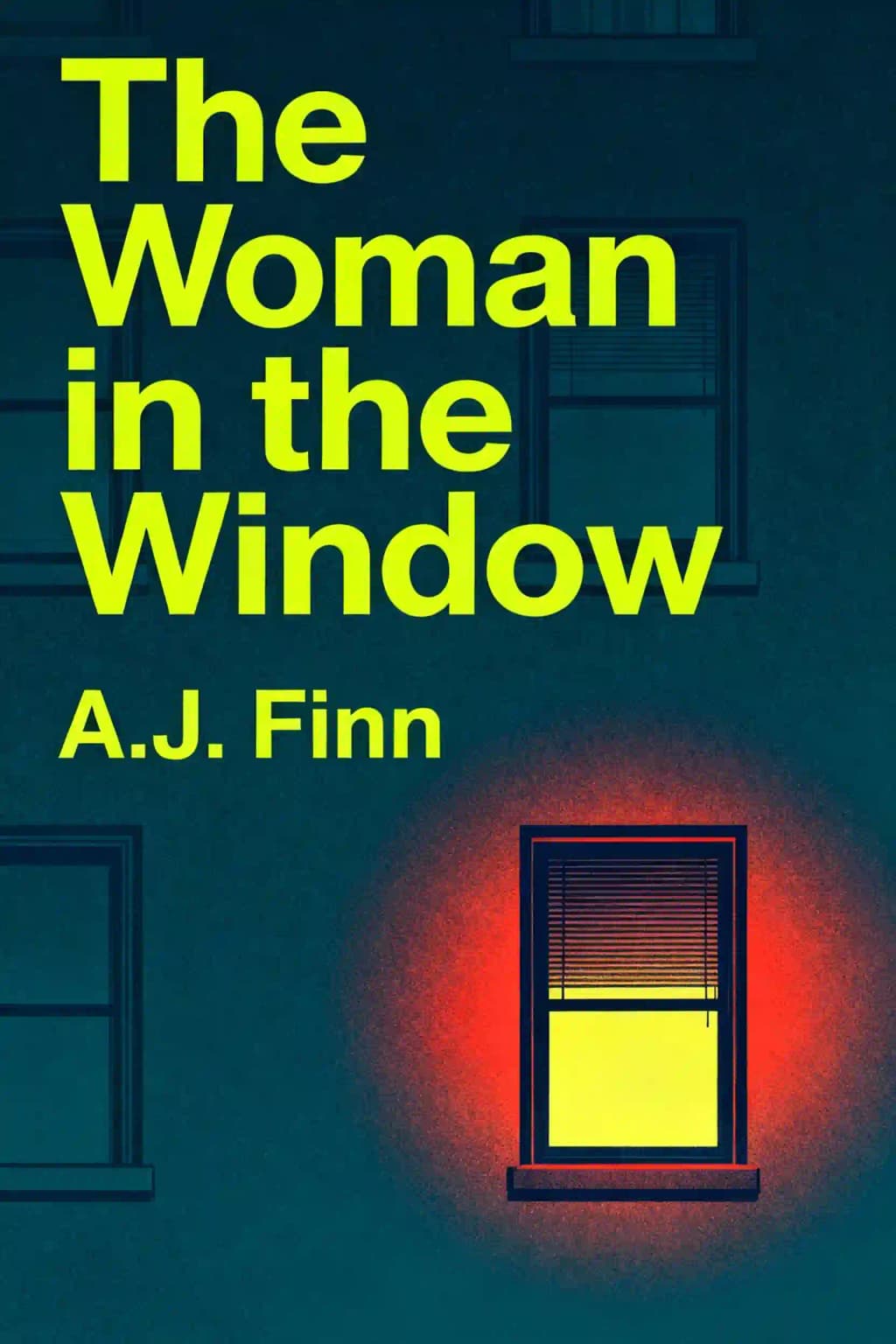
"The Woman in the Window" isn't just another psychological thriller-it's a cultural phenomenon that redefined the unreliable narrator trope for modern audiences. A.J. Finn's debut novel spent an astonishing 13 weeks atop the New York Times bestseller list, becoming the fastest-selling adult debut novel since "Gone Girl." When Amy Adams stepped into the role of Anna Fox for the film adaptation, the book's reputation as a masterclass in psychological suspense was cemented. What makes this story so compelling? Perhaps it's how it traps us in the mind of someone who cannot trust her own perceptions-a fear we all secretly harbor. Or maybe it's the claustrophobic setting that mirrors our own pandemic-era isolation. Either way, this neo-noir masterpiece draws us into a world where what we see isn't necessarily what's real, forcing us to question: How well do we really know ourselves?
Capítulo 2
The Prison of Perception
Anna Fox hasn't left her five-story Harlem brownstone in ten months, existing in a self-imposed exile that has transformed her home into both sanctuary and cage. Her days follow a predictable pattern with clockwork precision: she wakes late in the morning, habitually mixing her prescribed medication with generous pours of merlot - a dangerous cocktail that blurs the lines between therapy and self-medication. Through her Nikon D5500's powerful zoom lens, she becomes an unseen observer of her neighbors' lives, documenting their daily routines with the methodical attention of a surveillance expert while counseling fellow agoraphobics in online forums. Her expertise as a child psychologist now serves primarily to help others cope with the very fears that imprison her.
The neighborhood unfolds before her like a living theater. At 212, she watches Rita Miller's calculated afternoon rendezvous with her contractor, noting the precise timing of his arrival and departure. The Gray Sisters townhouses host their weekly book clubs, their animated discussions visible through warmly lit windows. The Takeda family's talented son practices his cello daily at 4 PM, his music occasionally drifting through her open windows. A mysterious double-wide brownstone stands vacant - a dark space that draws her attention like a missing tooth in an otherwise perfect smile. Below her, David, her basement tenant, leads a vibrant social life she can only witness, his parade of female companions a reminder of the world she's withdrawn from.
Her controlled environment is punctuated by carefully scheduled interventions: Bina's persistent physical therapy sessions that attempt to rebuild her confidence in movement; Skype French lessons with Yves that provide a structured connection to the outside world; and regular therapy sessions with Dr. Fielding, who employs cognitive behavioral techniques - including the umbrella as a transitional object - in his patient attempts to help her reclaim her freedom. These sessions serve as lifelines to normalcy, though they often highlight the depth of her isolation.
The painful separation from her family manifests in regular calls with Ed and Olivia - conversations that carry an undercurrent of loss and longing. When she tells Ed "I wish you were here," his careful response about needing more time and doctors' recommendations against too much contact suggests deeper complications in their separation. The truth of their absence weighs heavily, driving her deeper into the twin escapes of wine and voyeurism. Her drinking has become more than habit - it's a coping mechanism that helps blur the edges of her confinement while simultaneously reinforcing it.
The neighborhood becomes Anna's entire universe - a fishbowl she observes with professional precision but cannot enter. Her camera serves as both connection and barrier, allowing her to maintain the illusion of participation while keeping her safely removed from actual human contact. Through her lens, we witness her paradoxical existence: a trained observer of human behavior who can no longer engage in it normally, a professional healer who cannot heal herself. Her detailed observations of neighbors reveal both her sharp psychological insights and her profound disconnection from regular social interaction. As she documents others living their lives, we watch her gradually losing touch with her own - becoming more observer than participant in the human drama unfolding around her.
Capítulo 3
New Neighbors, New Obsessions
Anna's carefully controlled existence shatters when the Russell family moves into house 207 across the park. With the precision of her former profession, she immediately begins cataloging details through her telephoto lens: Alistair Russell, an imposing figure in tailored suits who secured a partnership at Boston Consulting Group and paid $3.45 million for the Victorian home; Jane, a willowy woman whose movements suggest an artistic temperament but whose background remains frustratingly opaque; and their teenage son Ethan, whom Anna observes rushing to school with a heavy backpack and downturned face. Her professional instincts as a child psychologist emerge full force as she creates detailed mental dossiers on each family member - noting their routines, relationships, and subtle behavioral patterns.
The first crack in her isolation appears when Ethan knocks on her door, delivering a lavender-scented candle from his mother. Their interaction proves transformative for Anna, who instinctively slips into her former therapeutic role. The familiar cadence of gentle questioning and active listening provides a comforting framework for connection. Ethan, nearly seventeen and struggling with the isolation of homeschooling, gradually opens up about his longing for Boston - his old friends, his former school, the familiarity of established routines. Despite an obvious cat allergy that makes his eyes water, he pets Punch with determined gentleness, revealing a sensitivity that resonates with Anna's own fragility. When he mentions being able to see her house from his bedroom window, his voice catches with emotion as he confesses his profound loneliness in the new neighborhood. Anna's offer of "Night Must Fall" - a classic thriller about isolation and perception - creates their first meaningful bond.
The arrival of "Jane" Russell marks another seismic shift in Anna's routine when she bursts through the front door clutching a bottle of Riesling, her energy filling Anna's stagnant rooms with vitality. They share the wine while Jane chain-smokes Virginia Slims with elegant defiance, her questions about Anna's condition direct but not unkind. When Jane playfully refers to Anna's window as her "spyglass," Anna's embarrassment at being discovered watching the neighborhood dissolves under Jane's conspiratorial acceptance. Their evening unfolds through chess matches and conversation, culminating in the discovery of their shared birthday and Jane's creation of a hauntingly accurate portrait of Anna. As night deepens, Jane reveals troubling details about her marriage to Alistair - describing his controlling nature and paranoid distrust - while hinting at her own tumultuous past filled with "bad crowds, bad choices." The conversation grows increasingly intimate as Jane gently probes Anna's agoraphobia, which Anna attributes to a complex interplay of trauma and clinical depression.
These encounters with Ethan and Jane awaken something long dormant in Anna - a desperate yearning for human connection that overwhelms her careful defenses. For the first time since her self-imposed exile, she feels "young again, almost giddy" with the possibility of friendship. However, these tentative steps toward connection will soon entangle her in a dangerous web of lies, betrayal, and violence that threatens to destroy her tenuous grip on reality and force her to question everything she believes about her new neighbors.
Capítulo 4
The Witness
Late one night, heavily intoxicated on wine and medication, Anna watches through her camera lens as Jane appears in the Russell house, arguing with someone unseen. To Anna's horror, Jane staggers into view with a knife in her chest, blood spreading across her white blouse. Jane presses her bloody hand against the window before collapsing. Frantic, Anna calls 911 but struggles to articulate what she's witnessed through her drug-and-alcohol haze.
Determined to help, Anna makes a momentous decision-she will leave her house. After nearly a year of agoraphobia, she grabs her umbrella as a makeshift weapon and forces herself outside. The experience is terrifying; she counts steps to calm herself as she stumbles through the park. When she reaches a bench, Anna realizes she hasn't thought this through-the Russell house has no park entrance. As sirens approach and flashing lights appear, Anna collapses from the overwhelming panic of being outside.
She wakes in a hospital bed, immediately seized by panic as the room seems to expand around her. Detective Little introduces himself and explains they found her unconscious in the park. When Anna insists Jane Russell was stabbed, Little reveals he visited the Russells that morning. After being evaluated by a doctor, Anna is escorted home by Detective Little.
The drive through the city is overwhelming for Anna after ten months of isolation. Everything seems alien-the buildings, crowds, colors, and sounds assault her senses like a visitor from another world. When they arrive at her house, Little drives past it, explaining he wants her to speak with neighbors first. Finally home, Anna finds everything exactly as she left it-dishwasher open, blankets tangled, TV still showing the DVD menu, wine bottles and pill canisters scattered on the coffee table.
Detective Little examines her living room, noting the wine bottles before announcing "they're on their way over." Soon Detective Norelli arrives with Alistair Russell and plays back Anna's 911 call-her voice slurred and barely intelligible. The detectives suggest Anna was "overstimulated" by wine, medication, and movies, causing her to hallucinate. When Alistair claims his wife has been out of town and Anna has never met her, Anna insists she visited twice and they played chess. Alistair makes a phone call, and a woman Anna has never seen enters with Ethan. This stranger-tall with sleek dark hair and gray-green eyes-is introduced as Jane Russell.
Anna's certainty begins to crumble as everyone denies her reality. Even Ethan, when asked directly, mumbles that Anna has never met his mother, though his body language betrays him-the averted gaze, leftward glance, delayed response, and fingernail picking all classic signs of deception. His clenched jaw signals something more concerning: fear.
Capítulo 5
Unraveling Reality
Left alone after the detectives depart, Anna tries to process what happened. She calls her physical therapist Bina, who comes over to listen but remains skeptical. Anna insists she met Jane twice and clearly saw her bleeding with a knife in her chest. She realizes the police won't believe anything happened until they accept that the woman they think is Jane isn't really her.
Anna's investigation takes a new turn when she calls Alistair's company, posing as an old friend. She learns his employment was terminated about five weeks earlier, and his former assistant Alex admits to never having met Jane despite working for Alistair for six months. When Anna asks too many questions, Alex becomes suspicious, forcing her to hang up.
Later, Anna spots the woman leaving the Russell house in a red coat with an umbrella. In a moment of determination, she swallows Ativan, grabs her umbrella, and ventures outside with eyes closed-a technique she's never tried before. When she opens her eyes, she catches her disheveled reflection in a window and sees the woman inside a coffee shop. Inside, Anna confronts her, asking who she is, but the woman dismisses her as drunk and impaired, threatening to call the police.
Nick Takeda, the cellist's son now grown taller with stubble, finds Anna frozen in the coffee shop and gently guides her home. When they arrive, Ethan appears, concerned that Anna is outside. After Nick leaves, Anna confronts Ethan directly: "Why did you lie?" Though he claims the woman is his mother, Anna presses him about where his real mother is and asks if she's dead. Ethan whispers "I'm scared" before bolting from the house.
Anna's fragile grip on reality is further shaken when Detective Little reveals that Dr. Fielding told him something crucial: Anna's husband and daughter are dead. No one has ever put it so bluntly before. Little explains that Anna was found at the bottom of a cliff after spending two nights in a snowstorm. Olivia was still alive when rescued, but Ed was already gone. That's when her agoraphobia began-her post-traumatic stress, her fear of the outside world. He gently reminds her that her medications can cause hallucinations, suggesting that perhaps she should let this investigation go.
This revelation forces Anna to confront the truth she's been avoiding-she's been speaking to ghosts, living in denial of her family's death. The conversations with Ed and Olivia weren't real; they were manifestations of her grief and guilt. Her isolation isn't just physical but psychological-a defense mechanism against unbearable loss.
Capítulo 6
The Truth Behind the Glass
After days of drinking and self-medication, Anna experiences a moment of clarity. She realizes she's been approaching the mystery incorrectly-what if the woman she met wasn't Jane Russell at all, but someone else pretending to be Jane? She questions why the Russells would deny this woman's existence entirely rather than just claiming she wasn't Jane.
Her theory is interrupted when Alistair breaks into her house, drunk and wearing gloves. He returns Ethan's key, warning her to stay away from his son. When Anna asks about "that woman," Alistair attacks her, seizing her throat and pinning her against the wall. He calls her delusional while choking her. Anna attempts to slash him with a box cutter but misses. After releasing her with a final "Please," he smashes more glass and leaves.
The next day, while checking her phone, Anna discovers she still has a photo with Jane's reflection in it-proof the woman existed. Energized by this evidence, she calls Ethan, believing he's her only ally. She convinces him to come over despite his father taking his key away. When he arrives, Anna shows him the photo, watching his face carefully as she tells him, "I think it's time for the truth."
Ethan begs Anna to let him tell his parents before contacting the police about "Katie's" murder. Though hesitant, Anna agrees when he insists they'll listen to him. Before leaving, Ethan asks what might happen to his parents, and Anna explains the police would consider Katie's stalking behavior and that the killing happened during an argument. As he departs, Anna hugs him tightly, whispering "Please be safe."
Later that night, Anna has a disturbing realization-Ethan couldn't have known about Punch's injured paw from his previous visit. She awakens to find him standing in her bedroom doorway, holding the letter opener used to kill Katie. He reveals he's been entering her house at night using a copied key. His entire story was fabricated-he was the one who broke Punch's leg when the cat followed him during his nighttime intrusions.
Ethan confirms parts of his background-Katie was indeed a heroin addict who neglected him, but contrary to his earlier story, he was the one who murdered her. He stabbed her during an argument with his father, finding it "exhilarating." His mother knows nothing about the murder, and his father has kept it secret to protect her. Even more disturbing, Ethan reveals he was actually "Lizzie" from the agoraphobia forum, creating a fake identity to learn Anna's secrets. He used information Anna shared with "Lizzie" to hack her passwords and devices. When Anna attempts to psychoanalyze him, he rejects her efforts and announces his plan to kill her.
Capítulo 7
The Final Confrontation
In a desperate move born of pure survival instinct, Anna kicks Ethan violently - first in the stomach, then squarely in the face - before fleeing into the dark hallway of her Victorian brownstone. Her heart pounds against her ribs as she races through the familiar darkness, guided by the internalized voices of Ed and Olivia. Though they're gone, their presence remains her psychological compass, urging her forward even as panic threatens to overwhelm her. "Move, baby," Ed's voice echoes in her mind. "You're stronger than you know," Olivia whispers, spurring her upward as Ethan's heavy footsteps thunder behind her.
At the landing, Anna's trembling hands find the metal chain for the trapdoor. The rusted mechanism groans as she pulls, revealing the night sky above - a sight that simultaneously terrifies and beckons her. Rain pelts through the opening, each drop a reminder of the vast open space that awaits.
The final confrontation unfolds on the rain-slicked roof, where Anna must face a double nightmare: her crippling agoraphobia and a murderous teenager intent on silencing her forever. The city lights blur through the downpour, creating a dizzying kaleidoscope that threatens to paralyze her with fear. Despite her terror of open spaces - a fear that has imprisoned her for ten months - Anna discovers reserves of strength she didn't know she possessed. Her bare feet grip the wet surface as she dodges Ethan's attacks, proving that beneath layers of grief, wine-soaked nights, and prescription drug haze lies an unbreakable will to survive.
The battle reaches its climax in a flurry of desperate movements, ending with Ethan's defeat. When help finally arrives, they find Anna drenched and shaking, but alive - having conquered not just a killer, but the prison of her own making. The rain that once symbolized her isolation now feels like cleansing, washing away months of self-imposed exile.
In the aftermath, Anna begins the slow, deliberate process of healing. With Bina's steady presence and gentle encouragement, she prepares for another momentous battle: stepping outside into her snow-covered garden. The realization strikes her with crystalline clarity - if she fought so fiercely for her life on that rain-drenched roof, she must not truly want to die. And if she wants to live, really live, she needs to rejoin the world beyond her walls. Standing at her threshold, snow boots laced tight and winter sunshine streaming through the open door, Anna takes a deep breath. She closes her eyes, remembering the strength she found on the roof, opens them to face the pristine white landscape before her, and finally steps into the light - not running this time, but walking purposefully toward her future.
Capítulo 8
Shattered Windows, Shattered Lives
"The Woman in the Window" masterfully explores the fragility of perception and the unreliability of the human mind. Anna Fox represents the ultimate unreliable narrator - a psychologist who cannot trust her own observations, a woman who converses with her dead family while denying their deaths, a witness whose testimony is compromised by medication and alcohol. Her windows become both literal and metaphorical barriers - protecting her from the outside world while distorting her view of reality. Through these windows, she observes life like a movie, detached and distant, creating her own narrative from fragments of what she sees.
The novel's genius lies in how it manipulates our trust through layers of deception. We initially accept Anna's perspective without question, drawn in by her professional background and apparent lucidity, only to have that trust systematically undermined as the story progresses. Her detailed observations of her neighbors, her seemingly rational analyses of their behavior, and her confident interpretations of events all crumble under scrutiny. Like Anna, we must reassess what we thought we knew, separating hallucination from reality. The revelation that Ed and Olivia are dead forces us to reexamine every interaction Anna described, recognizing the depth of her denial and the extent of her psychological trauma. Each memory becomes suspect, each conversation questionable, creating a destabilizing effect that mirrors Anna's own confused state.
Finn's narrative also explores how trauma reshapes our relationship with the world through intricate psychological detail. Anna's agoraphobia isn't merely a plot device but a physical manifestation of emotional pain - her fear of open spaces reflects her inability to face the emptiness left by her family's death. Her home becomes both sanctuary and prison, the windows both connection to the world and barrier against it. The house itself becomes a character, its creaking floors and shadowy corners reflecting Anna's fragmented psyche. Her obsessive photography through the windows, her meticulous documentation of neighbors' lives, and her retreat into classic films all serve as coping mechanisms, ways to maintain control over an uncontrollable reality.
In the end, Anna's journey is one of painful awakening that unfolds in layers. She must confront not only the truth about the Russells but the truth about herself - her guilt over the affair that led to her family's fateful trip, her reliance on alcohol and medication to numb her pain, and her retreat from life after devastating loss. Her interactions with Detective Little force her to question her own reliability, while her growing connection with Jane Russell's true story pushes her toward uncomfortable revelations. When she finally steps outside into the snowy garden, it represents more than conquering agoraphobia - it symbolizes her willingness to rejoin the living, to face her grief honestly, and to move forward despite her scars.
Through Anna's broken windows, we glimpse our own vulnerability to deception - both from others and from ourselves. Her story reminds us that healing begins only when we're brave enough to face our truths, however painful they may be. The novel's final message suggests that while our perceptions may be fragile and our memories unreliable, genuine recovery requires us to step through the broken glass of our past and embrace the sharp edges of reality.