Capítulo 1
When a Moment's Hesitation Changes Everything
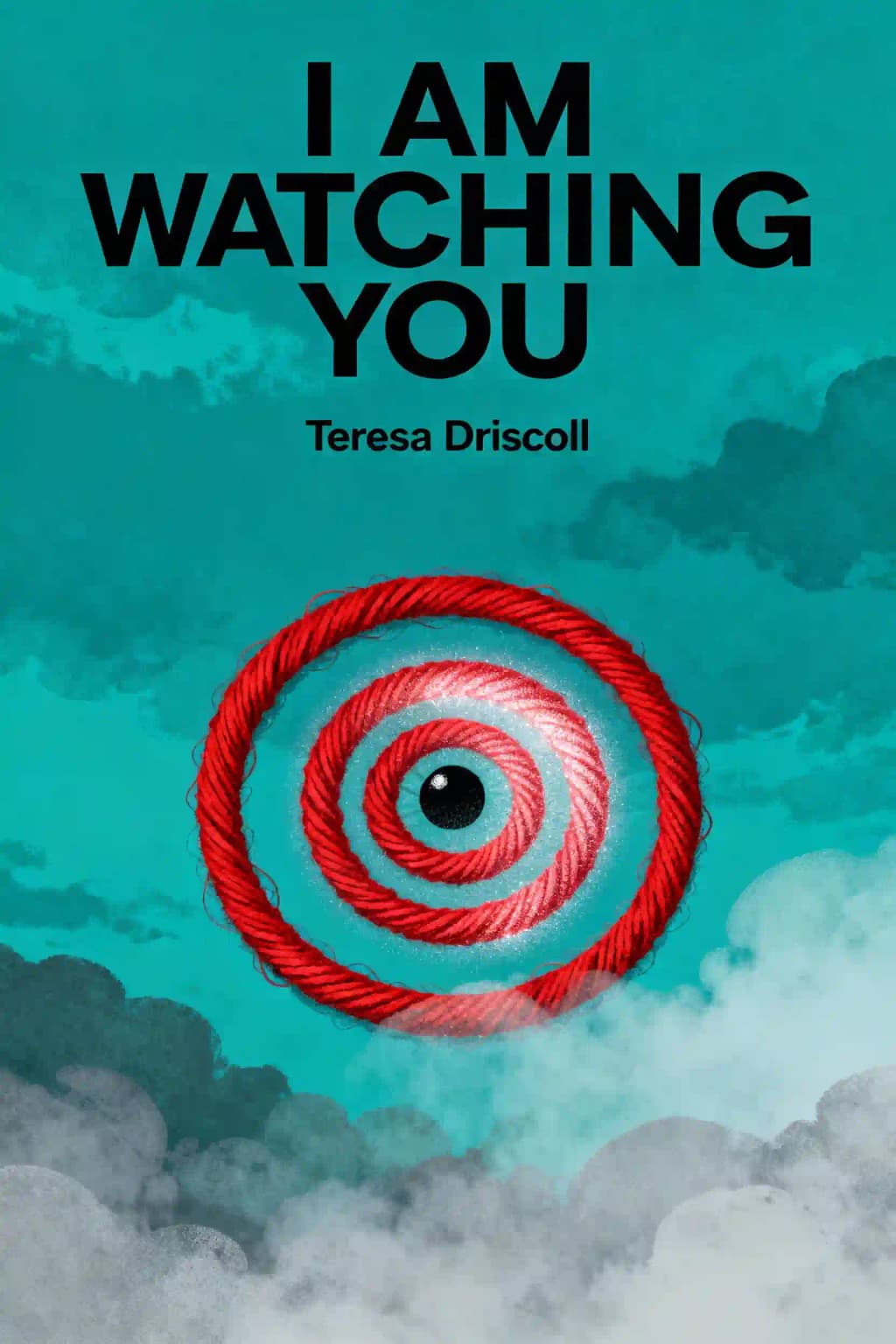
Have you ever witnessed something unsettling and hesitated to act? For Ella Longfield, that split-second decision on a train journey would haunt her for years to come. Teresa Driscoll's psychological thriller "I Am Watching You" explores this devastating ripple effect through multiple perspectives, creating a tense narrative that keeps readers guessing until the final revelation. Since its 2017 publication, the book has become a #1 Amazon bestseller with over a million copies sold, resonating with readers who recognize the moral complexity of bystander intervention. Celebrities like Reese Witherspoon have praised its tight plotting and emotional depth, while its exploration of parental anxiety has made it a book club favorite. What begins with a simple train journey evolves into a haunting examination of guilt, responsibility, and the devastating consequences of inaction.
Capítulo 2
The Fateful Train Journey That Started It All
It began with a simple train ride. Ella Longfield, a florist traveling home from a conference, notices two teenage girls - Anna Ballard and Sarah - being charmed by a pair of young men recently released from prison. She overhears their conversation and feels immediate concern, that protective instinct that rises when witnessing potential danger. Should she intervene? Say something to the girls? Call their parents?
While debating what to do, Ella follows Sarah and one of the men, Antony, to the buffet car, intending to separate Sarah and warn her. Instead, she overhears them in the train toilet engaged in intimate activity. Shocked and embarrassed, Ella retreats, suddenly questioning her own judgment. Perhaps she was being old-fashioned or prudish? These "nice girls" clearly weren't as innocent as she'd assumed.
That night in her hotel room, Ella considers calling the girls' parents but ultimately decides against it after having a brandy from the minibar. The next morning, she turns on the television to see Anna's beautiful face from Facebook with the word "Missing" scrolling beneath it. In that moment, Ella's world shifts irrevocably as she realizes her hesitation may have contributed to a tragedy.
This opening sequence establishes the novel's central moral dilemma: when do we have a responsibility to intervene in others' lives? Ella's initial protective instinct was correct, but social awkwardness and doubt caused her to second-guess herself. How many of us have experienced similar moments of uncertainty when witnessing something concerning? The brilliance of Driscoll's narrative is how it places readers directly into this ethical quandary, forcing us to question what we would have done in Ella's position.
Capítulo 3
The Ripple Effects of Tragedy
Anna's disappearance creates devastating ripples that touch everyone connected to her. Henry Ballard, Anna's father, sits in his conservatory trying to escape into memories of Anna and her friend Jenny playing in their childhood den. He wishes he'd made time for the proper camping trips he'd always promised. When police arrive to search Anna's room, Henry remembers it was he who insisted the girls could go on the trip when his wife Barbara thought they were too young. "You can't baby them forever," he'd said. But there was more to his insistence - something he fears the police might discover.
Sarah, Anna's best friend who was with her that night, finds herself under increasing scrutiny. When police mention a witness from the train and inconsistencies in her story, Sarah grows visibly distressed. She's hiding something crucial about what really happened that night, something that will eventually come to light with devastating consequences.
For Ella, the guilt becomes almost unbearable. A year after Anna's disappearance, she receives threatening postcards with cut-out letters: "WHY DIDN'T YOU HELP HER?" and "BITCH... HOW DO YOU SLEEP?" Though terrified, she believes she deserves this punishment not only for failing Anna but for something she did "down there in the summer." The postcards represent her externalized guilt taking physical form.
What makes this narrative structure so effective is how Driscoll weaves together these different perspectives, each revealing only fragments of the truth. Like pieces of a puzzle, they gradually form a complete picture, but not before leading readers down several misleading paths. The story becomes not just about what happened to Anna, but how tragedy transforms everyone it touches - parents, friends, witnesses, and even investigators.
Capítulo 4
The Weight of Parental Responsibility
Parental guilt and responsibility form a powerful undercurrent throughout the novel, manifesting in various ways that reflect the universal challenges of raising children. Henry Ballard carries the crushing weight of having encouraged Anna's independence against his wife's better judgment. "You can't baby them forever," he had insisted, words that now haunt him with a devastating irony. His marriage to Barbara deteriorates under the strain, with Barbara becoming increasingly dependent on antidepressants that cause severe mood swings - from manic cleaning episodes at 3 AM to days spent motionless in bed, leaving Henry to navigate both his grief and her instability.
Henry's relationship with Anna had already been strained before her disappearance, marked by a series of escalating conflicts typical of teenage rebellion but tinged with something darker. He remembers her saying, "You disgust me, Dad..." during their last major argument - words that cut deeper than any knife and echo through his sleepless nights. The source of their discord remains murky: was it his workaholic tendencies, his affair with his secretary that Anna had discovered, or something more sinister that readers gradually uncover? The mystery of their broken relationship adds another layer to the investigation, suggesting that family secrets might hold the key to Anna's disappearance.
Meanwhile, Ella faces her own parental challenges when her seventeen-year-old son Luke gets his sixteen-year-old girlfriend Emily pregnant. The situation forces her to confront multiple difficult decisions: supporting the young couple's choice to keep the baby, mediating between two sets of angry parents, and helping Luke balance his college aspirations with impending fatherhood. The irony isn't lost on her - after judging the girls on the train for their perceived promiscuity, her own son has created a similar situation. This parallel forces Ella to confront her own hypocrisy and recognize the complexity of parenting teenagers in an era where old moral certainties seem increasingly inadequate.
The novel brilliantly explores how parents navigate the delicate balance between protection and independence through multiple perspectives and situations. When does guidance become control? When does granting freedom become neglect? Every parent recognizes this impossible tightrope walk - the knowledge that both overprotection and under-protection can harm our children in different ways. The story presents various parenting styles: Barbara's anxious hovering, Henry's hands-off approach, and Ella's attempt to find middle ground, each with its own consequences.
Barbara's insistence that Anna was too young for the London trip seems validated by events, yet complete restriction would have denied Anna important experiences of independence. Through flashbacks, we see Anna's growing resentment of her mother's protective instincts - sneaking out, lying about her whereabouts, and ultimately planning the fatal trip to London as an act of rebellion. This tension between safety and growth forms the emotional core of many parent-child relationships in the story, reflecting the universal anxiety of raising children in an unpredictable world. The novel suggests that perhaps the greatest challenge of parenthood is learning to live with uncertainty - the knowledge that no amount of protection can guarantee our children's safety, yet we must still find the courage to let them grow.
Capítulo 5
Secrets That Poison Relationships
As the investigation unfolds, we discover that nearly every character harbors secrets that poison their relationships, creating a complex web of deception that threatens to unravel their carefully constructed lives. Henry Ballard has been having a long-term affair with his colleague Jessica, using it as an alibi for the night Anna disappeared - though this relationship itself conceals deeper issues in his marriage. Sarah lied about what happened at the club, abandoning Anna when she wanted to leave early, a decision that haunts her with escalating guilt as the investigation progresses. Ella conceals the threatening postcards from her husband Tony, afraid of worrying him further, though each hidden message adds another brick to the wall growing between them.
Sarah's family holds particularly dark secrets that cast long shadows over multiple generations. Her father's inappropriate behavior toward her when she was twelve created lasting trauma she's never revealed, manifesting in her adult life through trust issues and self-destructive relationships. Her sister Lily, who now calls herself "Saffron" in an attempt to forge a new identity, fled home at sixteen after their father sexually abused her - a truth their mother actively denied, choosing instead to blame Lily for "tearing the family apart." These hidden wounds explain Sarah's self-destructive behavior and her complicated relationship with Anna, who reminded her of her younger self and triggered both protective and avoidant responses.
The novel demonstrates how secrets, even those kept with good intentions, ultimately corrode trust and create irreparable damage in relationships. Ella believes she's protecting Tony by handling the threatening postcards alone, but her secrecy only creates distance between them, leading to misunderstandings and missed opportunities for support. When she finally confesses everything, Tony is more hurt by her lack of trust than by the situation itself, telling her, "I'm disappointed you didn't feel you could tell me." Their story illustrates how secrets intended to protect often end up causing more harm than the truth itself would have.
This exploration of secrecy extends to broader social questions about what we choose to reveal and conceal in our daily lives. The police deliberately withhold certain details about Anna's case from the public, believing it necessary for the investigation but inadvertently feeding the community's fears and suspicions. Families present carefully curated versions of themselves to the world - the Ballards maintain their image as the perfect couple while their marriage crumbles behind closed doors. Even our own memories can be selective, hiding truths we're not ready to confront, as demonstrated by Sarah's gradual recovery of suppressed memories from her childhood. Driscoll suggests that healing can only begin when secrets are brought into the light - a painful but necessary process for both individuals and families. The novel ultimately reveals how the weight of unspoken truths can become unbearable, and only through confronting these hidden realities can genuine connection and recovery begin.
Capítulo 6
The Psychological Impact of Watching and Being Watched
Throughout the novel, Driscoll intersperses chilling chapters titled "WATCHING..." that offer haunting glimpses into the mind of someone obsessively monitoring others. This unnamed watcher describes the fascinating dichotomy of observing people in their unguarded moments versus when they sense observation: "Some people are exactly the same either way... But most people change." The watcher meticulously catalogs these changes - how shoulders tense, voices modulate, and casual movements become self-conscious performances.
This voyeuristic perspective creates immediate tension, suggesting Anna's disappearance may be connected to stalking. The watcher demonstrates a predatory intelligence, carefully selecting observation points and documenting patterns of behavior. They particularly enjoy provoking reactions, noting that sometimes they must "stir it up" to get a response - moving objects slightly, leaving subtle signs of their presence. What's most disturbing is how they savor that moment of uncertainty - "when someone feels watched but isn't completely sure" - revealing a sophisticated understanding of psychological manipulation.
Ella increasingly feels this unsettling sensation at her flower shop, experiencing what psychologists term "surveillance anxiety." She notices cars idling outside early in the morning, items mysteriously moved from their usual positions, and slight changes in her shop's arrangement that only she would recognize. This psychological terrorism proves more frightening than direct threats because it creates constant uncertainty. The ambiguity forces her to question everything: Is she truly being watched, or is her guilt manifesting as paranoia? Are these coincidences, or calculated moves in a larger game?
The novel brilliantly explores surveillance from multiple angles, each revealing different power dynamics and motivations. Police watch suspects through CCTV footage and careful interviews, searching for tells and inconsistencies. Parents anxiously monitor their children, trying to balance protection with independence. The media watches the investigation with an increasingly predatory intensity, sometimes interfering with police work in their quest for headlines. Social media creates new forms of watching, with Anna's Facebook photos and online presence becoming central to the public's understanding of her disappearance - each image scrutinized for clues, each post analyzed for hidden meanings.
This theme resonates powerfully in our current era of increased surveillance, raising complex questions about privacy, security, and the psychological impact of knowing we're constantly observable. The novel forces readers to confront uncomfortable truths about modern life: our phones track our movements, cameras record our daily activities, and our digital footprints create permanent records of our choices. When does protective watching become harmful control? How does the awareness of being watched alter our authentic selves? These questions linger long after the final page, forcing readers to examine their own roles as both watchers and watched in contemporary society.
Capítulo 7
The Media's Role in Missing Persons Cases
Driscoll draws on her twenty-five years of journalism experience to offer an insider's perspective on media coverage of missing persons cases. The anniversary TV reconstruction on "Crimecatchers" becomes a pivotal plot point, generating new leads while also retraumatizing those involved. The show's production team's careful staging of recreated scenes, including hiring an actress who resembles Anna, demonstrates both the methodical approach to such coverage and its emotional toll on families who must relive their worst moments.
Henry and Barbara's conflicting attitudes toward media attention exemplify the complex dynamics families face. Barbara insists on organizing a vigil to keep Anna's case in the public eye, arranging candlelight ceremonies and press appearances with meticulous attention to timing and visual impact. Henry, however, finds it "ghoulish" and believes it exploits their tragedy, particularly objecting to photographers capturing their grief in what should be private moments. Their disagreement reflects the broader tension between maintaining public interest and preserving family dignity - a balance that becomes increasingly difficult as the case grows cold.
The novel delves deep into how media shapes public perception through selective storytelling. When Jenny participates in the TV appeal, her hopeful comments about Anna's resilience and potential survival are edited out, leaving only her tearful descriptions of their last conversation. The final broadcast emphasizes dramatic tension over factual reporting, with slow-motion footage and ominous background music manipulating viewers' emotions. This manipulation serves the program's need for compelling television rather than the family's need for accurate representation, highlighting the often-conflicting goals of entertainment and investigation.
Social media emerges as a double-edged sword in modern missing persons cases. Anna's Facebook photos become her public identity, frozen in time and endlessly shared, creating a specific narrative about who she was. The platform's algorithms continue to suggest "memories" to her friends and family, causing unexpected emotional turbulence. When photos of the hostage situation in Spain circulate online against police wishes, they actually help Matthew identify crucial differences in body shape and posture that confirm the woman isn't Anna. This demonstrates both the dangers of uncontrolled information spread and the potential benefits of crowdsourced investigation in our interconnected digital age.
Through these elements, Driscoll offers a nuanced critique of media practices while acknowledging journalism's vital role in solving cases. Her insider perspective provides authenticity to these scenes, showing both the ethical journalists who meticulously fact-check and respect family boundaries, and the sensationalistic elements that can exploit tragedy for ratings. The novel particularly excels in depicting the behind-the-scenes negotiations between police press officers, family liaisons, and media outlets, revealing how competing interests shape the public narrative of a missing person's case.
Capítulo 8
The Complexities of Female Friendship
The friendship between Anna and Sarah forms another crucial dimension of the story. Their relationship began in primary school, with Sarah immediately noticing the stark contrast between Anna's idyllic farmhouse with homemade meals and her own modest home with tinned food. Despite these differences, they became inseparable, with the Ballard farm becoming Sarah's second home.
Their dynamic shifted in secondary school when Sarah discovered her academic talents, creating a balance where she helped Anna with schoolwork. But as they entered adolescence, new tensions emerged. When both auditioned for the coveted role of Fantine in their school's production of Les Miserables, Anna won the part. Though she offered to withdraw for Sarah's sake, Sarah pretended to be pleased while secretly harboring jealousy.
As Anna gained popularity from her performance, Sarah sought attention through promiscuity, developing a reputation that Anna loyally defended despite the truth behind the rumors. This complex mixture of love, jealousy, loyalty and competition culminated in their fateful London trip, where Sarah's resentment and self-destructive tendencies led her to abandon Anna at the club.
Driscoll portrays female friendship with remarkable nuance, acknowledging both its supportive power and its potential for toxicity when complicated by insecurity and competition. Sarah genuinely loved Anna yet simultaneously envied her stable family, her natural talent, and her wholesome reputation. This ambivalence feels authentic to many adolescent friendships where affection and rivalry often coexist.
The novel also explores how trauma can distort relationships. Sarah's inappropriate relationship with her father created patterns of seeking male validation through sexual behavior, contrasting with Anna's more reserved approach. These different responses to male attention became another source of tension between them, ultimately contributing to the tragedy.
Capítulo 9
The Shocking Truth Revealed
The novel builds toward a shocking revelation about Anna's fate. After a dramatic hostage situation in Spain involving Karl Preston (one of the men from the train) proves to be a false lead, attention turns to an unexpected suspect: Tim Blackhouse, a friend from Anna and Sarah's hometown.
The truth emerges in fragments. Sarah finally confesses what really happened that night: Anna had come to her at 12:30, drunk and wanting to leave early. Sarah cruelly told her to "piss off" and make her own way back. Anna suggested calling Sarah's father for help, but Sarah threatened never to speak to her again if she did. Sarah then lied to police, claiming Anna never showed up for their planned meeting.
Meanwhile, Ella makes a crucial discovery - the boy in a Ballard family photo was definitely on the train with Anna that day, despite Mrs. Ballard's insistence that "he was away" and "in Scotland." This boy is Tim, who had been secretly obsessed with Anna for years.
The final piece comes from Anna's own perspective in a heartbreaking chapter. Drunk and abandoned by Sarah, Anna encounters Tim outside the club. Relieved to see someone familiar, she accepts his help when he offers to take her somewhere dry to call a taxi. At what he claims is his father's flat, Anna discovers disturbing evidence - magazines accumulated over months and a walking book containing surveillance photos of her. When she attempts to leave, Tim blocks her way, his demeanor changing completely. "You're fine when you're with me," he says before attacking her.
This revelation is devastating precisely because Tim was hiding in plain sight - a friend from their hometown who nobody suspected. The novel's brilliance lies in how it misdirects readers toward the obvious suspects (the ex-prisoners from the train) while the real danger came from someone trusted and familiar. This reflects the statistical reality that women are often in greatest danger from people they know rather than strangers.
Capítulo 10
Finding Peace Amid Unimaginable Loss
The epilogue offers a measure of resolution, though not the happy ending everyone hoped for. Tim's disturbed mind contained hundreds of photographs of boys who'd spoken to Anna, with Luke becoming an unlucky target due to appearing in an old Ten Tors expedition photo with her. In a confrontation at Ella's flower shop, Luke manages to defend himself using his mother's red-handled secateurs.
Barbara Ballard visits Ella's shop with an unexpected request - rather than a traditional wreath for Anna's funeral, she wants a meadow-like arrangement with wildflowers, feeling a wreath is too "grown up" for her daughter. Despite their painful history, Ella is moved and immediately begins planning a special tribute of primroses, bluebells, wild garlic and campion for a girl "much too young for a wreath."
This final scene beautifully captures how healing begins through small acts of grace. Barbara could have remained bitter toward Ella, but instead reaches across the divide of their shared tragedy. Ella could have refused this painful commission but instead channels her guilt into creating something beautiful to honor Anna. Their interaction acknowledges the irreparable loss while suggesting that connection remains possible even after unimaginable pain.
The novel ultimately suggests that while we cannot undo past mistakes or bring back those we've lost, we can choose how we respond to tragedy. Sarah begins a new life as "Dawn" at Caroline's refuge, symbolizing her potential for rebirth after acknowledging her role in Anna's fate. Henry and Barbara must rebuild their lives separately, forever changed by their daughter's death. And Ella must learn to forgive herself for that moment of hesitation on the train, recognizing that while she bears some responsibility, the true blame lies with Tim.
Through these resolutions, Driscoll offers not a neat conclusion but a realistic portrayal of how people continue living after tragedy - damaged but not destroyed, carrying their wounds while slowly finding ways to move forward. The primroses Ella plans for Anna's arrangement echo those from the lane where Anna played as a child, creating a poignant symbol of life's fragile beauty and the memories that endure even after death.