Two teen coders created "Tampon Run," a game that smashed menstrual taboos and went viral overnight. Named a "Best STEM Book" and praised by Publishers Weekly, "Girl Code" reveals how girls are revolutionizing tech while breaking society's most awkward silence.
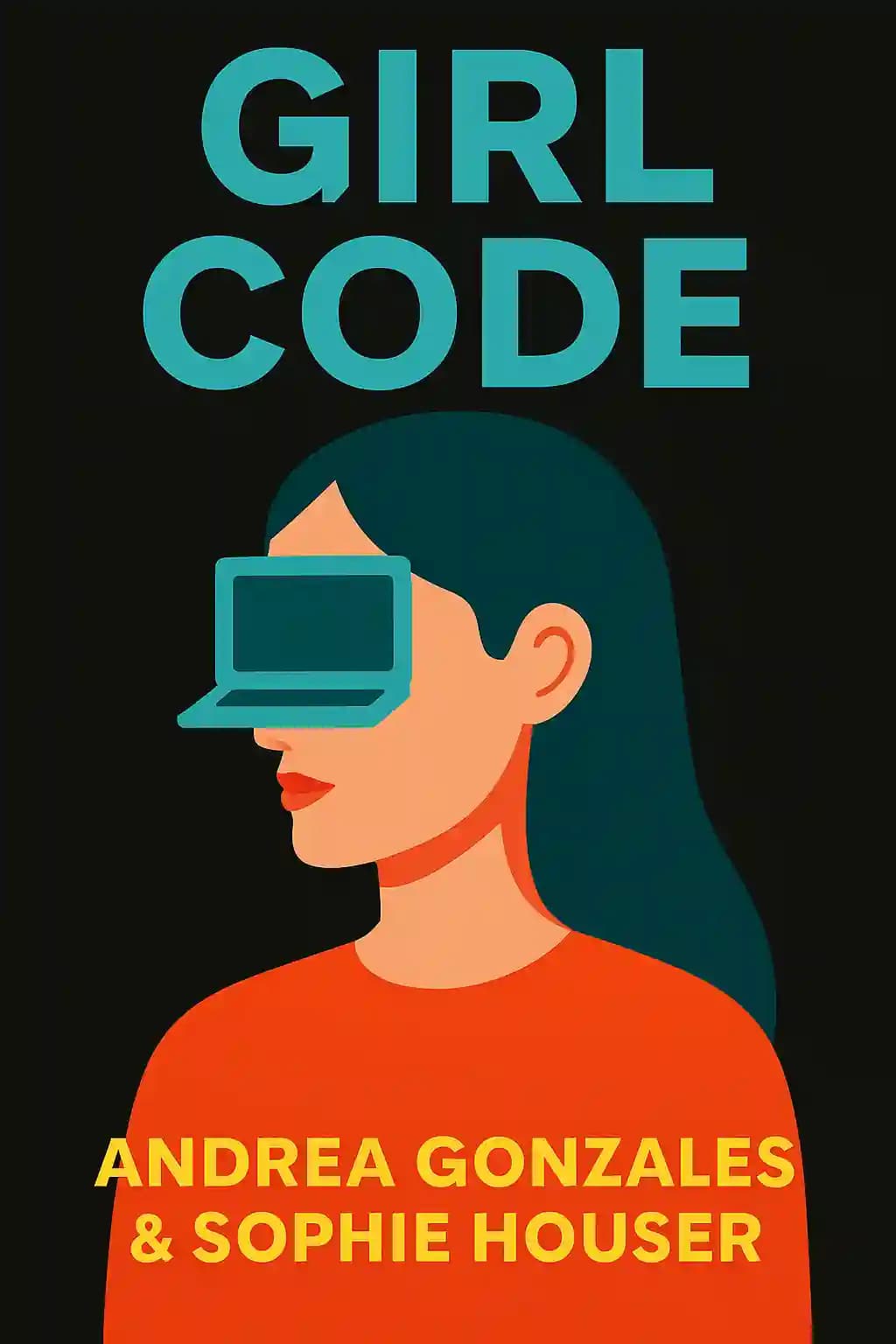
Andrea Gonzales and Sophie Houser, co-authors of Girl Code: Gaming, Going Viral, and Getting It Done, are trailblazing advocates for women in STEM and feminist game developers who gained recognition for their viral video game Tampon Run. The memoir chronicles their journey from high school students at a Girls Who Code summer program to international figures challenging societal taboos around menstruation and gender representation in tech.
Gonzales, a Robertson Scholar who studied computer science and journalism at UNC-Chapel Hill and Duke University, now works as a software engineer at Microsoft.
Houser, a Brown University computer science graduate, continues to promote diversity in tech through public speaking and mentorship. Their work has been featured in TIME, Teen Vogue, and CNN, and they have presented at institutions like NC State University, bridging activism with tech innovation.
Published by HarperCollins in 2017, Girl Code combines personal storytelling with coding tutorials, inspiring a generation of young women to pursue STEM careers while dismantling stereotypes. The book’s success underscores their lasting impact on conversations about gender equity in technology.
Girl Code chronicles the journey of Andrea "Andy" Gonzales and Sophie Houser, two teens who met at a Girls Who Code camp and created the viral video game Tampon Run to challenge menstrual stigma. The book blends their personal experiences in tech with insights on overcoming gender barriers, advocating for women in STEM, and harnessing creativity to drive social change.
Aspiring coders, educators, and advocates for gender equality in tech will find this book inspiring. It’s particularly relevant for teens interested in STEM, educators seeking relatable success stories, and anyone passionate about bridging the gender gap in male-dominated fields.
Yes—readers praise its uplifting message, real-world examples of perseverance, and actionable advice for navigating tech careers. The authors’ candid storytelling and practical coding tips make it both motivational and educational, especially for young women exploring STEM.
Key themes include overcoming societal taboos (like menstruation), resilience in male-dominated spaces, and the power of coding as a tool for activism. The authors emphasize collaboration, creativity, and using technology to amplify underrepresented voices.
During their Girls Who Code camp, Gonzales and Houser collaborated to build Tampon Run, a game that satirizes period stigma. The project went viral, landing them media spots and speaking engagements, and became a catalyst for discussions about gender equality in tech.
The duo navigates public speaking fears, societal discomfort around menstruation, and technical hurdles in game development. Their journey highlights the emotional and logistical obstacles women often face in tech.
By sharing their viral success and advocacy work, Gonzales and Houser critique the lack of female representation in tech. They encourage readers to challenge stereotypes, pursue coding careers, and create inclusive spaces for women.
The authors stress collaboration, embracing failure as a learning tool, and using code to solve real-world problems. The book includes bonus coding resources to help readers kickstart their own projects.
While praised for its positivity, some note the book focuses more on inspirational storytelling than deep technical analysis. However, its accessibility and relatable tone resonate strongly with its target audience.
Unlike theoretical takes on gender inequality, Girl Code offers a firsthand narrative of teen innovators leveraging tech for social impact. It pairs memoir-style storytelling with actionable advice, setting it apart from academic guides.
With ongoing gender disparities in tech, the book’s message about representation and empowerment remains critical. It serves as a roadmap for young women navigating an evolving industry still grappling with inclusivity.
Yes! The book provides coding tips, project ideas, and guidance for beginners. These resources aim to demystify programming and inspire readers to turn their ideas into functional projects.
Siente el libro a través de la voz del autor
Convierte el conocimiento en ideas atractivas y llenas de ejemplos
Captura ideas clave en un instante para un aprendizaje rápido
Disfruta el libro de una manera divertida y atractiva
Coding can be a powerful tool for social change.
Financial stability was paramount in her family's values.
Desglosa las ideas clave de Girl code en puntos fáciles de entender para comprender cómo los equipos innovadores crean, colaboran y crecen.
Experimenta Girl code a través de narraciones vívidas que convierten las lecciones de innovación en momentos que recordarás y aplicarás.
Pregunta cualquier cosa, elige tu estilo de aprendizaje y co-crea ideas que realmente resuenen contigo.

Creado por exalumnos de la Universidad de Columbia en San Francisco
"Instead of endless scrolling, I just hit play on BeFreed. It saves me so much time."
"I never knew where to start with nonfiction—BeFreed’s book lists turned into podcasts gave me a clear path."
"Perfect balance between learning and entertainment. Finished ‘Thinking, Fast and Slow’ on my commute this week."
"Crazy how much I learned while walking the dog. BeFreed = small habits → big gains."
"Reading used to feel like a chore. Now it’s just part of my lifestyle."
"Feels effortless compared to reading. I’ve finished 6 books this month already."
"BeFreed turned my guilty doomscrolling into something that feels productive and inspiring."
"BeFreed turned my commute into learning time. 20-min podcasts are perfect for finishing books I never had time for."
"BeFreed replaced my podcast queue. Imagine Spotify for books — that’s it. 🙌"
"It is great for me to learn something from the book without reading it."
"The themed book list podcasts help me connect ideas across authors—like a guided audio journey."
"Makes me feel smarter every time before going to work"
Creado por exalumnos de la Universidad de Columbia en San Francisco

Obtén el resumen de Girl code como PDF o EPUB gratis. Imprímelo o léelo sin conexión en cualquier momento.
In 2014, two teenage girls met at a summer coding program and created something extraordinary. Andrea "Andy" Gonzales and Sophie Houser developed "Tampon Run" - a game where players throw tampons at enemies instead of shooting bullets. What began as a coding project exploded overnight, reaching over half a million people worldwide and catapulting them into unexpected fame. Their creation wasn't just entertaining; it challenged one of society's most persistent taboos and sparked crucial conversations about menstruation stigma and women in technology. Most remarkably, they accomplished all this while still navigating high school, homework, and the complexities of teenage life. Their journey demonstrates how coding can become a powerful tool for social change, especially when wielded by young women determined to make their voices heard in spaces where they've traditionally been silenced.
Sophie and Andy came to Girls Who Code from different backgrounds. Sophie, painfully shy, hoped coding might offer expression without speaking, with only her journal as an outlet. Andy grew up with technology, playing StarCraft with her programmer father. At fourteen, she attended SummerTech Computer Camp as the only girl among twenty-three boys and, despite skepticism, earned the "Most Promising Programmer" award. The all-female environment transformed both girls. For Sophie, the supportive space made participation less intimidating. "It wasn't 'actually-shit-yourself-scary' anymore because everyone wanted me to succeed," she realized. When she and her partner solved a challenging JavaScript assignment, their peers applauded despite finishing last. Biking home that day, Sophie felt triumphant - if she could make rectangles scroll across a screen, what couldn't she do? For Andy, the program taught her to collaborate rather than work independently. She learned to teach others, explaining concepts clearly without simply providing code, which deepened her understanding. Andy's mentor Nikki, a technical project manager at Vimeo, showed her that computer science connected to every aspect of life and could be applied in countless ways beyond programming.
As the program neared its end, both girls experienced feminist awakenings that shaped their collaboration. Andy had long been bothered by the hypersexualization of women in video games with their "impossible proportions." Sophie had hesitated to identify as a feminist despite agreeing with its principles, fearing stereotypes. On project pitch day, Andy proposed addressing women's hypersexualization in video games, and Sophie immediately partnered with her. Their conversations revealed a shared discomfort with menstruation taboos. Research showed serious consequences: homeless shelters lacking menstrual supplies, girls dropping out of school at puberty, and women forced into isolation during periods. Tampon Run's concept emerged: a game where a female character throws tampons at enemies, challenging the double standard where violent blood is acceptable in media but menstrual blood remains taboo. Their instructor Sean's hesitation about needing approval only confirmed the taboo's power and strengthened their resolve. After brainstorming, they developed a detailed plan and created an MVP (minimum viable product) with simple shapes: blue for the girl, orange for enemies, and black squares for tampons. They divided tasks based on their strengths - Andy handled pixel art design and animation while Sophie worked on making the character jump. Both faced challenges: Sophie discovered her character was jumping too quickly to see, while Andy struggled with animating Luna (named for the connection between menstrual cycles and lunar phases), finally assembling the right code in the early morning hours.
On graduation day, Sophie lost her confidence before the audience while Andy worried about her family's reaction to their tampon game. Sophie forgot her lines despite holding her notecard, but received applause anyway. Surprisingly, Andy's parents embraced the concept, her mother admitting she overcame initial discomfort. That night, they created a website for Tampon Run and developed a promotion plan they playfully called "Releasing Tampon Run like Blood from the Uterus." Sophie posted the game online and established social media accounts. The next day transformed everything. By evening, Metro UK had featured their game, with articles soon appearing everywhere. Within days, press requests and supportive messages flooded in. The game spread rapidly, appearing in Time, Seventeen, CBS, and on late-night shows. Most meaningful were messages from users sharing menstruation stories or asking coding questions. Their summer project had ignited a global conversation about menstruation and women in technology, proving their voices truly mattered.
Tampon Run's viral success created significant challenges for the teenage creators. They managed interviews, emails, and social media between classes and during free periods, with Sophie earning the nickname "email girl" as she navigated school with her laptop constantly open. The experience transformed their relationship with school. Sophie realized she had created something with worldwide impact and felt fulfilled, while schoolwork made her feel trapped in an isolated bubble. She no longer needed grades to validate her worth-she could measure success through her creative projects' impact. Both girls struggled with time management. Andy missed volleyball practices, fell behind on SAT preparation, and watched her schoolwork and relationship suffer. Most significantly, her piano practice declined, leading to a failed final performance. Sophie's breaking point came when she found herself sobbing in the school bathroom, exhausted from late-night homework sessions. She questioned her obsession with perfect grades when she'd already proven herself through Tampon Run, gradually letting go of her perfectionism. While most feedback was supportive, they also faced negative comments and an uncomfortable interview with a radio host who made inappropriate suggestions-highlighting the darker side of the tech world where female developers often face harassment and unequal treatment.
Tampon Run's success created unexpected opportunities. Pivotal Labs offered a seven-week pro bono contract to develop a mobile version, showing Andy that programming could be collaborative rather than isolating. Their journey continued to Silicon Valley when Weeby.co invited them to learn gaming technology. There they created "CatCall Run," a game addressing street harassment, working 27 hours straight and becoming finalists. Sophie realized she wanted to launch her own startup rather than implement others' ideas. Andy secured a game development internship at DoSomething.org despite being years younger than other interns, gaining technical skills while being inspired by college students pursuing their passions.
By summer's end, Andy knew she wanted to be a programmer. Her mother advised simply, "Just do what you want. And do it well." Thanks to Tampon Run, Andy became comfortable with uncertainty, confident that computer science skills would remain valuable regardless of her path. The summer coding program transformed both girls. They discovered coding's creative power, the strength of collaboration, and that fear shouldn't prevent action. Most importantly, they learned that success often comes from addressing taboos others avoid. By tackling menstruation stigma through a humorous game, they sparked global conversations about periods and women in technology. The next time you hesitate to speak up about something uncomfortable, remember Sophie and Andy. Sometimes the most powerful action is coding your own revolution - transforming the unspeakable into something playable and impossible to ignore. Your voice, your code, your ideas matter. You got this.