Capítulo 1
The Unsung Heroines Who Shortened World War II
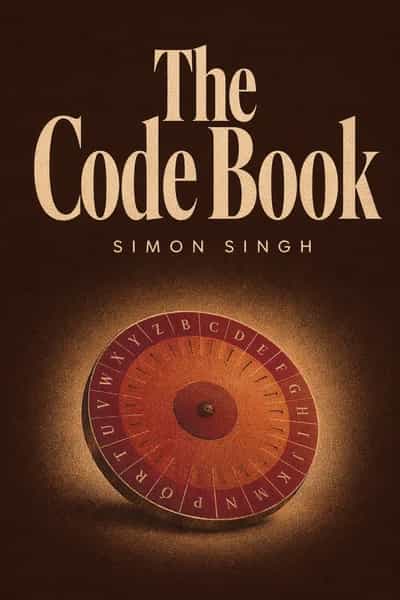
The story of America's female code breakers during World War II remains one of history's most remarkable yet underappreciated chapters. While Rosie the Riveter became the iconic symbol of women's industrial contributions, over 10,000 young women-college students, teachers, and mathematicians-were secretly recruited to Washington D.C. to apply their minds to breaking enemy codes. Their work proved so crucial that military leaders later estimated it shortened the war by at least two years, saving countless lives. The book became a New York Times bestseller upon its 2017 release, with NPR calling it "a story that needed to be told." Even Hollywood took notice, with rumors of a potential adaptation starring Amy Adams. Perhaps most significantly, the book arrived just as the NSA and intelligence community began publicly acknowledging women's historical contributions to cryptanalysis, making it a timely celebration of long-overdue recognition.
Capítulo 2
The Secret Letters That Changed History
In late 1941, as war clouds gathered over America, mysterious letters began arriving at elite women's colleges across the country. At Wellesley College, students like Ann White, Elizabeth Colby, and Louise Wilde received summons to meet Professor Helen Dodson at the observatory. There, they faced just two curious questions: Did they enjoy crossword puzzles? And were they engaged to be married?
These seemingly innocuous questions marked the beginning of America's secret recruitment of female code breakers-an operation that would become one of the most crucial yet least known intelligence initiatives of World War II. The Navy targeted prestigious women's colleges like Wellesley, Smith, Bryn Mawr, and Radcliffe, seeking bright liberal arts students with aptitude for languages and mathematics. Meanwhile, the Army cast a wider net, recruiting from teaching colleges across the South and Midwest, and later hiring experienced schoolteachers directly from small towns across America.
The Japanese attack on Pearl Harbor on December 7, 1941, dramatically accelerated this recruitment. As nearly two hundred Japanese fighters and bombers devastated America's Pacific fleet, killing over two thousand men, the urgent need for better intelligence became painfully clear. America's cryptanalytic operations were woefully understaffed and underprepared for war.
The women who answered these mysterious summons were sworn to absolute secrecy. They couldn't tell parents, friends, or even enlisted brothers about their work. Many studied frequency analysis, cipher systems, and code-breaking techniques in clandestine courses, often hiding materials from roommates. They were entering a shadowy world where their intellectual contributions would directly impact military operations and save countless lives, though few would ever receive public recognition for their service.
What made these women particularly valuable was their educational background. Despite only 4% of American women having completed college by 1942, these educated recruits possessed precisely the skills cryptanalysis required-training in languages, literature, music, mathematics, and meticulous attention to detail. Women's colleges with their strict codes of conduct produced graduates who sailed through security clearances, and women were considered less likely than men to divulge secrets while drinking. By war's end, women would constitute nearly 70% of the Army's code-breaking force and 80% of the Navy's domestic cryptanalysts-approximately 11,000 of America's 20,000 wartime code breakers were women.
Capítulo 3
The Pioneers Who Paved the Way
Despite the Navy's 1941 claim to female recruits that code-breaking had previously been men's work, America's early cryptanalytic capability actually owed much to brilliant women. These pioneering women were typically curious, resourceful, and intellectually unfulfilled schoolteachers seeking more stimulating work. Their success created a "jackpot effect," where women hired and mentored other talented women, establishing a significant female presence in the field.
One such pioneer was Elizebeth Smith, a restless midwesterner who graduated from Hillsdale College with an English major and classical language training. In 1916, she encountered George Fabyan, an eccentric wealthy textile merchant who hired her to work at his "Riverbank Laboratories" estate in Geneva, Illinois. Though initially assigned to assist with the dubious theory that Francis Bacon had authored Shakespeare's works, Smith and her future husband William Friedman became genuinely fascinated by cryptanalysis through Fabyan's rare collection of books on secret writing.
During World War I, Fabyan established Riverbank as America's first cryptanalytic training school for military officers heading to Europe. The Friedmans eventually escaped Fabyan's controlling grip, accepting Army contracts in 1921 and moving to Washington. William joined the Army Signal Corps permanently, while Elizebeth balanced motherhood with increasingly high-profile cryptanalytic work for various government agencies during Prohibition, breaking rum-runners' codes and testifying against dangerous criminals.
Meanwhile, the Navy developed its own separate operation with Agnes Meyer Driscoll, a brilliant mathematics teacher who had enlisted as a "Yeoman (F)" during WWI. After the war, when other female reservists were discharged, the Navy hired Meyer back as a civilian to test supposedly "foolproof" enciphering machines and systems. Working at the Navy's "research desk," Meyer Driscoll spent decades breaking Japanese naval codes, training virtually all major naval code breakers who became famous in WWII. Despite her brilliance, Meyer faced gender discrimination, always being paid less than her male counterparts like William Friedman.
These pioneering women laid the groundwork for the massive expansion of female cryptanalysts during World War II. Their success demonstrated that women could excel in this intellectually demanding field, opening doors for thousands who would follow in their footsteps during the war years.
Capítulo 4
Twenty-Eight Acres of Girls
In September 1942, twenty-two-year-old Dot Braden found herself overwhelmed teaching at Chatham High School in Virginia. With most male teachers gone to war and many female ones quitting to marry departing soldiers, Dot was suddenly responsible for teaching English, French, ancient history, civics, hygiene, calisthenics, and eventually physics-all for $900 a year. Despite her determination, by Christmas she was exhausted, especially after her roommate quit to marry and the restaurant where she ate closed due to rationing.
Born in 1920, Dot had rarely left Virginia. The oldest of four children being raised by a single mother during the Depression, she had worked her way through Randolph-Macon Woman's College with scholarships and jobs. She excelled in languages, particularly French and Latin. When she learned about government recruiters seeking schoolteachers for mysterious war work in Washington, D.C., she jumped at the opportunity to contribute to the war effort while earning nearly double her teaching salary.
On October 11, 1943, Dot boarded a crowded train to Washington, arriving at Arlington Hall-a former girls' finishing school now surrounded by imposing wire fences and military personnel. After signing loyalty and secrecy oaths, she discovered the government hadn't arranged housing as she'd assumed and was directed to Arlington Farms, a hastily constructed women's dormitory complex nicknamed "Girl Town" or "28 Acres of Girls."
Inside Arlington Hall, Dot discovered an operation of unprecedented scale-the largest clandestine message center in the world. Rooms were crammed with women working at tables with graph paper, cards, and pencils in focused concentration. Some areas contained strange machines-tabulating machines, punch-card machines, and unusual typewriters connected by thick cables. Here, thousands of workers-mostly female civilians like Dot-were attacking encrypted enemy messages from Nazi Germany, Japan, and other countries.
The influx of women workers into Arlington created challenging living conditions. The hastily constructed dormitories had paper-thin walls that shook when people walked down hallways, and women constantly stood in lines for everything from mailboxes to showers. Seeking escape from these crowded dormitories, Dot and her friend Liz from Durham spotted an advertisement for Fillmore Gardens, a new apartment complex being built near Arlington Hall. They invited colleague Ruth "Crow" Weston, who had been hired just a week before Dot, to join them.
Furnishing their apartment proved challenging during wartime shortages. Dot's mother sent a bedframe from Lynchburg, with Dot and Ruth sharing the bed while Liz slept on a cot. When the women purchased a mattress downtown, they found themselves stranded without delivery service until a kind salesman offered to help in exchange for a home-cooked meal. This mattress adventure marked the beginning of Dot and Ruth's deep friendship. Despite their close bond, they never discussed their work at Arlington Hall, even though they sometimes ate lunch together in the cafeteria while working on different aspects of the same Japanese Army code-breaking effort.
Capítulo 5
The Most Difficult Problem
On September 20, 1940, around two o'clock in the afternoon, Genevieve Grotjan approached Frank Rowlett and other senior cryptanalysts at the Army's code-breaking operation with work sheets clutched to her chest. With quiet excitement, she showed them what they'd been seeking for over a year-the repetition patterns that confirmed their hypothesis about the Purple machine's switching mechanism.
The Purple machine was Japan's most sophisticated diplomatic cipher system, replacing the earlier "Red" machine. Despite the British, Germans, and even the U.S. Navy abandoning the effort as impossible, William Friedman's small team of civilian cryptanalysts stubbornly persisted. They theorized the machine used telephone-like stepping switches rather than rotors, with a complex cascading rhythm to transform letters.
Despite being a junior mathematician with less than a year's experience, working alongside men who had literally written the textbooks on cryptanalysis, Grotjan had found the "entering wedge" they needed. Her remarkable ability to concentrate and see patterns had broken the "twenties" component that had stymied everyone else. The room erupted in cheers while Friedman, overcome with emotion, slumped against the table. With this breakthrough, they could now construct their own machine to decipher Japanese diplomatic messages.
The toll of the Purple project was immense, particularly on William Friedman. The pressure of the work combined with the burden of absolute secrecy-unable to discuss anything even with his wife Elizebeth-led to his hospitalization at Walter Reed for three months in early 1941, suffering from what was essentially a nervous breakdown. Three years later, Friedman wrote a top-secret memo praising Grotjan, describing their solution of the Purple cipher as "by far the most difficult cryptanalytic problem successfully handled and solved by any signal intelligence organization in the world." They had accomplished something unprecedented: reconstructing an enemy cipher machine without ever having seen it.
The Purple breakthrough provided the Allies with their most valuable intelligence source throughout the war. Japanese diplomats in Europe, especially Ambassador Oshima in Berlin, sent detailed reports about Nazi activities, Hitler's conversations, and German military preparations. These messages, deciphered as "Magic" intelligence, were delivered daily in top-secret briefings to a select few officials. Despite not predicting Pearl Harbor (as Japanese diplomats weren't informed of military plans), Purple intelligence proved invaluable for Allied strategy, including D-Day planning.
As the war expanded, so did the code-breaking operation, moving from the Munitions Building to Arlington Hall, a bankrupt girls' finishing school with spacious grounds. The Army took possession in June 1942, hastily converting dorm rooms into offices where intercepts were stored in bathtubs. The operation expanded to tackle codes from twenty-five nations, with women like Grotjan assuming positions of enormous authority.
Capítulo 6
"Over All This Vast Expanse of Waters Japan Was Supreme"
The first six months of 1942 marked a dark, disheartening period for the United States, especially the Navy. Japan controlled a quarter of the Pacific Ocean with a formidable naval force that hadn't lost a battle in over fifty years. Despite Pearl Harbor failing to deliver the knockout blow Japan needed, they swiftly captured territories across the Pacific-Guam, Wake Island, the Philippines, Hong Kong, Singapore, Burma, and numerous Dutch East Indies islands. By February 1942, Roosevelt ordered MacArthur to leave the Philippines, and Corregidor fell soon after, marking Japan's breathtaking series of victories that left the Allies "weak and naked" across vast waters.
In June 1942, Japanese diplomats plotted propaganda campaigns targeting American vulnerabilities like inflation and racial tensions, smugly noting how Pearl Harbor had "upset the moral equilibrium of the American people." Meanwhile, the Atlantic situation was equally dire as German U-boats terrorized the East Coast in their "Happy Time," sinking ships within view of horrified American citizens. The Battle of the Atlantic became a desperate struggle of commerce and lives, with U-boats sinking ships faster than America could build them. It was also a battle of code-breaking-the Germans using supposedly unbreakable Enigma machines while the Allies raced to crack their ciphers.
Into this demoralized atmosphere came the young women from Seven Sisters colleges, recruited to join the Navy's desperate code-breaking effort. By mid-1942, the naval code-breaking operation had grown from just 60 people to 720, with more arriving daily. The women worked punishing shifts in unbearable conditions. Their neat cotton dresses would be plastered to their skin with sweat, papers beneath their forearms soaked through. Despite rigorous college training in cryptanalysis, the actual work often diverged from their academic preparation. Most distressing was the weight of responsibility: these young women knew men's lives depended on their success.
The work brought uncomfortable encounters with the enemy's humanity. The British sent over personal effects from captured U-boats-family photos of drowned German sailors. Once, Ann White's team deciphered a Nazi commander's announcement of his son's birth. But mostly, the work bred sadness and a sense of failure when ships were lost despite their efforts. "We worked on the Enigma desperately," Ann would say. "Blindly."
Naval code breaking initially operated under a dark cloud after Pearl Harbor, with many officials doubting its value. Despite these challenges, the tide began turning in May 1942 when decoded JN-25 messages revealed Japanese plans to capture Port Moresby in New Guinea. By mid-May, intercepted messages indicated a massive Japanese operation targeting "AF." Through a clever ruse-having Midway broadcast an uncoded message about water shortages-code breakers confirmed "AF" was indeed Midway. This intelligence gave Admiral Nimitz the priceless advantage that led to America's stunning victory at the Battle of Midway in June 1942, a major turning point that ended Japan's Pacific expansion.
Capítulo 7
"Q for Communications"
By July 1942, women were proving so valuable to the war effort that military service opened to them, despite significant resistance. Massachusetts Republican Edith Nourse Rogers championed the Women's Army Auxiliary Corps (WAAC), though it faced opposition from those worried about women's femininity and morality. The Navy was even more resistant, with Virginia Gildersleeve noting that certain admirals "would probably have greatly preferred dogs or ducks or monkeys to women." Nevertheless, President Roosevelt signed the law creating WAVES (Women Accepted for Volunteer Emergency Service) in July 1942.
The WAVES officer training was rigorous and transformative. Women struggled with marching in civilian heels, sometimes falling backward on wet surfaces. They immersed themselves in naval culture, studying The Bluejackets' Manual, Navy protocols, and adopting naval terminology-shifts became "watches," floors "decks," bathrooms "the head." When graduating, they received their ensign uniforms, though many code breakers were rushed back to Washington after only four weeks as "thirty-day wonders."
Women from diverse backgrounds joined the WAVES for varied reasons-patriotism, adventure, family representation, or simply curiosity. Many faced culture shock during training, like Betty Hyatt from rural South Carolina who had never met Jewish or Catholic people before, or women who had never seen a northern city and feared the subway would "swallow them up."
The WAVES consolidated their boot camps at Hunter College in the Bronx by February 1943, processing some 90,000 women through six-week training programs. The women endured physical examinations that shocked the modest, including group medical inspections where they stood bare-chested with numbers drawn between their breasts.
By late 1942, the Navy's Washington code-breaking operation had grown from a few hundred to over a thousand personnel, forcing relocation to the prestigious Mount Vernon Seminary in Tenleytown. This elite women's junior college with its Georgian brick buildings, cloisters, indoor pool, and 38 acres of elevated grounds offered both space and seclusion-perfect for secret work. The Navy seized the campus in December 1942, renaming it the Naval Communications Annex, though most called it simply "the Annex" or "USS Mount Vernon."
Across from the main compound, the Navy constructed Barracks D-the largest WAVES barracks in the world, housing code breakers who worked round-the-clock shifts. The facility included beauty shops, bowling alleys, and a mess hall catered by Hot Shoppes. Armed Marines who had often seen combat duty in places like Guadalcanal guarded the compound, checking badges and bags as women entered.
Capítulo 8
The Naval Communications Annex
The Naval Annex developed a university-like atmosphere, with many male officers being reservists from academic backgrounds. The staff included Shakespeare bibliographer Fredson Bowers, bridge champion Oswald Jacoby, Harvard philosopher Willard Van Orman Quine, classics scholar Richmond Lattimore, and publishers Charles Scribner Jr. and Pike Johnson. Women worked in every unit-breaking codes, drafting intelligence summaries, and conducting research.
Women's numbers at the Naval Annex steadily increased until they dominated the workforce. By July 1943, there were 96 female officers and 1,534 enlisted women compared to 269 male officers and 641 enlisted men. By February 1944, women's numbers nearly doubled while men's decreased. Eventually, 4,000 women were breaking enemy naval codes at the USS Mount Vernon Seminary, comprising 80% of the total force.
The code breakers gained a sobering perspective on the war that contradicted public propaganda. Ensign Marjorie Faeder, assigned to the electric cipher machine, was shocked by the disparity between optimistic newspaper headlines and the grim reality revealed in classified messages about high casualties and lost ships in the Pacific.
Women's experiences with male leadership varied dramatically. Some officers made inappropriate advances or treated women as servants, while others like Commander Hanson fiercely protected their female staff, even taking on menial tasks like mopping floors himself rather than assigning them to the women. Commander Wyman Packard, who supervised women on the midnight watch, published a mimeographed newsletter called "Midwatch Murmurs" to keep them informed and boost morale, praising their "unquenchable spirit" and "sincere devotion to duty."
Many women discovered unexpected talents and quickly rose to trusted positions. Female officers advanced from ensigns to lieutenant junior grades, full lieutenants, and sometimes lieutenant commanders. Despite Navy attempts to prevent close friendships, strong bonds formed anyway. The OP-20-G-L library unit formed a particularly tight-knit group including Betty Allen, Georgia O'Connor, Lyn Ramsdell, and Ruth Schoen. These friendships extended beyond work, with women visiting each other's families and attending weddings.
Despite their capabilities, WAVES faced significant restrictions. They couldn't be sent overseas despite many repeatedly requesting transfers. The Navy had to improvise policies regarding women's roles. After debate, WAVES officers were allowed to learn to shoot pistols for code room security, though commanders joked smaller weapons would better suit their uniforms. Complex authority questions arose about female officers supervising male personnel.
Capítulo 9
Sugar Camp and the American Bombe Project
In April 1943, a group of WAVES boarded a midnight train in Washington under sealed orders, knowing only they were headed "west." After an uncomfortable overnight journey sitting upright, they arrived not in California as some had hoped, but in Dayton, Ohio. The women were taken to what appeared to be a rustic camp with maple trees and wooden cabins-a 31-acre property owned by National Cash Register Company called Sugar Camp.
Six hundred WAVES were stationed at the camp, marching daily to NCR's main campus where they worked in Building 26 under armed guard, with a cover story about learning accounting machines. Their real task involved using soldering irons to fashion intricate wire baskets attached to Bakelite, brass, and copper wheels-exacting work requiring perfect precision. Despite warnings about German spies and instructions never to discuss their work, the women noticed their wheels had 26 numbers-the same as letters in the alphabet.
America's industrial might would prove decisive in the Enigma battle. With more factories, materials, and technical expertise, the U.S. Navy engaged Joseph Desch, a brilliant Dayton inventor without Ivy League credentials but with an engineer's genius, to design an American bombe. Desch, who had designed electronic accounting machines and specialized vacuum tubes at National Cash Register, was tasked with creating high-speed machines capable of handling the four-rotor Enigma cipher.
The Navy desperately sought women with mathematical aptitude-the very field women had long been discouraged from entering. Louise Pearsall, a 22-year-old from Elgin, Illinois who had studied mathematics but abandoned her actuarial ambitions after being repeatedly told it was "a man's field," found her calling in the Enigma project. Working for MIT's John Howard, she performed the manual calculations that the bombes would eventually do faster: testing permutations and working out mathematical formulas for letter sequences.
By summer 1943, the first experimental bombes-nicknamed Adam and Eve-were undergoing testing in Dayton. The massive machines stood seven feet tall, ten feet long, weighed over two tons, and contained thousands of components from 12,000 different suppliers. By September, the first generation of bombes was ready for shipment to Washington, where Louise and other WAVES faced unexpected disrespect at processing, being mistaken for women expelled from Dayton for misconduct.
Several hundred women from Sugar Camp returned to Washington to operate the 120 bombe machines installed in a hangar-like space with three rooms divided into four-machine bays. The work was physically demanding-operators like Jimmie Lee Hutchison had to carefully place heavy two-pound commutator wheels, monitor for "hits," and deliver printouts to unseen officers. The machines ran so hot that windows were opened in summer, letting the racket escape onto Nebraska Avenue.
By September 1943, the American bombes had exceeded all expectations, with Allied intelligence now reading every U-boat message with just twelve hours delay. This intelligence revolution, combined with advances in radar, sonar, high-frequency direction finding, and improved convoy protection, swept most U-boats from Atlantic waters. By November, thirty U-boats ventured into the North Atlantic and sank nothing. The British graciously acknowledged American dominance, with one internal memo noting that "by half way through 1944" the Americans "had taken complete control of Shark and undoubtedly knew far more about the key than we did."
Capítulo 10
The Surrender Message
As Arlington Hall decoded the Japanese surrender message, the news spread rapidly despite initial attempts to maintain secrecy. Frank Rowlett and Solomon Kullback tried to contain the excitement, but soon all employees were gathered to take a vow of silence. Dot Braden raised her right hand with her colleagues, feeling both thrilled and intimidated by the gravity of knowing the war was ending before the rest of the world.
At seven p.m., when President Truman finally announced Japan's surrender, Arlington Hall and Naval Annex workers poured into the streets of Washington. The city erupted in celebration-people rode atop cars and trolleys, toilet paper streamed from hotel windows, and crowds sang "Happy Days Are Here Again!" Among the revelers, code breaker Jeuel Bannister met her future husband, a j-boy she'd never seen before. The next day, August 15, Truman declared a two-day holiday to mark Japan's surrender.
With the war's end, Japanese messages ceased. Brigadier General Preston Corderman soon gathered Arlington Hall staff to thank them for their service and suggest they leave government employment. Many, like Ann Caracristi, initially departed, but she was soon recruited back by friends Wilma Berryman and Gertrude Kirtland. Despite the apparent demobilization, Arlington Hall wasn't closing-it was just beginning its next chapter.
Jim Bruce returned from overseas in September 1945, and he and Dot confirmed their decision to marry after their two-year correspondence. When Crow heard Jim was returning, she cried-not from jealousy, but knowing their close friendship would change. Dot and Jim married on December 29, 1945, with Dot wearing a gray silk suit and a fashionable fuchsia feathered hat.
By January 31, 1946, Dot resigned from Arlington Hall to join Jim in Oklahoma. Crow tearfully saw her off at Union Station, with Dot's mother reassuring Crow she'd find someone after the war. The couple eventually settled in Richmond, where they struggled with housing shortages like many returning veterans before securing a prefabricated house.
Crow remained at Arlington Hall as a mathematician, receiving excellent ratings and a commendation in 1948. She eventually married Bill Cable, whom Dot and Jim approved. However, like many women of that era, Crow resigned in 1952 when expecting her first child, as postwar America discouraged women's employment. Both women eventually returned to work-Dot as a real estate agent and Crow as a cartographer. Their friendship endured throughout their lives, so close that their children assumed they were related.
Capítulo 11
The Mitten
In January 2016, a solemn procession gathered at a northern Virginia cemetery to honor Ann Caracristi, the first female deputy director of the National Security Agency. Distinguished intelligence community members came to pay respects to this remarkable woman who maintained her sharp intellect until her death at ninety-four.
Many women code breakers distinguished themselves at the NSA after the war. Ann worked under Carrie Berry, the first woman sent to Cheltenham as NSA liaison with the British. Her friend Wilma Berryman (later Davis) worked on Chinese problems. The merged Army-Navy operation eventually relocated to Maryland, but wartime relationships and rivalries persisted-like when Polly Budenbach, who helped break Japanese naval attache ciphers, passed Agnes Driscoll in a hallway and received an unmistakable hiss from the legendary codebreaker.
Several women achieved "supergrade" status-the top civil service rating-including Bryn Mawr's Julia Ward who built Arlington Hall's library, and Juanita Morris (later Moody) who had solved a "hopeless" German diplomatic code and later handled Cuban messages during the Missile Crisis. Gene Grabeel, an ex-schoolteacher, launched the Venona project targeting Soviet communications, where 90% of workers were women who devoted decades to uncovering Soviet spies.
After the war, opportunities for women were mixed. Most packed up and went home, even brilliant analysts like Delia Taylor Sinkov and Genevieve Grotjan Feinstein, particularly when they began having children. The nation lost talent that the war had developed, and women would have to fight for recognition again in the 1970s and 1980s.
To combat isolation and loneliness, the women from the Naval Annex library unit created a round-robin letter system where each would write about her life, passing the growing sheaf to the next woman. This correspondence continued for decades-through raising children, social movements, wars, and presidential administrations-providing crucial connection for women suddenly thrust from analytical work into domestic labor.
At ninety-seven in 2017, Dot Braden Bruce lives in an assisted-living facility near Richmond, keeping her French skills sharp by conversing with West African caregivers. Her husband Jim died in 2007, and her roommate Crow in 2012. Jim was steady, kind, and supportive of Dot's independence throughout their sixty-three years together, whether she was teaching or selling real estate.
For fifty years after the war, Dot told no one about her code-breaking work. When she finally gave hints, her family initially disbelieved her, then exaggerated her role. Even now, with NSA's permission to share her story, she hesitates to discuss details, instinctively covering her mouth after mentioning certain code names. Despite the passage of time, her wartime secrecy remains deeply ingrained-as if an enemy might still be listening at the window.