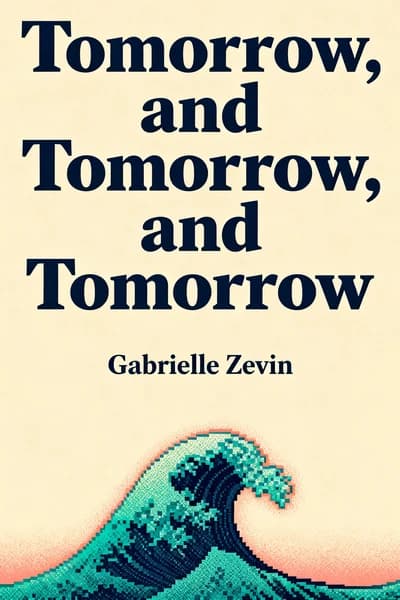
In Gabrielle Zevin's gaming-world masterpiece, two brilliant friends create virtual worlds while navigating their complex reality. John Green called it "utterly brilliant" - this #1 bestseller exploring friendship, identity, and love across thirty years became Fallon's Book Club pick and sparked a 25-bidder film rights war.
Gabrielle Zevin is the New York Times bestselling author of Tomorrow, and Tomorrow, and Tomorrow, a literary fiction novel exploring creativity, friendship, and the transformative power of storytelling through the lens of video game design.
A Harvard graduate and accomplished screenwriter—her Independent Spirit Award–nominated film Conversations with Other Women starred Helena Bonham Carter—Zevin merges her passion for technology and art in this genre-defying work.
Her acclaimed novels, including The Storied Life of A. J. Fikry (a NYT bestseller adapted into a feature film) and the young adult classic Elsewhere, consistently tackle themes of resilience, identity, and human connection.
A frequent contributor to NPR’s All Things Considered and the New York Times Book Review, Zevin’s works have been translated into nearly 40 languages. Tomorrow, and Tomorrow, and Tomorrow won the 2022 Goodreads Choice Award for Fiction, was named Amazon’s #1 Book of the Year, and is being adapted by Paramount Studios and Temple Hill Entertainment.
Tomorrow, and Tomorrow, and Tomorrow follows decades of friendship between Sam Masur and Sadie Green, two video game designers whose creative partnership evolves through love, rivalry, and tragedy. Their journey spans Boston, Los Angeles, and Tokyo, blending themes of art, identity, and human connection. The novel explores how games reflect life’s complexities, winning acclaim as Amazon’s #1 Book of 2022 and a Time Magazine Top 10 selection.
Gamers, literary fiction fans, and readers drawn to nuanced relationships will appreciate this book. Its exploration of creativity, trauma, and collaboration resonates with anyone interested in art’s role in healing. While praised for lyrical prose and meta-commentary on game design, some criticize its pacing and unlikable characters.
Key themes include:
The novel frames game design as a lens for examining human experiences—love, loss, and reinvention. Games like Ichigo and EmilyBlaster mirror characters’ emotional journeys, blurring reality and virtual worlds. Zevin’s technical descriptions immerse readers in the creative process, highlighting how games externalize inner conflicts.
Yes, for its ambitious blend of literary fiction and gaming nostalgia. While some find characters emotionally distant or the plot slow, critics praise its originality and depth. It won the Goodreads Choice Award for Fiction and has a 4.3/5 rating from 143k reviews.
Critics note uneven pacing, excessive pop-culture references, and underdeveloped secondary characters. Some readers struggle with Sam and Sadie’s toxic dynamic, arguing it lacks resolution. Trigger warnings include drug use, sexual content, and graphic violence.
Unlike The Storied Life of A.J. Fikry’s cozy charm, Tomorrow adopts a darker, more experimental tone. Both books explore art’s redemptive power, but Tomorrow’s scope—spanning 30 years and multiple cities—showcases Zevin’s growth in tackling complex themes.
The title quotes Macbeth’s soliloquy about life’s fleeting nature, reflecting the novel’s focus on legacy and mortality. It echoes characters’ attempts to immortalize themselves through games, contrasting creative permanence with human fragility.
Yes. Paramount Studios and Temple Hill acquired film rights after a competitive 25-bidder auction. Gabrielle Zevin is writing the screenplay, aiming to preserve the book’s exploration of art and time.
“What is a game? It’s a problem-solving activity, approached with a playful attitude.” This line distills the novel’s thesis: games as metaphors for navigating life’s challenges. Another standout: “You’re not an artist unless you’re brave.”
Without spoilers, the conclusion emphasizes reconciliation and legacy, tying into the Shakespearean motif of cyclical time. It underscores how art outlives its creators, offering a bittersweet meditation on memory and loss.
Fans might enjoy:
Siente el libro a través de la voz del autor
Convierte el conocimiento en ideas atractivas y llenas de ejemplos
Captura ideas clave en un instante para un aprendizaje rápido
Disfruta el libro de una manera divertida y atractiva
What is a game? It’s tomorrow, and tomorrow, and tomorrow. It’s the possibility of infinite rebirth, infinite redemption. The idea that if you keep playing, you could win. No loss is permanent, because nothing is permanent, ever.
Games function as both escape and communication.
Their collaboration isn't idealized-it's messy, intense, and occasionally destructive.
Success complicates relationships.
Creative collaboration functions as a kind of love story.
Desglosa las ideas clave de Tomorrow, and Tomorrow, and Tomorrow en puntos fáciles de entender para comprender cómo los equipos innovadores crean, colaboran y crecen.
Experimenta Tomorrow, and Tomorrow, and Tomorrow a través de narraciones vívidas que convierten las lecciones de innovación en momentos que recordarás y aplicarás.
Pregunta cualquier cosa, elige tu estilo de aprendizaje y co-crea ideas que realmente resuenen contigo.

Creado por exalumnos de la Universidad de Columbia en San Francisco
"Instead of endless scrolling, I just hit play on BeFreed. It saves me so much time."
"I never knew where to start with nonfiction—BeFreed’s book lists turned into podcasts gave me a clear path."
"Perfect balance between learning and entertainment. Finished ‘Thinking, Fast and Slow’ on my commute this week."
"Crazy how much I learned while walking the dog. BeFreed = small habits → big gains."
"Reading used to feel like a chore. Now it’s just part of my lifestyle."
"Feels effortless compared to reading. I’ve finished 6 books this month already."
"BeFreed turned my guilty doomscrolling into something that feels productive and inspiring."
"BeFreed turned my commute into learning time. 20-min podcasts are perfect for finishing books I never had time for."
"BeFreed replaced my podcast queue. Imagine Spotify for books — that’s it. 🙌"
"It is great for me to learn something from the book without reading it."
"The themed book list podcasts help me connect ideas across authors—like a guided audio journey."
"Makes me feel smarter every time before going to work"
Creado por exalumnos de la Universidad de Columbia en San Francisco

Obtén el resumen de Tomorrow, and Tomorrow, and Tomorrow como PDF o EPUB gratis. Imprímelo o léelo sin conexión en cualquier momento.
In a hospital game room in 1986, two children find refuge in Oregon Trail. Eleven-year-old Sadie visits her sister battling leukemia, while Sam recovers from a devastating foot injury. Between pixelated deaths from dysentery and snake bites, something extraordinary happens - a friendship forms through play, creating a language that will define their lives for decades to come. When they reconnect by chance years later in a Boston subway station - Sam spotting Sadie struggling with a Magic Eye poster - they resume their conversation as if the years between never existed. This chance reunion ignites one of the most profound creative partnerships in gaming history, one that will produce worlds where players can find what the creators themselves are seeking: meaning, connection, and the chance to start again when life deals its cruelest blows.
Their first collaboration stems from a simple concept: a tsunami-swept child finding their way home with only a bucket and shovel. "Ichigo" embodies their complementary creative approaches. Sam designs for player experience, creating joy that helped him through childhood trauma. Sadie adds academic rigor and artistic ambition. Marx, Sam's charismatic roommate, handles business while championing their vision. Their development process is intensely physical-Sam types until his fingers bleed, Sadie bursts a blood vessel in her eye. Their first major decision arrives when publishers approach: accept modest payment from a small company respecting their vision, or take five times more from a corporation that immediately genders their intentionally neutral protagonist. This tension between artistic integrity and commercial success continues when "Ichigo II" becomes financially successful but creatively disappointing. As Unfair Games grows from three friends in a cramped apartment to a proper studio with employees and investors, their intimate creative process becomes industrialized. Marx and Sadie's romantic relationship leaves Sam feeling excluded. Their once complementary creative differences transform into conflicts, with Sam's focus on accessibility clashing with Sadie's artistic ambitions.
Their collaborative masterpiece "Both Sides" reflects their creative tension perfectly. The game features two contrasting worlds-Mapletown's nostalgic Americana versus Myre Landing's dark fantasy-that players navigate simultaneously. These dual worlds mirror Sam and Sadie themselves: distinct creative visions forced to coexist. When reviews criticize the game's disjointed nature, their partnership begins to fracture. Sam and Sadie's bodies bear the marks of their dedication. Sam undergoes multiple surgeries for a foot condition, while Sadie's eyesight deteriorates from screen time. During intense development periods, both suffer severe exhaustion, surviving on energy drinks and vending machine snacks. The novel explores the psychological price of tying identity to creative output. When "Both Sides" receives negative reviews, Sadie experiences failure as "a fine coating of ash" penetrating her entire being. Sam's phantom limb pain becomes a metaphor for creative anxiety, intensifying during deadlines. Their self-worth becomes dangerously entangled with their work's reception. Their relationship functions as a love story without being a romance. They communicate through code and gameplay mechanics when words fail. Finding someone you want to play with for hundreds of hours is extraordinarily rare, as Sam reflects. Yet this intimacy makes betrayal more devastating, as their intertwined identities mean criticism of one feels like rejection of the other.
Tragedy strikes when gunmen targeting Sam kill Marx in their studio parking lot. His final protective gesture exemplifies his selflessness. Without his mediating presence, Sam and Sadie's relationship crumbles under grief and unresolved tensions. Their creative paths diverge. Sadie isolates herself during pregnancy with Marx's child, finding refuge in coding while mourning. She creates "Master of the Revels," her most acclaimed solo work, embedding themes of loss and memory. The game contains a hidden level where Marx recites Shakespeare's "Tomorrow, and tomorrow, and tomorrow" speech-a digital memorial that becomes player lore. Sam battles survivor's guilt, knowing the bullets were meant for him. He develops commercially successful but creatively diminished games, increasingly focused on redemption and second chances-reflecting his desire to rewrite an unchangeable past. The tragedy transforms both their lives and creative work, as art becomes both escape from and expression of their deepest wounds.
Years later in "Pioneers," Sam creates an elaborate deception, playing as both Sadie's neighbor Alabaster and her eventual wife Dr. Edna Daedalus, while Sadie plays as Emily B. Marks. This virtual relationship raises questions about authenticity - is Sam's creation of a virtual universe for Sadie romantic or invasive? The virtual world serves as both sanctuary and battlefield for their relationship. Through Dr. Daedalus, an optometrist who creates glass art, Sam expresses what he struggles to communicate in person. Sadie similarly uses her virtual presence to explore unconstrained versions of herself. Creation becomes an addiction and escape mechanism. After Marx's death, Sam works sixteen-hour days rather than processing grief, while Sadie plays "garbage games" to manage anxiety - providing temporary relief but delaying emotional processing. When Sadie discovers the truth, her reaction is complex: violation at the manipulation but acknowledgment that the experience helped her process postpartum depression and rediscover herself. The virtual world becomes a laboratory for identity, questioning whether artificial constructs can facilitate real healing.
After years of estrangement, Sam and Sadie begin reconciling through small but meaningful moments - Sadie offering condolences when Sam's grandfather dies, Sam helping Sadie see a Magic Eye image over the phone. These gestures reveal their evolved understanding of friendship and forgiveness. The novel concludes with Sadie giving Sam a drive containing a game she's started called "Ludo Sextus," inviting his collaboration. This moment mirrors their childhood meeting but with crucial differences. The Latin name suggests both playfulness and wisdom, while her invitation comes without demands - just possibility. Her words "Old friends play free" acknowledge their history while suggesting connections beyond commercial considerations. This open-ended conclusion reveals that creative partnerships, like games themselves, are ongoing processes rather than finished products. Their story shows that meaningful victories aren't about winning but about finding new ways to play together despite past failures.
At its heart, this story examines how play shapes our understanding of ourselves and others. Through games, characters process trauma, build connections, and create meaning from chaos. The novel suggests that play isn't merely escapism but a fundamental way of engaging with life's complexities. The most meaningful games, like meaningful relationships, aren't about perfection but about perseverance despite failure. When Sadie tells Sam what helps her through depression - imagining people playing games, finding hope in "the willingness to play that kept one from despair" - she articulates the central insight: play itself is an act of hope and resilience. In our increasingly digital world, virtual experiences aren't separate from "real" life but extensions of our human need to create, connect, and find meaning through shared stories. Sam and Sadie's journey shows how the games we create become integral to our identities - digital expressions of our desire to leave something meaningful behind. What will you create? And more importantly, who will you create it with? The answers might just define your life's most important game.