Capítulo 1
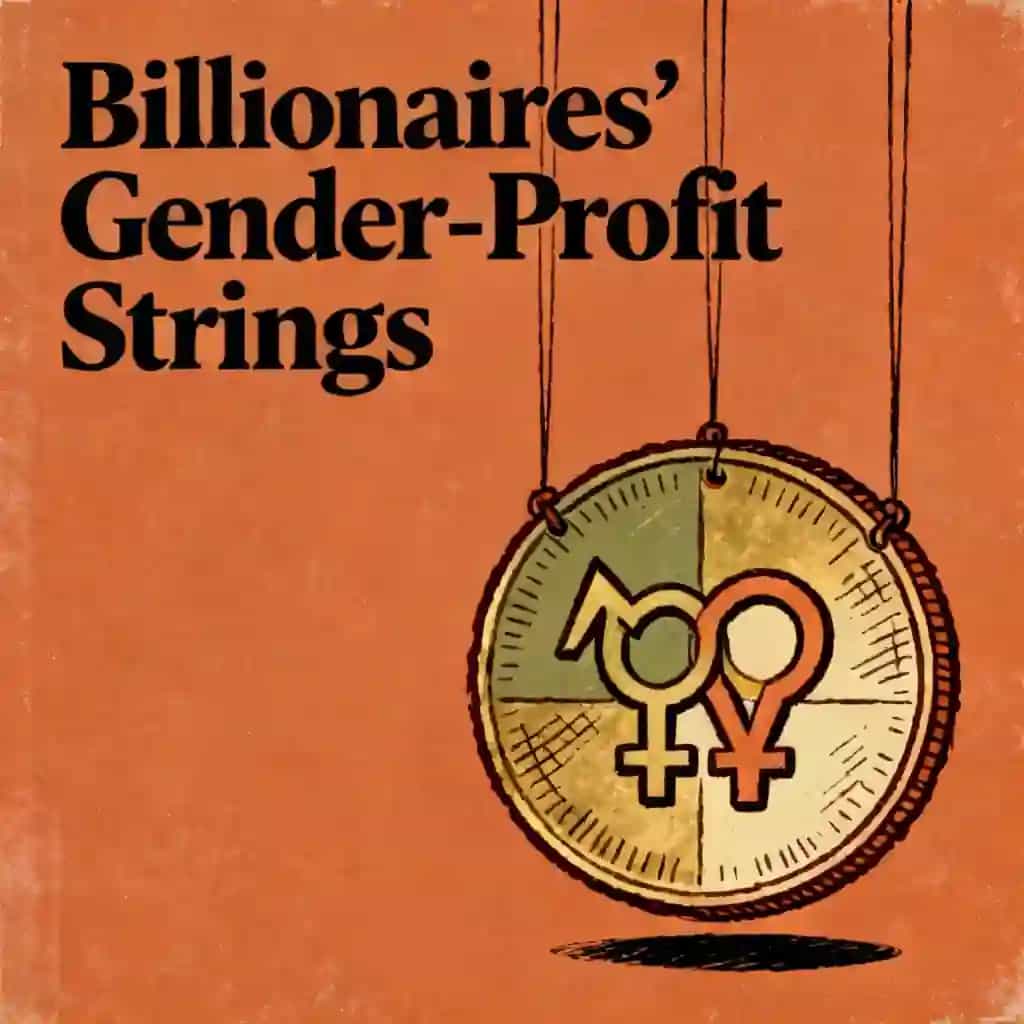
The Silicon Valley Boys' Club: A Toxic Culture in Need of Disruption
In 2017, a seismic shift began in Silicon Valley. Susan Fowler's blog post about sexual harassment at Uber ignited a firestorm that exposed the tech industry's deeply entrenched gender problems. Emily Chang's "Brotopia" arrived at this pivotal moment, offering an unflinching examination of how the industry that promised to reinvent everything had instead reinforced some of society's oldest biases. The book quickly became required reading for tech executives, with Salesforce CEO Marc Benioff purchasing copies for his entire leadership team. Even Elon Musk, despite being implicated in some of the industry's problematic behaviors, acknowledged the book's importance in exposing Silicon Valley's gender imbalance. Chang's work resonated far beyond tech circles, becoming a New York Times bestseller and sparking conversations across industries about workplace equity. As one female engineer told Chang, "We've been telling you this for a long time. And it's not isolated to Uber." The book's cultural impact continues today, with many tech companies citing it as motivation for diversity initiatives that are slowly-though not quickly enough-transforming the industry's demographics.
Capítulo 2
From Programming Pioneers to Silicon Valley Outsiders
The exclusion of women from technology represents one of history's great professional reversals. In computing's earliest days, programming was considered "women's work" - mechanical and clerical rather than intellectual. During World War II, six brilliant women programmed the Army's first electronic computer, ENIAC: Betty Snyder, Betty Jean Jennings, Frances Bilas, Kay McNulty, Marlyn Wescoff, and Ruth Lichterman. Despite their crucial role in making ENIAC operational, they weren't invited to the celebratory dinner or mentioned in press coverage. Their contributions remained largely unacknowledged until the 1980s. Grace Hopper, a mathematics PhD and Navy rear admiral, programmed Harvard's Mark I computer in 1944 and invented the first compiler, COBOL, which revolutionized programming by allowing commands in English rather than machine code. By 1967, Cosmopolitan magazine highlighted computing as an ideal career for women, quoting Hopper saying women were "naturals" at programming due to their patience and attention to detail.
The industry's transformation began as computing grew more lucrative and prestigious in the 1960s. Companies like IBM and other tech giants developed personality tests and aptitude assessments that favored antisocial, mathematically-oriented personalities - traits statistically more common in men. These tests asked questions about social preferences and work styles, systematically filtering out more collaborative and communicative candidates. This created a self-fulfilling prophecy: the industry selected for antisocial males, then reinforced the stereotype that programmers should be antisocial males. Women like former Cisco CTO Padmasree Warrior and early Apple engineer Joanna Hoffman felt compelled to hide their femininity, wearing masculine clothing to be taken seriously while constantly battling skepticism about their technical abilities. Many reported having their code double-checked when male colleagues' work went unquestioned.
The personal computing revolution of the early 1980s briefly made computer science glamorous and exciting. University enrollment surged, with women reaching nearly 40% of computer science degrees by 1984. The introduction of accessible home computers like the Commodore 64 and Apple II created new opportunities for learning programming. However, universities couldn't meet the growing demand and began restricting admission based on prior programming experience and academic performance. Boys who had spent years tinkering with computers in their bedrooms - often encouraged by parents and teachers - had significant advantages that most girls lacked. Computer games and marketing increasingly targeted males, creating a feedback loop that discouraged female participation. The percentage of women in computer science peaked in 1984-ironically the same year Apple released its iconic "1984" Super Bowl ad featuring a heroic woman smashing conformity-and then began a dramatic decline that would continue for decades, dropping below 20% by the early 2000s. This decline coincided with the rise of the "tech bro" culture that would come to dominate Silicon Valley, further alienating women from the field they had helped pioneer.
Capítulo 3
The Myth of Meritocracy and the PayPal Brotherhood
Silicon Valley's gender imbalance was significantly shaped by the "PayPal Mafia" - a group of founders and early employees who went on to extraordinary influence across the industry. Led by Peter Thiel, this cadre originated at Stanford University in the mid-1990s, where they bonded through the conservative Stanford Review newspaper. Self-described "outcasts" in liberal Stanford, they defined themselves through contrarianism, opposing the university's diversity initiatives and multicultural curriculum.
Despite claiming devotion to meritocracy, Thiel and co-founder Max Levchin openly admit they hired people like themselves. As Thiel wrote in "Zero to One," they wanted people who "shared an understanding of the world" and were "the same kind of nerd." Keith Rabois acknowledges it was "almost impossible to get a job without a connection" at PayPal, believing ideological similarity was necessary for early startup success. This narrow hiring approach created an intense, debate-driven culture but severely limited diversity.
After PayPal's $1.5 billion sale to eBay in 2002, the all-male PayPal Mafia "unfurled like an octopus" across Silicon Valley, creating a powerful network that funded and supported each other's ventures. Thiel partnered with PayPal co-founders for Founders Fund, which invested in Elon Musk's SpaceX and David Sacks' Yammer (later sold for $1.2 billion). This network became so dominant that Adam Pisoni, who never worked at PayPal but co-founded Yammer with Sacks, acknowledged benefiting from the "PayPal Mafia dynasty" and cited it as "a major contributor to the lack of diversity" in tech.
Despite claiming Silicon Valley "epitomizes meritocracy," the PayPal Mafia's success story reveals significant privilege. These "outsiders" actually began at Stanford, one of the world's most prestigious universities with powerful connections. The term "meritocracy" originated in Michael Young's 1958 satirical novel warning about a new social stratification based on education and achievement rather than birth. By 2000, the concept had lost its cautionary meaning, prompting Young to write that meritocracy creates a class of people who "can feel they deserve whatever they can get" and become "insufferably smug."
Capítulo 4
Google's Mixed Legacy: Good Intentions Aren't Enough
Google's relationship with gender diversity offers a case study in how even well-intentioned companies struggle to create inclusive environments. Unlike the stereotypical tech bros, Google's founders actively recruited strong, smart women from the beginning. Susan Wojcicki, now YouTube's CEO, joined as Google's first marketing manager in 1999 while pregnant with her first child. She went on to develop AdWords and AdSense - revolutionary advertising platforms generating tens of billions in revenue. Marissa Mayer joined as employee twenty-one after a grueling thirteen-hour interview process, becoming instrumental in developing AdWords algorithms and maintaining Google's minimalist user interface. Sheryl Sandberg built Google's global sales operation from scratch after joining in 2001.
This female leadership trio created a uniquely supportive environment within Google's intellectually intense culture. Kim Scott, hired as a director in 2004, found powerful role models who demonstrated women could have vibrant careers while being great mothers. Sandberg organized women's networking events, mentored female employees extensively, and demonstrated exceptional emotional intelligence in managing teams.
Google's founders took unprecedented steps to increase gender diversity, with Larry Page once ordering recruiters to hire twenty female engineers in a row before adding more men. The company meticulously tracked women engineer percentages weekly, allocated disproportionate recruiting resources to finding female candidates, and even considered starting their own school to build a gender-balanced pipeline. Around 2008, Google secretly established a "Revisit Committee" of women engineers to review rejected female candidates, later expanding it to all diverse applicants to combat unconscious bias.
Despite these efforts, by 2017 Google reported numbers similar to the rest of the tech industry: women comprised just 31 percent of employees overall, 25 percent of leadership roles, and 20 percent of technical positions. That spring, Google's reputation suffered when the U.S. Department of Labor announced evidence of "systemic compensation disparities" between male and female employees, calling the discrimination "quite extreme, even in this industry."
Former Googlers pointed to several factors behind these disappointing results: rapid scaling that defaulted to standard industry recruiting practices rather than the thoughtful approach of Google's early days, heavy reliance on employee referrals that perpetuated existing demographics, and a culture that rewarded traditionally male-associated traits like assertiveness and confrontation while undervaluing collaboration and listening. As diversity executive Nancy Lee observed: "The things that get undervalued are things like collaboration, willingness to listen. Some of the skills women would bring to bear were simply not valued."
Capítulo 5
The Breaking Point: Women Engineers Speak Out
Susan Fowler's scathing blog post about sexual harassment at Uber became the tipping point that exposed Silicon Valley's toxic bro culture. The twenty-six-year-old engineer joined Uber in November 2015 as a site reliability engineer. On her first day, her manager propositioned her over company chat, claiming he was in an open relationship and looking for sex partners. When she reported this to HR, they dismissed it as a first offense by a "high performer." As she met other women engineers, she discovered many had similar experiences with the same manager-proving HR had lied about it being his first offense.
When Emily Chang invited a dozen women engineers to her home to discuss Silicon Valley's treatment of women, the consensus was clear: Susan Fowler's story wasn't shocking to women in tech. As Tracy Chou, a former Pinterest engineer, stated, "We've been telling you this for a long time. And it's not isolated to Uber." The women agreed that only men seemed surprised by Fowler's revelations.
Laura Holmes recounted her traumatic experience at a startup where a drunk male engineer tried to choke her when she attempted to leave a company night out. The startup had no HR department, so Holmes buried the incident and returned to work the next day. Another engineer told Holmes, "You're so fucking dumb...The only thing you're good for is being taken out to the back parking lot and being raped." At 23, Holmes didn't want to be defined as a whistleblower, so she remained silent.
A 2016 survey called "Elephant in the Valley" finally quantified what women in tech had long experienced. Among 200+ women respondents (most with at least ten years' experience), 90% reported witnessing sexist behavior at industry events, 60% had been sexually harassed (usually by superiors), and 84% were called "too aggressive." The survey collected hundreds of anonymous stories ranging from unwanted advances to assault. The overwhelming tone in these accounts wasn't outrage but exhaustion - women were simply tired of enduring and explaining the toxic culture they worked in.
For women who are also racial minorities, Silicon Valley's challenges multiply exponentially. Leah McGowen-Hare, with 25 years in tech, expressed frustration that while gender diversity was finally being discussed, racial diversity remained sidelined. "As a woman, I'm thrilled. But as an African American, I'm put out... If you don't address racial diversity, you're going to end up with fifty women and fifty men, 100 percent white." Ana Medina, a Latina engineer, described constantly needing to prove her technical capabilities despite her impressive resume. Vanessa Farias tearfully admitted, "When I see someone who's Hispanic or black, I know they see me. I don't feel like anyone else really sees me sometimes. If this is a movement, it's moving way too slow."
Capítulo 6
The Gatekeepers: How Venture Capital Perpetuates Exclusion
Venture capitalists wield enormous power in Silicon Valley, but their diversity problems run deep. During a TV interview, Sequoia Capital's Sir Michael Moritz-arguably Silicon Valley's most successful investor-created controversy when discussing his firm's lack of female partners. Despite claiming to be "blind to somebody's sex," Moritz suggested Sequoia couldn't find qualified women, stating they weren't "prepared to lower our standards." This comment sparked outrage across the industry, with female VC Jennifer Fonstad saying it would be "his epitaph." The irony: Moritz himself lacked a technical background, holding a history degree from Oxford before becoming a Time magazine correspondent.
Despite venture capital's reputation for betting on innovation, the industry itself has changed little since its origins with wealthy families like the Vanderbilts and Rockefellers. Women's representation has actually declined from 10% of partners in 1999 to just 6% by 2014. Top firms like Sequoia and Benchmark made billions before hiring any women partners, creating little incentive for change.
In Silicon Valley, top venture capitalists wield extraordinary power as kingmakers. Their investments provide not just capital but crucial connections to talent, partners, and exit opportunities. Despite representing half the population, women run just 8% of VC-backed companies nationwide. In 2016, male founders received $58 billion in VC funding compared to just $1.46 billion for women, with the average investment in women-led companies actually decreasing from $6.1 million to $4.5 million.
Stitch Fix founder Katrina Lake experienced this firsthand. Despite her impressive background and promising early traction, she faced rejection from some fifty VCs when raising her Series A. Many male investors simply couldn't connect with her female-focused business, with one dismissing it in the first minute of her pitch: "I don't know why anyone would ever want to receive something like this."
Research shows investors talk about male and female entrepreneurs differently - men are "young and promising" while women are "inexperienced." Studies reveal investors fund male-voiced presentations 60% more often than identical female-voiced ones, and attractive men gain additional advantage while women's looks provide no benefit. Both male and female investors systematically perceive women entrepreneurs as less competent.
Capítulo 7
The Party Culture: When Work and Sex Collide
About once a month, Silicon Valley's tech elite gather for drug-heavy, sex-heavy parties in luxurious venues ranging from Pacific Heights mansions to Napa Valley chateaus and exclusive Malibu beach houses. Nearly two dozen sources, including prominent venture capitalists, founders, and executives, described these events where participants proudly speak of overturning traditional social and sexual norms, viewing their behavior as revolutionary rather than problematic. They justify their actions through the lens of innovation, claiming that disrupting social conventions is as natural as disrupting established industries.
Silicon Valley's sex party culture operates within a carefully constructed ecosystem of power and privilege. These exclusive gatherings typically feature a curated guest list of 50-150 people, heavily weighted toward powerful tech figures. Women, often in their twenties and early thirties, are primarily invited based on physical appearance rather than professional accomplishments, creating a calculated two-to-one ratio favoring men. The parties begin innocuously with gourmet catering and premium alcohol, but quickly evolve as designer drugs circulate - particularly MDMA tablets specially pressed with tech company logos or startup brands. By midnight, groups typically form into "cuddle puddles" - intimate gatherings of touching and kissing that frequently lead to more explicit sexual encounters. Invitations spread through encrypted apps and private WhatsApp groups, with coded language like "dinner party" or "gathering" masking the true nature of these events.
For women in Silicon Valley's tech industry, this party culture creates an impossible professional predicament. While male attendees leverage these events for deal-making and network building without consequence, women face a cruel double standard. Female entrepreneurs and executives describe being trapped between equally damaging choices: attend these parties and risk being permanently labeled as sexual objects rather than serious professionals, or avoid them and miss critical business connections that could advance their careers. As one prominent female founder explained after leaving the industry: "If you do participate in these sex parties, don't ever think about starting a company or having someone invest in you. Those doors get shut. But if you don't participate, you're shut out of the informal networks where many deals originate. You're damned if you do, damned if you don't."
The normalization of polyamorous and open relationships within Silicon Valley's tech culture has further complicated workplace dynamics and power structures. Beyond the party scene, this attitude seeps into daily professional interactions, creating uncomfortable and potentially hostile work environments. Susan Fowler's widely-publicized experience at Uber exemplifies this problem, where her manager's inappropriate invitation to join his "open relationship" was dismissed by HR as "probably just an innocent mistake on his part." This dismissive response reflected attitudes at Uber's highest levels, where then-CEO Travis Kalanick reportedly pressured his girlfriend to participate in finding women for threesomes, demonstrating how these behaviors can become embedded in company culture. Similar stories have emerged from other major tech companies, where the line between professional and personal relationships becomes dangerously blurred.
Capítulo 8
The Family Dilemma: How Tech Excludes Parents
In 2014, Facebook and Apple began offering female employees up to $20,000 to freeze their eggs - a benefit soon adopted by Google, Intel, Spotify, and Salesforce. While presented as giving women more choice and helping attract female talent, this perk exemplifies how tech approaches work-life balance. Silicon Valley companies offer numerous perks - free meals, on-site massages, doctors, fitness classes, and pet benefits - that primarily appeal to young, single employees without children. These "campuses" encourage employees to blend work and personal life, making it easy to spend virtually all waking hours at the office. However, benefits like on-site childcare remain notably absent, reflecting the priorities of mostly young, male, childless founders.
Women leave tech jobs at alarming rates - twice as fast as men, with 50% abandoning STEM careers within twelve years compared to just 20% in other professional fields. Research shows women in STEM are 807% more likely to leave their jobs than peers in other fields after having children, despite often earning higher salaries. This exodus during women's thirties is particularly damaging as these are prime career years when people move into positions of real influence.
The tech industry's expectation of superhuman work hours - immortalized since the 1984 Macintosh team's "90 Hrs/Wk and Loving It" motto - creates an unsustainable environment for parents. From all-night hackathons to late office dinners (Uber's free meals started at 8:15 p.m.), the industry glorifies constant availability and extreme dedication. This culture particularly disadvantages women with children and perpetuates the dominance of young, single employees willing to make work their entire life.
Taking time off in tech carries severe career penalties due to the industry's breakneck pace. As one female executive noted, "Things in Silicon Valley change ten times faster than anywhere else... The pace of technological change has made it very, very hard for people to successfully take a break and come back." Female entrepreneurs face additional barriers. Katharine Zaleski was "forty-two weeks pregnant" during her final investor pitch, and studies confirm the "motherhood penalty" is especially harsh on female entrepreneurs.
Capítulo 9
A Second Chance: Building a Better Silicon Valley
As 2018 began, Silicon Valley stood at a critical inflection point following an unprecedented wave of harassment and discrimination revelations. The tech industry's treatment of women had reached a breaking point, with powerful figures like Uber's Travis Kalanick and multiple prominent investors resigning or being publicly disgraced. In response, women rose up through movements like #MeToo, using the very social platforms that often enabled harassment to create solidarity and seek justice.
Silicon Valley celebrates failure as part of innovation, but it's time to acknowledge its biggest failure: the systematic exclusion of women. At the current glacial pace of change - with VCs celebrating hiring their first female partners and companies achieving only single-digit increases in female representation - reaching gender parity could take generations.
This isn't just a moral failing but a business blunder. Research consistently shows companies with gender-balanced leadership are significantly more profitable. Investor Roger McNamee believes a gender-balanced Silicon Valley would be "wildly more profitable" with "a significant reduction in absolute failures."
Stewart Butterfield, Slack's founder, has proven that building a diverse workforce drives business success. Unlike most tech companies, Slack grew rapidly while maintaining impressive diversity metrics - by 2017, women represented 43.5% of employees, 48% of managers, and nearly 30% of technical roles.
Butterfield made diversity an explicit priority from Slack's early days. When the company had just fifty mostly white male employees, he hired Anne Toth to lead people operations and brought in diversity consultant Joelle Emerson. Slack implemented concrete strategies: articulating company values centered on empathy, restructuring interviews to eliminate bias, ending intimidating "whiteboard coding" sessions, diversifying the recruiting team, and rewriting job descriptions to remove male-biased terms like "rock star" and "ninja."
The path forward requires both individual and systemic changes:
• Treat everyone with respect and dignity
• Stop enabling or excusing bad behavior
• CEOs must champion gender representation with comprehensive plans
• Companies need more women on boards
• VCs must hire more women partners and fund more diverse teams
• LPs should fund more women VCs and pressure firms on diversity
As Apple CEO Tim Cook noted, "People that just merely point to the pipeline issue, they don't get it. The tech companies have a lot to do ourselves." Though Apple's diversity numbers remain average (32% women overall, 23% in tech), they've accelerated hiring women, who represented 37% of new hires in 2016. Cook emphasized that diversity is essential for creating desirable products: "When you're designing products for the world, don't you want different views?"
Computer science is becoming increasingly "cool" for girls, with publications like Seventeen featuring stories about girls who code. But history may be repeating itself in troubling ways. Just as in the early 1980s when computer science departments couldn't meet exploding demand, today's schools are facing similar capacity issues. Stanford professor Eric Roberts warns that this mirrors the crisis of the 1980s, when schools instituted GPA requirements and classes became harder, favoring students (mostly boys) with prior experience. "Our society cannot afford to repeat that mistake," Roberts cautions.
The next generation of women in tech is coming with dreams of making a dent in the universe. They're already aware of some challenges they'll face in Brotopia - and they'll discover the rest soon enough. When they open the door, we must welcome them and change the Valley - and the world - for them and for all.