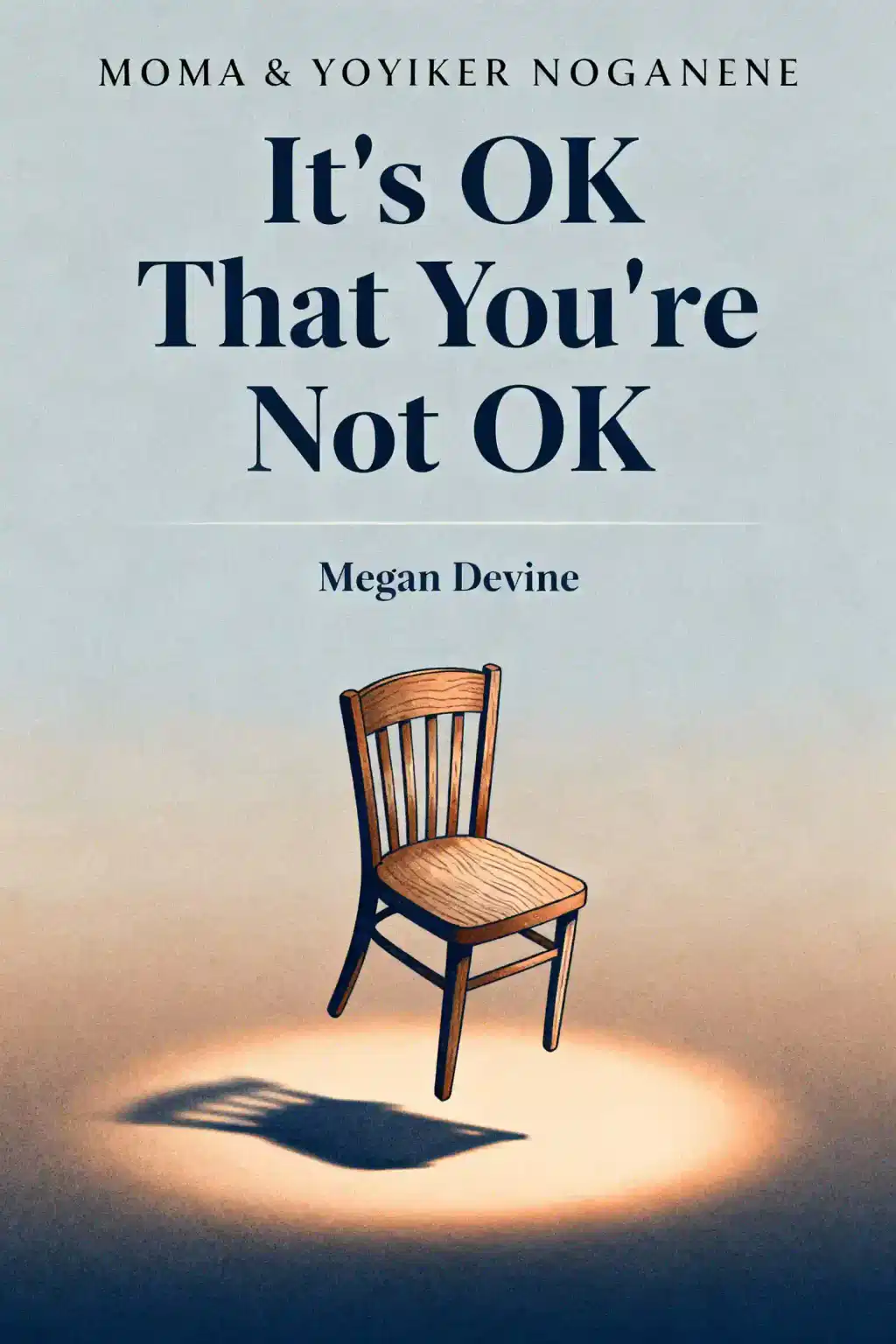
It's Ok That You're Not Ok: Meeting Grief and Loss in a Culture That Doesn't Understand by Megan Devine Summary

Overview of It's Ok That You're Not Ok
In "It's OK That You're Not OK," Megan Devine revolutionizes grief support by challenging our rush-to-heal culture. Drawing from personal tragedy, she offers what countless readers call "permission to grieve authentically." Why has this compassionate manifesto become essential reading for therapists and the heartbroken alike?
- Permission to grieve unapologetically is the first step toward true healing.
- The myth of "moving on" from grief ignores its lifelong presence.
- Stop trying to fix grief—start learning how to hold space for it.
- Toxic positivity harms more than helps when navigating profound loss.
- Grief doesn’t require solutions—it demands acknowledgment and compassionate witnessing.
- Writing practices unlock unprocessed emotions and rebuild self-trust after trauma.
- Societal timelines for healing fail to honor grief’s nonlinear nature.
- Supporting grievers means listening without advising, fixing, or minimizing pain.
- Megan Devine redefines healing as coexisting with loss—not erasing it.
- Grief reshapes identity—allow it to coexist with daily living.
- Well-meaning phrases like "everything happens for a reason" deepen isolation.
- Validate your experience—grief needs no justification beyond existing.
About the Author of It's Ok That You're Not Ok
Megan Devine is the bestselling author of It’s OK That You’re Not OK: Meeting Grief and Loss in a Culture That Doesn’t Understand and a leading grief advocate, psychotherapist, and speaker.
A licensed professional counselor with over two decades of experience, Devine combines her clinical expertise with her personal journey of losing her partner in a traumatic accident to redefine modern grief support. Her work focuses on dismantling harmful cultural narratives around loss, emphasizing validation over forced resilience.
She founded Refuge in Grief, a platform offering resources like the acclaimed Writing Your Grief course and the It’s OK That You’re Not OK podcast, which provides compassionate guidance for navigating pain.
Devine’s animated video How to Help a Grieving Friend has been viewed over 28 million times and is used globally in training programs. A frequent media contributor, she has been featured on NPR and in The New York Times. Her book, celebrated for its raw honesty and practical wisdom, has become a cornerstone in grief literature, empowering readers to honor their pain without judgment.
FAQs About It's Ok That You're Not Ok
What is It's OK That You're Not OK about?
It's OK That You're Not OK by Megan Devine challenges cultural norms around grief, advocating for acceptance rather than "fixing" pain. It combines personal insights from Devine’s experience losing her partner with professional expertise as a psychotherapist, offering practical tools for navigating loss while dismantling harmful myths like staged grief models. The book emphasizes building a life alongside grief instead of seeking closure.
Who should read It's OK That You're Not OK?
This book is for grieving individuals, caregivers, therapists, and anyone seeking to better support loved ones. It’s particularly valuable for those tired of overly optimistic self-help approaches, offering validation for complex emotions. Megan Devine’s work also aids HR professionals and healthcare providers in creating compassionate grief-informed environments.
Is It's OK That You're Not OK worth reading?
Yes, it’s widely praised for reframing grief as a natural response to love, not a problem to solve. Featured on NPR and in The Washington Post, it provides actionable advice for stress management, sleep improvement, and navigating insensitive remarks. Readers describe it as transformative for both personal healing and supporting others.
Who is Megan Devine, author of It's OK That You're Not OK?
Megan Devine is a psychotherapist, grief advocate, and founder of Refuge in Grief. Her work blends professional expertise with lived experience—she witnessed her partner’s drowning in 2009. She’s contributed to Harvard Business Review, PBS’s Speaking Grief, and hosts a podcast on grief literacy.
What are the main concepts in It's OK That You're Not OK?
Key ideas include:
- Grief is love in its “most wild and painful form,” not a pathology.
- Cultural timelines for healing are harmful; grief requires space, not solutions.
- Practical strategies: mindfulness, stress reduction, and boundary-setting with unhelpful advice.
How does the book challenge traditional views on grief?
Devine rejects staged models (e.g., Kübler-Ross) and societal pressure to “move on.” She argues grief isn’t linear but a lifelong process of adaptation. The book critiques toxic positivity and emphasizes honoring pain instead of suppressing it.
What practical advice does Megan Devine offer?
The book provides tools like:
- Stress management: Grounding techniques for anxiety attacks.
- Sleep hygiene: Rituals to ease insomnia without forcing “normalcy”.
- Boundaries: Scripts to redirect unhelpful comments (e.g., “At least they’re in a better place”).
How can this book help someone support a grieving friend?
Devine advises avoiding advice or silver linings. Instead, “be an elephant”—offer presence, not fixes. Tips include asking direct questions (“Can I bring dinner Thursday?”) and validating emotions without judgment.
What are key quotes from It's OK That You're Not OK?
- “Grief no more needs a solution than love needs a solution”: Rejects “fixing” grief.
- “You don’t need to ‘heal’ to live well”: Encourages coexistence with loss.
- “Helpful people don’t shame your pain”: Guides supportive communication.
How does the book address cultural myths about grief?
It debunks myths like “time heals all wounds” and “staying busy helps,” explaining how these invalidate genuine suffering. Devine highlights systemic issues, such as inadequate bereavement leave policies, that compound isolation.
What makes this book different from other grief guides?
Unlike prescriptive guides, It’s OK prioritizes emotional honesty over forced resilience. It merges memoir, therapy insights, and social critique, offering a roadmap for living with grief rather than “overcoming” it.
Are there criticisms of It's OK That You're Not OK?
Some readers seeking structured coping mechanisms may find its anti-solution stance unsettling. However, Devine clarifies this isn’t a dismissal of therapy but a call to rethink societal expectations. Critics acknowledge its niche appeal but praise its cultural impact.
Feel the book through the author's voice
Turn knowledge into engaging, example-rich insights
Capture key ideas in a flash for fast learning
Enjoy the book in a fun and engaging way
Key Themes in It's Ok That You're Not Ok
Quotes from It's Ok That You're Not Ok
Some things cannot be fixed. They can only be carried.
Grief is not a problem to be solved.
Grief cannot be forced into order or made predictable.
Our intention to fix grief, to cure it, to return to "normal" stops connection and intimacy.
Understanding the cultural context helps you see that you aren't crazy or broken-the culture is.
Characters in It's Ok That You're Not Ok
Quick Summary Mode - Read or listen to It's Ok That You're Not Ok Summary in 8 Minutes

Break down key ideas from It's Ok That You're Not Ok into bite-sized takeaways to understand how innovative teams create, collaborate, and grow.

Flash Card Mode - Top 10 Insights from It's Ok That You're Not Ok in a Nutshell

Distill It's Ok That You're Not Ok into rapid-fire memory cues that highlight key principles of candor, teamwork, and creative resilience.

Fun Mode - It's Ok That You're Not Ok Lessons Told Through 20-Min Stories

Experience It's Ok That You're Not Ok through vivid storytelling that turns innovation lessons into moments you'll remember and apply.
Personalize Mode - Read or listen to It's Ok That You're Not Ok Summary in 0 Minutes

Ask anything, pick the voice, and co-create insights that truly resonate with you.

From Columbia University alumni built in San Francisco
"Instead of endless scrolling, I just hit play on BeFreed. It saves me so much time."


"I never knew where to start with nonfiction—BeFreed’s book lists turned into podcasts gave me a clear path."


"Perfect balance between learning and entertainment. Finished ‘Thinking, Fast and Slow’ on my commute this week."
"Crazy how much I learned while walking the dog. BeFreed = small habits → big gains."
"Reading used to feel like a chore. Now it’s just part of my lifestyle."

"Feels effortless compared to reading. I’ve finished 6 books this month already."
"BeFreed turned my guilty doomscrolling into something that feels productive and inspiring."

"BeFreed turned my commute into learning time. 20-min podcasts are perfect for finishing books I never had time for."
"BeFreed replaced my podcast queue. Imagine Spotify for books — that’s it. 🙌"

"It is great for me to learn something from the book without reading it."
"The themed book list podcasts help me connect ideas across authors—like a guided audio journey."
"Makes me feel smarter every time before going to work"
From Columbia University alumni built in San Francisco
"Instead of endless scrolling, I just hit play on BeFreed. It saves me so much time."
"I never knew where to start with nonfiction—BeFreed’s book lists turned into podcasts gave me a clear path."
"Perfect balance between learning and entertainment. Finished ‘Thinking, Fast and Slow’ on my commute this week."
"Crazy how much I learned while walking the dog. BeFreed = small habits → big gains."
"Reading used to feel like a chore. Now it’s just part of my lifestyle."
"Feels effortless compared to reading. I’ve finished 6 books this month already."
"BeFreed turned my guilty doomscrolling into something that feels productive and inspiring."
"BeFreed turned my commute into learning time. 20-min podcasts are perfect for finishing books I never had time for."
"BeFreed replaced my podcast queue. Imagine Spotify for books — that’s it. 🙌"
"It is great for me to learn something from the book without reading it."
"The themed book list podcasts help me connect ideas across authors—like a guided audio journey."
"Makes me feel smarter every time before going to work"
"Instead of endless scrolling, I just hit play on BeFreed. It saves me so much time."
"I never knew where to start with nonfiction—BeFreed’s book lists turned into podcasts gave me a clear path."
"Perfect balance between learning and entertainment. Finished ‘Thinking, Fast and Slow’ on my commute this week."
"Crazy how much I learned while walking the dog. BeFreed = small habits → big gains."
"Reading used to feel like a chore. Now it’s just part of my lifestyle."
"Feels effortless compared to reading. I’ve finished 6 books this month already."
"BeFreed turned my guilty doomscrolling into something that feels productive and inspiring."
"BeFreed turned my commute into learning time. 20-min podcasts are perfect for finishing books I never had time for."
"BeFreed replaced my podcast queue. Imagine Spotify for books — that’s it. 🙌"
"It is great for me to learn something from the book without reading it."
"The themed book list podcasts help me connect ideas across authors—like a guided audio journey."
"Makes me feel smarter every time before going to work"
"Instead of endless scrolling, I just hit play on BeFreed. It saves me so much time."
"I never knew where to start with nonfiction—BeFreed’s book lists turned into podcasts gave me a clear path."
"Perfect balance between learning and entertainment. Finished ‘Thinking, Fast and Slow’ on my commute this week."
"Crazy how much I learned while walking the dog. BeFreed = small habits → big gains."
"Reading used to feel like a chore. Now it’s just part of my lifestyle."
"Feels effortless compared to reading. I’ve finished 6 books this month already."
"BeFreed turned my guilty doomscrolling into something that feels productive and inspiring."
"BeFreed turned my commute into learning time. 20-min podcasts are perfect for finishing books I never had time for."
"BeFreed replaced my podcast queue. Imagine Spotify for books — that’s it. 🙌"
"It is great for me to learn something from the book without reading it."
"The themed book list podcasts help me connect ideas across authors—like a guided audio journey."
"Makes me feel smarter every time before going to work"

Get the It's Ok That You're Not Ok summary as a free PDF or EPUB. Print it or read offline anytime.