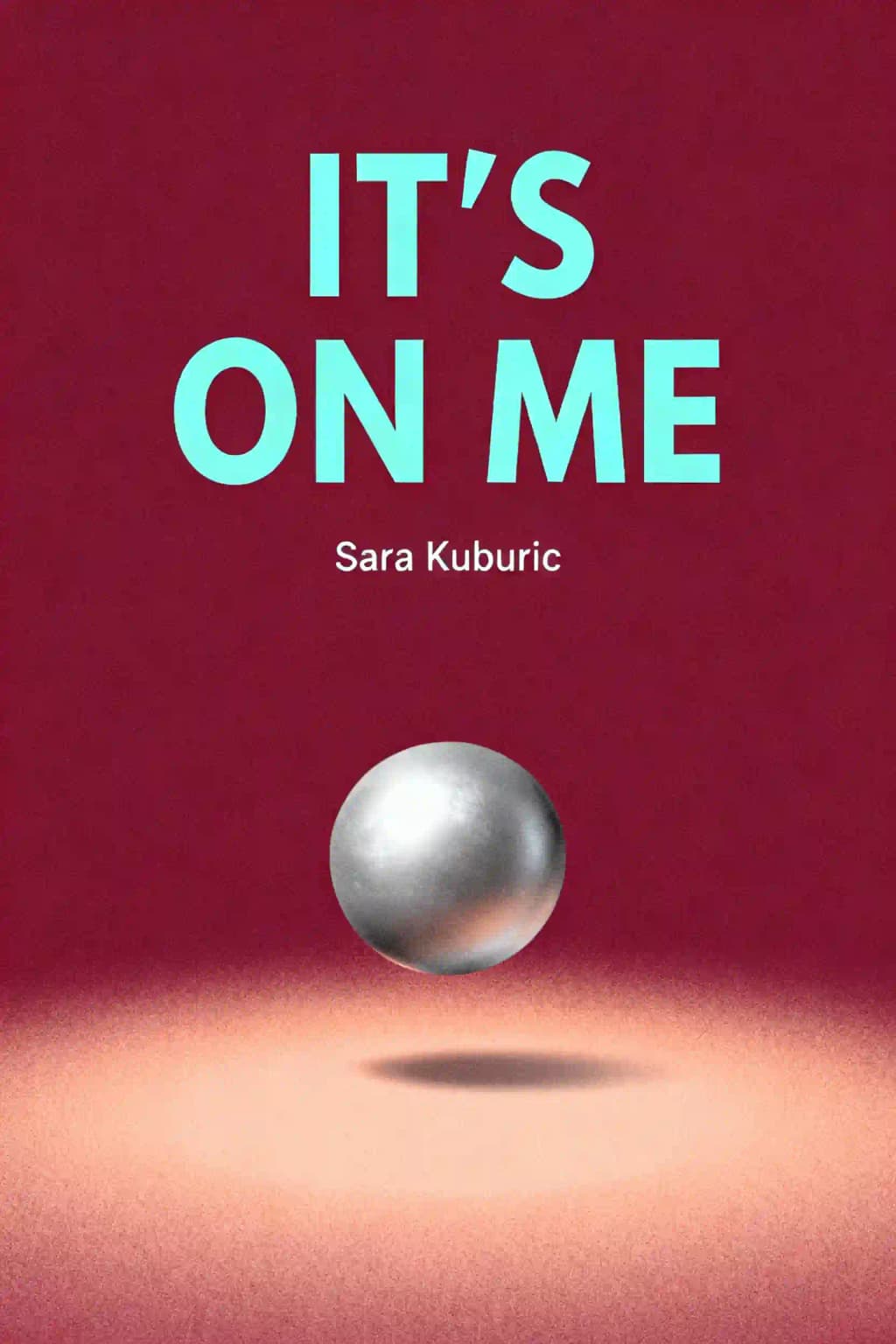
It's On Me
The truth about co-dependency, people-pleasing, and setting healthy boundaries
Overview of It's On Me
Feeling lost? "It's On Me" is Sara Kuburic's revolutionary guide to reclaiming your authentic self. Praised by bestselling author Yung Pueblo as "brilliantly reconnecting us with meaning and empowerment," this book transforms the concept of self-loss into a profound journey toward vibrant, aligned living.

Key Themes in It's On Me
- existential responsibility
- authentic self-expression
- radical self-ownership
- overcoming self-loss
- inner consent
Quotes from It's On Me
It's never too late to be you.
Self-loss shouldn't be normalized.
Pain serves as a crucial signal.
We are 'condemned to be free'.
Authenticity means finding peace within ourselves.
Characters in It's On Me
- Sara KuburicAuthor and existential psychotherapist
- Søren KierkegaardPhilosopher whose views on the Self are discussed
About the Author
About the Author of It's On Me
Dr. Sara Kuburic, a Serbian-Canadian existential psychotherapist and the author of It’s On Me, is celebrated as the "millennial therapist" for her pioneering work on identity and self-discovery.
As a trauma-informed clinician, Dr. Kuburic holds a doctorate in Psychotherapy Science from Sigmund Freud University, Vienna. She integrates existential philosophy with somatic techniques to address moral trauma, authenticity, and existential crises. Her book, It’s On Me, delves into universal human struggles with self-loss, drawing from her clinical practice and her experiences living nomadically across four continents.
Dr. Kuburic extends her influence through her USA Today column, her private online clinic, and her extensive social media community of 1.7 million followers. She is also the co-founder of The Phenomenological Society and STET Publishing.
It’s On Me has resonated with readers worldwide and has been published in 17 countries, earning critical acclaim for its innovative approach to navigating life's most essential questions.
Download Summary of It's On Me
Get the It's On Me summary as a free PDF or EPUB. Print it or read offline anytime.
FAQs About This Book
It's On Me explores the concept of self-loss—the disconnect from one’s authentic Self—and provides actionable steps to reclaim identity through self-reflection, boundary-setting, and embracing responsibility. Drawing on existential psychotherapy, Kuburic addresses how societal expectations, trauma, and avoidance mechanisms trap individuals in unfulfilling roles, offering tools to declutter mental/physical spaces and align actions with core values.
This book targets individuals feeling stuck in toxic patterns, disconnected from their purpose, or trapped by societal roles (e.g., caregivers, professionals, or those navigating identity crises). It’s particularly relevant for readers seeking existential clarity, emotional resilience, or strategies to heal relationships through self-awareness.
Yes—readers praise its actionable frameworks for self-discovery and its compassionate yet direct approach to existential challenges. Blinkist highlights its “profound” insights on authenticity, while Quercus Books notes its “masterful guidance” for rebuilding self-trust. Ideal for those ready to confront hard truths about their choices and behaviors.
Self-loss describes the erosion of authentic identity through people-pleasing, societal conformity, or trauma. Symptoms include emotional numbness, chronic dissatisfaction, and feeling like an observer in one’s own life. Kuburic argues that recognizing self-loss is the first step to reclaiming agency and crafting a purposeful existence.
Kuburic reframes existential loneliness as a catalyst for authentic connection, urging readers to embrace solitude as a space for self-discovery. By prioritizing self-alignment over external validation, individuals can build relationships rooted in mutual growth rather than dependency.
- Decluttering environments (physical/mental) to reduce overwhelm
- Body awareness practices to reconnect with instinctual needs
- Loving boundary-setting to protect autonomy
- Existential reflection on purpose and mortality
Kuburic emphasizes that self-discovery is iterative, requiring courage to confront uncomfortable truths.
Responsibility here means owning your agency in shaping reactions, relationships, and life direction—not self-blame. Kuburic asserts that avoiding responsibility perpetuates self-loss, while embracing it empowers intentional living aligned with personal values.
Yes—the book teaches boundary frameworks to differentiate between codependency and healthy interdependence. By articulating needs and detaching from others’ expectations, readers can foster relationships that honor their authentic Self.
Some may find its existential focus overly abstract or challenging, particularly readers seeking quick fixes. The book demands sustained self-work, which Kuburic acknowledges by providing structured reflection exercises to mitigate overwhelm.
Unlike tactical productivity guides, Kuburic’s work delves into philosophical roots of dissatisfaction, akin to Viktor Frankl’s Man’s Search for Meaning. It prioritizes self-inquiry over habit-building, making it a complement to books like Atomic Habits for holistic growth.
She likens self-loss to sleepwalking through life—acting on autopilot while feeling detached from one’s choices. Other metaphors include “clutter” (external expectations suffocating authenticity) and “the cage” (self-imposed limitations rooted in fear).
The book provides frameworks to audit misalignment in work/life roles, encouraging readers to pivot toward paths resonating with their core identity. Kuburic’s emphasis on responsibility helps individuals navigate change proactively rather than reactively.