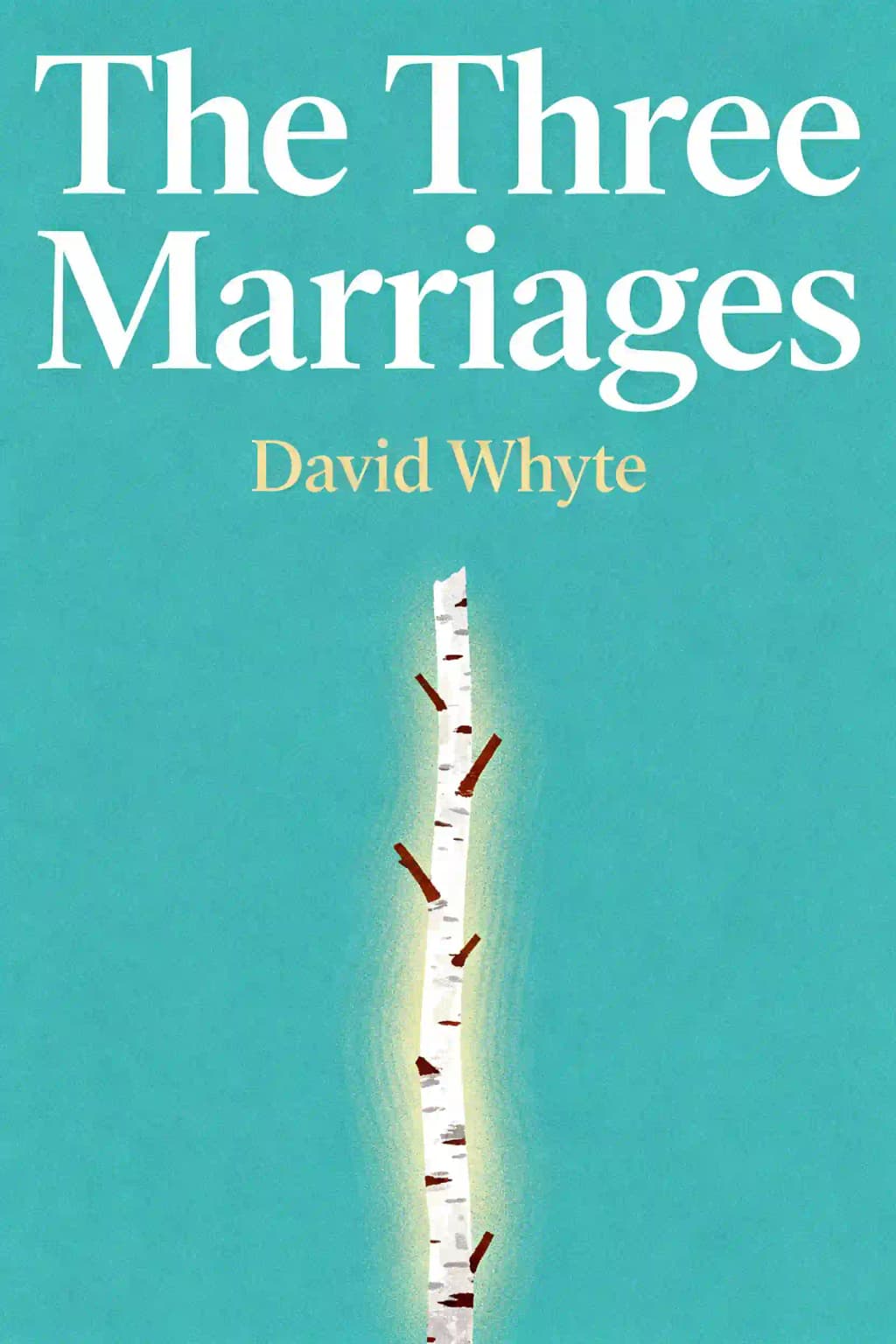
The three marriages
reimagining work, self and relationship
Overview of The three marriages
In "The Three Marriages," poet David Whyte redefines commitment beyond romance to include work and self-discovery. Praised by business leaders like Charbel Zreik for its life-changing wisdom, it asks: What if balancing these three marriages is the key to your fulfillment?

Key Themes in The three marriages
- work-life integration
- vocation and calling
- internal self-recognition
- relational commitment
- human belonging
Quotes from The three marriages
To neglect any one impoverishes them all.
Passionate love requires a loss of context.
The first steps toward self-understanding are often painful.
Characters in The three marriages
- David WhyteAuthor and developer of the three marriages model
- Dante AlighieriPoet used to illustrate the recognition of love
- Joan of ArcHistorical figure used as a case study for work
- William Butler YeatsPoet used to illustrate profound recognition
About the Author
About the Author of The three marriages
David Whyte, the acclaimed Anglo-Irish poet and philosopher behind The Three Marriages, merges literary artistry with profound insights into human connection and vocation. Born in 1955 to an Irish mother and Yorkshire father, his work explores the interplay between work, love, and self-discovery, informed by his unconventional background as a marine zoologist and former naturalist in the Galápagos Islands.
A bestselling author and sought-after speaker, Whyte has bridged poetry and corporate leadership for decades, consulting for organizations like NASA, Toyota, and the Royal Air Force. His seminal book The Heart Aroused: Poetry and the Preservation of the Soul in Corporate America became a cultural touchstone, topping U.S. bestseller lists.
Whyte’s twelve poetry collections, including Still Possible and Consolations, and his immersive Three Sundays Series seminars reflect his global influence across literary, philosophical, and organizational realms. With works translated into over 20 languages, he regularly speaks at institutions like Stanford and MIT. His latest collection, Consolations II, continues his exploration of language’s power to illuminate everyday choices.
A hallmark of Whyte’s career is his sold-out international seminars, where he blends poetic recitation with commentary on leadership and identity, drawing from both his Himalayan expeditions and Yorkshire upbringing. The Heart Aroused remains required reading in executive education programs worldwide.
Download Summary of The three marriages
Get the The three marriages summary as a free PDF or EPUB. Print it or read offline anytime.
FAQs About This Book
The Three Marriages explores the interconnectedness of love, work, and self-discovery, arguing that true fulfillment comes from harmonizing these three "marriages." David Whyte uses examples like Robert Louis Stevenson’s bold pursuit of love and poet Emily Dickinson’s creative solitude to illustrate how prioritizing one often requires sacrifice in others. The book challenges conventional notions of balance, urging readers to embrace vulnerability and internal reflection.
This book is ideal for individuals seeking deeper alignment between their careers, relationships, and personal growth. It resonates with professionals navigating burnout, couples reevaluating priorities, and creatives pursuing their calling. David Whyte’s poetic insights appeal to readers interested in philosophy, psychology, and holistic self-development.
Yes, particularly for its fresh perspective on work-life integration. Unlike typical self-help books, Whyte rejects simplistic "balance" in favor of a dynamic, interconnected approach. His blend of literary anecdotes (e.g., Jane Austen’s writing struggles) and corporate consulting experience offers actionable wisdom for cultivating resilience and authenticity.
- Work: Commitment to a vocation or creative calling.
- Relationship: Partnership with a significant other.
- Self: Inner dialogue and acceptance of one’s evolving identity.
Whyte argues these marriages are not separate but overlapping conversations that shape our lives.
Whyte dismisses the idea of “balance” as a static goal. Instead, he advocates for “belonging” – a dynamic interplay where work, love, and self-inquiry nourish each other. For example, a nurse’s demanding job might deepen her empathy for her partner, while her relationship fuels her vocational purpose.
He reframes fear, doubt, and loneliness as essential guides rather than obstacles. Using poet Rainer Maria Rilke’s struggles, Whyte shows how embracing emotional discomfort fosters creativity and strengthens commitments to work, relationships, and self.
Stevenson’s decision to abandon financial security to pursue Fanny Osbourne exemplifies Whyte’s argument that love demands radical vulnerability. His transatlantic journey – fraught with poverty and illness – became a catalyst for literary masterpieces like Treasure Island, blending his three marriages into one narrative.
This foundational marriage involves cultivating honesty with one’s evolving identity. Whyte compares it to an internal courtship, where suppressing self-awareness to maintain external relationships or career stability leads to existential burnout.
The book encourages viewing career shifts not as disruptions but as invitations to realign with core values. A teacher becoming a writer, for instance, might initially strain family relationships but ultimately model authenticity for loved ones.
Some readers find Whyte’s poetic style overly abstract for practical application. Others note the examples skew toward artistic/white-collar professions, lacking diversity in vocational experiences (e.g., blue-collar workers).
While both authors emphasize emotional courage, Whyte focuses on systemic interdependence between life domains. Brown’s research-based approach contrasts with Whyte’s literary/philosophical lens, though they converge on the necessity of self-acceptance.
- “Love is not a mere unlocking—it is a dramatic, sometimes destructive reimagining of who we are.”
- “A job gone stale reveals not just vocational boredom but a faltering marriage with oneself.”
These lines underscore Whyte’s thesis that growth arises from friction between commitments.