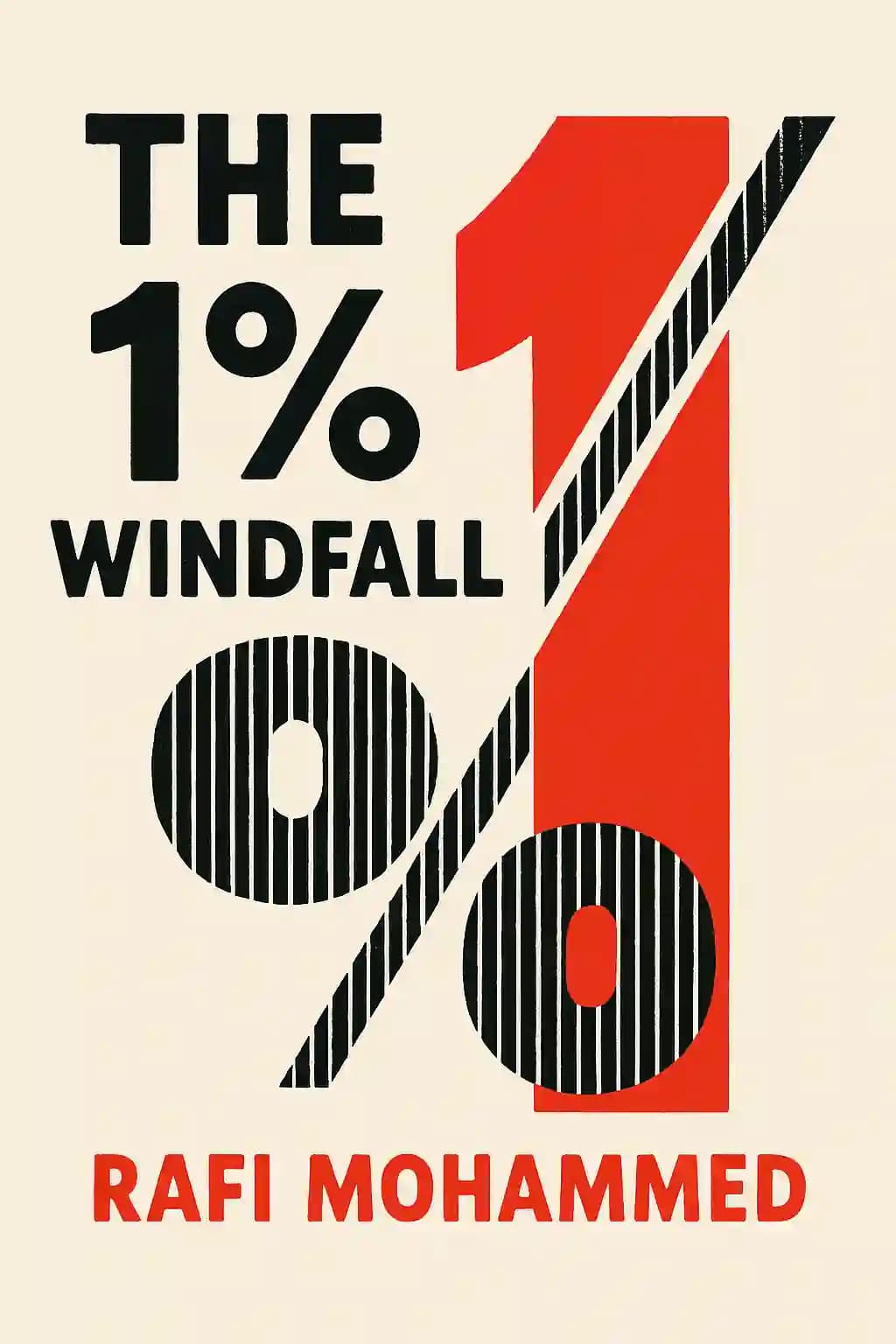
The 1% Windfall
Overview of The 1% Windfall
Discover why a mere 1% price adjustment can boost profits by 11%. Rafi Mohammed's strategic pricing bible has transformed corporate America, earning praise from Scholastic's Richard Spaulding. What small pricing tweak could revolutionize your business tomorrow?

Key Themes in The 1% Windfall
- value-based pricing
- profit margin optimization
- customer segmentation strategy
- price versioning
- differential pricing tactics
Quotes from The 1% Windfall
Pricing flexibility often matters as much as the absolute price point.
Value isn't fixed—it varies by customer.
Pricing...doesn't require massive investments or organizational overhauls.
Smart companies continually reassess their products' value.
The key insight...customers differ fundamentally.
Characters in The 1% Windfall
- Rafi MohammedAuthor and pricing strategy expert
- Olivier BiebuyckVP at Lafarge who implemented value-based pricing
About the Author
About the Author of The 1% Windfall
Rafi Mohammed, Ph.D., is the acclaimed author of The 1% Windfall: How Successful Companies Use Price to Profit and Grow and a leading authority in pricing strategy. With over 25 years of experience as a pricing consultant, he founded Culture of Profit and serves as a Batten Fellow at the University of Virginia’s Darden School of Business. His expertise in innovative pricing models, including dynamic pricing and value-based strategies, stems from academic research and real-world applications across industries.
Mohammed’s work has been featured in over 90 articles for the Harvard Business Review, including a 2023 cover story, and he frequently contributes to major media outlets like The New York Times, Wall Street Journal, and CNBC. His first book, The Art of Pricing, has been translated into seven languages and established him as a global thought leader. Known for blending economic theory with practical frameworks, Mohammed’s insights guide businesses in optimizing revenue while balancing customer fairness.
The 1% Windfall builds on his proven methodologies, offering actionable strategies adopted by Fortune 500 companies and startups alike. His research on pricing bundling, published in the Rand Journal of Economics, remains foundational in the field. Mohammed’s work continues to shape pricing education in MBA programs and corporate training worldwide.
Download Summary of The 1% Windfall
Get the The 1% Windfall summary as a free PDF or EPUB. Print it or read offline anytime.
FAQs About This Book
The 1% Windfall explains how small pricing adjustments can dramatically boost profits. Rafi Mohammed, a pricing strategist, argues that a 1% price increase could raise operating profits by 11% on average, using real-world examples like Sears and Whirlpool. The book offers frameworks like value-based pricing and 16 tactics to tailor prices to customer needs.
Entrepreneurs, managers, and business leaders seeking to optimize pricing strategies will benefit most. It’s ideal for those in retail, manufacturing, or service industries looking to uncover hidden profits through data-driven pricing adjustments.
Yes—it provides actionable strategies for profit growth, making it valuable for decision-makers. Reviewers praise its practicality, with case studies showing companies achieving 10%+ profit increases through tactics like dynamic pricing.
The core idea is that incremental pricing changes, not drastic overhauls, often yield the most profit. By aligning prices with customer-perceived value and offering flexible pricing plans, businesses can maximize revenue without losing customers.
A McKinsey study of 1,200 companies found a 1% price hike boosts operating profits by 11% on average. For firms like Sears, profits surged 155% due to high fixed costs and low variable expenses.
Key frameworks include:
- Value-based pricing: Base prices on alternatives plus unique attributes.
- Pick-a-plan pricing: Address customer concerns (e.g., budgets, uncertainty) via 16 tactics like flat-rate billing and money-back guarantees.
Yes:
- A retail company increased profits by 10% using dynamic pricing.
- A manufacturer saved millions by renegotiating supplier contracts.
- Land O’Lakes boosted profits 58% with modest price adjustments.
Mohammed is an economist and pricing consultant with decades of experience advising Fortune 500 companies. His expertise lies in translating pricing theory into profitable strategies.
Steps include:
- Analyze current pricing against competitors and customer value perceptions.
- Test pricing tiers (e.g., subscriptions, bundles).
- Negotiate supplier costs and streamline operations.
- Small pricing tweaks > large overhauls for profit growth.
- Customize pricing to address customer barriers (e.g., budgets, risk aversion).
- Use data to identify undervalued profit opportunities.
Unlike theoretical guides, Mohammed focuses on actionable tactics, blending case studies with frameworks like pick-a-plan pricing. It’s often paired with Value-Based Pricing for deeper strategy integration.
Yes—it warns against undervaluing offers due to “loss aversion” and one-size-fits-all pricing. Instead, it advocates tiered options to cater to diverse customer needs.