Chapter 1
The Mamba Before the Myth: How Philadelphia Forged a Legend
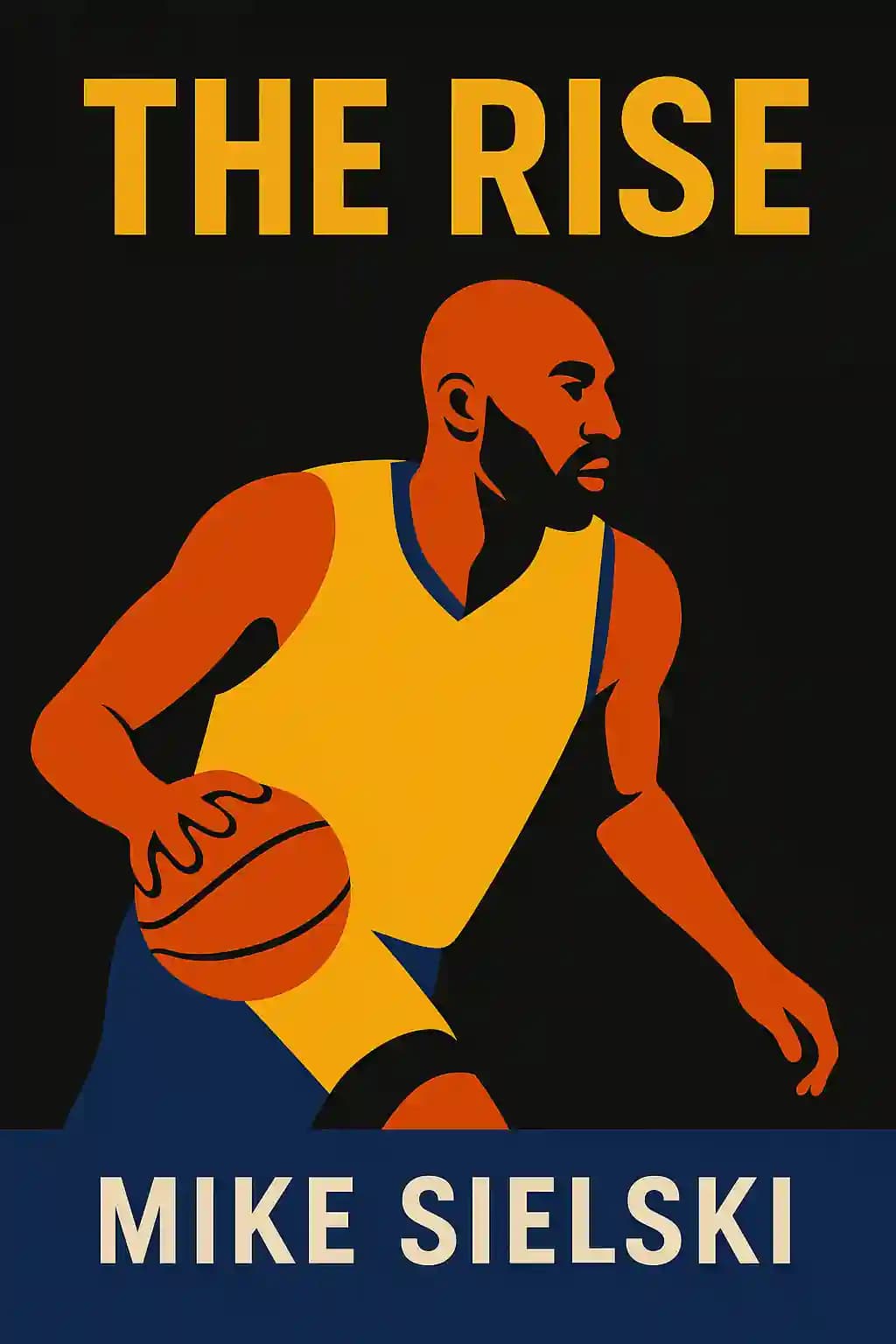
Kobe Bryant's death in January 2020 caused the world to pause in collective grief. What many don't know is how deeply his Philadelphia roots shaped the legend he would become. The book "The Rise" by Mike Sielski has become a cultural touchstone for understanding Kobe's formative years, with LeBron James, Stephen A. Smith, and countless NBA players citing it as essential reading for understanding the Mamba Mentality's origins. Before the five championships, before the 81-point game, before the Lakers dynasty, there was a skinny kid from the Philadelphia suburbs with an Italian accent and unshakeable confidence who told anyone who would listen: "I'm going to be a pro someday." This wasn't just teenage bravado-it was the foundation of what would become one of basketball's most remarkable journeys.
Chapter 2
From Italian Courts to American Dreams: The Bryant Family's Journey
Joe Bryant's basketball journey shaped his son's destiny in profound ways. Standing 6'9" with extraordinary coordination, "Jellybean" Bryant possessed guard-like skills despite his height. Growing up in West Philadelphia during the dangerous gang era of the late 1960s, basketball became Joe's sanctuary. The street code granted talented athletes like him protection from violence-a lesson in survival that would later influence his approach to fatherhood.
After starring at La Salle College, Joe was drafted 14th overall by the Golden State Warriors in 1975, but a contract mishap allowed him to sign with his hometown Philadelphia 76ers instead. His father marveled at the rare opportunity to see his son play "in junior high, high school, college, and the NBA all in the same city." Though Joe's NBA career started slowly, he and his wife Pam soon welcomed daughter Sharia and purchased an $82,000 colonial home in Wynnewood.
When Joe was traded to the San Diego Clippers in 1979, the family relocated while maintaining their Philadelphia home. Three-year-old Kobe, despite hands too small to palm a basketball, already delighted in dunking on a mini-hoop using a trampoline. Nicknamed "the Chosen One" and "the Golden Child" by his father's Sixers teammates, young Kobe enthusiastically reported his father's basketball exploits to his teachers.
The pivotal move to Italy when Kobe was six transformed the Bryant family. Joe signed with Sebastiani Rieti, where the relaxed schedule allowed more family time than the NBA. Living in a cottage in Rieti, the children attended school six days weekly, quickly learning Italian while developing stronger family bonds. Kobe spent afternoons at his father's practices and evenings watching NBA videotapes sent by his grandfather, particularly captivated by Magic Johnson and Kareem Abdul-Jabbar. He absorbed every nuance of these games, recreating moves with rolled-up socks and on his backyard hoop.
Unlike his NBA days, Joe was present daily to witness his son's development, proudly telling The New York Times, "I've become a family man." Meanwhile, Pam maintained household discipline, ensuring the children remained well-rounded, respectful yet assertive, and grounded in their Catholic faith.
Chapter 3
Return to America: The Awkward Transplant
When 13-year-old Kobe arrived at Bala Cynwyd Middle School from Italy in December 1991, he was an immediate curiosity. Despite arriving two months into the school year, he made a strong impression-friendly and sociable, joining classmates on trips and winning stuffed animals for girls at Hershey Park. Following his mother Pam's rule that academics came first, he diligently completed homework each night.
Though featured prominently in the yearbook as an outstanding athlete, the baseball team photo revealed his outsider status-he was the only Black player and the only one not wearing a uniform. To his friend Matt Matkov, Kobe confided his NBA ambitions, which many classmates dismissed as fantasy. When Kobe predicted he'd start on varsity as a freshman, they laughed.
As a recent transplant from Italy, Kobe struggled with American slang and cultural references, keeping quiet when confused and maintaining emotional distance from peers-leaving more time for basketball. His first coach in the Lower Merion system, Dr. George Smith, was a disciplined educator who insisted his Bala Cynwyd Middle School players pass the ball at least three times before shooting. Smith initially hesitated to add Kobe to the team mid-season but quickly secured his paperwork and joined a scrimmage wearing #24.
Despite Smith's structured system, Kobe immediately stood out, though Smith later admitted, "I probably held him back too much." Rumors about the mysterious new student with the Italian accent spread quickly-his father played for the Sixers, he lived in Italy for eight years, he was unnaturally talented. Lower Merion's varsity coach Gregg Downer heard these rumors and watched Kobe play at Bala, witnessing his frustration with Smith's restrictive system. Downer invited Kobe to practice with the varsity team, where the 13-year-old dominated older players while his father Joe watched impassively. "This kid is a pro," Downer told his assistants, not realizing how profound an understatement that would prove to be.
Chapter 4
The Freshman Phenomenon: Kobe's Difficult First Season
Kobe's freshman season at Lower Merion proved difficult for the team. Despite his immediate insertion into the starting lineup, the Aces struggled terribly, with jealousy and resentment brewing among upperclassmen who resented his playing time and shot selection. The contrast between Kobe's disciplined approach and the lifestyles of teammates like Sultan Shabazz, who sold drugs at night in West Philadelphia, highlighted why Kobe would eventually separate himself from his peers.
While teammates participated in typical teenage antics during road trips, Kobe remained serious and focused, avoiding distractions. The team's dismal 4-20 record reflected their struggles, yet Kobe's competitive nature showed in his intense post-game reactions to losses and his dedication to extra practice. After games, he would stay to shoot hundreds of additional shots while teammates headed home.
Even in small details like lunch habits, where Kobe avoided junk food but collected milk cartons from teammates for nutrition, his disciplined approach separated him from peers. Kobe's season ended early when he fractured his kneecap in February, finishing with an average of 17.1 points per game as a freshman.
When guidance counselor Frank Hartwell cautioned him about the slim chances of reaching the NBA, Kobe took this as a challenge rather than advice, becoming even more determined to prove doubters wrong. Meanwhile, journalist Jeremy Treatman, who covered local high school sports, witnessed fourteen-year-old Kobe's extraordinary abilities during practice sessions. When Treatman asked Joe if he expected Kobe to be as good as him, Joe replied, "He's going to be so much better than me, it's not even funny."
Chapter 5
Transformation: Building Skills and Confidence
During summer 1993, fifteen-year-old Kobe joined pickup games with professional and collegiate players at various Philadelphia gyms. NBA player Tim Legler was astonished when he learned the confident player holding his own against professionals was just a high school freshman. What impressed Legler wasn't just Kobe's physical ability to compete with grown men, but his unprecedented confidence level.
In Philadelphia's Sonny Hill League, city players like Donnie Carr initially mocked Kobe, but his fearlessness and improved skills earned their respect. After games, he'd join them for fast food, genuinely interested in their experiences growing up in poverty. As Carr observed, "He might have grown up in the suburbs, but he had an inner-city mind and heart."
At the 1994 Adidas ABCD Camp, Kobe was among 157 players including standout juniors-to-be Lester Earl, Shaheen Holloway, Tim Thomas, and Kobe himself. The camp attracted basketball royalty-Dick Vitale and coaches like Rick Pitino, Steve Lappas, and Stu Jackson watched from the bleachers. While Stephon Marbury was named MVP, the camp proved more significant for Kobe's future.
After the game, the entire Bryant family approached camp director Sonny Vaccaro. While Joe hugged him and Pam smiled, Kobe embraced Vaccaro and said, "Thank you very much, Mr. Vaccaro, for allowing me to come to camp. And I apologize." When Vaccaro asked why he was apologizing, Kobe replied, "Because I'm coming back next year, and I'm going to win the MVP for the whole camp."
For Kobe, humbling experiences were never far away. At Lower Merion, his selfishness created team tension during his freshman season. In AAU ball, he clashed with coach Sam Rines Jr. But unlike these relationships, Kobe deeply respected his father Joe. Their driveway on Remington Road became their private laboratory where the now six-foot-five Kobe, with added muscle, tested himself against his dad. In one memorable game, after Kobe scored first and felt confident, Joe decided to teach him a lesson-driving past him and dunking on him. This shocking display of athleticism from his retired NBA father didn't make Kobe cry or pout, but instead helped him realize the journey and lessons still ahead.
Chapter 6
The Championship Quest: Building a Team Around Kobe
As Kobe's junior year began, Coach Gregg Downer recognized that despite their promising 16-6 record the previous season, changes were needed if the Aces were to reach championship heights. Downer strengthened the team by adding key components: freshman Dan Pangrazio, a Connecticut free-throw champion who joined as starting shooting guard; defensive coordinator Mike Egan, who was drawn to coach Kobe; and most importantly, a tougher non-conference schedule including elite programs like St. Anthony, Glen Mills, and Coatesville (featuring future star Rip Hamilton).
Jermaine Griffin became exactly what Kobe needed-a friend who complemented him perfectly. Coming from Far Rockaway's housing projects where drugs were ubiquitous and violence claimed young lives, Griffin transferred to Lower Merion through the A Better Chance program. The six-foot-three Griffin formed a fast friendship with Kobe based on their shared basketball intensity, love of rap music, and outsider status. Kobe called Griffin "the savior"-someone he could finally relate to on the team.
The results showed immediately-the team won their first four games, matching their entire previous season's victory total. In one game against Strath Haven, Kobe scored thirty-four points including five three-pointers. The Aces finished with a 15-5 record despite some late-season struggles, entering district playoffs with their strongest roster in years.
After dominating Pennsbury with 35 points in the first round, Kobe scored 24 in their season-ending loss to Plymouth Whitemarsh, including 14 fourth-quarter points and three late three-pointers. In the silent locker room afterward, he made a declaration: "Never again. This is not how we're going out. Next year, we're going to win the state championship."
In the Beach Ball Classic tournament during Kobe's senior year, the Aces led by nine points against Jenks High School when Kobe fouled out after scoring 31 points. Without him, the team completely unraveled-they committed a lane violation that sent the game to overtime and ultimately lost 78-63.
In a pivotal team meeting afterward, Coach Downer delivered his "Cancer of Me" speech, punching holes through paper to demonstrate how selfishness was destroying the team. He addressed each player's shortcomings while acknowledging the pressure Kobe faced: "You have no idea what kind of pressure this guy is under." Downer challenged Kobe to respect his teammates while urging the others to match his intensity. The speech became the season's turning point, clearing tension that had built within the team.
Chapter 7
The Secret NBA Plan: Kobe's Hidden Ambitions
Through a chance connection involving his sister Shaya, Kobe met Mike Harris, a marketing manager with ties to Boyz II Men. When Harris learned of Kobe's crush on singer-actress Brandy, he orchestrated a surprise meeting at the 1996 Essence Awards in New York. After an awkward introduction in Wanya Morris's hotel suite, Harris asked if Kobe wanted to take Brandy to his prom. With Brandy's agreement (pending her mother's approval), Kobe secured a celebrity prom date without having to ask her himself.
Frank Hartwell's office overflowed weekly with college recruitment letters for Kobe, most of which were discarded. The few larger packages were opened ceremoniously by the Downer brothers in front of the team, but Kobe showed no interest. Unlike most elite prospects, Kobe never took official recruiting visits, having already decided his path.
This represented Kobe's contradictory approach-traditional in playing for his local high school rather than transferring to a basketball powerhouse, yet revolutionary in controlling his image and future. He maintained public ambiguity about his plans, mentioning interest in schools like Villanova, Michigan, and Arizona while privately planning to skip college.
Even basketball royalty struggled to recruit him-Rick Pitino flew Downer to Kentucky hoping to influence Kobe, while Dean Smith acknowledged the obvious in his letter: "We know you're turning pro, but if you change your mind, there's a scholarship here waiting for you." Kobe kept his NBA intentions mostly secret, confiding only in Matt Matkov, Jermaine Griffin, and Jeremy Treatman, explaining later: "During the season, I didn't want to come out and tell anybody because it would be a total distraction. I wanted to stay focused... so we can win this damn championship."
Sonny Vaccaro orchestrated a clandestine recruitment of Kobe for Adidas, convincing the company to relocate him to Manhattan for nine months to be closer to basketball talent. From there, he and associate Gary Charles would secretly meet Joe Bryant, either by driving to Philadelphia under the pretext of watching Villanova games or having Joe travel to New York. Vaccaro deliberately avoided attending Lower Merion games to prevent speculation, relying on Charles as his eyes and ears. By Christmas, Vaccaro had secured Kobe for Adidas with agent Arn Tellem ready, though no one else knew Kobe planned to go pro.
Chapter 8
The Championship Season: Fulfilling the Promise
As a high school senior, Kobe would arrive at Lower Merion before 5:30 AM, driving his Land Cruiser through the dark, empty streets. Sometimes he'd pick up junior guard Robby Schwartz, who had fought desperately to make the team because "I knew something special was going to happen." A janitor would let them into the cold gym where the lights took five minutes to warm up. Though Schwartz initially hoped these sessions would build chemistry and increase his playing time, he ended up just rebounding for Kobe for an hour.
Following their refocus after the Beach Ball Classic, the Aces won fifteen straight regular-season games, becoming a major attraction in Philadelphia basketball. During one game against Marple Newtown, Kobe reached 48 points when Downer called a timeout to have him score once more and sit, but Kobe stubbornly assisted on five straight baskets before finally scoring his 50th point.
As the postseason approached, Coach Downer employed creative motivational tactics for his championship-aspiring team. He had Jeremy Treatman record a simulated championship game play-by-play against Williamsport, complete with Kobe hitting the winning shot. While most players laughed and cheered during the recording, Kobe remained intensely focused. Downer also had the numbers "27" and "53" added to their warm-up shirts-reminders of their 27-point loss to Chester the previous year and the 53 years since Lower Merion's last state championship.
In the District One championship at Villanova's DuPont Pavilion, Lower Merion faced Chester in a rematch of the previous year's blowout loss. The atmosphere was tense with cultural and class tensions between Chester and Lower Merion fans. Despite starting Kobe at point guard to break Chester's press, Lower Merion struggled against the Clippers' size advantage and trailed 29-22 at halftime. Coach Downer made a tactical adjustment, moving Kobe off the ball to roam the baseline with Jermaine Griffin, hoping to counter Chester's height and allow his star to score more easily.
After Downer's tactical adjustment, Kobe dominated the second half against Chester. He sparked a 14-1 run with a diving steal, culminating in an alley-oop dunk from Pangrazio and a deep three-pointer for an eight-point lead. His final stat line was magnificent: 34 points, 11 rebounds, 9 blocks, and 6 assists. When the final buzzer sounded on the 60-53 victory, the Aces celebrated wildly while receiving their gold medals.
During a practice two days before facing Chester again in the state semifinals, Kobe broke his nose in a collision with teammate Leo Stacy. Blood gushing from his face, Kobe's only immediate concern was betting teammate Jeremy Treatman five dollars that he could make a left-handed three-pointer with his right hand holding a bloody towel to his nose. He swished it, then reluctantly agreed to stop practicing.
Playing without his protective face mask after dramatically throwing it against the wall before tipoff, Kobe struggled in the first half against Chester, missing ten of fourteen shots with "no legs" under him. At halftime, he resolved to stop settling for jump shots and attack the rim despite his fatigue. His aggressiveness in the third quarter helped Lower Merion take a 41-39 lead, and he scored twelve fourth-quarter points to build a 61-56 advantage with 1:19 remaining. When disaster struck-turnovers, Pangrazio's ankle injury, and Chester tying the game-sophomore Emory Dabney's crucial block on John Linehan's potential game-winner sent the contest to overtime. There, Kobe took over, splitting double-teams and finishing with a spectacular coast-to-coast dunk in the final seconds of Lower Merion's 77-69 victory.
Chapter 9
Legacy in the Making: From Lower Merion to the Lakers
The orchestration of Kobe's move to the Lakers began with the friendship between Arn Tellem (Kobe's agent) and Jerry West (Lakers GM), who had bonded through their wives and sons. With Kobe determined to play for the Lakers, who had the 24th pick, Tellem devised a strategy to manipulate the draft process by limiting which teams could work out Kobe, creating uncertainty around his potential.
West arranged private workouts where Kobe dominated Michael Cooper and Dontae' Jones, convincing West that Kobe would be the NBA's next greatest player. West told Tellem he wanted to build around Kobe and "another player" (Shaquille O'Neal), and arranged a potential trade with Charlotte for their 13th pick.
The night before the draft, Nets executives John Calipari and John Nash hosted Joe and Pam Bryant for dinner, telling them they would draft Kobe. Joe confidently predicted Kobe would start as a rookie and become an All-Star in his second season, which the executives privately considered typical parental overconfidence.
Hours before the draft, Tellem and Joe Bryant reviewed their strategy with Kobe, warning him of the risk that another team might draft him despite their efforts to steer him to the Lakers. Kobe grabbed Tellem's shirt and said firmly, "That's why I hired you. You'll get it done."
When the Hornets selected Kobe at #13, the trade to the Lakers was nearly derailed when Vlade Divac threatened retirement, but West and Tellem forced the deal through. The backlash was immediate-Kobe was labeled a prima donna, but he remained unfazed, boldly declaring his championship ambitions with the Lakers: "I want to get a championship. I want to get there now."
In Marina del Rey, Elissa Fisher Grabow watched in dismay as Kobe shot four consecutive air balls against Utah in the Western Conference semifinals, ending the Lakers' season. As his non-basketball confidante during his rookie year, she prepared for a devastated call from the exhausted rookie. Instead, Kobe called from the team plane with a direct order: "Have Palisades' gym open for me. I want to go shoot."
Despite it being after 10 PM on a school night, his voice betrayed no shame or anger-only determination. Grabow understood immediately: wake whoever needed waking, make whatever calls necessary, but ensure that gym would be available. After Kobe's call, Grabow arranged for Palisades High to be opened in the middle of the night. When the Lakers' plane landed at 2 AM, Kobe drove straight to the gym without stopping home.
He couldn't yet read the newspapers that would mock his "scene straight out of Ripley's" or question why the ball was in his hands for the final shot. Every criticism would eventually reach him and burn like fever in his brain, fueling his determination. Alone in that high school gymnasium at eighteen, with the world thinking him a failure, he began shooting. They didn't know his story yet-but he would make sure they learned. He had time. The first shot left his fingertips.
Chapter 10
The Full Circle: Kobe's Legacy and Loss
When Kobe Bryant died in January 2020, a makeshift memorial bloomed outside Kobe Bryant Gymnasium at Lower Merion High School. Candles, wreaths, sneakers and jerseys in maroon and white for the Aces, purple and gold for the Lakers, and basketballs created a colorful tribute. Students paused between classes while adults made pilgrimages to the site.
Meanwhile, Gregg Downer, Kobe's former coach, avoided the memorial and media, devastated by the loss. Phil Mellet, a former teammate, learned the news while playing with his children in the very gymnasium named for Kobe. Amy Buckman, the school district spokesperson, drafted a statement including Downer's words that "Aces Nation has lost its heartbeat."
A month after Kobe's death, Downer flew back from Los Angeles following the Staples Center memorial ceremony, racing home to coach a playoff game that evening. He, Treatman, and Young had attended the memorial together, arriving early to navigate the crowds outside the arena where phantasmagorical murals of Kobe adorned building walls.
Inside, Downer found himself surrounded by basketball legends-Jordan, Russell, Abdul-Jabbar, Magic-a scene that would have been a dream under different circumstances. For twenty years, he had kept West Coast time to follow Kobe's career, accumulating countless memories: shooting free throws with him at the Forum, swimming at Kobe's Pacific-view home, and working his basketball camps.
After the ceremony, he and Treatman shared emotional embraces with Joe and Pam Bryant, whom Vanessa hadn't acknowledged during the program. "We made a kid for the world," Joe repeated while massaging Downer's shoulders.
Following the memorial ceremony, Downer reflected on how Kobe's presence remained everywhere at Lower Merion-he coached in the gym Kobe had funded and built. Random memories would surface unexpectedly; one morning, Downer spontaneously dropped to the floor and did twenty-four push-ups.
He began writing down thoughts: "Kobe needs me to be strong. My current players need it. My students need it." He found particular meaning in being a "girl dad" to his daughter Brynn, who attended his games with her own clipboard, participated in film sessions, and celebrated victories with him. "She can be whatever she wants to be," he wrote, "and I want more than anything else to guide her through the good and bad. Kobe's love for his girls strengthens me."
For the first time since January 26, nearly thirty years after meeting Kobe, Downer felt he had a game plan again.