Chapter 1
The Champion's Mindset: Lessons from an NBA Legend
When Chris Bosh's career ended abruptly due to blood clots in 2016, the basketball world lost more than just an 11-time All-Star. We lost a basketball intellectual - someone who approached the game with both physical prowess and philosophical depth. What makes Bosh's perspective particularly valuable is that he experienced basketball from every angle: the high school phenom in Texas, the franchise cornerstone in Toronto, the supporting star who sacrificed individual glory for championships in Miami. His journey resonates with anyone who's ever had to adapt their role or face unexpected challenges.
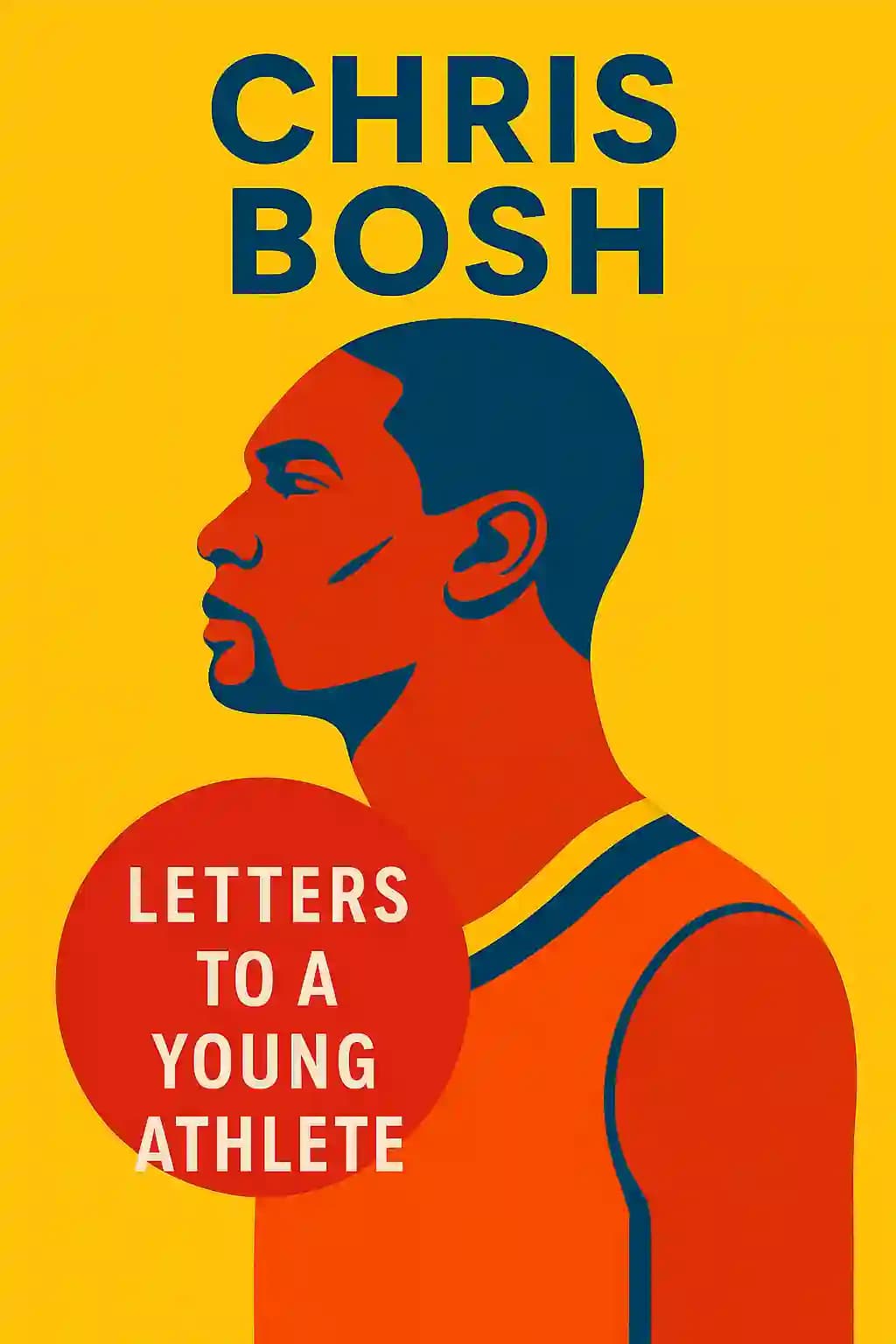
"Letters to a Young Athlete" has become required reading in locker rooms across America, with coaches from high school to the pros using Bosh's insights to develop not just better players, but better people. LeBron James called it "the book I wish I had when I was starting my journey," while Dwyane Wade praised it as "wisdom that transcends sports." Beyond basketball circles, the book has found fans in business leaders like Mark Cuban and entertainers like Drake, who appreciate its lessons on teamwork, resilience, and purpose that apply far beyond the court.
Chapter 2
When You Ain't Nothing but Tired
You're tired, yeah? Welcome to the club.
Sometimes the primary sensation in an athlete's life isn't winning or passion-it's bone-deep exhaustion. Tired from practice, games, film study, school, work. Tired of it all. And maybe you're not even through the second quarter of your game, career, or life.
How an athlete plays when exhausted tells you everything about who they are as a competitor. The successful ones don't even think about being tired-they're so used to it that all they focus on is performing. Maybe that's what being an athlete really is: enduring and transcending limits when you "ain't nothing but tired."
In high school, I dreaded practice. Coach Robert Allen's words "we need to work on our conditioning" made my heart sink. But those brutal sprints and drills taught us where to dig for extra strength. Years later in the NBA, I'd see opposing players at the free throw line asking if I was "going for it"-making a gentlemen's agreement not to fight for a rebound to save energy. I participated sometimes, but I hated myself for it. Agreeing not to give your best-for any reason-is cheating yourself and the game.
The greats like Kobe, Rip Hamilton, and Tim Duncan found another gear in the fourth quarter. They schooled me, but they were teaching me too-that champions have another level. David Goggins, the ultramarathoner, says when you think you've hit your limit, you're only at 40% of capacity. Your mind's "Empty" light is malfunctioning-you can safely ignore it.
That's what pushing yourself in practice is for. It teaches you when to ignore that voice saying you can't continue. I remember the first time I ran a mile, thinking I'd collapse. When I made it, I thought, "What else can I do?" Winning requires accessing energies from deep within that aren't typically accessed.
Like when I grabbed that rebound and kicked it to Ray Allen for the game-tying three in Game 6 of the 2013 Finals-my 96th game that season, in the 48th minute against the greatest power forward ever. That's exhaustion beyond what you can imagine.
Pain is temporary; glory is forever. You have to get used to exhaustion, to welcome it like an old friend. The difference between champions and everyone else is learning to say "This is miserable-give me more!" instead of "This is miserable-I quit."
Chapter 3
Finding Your Why Beyond Fame and Fortune
All the rewards of success aren't whys-they're more like hows. They're tools for getting you where you want to go, but they're not the destination.
What is a why? Knowing-not just thinking, but knowing-that you're making the most of your God-given talents. The joy of operating at the peak of your ability. The joy of being part of a team that runs like a well-oiled machine.
For me, a big part of my why was the squeak of shoes on the gym floor. I just love that sound. The smell of the gym. The sensation of straining my muscles and feeling the strength in them. It's trusting that your teammate is going to be where you think he's going to be when you whip him a pass-and then he is. It's the swish of the ball through the net, the anticipation before tip-off, the blood pounding through your body as the seconds tick down in a close game.
I remember in fourth grade at Hutchins Elementary, waiting to play organized basketball for the first time and feeling this intense excitement. I played my heart out, and the next day, people were saying, "Hey, Chris Bosh is good." I was being seen. I was showing what I could do. It was the perfect intersection of something I was good at and recognition for the work I was putting in.
That's my why. It's me saying: This is who I am. This is what I can do with what God and my parents gave me. It's challenging other athletes, asking them to show me what they can do. Together, we become the best we can be.
Coach Sean Payton once tried to motivate the Saints with cash and trophies before the playoffs. It didn't work. But in 2006, after Hurricane Katrina, he showed them footage of the devastation alongside their preseason clips. The players knew they weren't just playing a game-they were carrying a proud, beaten, resilient city on their backs. That's a why that matters.
Fame and popularity don't last either. Most NBA All-Stars from 1979 are forgotten now. Most '90s hip-hop stars too. But Nas created Illmatic because "it wouldn't be told if I didn't tell it." That's a why that works whether you're winning or losing.
During my first year with the Heat, I wanted to win just to shut up the haters. Then we lost in the Finals. In the weeks after, I realized that even winning with that attitude wouldn't have made me truly happy. Victory gets old fast without a purpose you can be proud of.
A good why endures through life's ups and downs, even when everything around you is falling apart. Your what can be taken away in an instant-your why can outlast that.
Chapter 4
The Gift of Hunger
When my NBA teammate brought his talented high school-age son to practice, I could tell the kid had serious skills. But what was driving his drive? Was it impressing his dad? Mastering the game? Making it to the league?
Growing up with fewer resources than some competitors gave me a gift-real hunger. When my teammates and I faced kids from better-off schools with superior facilities, we feasted on that competition. I'd think: "At the end of this game, I'm going back to my life, and you're going back to yours. But right now, on this court, we're equals. And I want this in a way you can't even understand."
Hunger doesn't just come from economic circumstances. Look at NBA players like Klay Thompson, Austin Rivers, or Tim Hardaway Jr., whose fathers were NBA stars. Maybe their hunger came from proving they weren't just good because of their dads.
Michael Jordan understood hunger's power when he told the Bulls before they finally beat Detroit: "Even though they may have that experience, we have that hunger." Lewis Hamilton keeps pushing despite seven Formula 1 championships because his hunger drives him to get better. Tom Brady, James Harden, and Elon Musk stay hungry not for financial rewards but to beat their personal bests and fulfill their purpose.
Playing alongside LeBron James showed me that truly great players never take plays or practices off. Their hunger gets them through tough days because they respect the game too much to take it lightly. Jordan could have rested on his laurels any night in the '90s, but his hunger-even when he had to manufacture slights and grudges-drove him to six championships instead of one.
Hunger becomes a virtuous cycle: the more work you put in, the hungrier you get, the harder you work, the more success you see, the hungrier you get. But you have to actively cultivate it. Bill Belichick excels at this-after winning his first Super Bowl, when a teary-eyed scout asked "What do we do now?", Belichick simply replied, "We win more!"
But hunger must be directed properly. Get too hungry and you risk obsessing over past mistakes or endangering your health. I've seen players hungry for the wrong things-personal stats instead of wins, ego gratification instead of team success, money instead of joy in the game. What you're hungry for matters as much as staying hungry.
Chapter 5
Cultivating the Mind
The fact that you're still reading this book-despite not having discussed basketball techniques, rebounding positions, or weightlifting strategies-shows promise. This isn't that kind of book. While some athletes and coaches proudly claim they "haven't read a book in years," the truly elite athletes possess elite minds. Aaron Rodgers can recall specific plays from games years ago. LeBron demonstrates photographic memory at press conferences. Greg Maddux dominated baseball without overwhelming physical gifts, using mental preparation to predict outcomes before they happened.
Your mind is part of your body-both need cultivation. Reading, learning, and expanding your intellectual horizons directly transfers to athletic performance through improved visualization, creativity, and understanding. The analytical revolution in sports proves this-modern basketball was transformed not by brute force but by creative thinking about shot efficiency and mathematical probabilities.
I didn't just want to be a basketball player-I wanted to be a complete person. In Toronto, I'd walk to the Indigo bookstore on Bay Street and browse for hours. I'd read philosophy, history, and biographies of great leaders. This wasn't just to pass time; it was building my mental muscles alongside my physical ones.
The mind-body connection isn't mystical-it's practical. When I visualized game situations during practice, I was programming my brain for success. When I read about leadership, I was preparing to guide my team through adversity. When I studied the history of the game, I was connecting to something larger than myself.
Think about how many decisions you make during a single possession-reading defenses, anticipating movements, calculating risk-reward scenarios. These aren't just physical actions; they're complex cognitive processes happening at lightning speed. The sharper your mind, the better those decisions become.
This mental cultivation extends beyond basketball. It prepares you for life after sports, for business opportunities, for family leadership. The greatest athletes understand that their playing careers are just one chapter in their lives. Developing your mind ensures the next chapters can be just as meaningful.
Chapter 6
Communication Is Key
When Coach K told me he was impressed by my wingspan on defense, I realized how I could contribute to Team USA. Among stars like LeBron, Kobe, Wade, and Carmelo, there weren't many shots left-but Coach K communicated my value in a way that made me listen. He didn't say "we don't need you on offense" (which would have hurt my pride); instead, he highlighted my defensive strengths, making me receptive to his message.
This illustrates the brilliance of great communicators-they know how to deliver messages in ways people can actually hear them. And I deserve credit for listening-recognizing Coach wasn't just being nice but sending a message about where to focus my efforts.
Listening is the underrated half of communication. While there are countless books about "Great Speeches of History" but none about "Great Listeners of History," listening is equally crucial and developable. The loudest talkers often aren't the best listeners, but true leaders excel at both-speaking concisely when needed and giving complete attention when others speak.
Though I haven't communicated on a basketball court since 2016, these lessons serve me well as a father, TV analyst, writer, and activist. The principles remain constant: know your audience, be honest and direct, listen well to earn the right to speak. Nothing from my athletic career has transferred to other contexts as effectively as what I learned about communication.
Whatever path your career takes, your playing days will eventually end. When they do, knowing how to talk and listen will be among the most valuable skills you take with you. The words may change, but the task itself never does.
Chapter 7
Sweep Away Your Ego
I never had a public blowup with coaches or teammates during my Team USA disappointment. I kept my head down and said the right things. But humans are excellent at reading hidden feelings-anyone near me could sense my frustration. I wasn't thinking about contributing or cheering from the bench; I was only focused on what I wanted. That's what ego does.
Looking back on my career, I deeply regret that period. Maybe you've had similar moments-when you were petulant or selfish, taking value from your team rather than adding it, refusing to learn because you felt stubborn. The most powerful step to defeating ego is learning to see it in yourself.
In 2008, I got a second chance with the Olympic team. This time, my attitude was "whatever the team needs." After training camp, Coach K mentioned seeing me on a pick-and-roll and commented on my long arms. He didn't explicitly ask anything, but I heard the opportunity-not to be the star, but to contribute in a specific role. I led the team in rebounds, came off the bench behind Dwight Howard, and we brought home gold.
We lost in 2006 and won in 2008 for many reasons beyond me, but the difference in my contribution is clear: In 2006, I hurt the team regardless of stats. In 2008, I helped, regardless of stats. No player-not MJ, Kobe, or LeBron-can win championships alone, but every team member can change their contribution from negative to positive.
The good news about ego is it's never too late to fix it. Taking responsibility, listening to feedback, and improving takes humility and confidence. My proudest moments came when I defeated my ego-like in Game 7 of the 2013 Finals against the Spurs, where I scored zero points but still contributed on defense and rebounding. Any kid can imagine hitting the winning shot, but it takes maturity to make a difference when your shot isn't falling.
What's the difference between ego and confidence? Ego lies, telling you you're the greatest regardless of results. Confidence is belief in your ability backed by reality and work. Ego says you deserve success just for being you; confidence expects success based on past efforts. Ego says you've already achieved enough; confidence is always ready for the next challenge.
Chapter 8
Leaders Lead
There is an expression we have for teams without leaders. We call those losing teams. Because a team without a leader-whether or not there's someone with a captain's C on their jersey-isn't going anywhere.
Like you, I've heard about leadership my whole life. Every sports book, documentary, and movie features that critical moment when somebody steps up and says what needs to be said. But leadership isn't so easily defined.
Leadership isn't just about giving speeches. A leader is someone who steps up and does what needs to be done-who becomes what the situation requires. They do this on the court, in the classroom, in their neighborhoods, during crises, when someone's being bullied, or when they spot a business opportunity.
When I was sixteen, Coach Leonard Bishop called me into his office for the summoning, the call to leadership. He told me I could lead by example-by being punctual, trying my best, being prepared for practice, paying attention, being a good citizen, working hard, showing commitment, continuously learning, taking and giving feedback, and being someone others looked up to.
People watch a leader's every move-how they walk and carry themselves-even outside of games. This didn't feel like a burden but an honor. I left that room feeling ten feet tall.
Leaders don't just lead from the front. They can set quiet examples, set the tone, pick teammates up when things get hard, and support others. Leaders make the team better by being part of it, not by making it about themselves.
You must learn to follow in order to lead. Some leaders put up the most points, but others are wise presences in the locker room. With the Raptors, Darrick Martin showed me you didn't need stats or minutes to lead. With the Heat, Juwan Howard would be in the gym before everyone else every morning, despite rarely playing.
The true test of leadership isn't who puts up the best stats but who teammates turn to when things aren't going well. When the Heat lost six of seven games after the All-Star break during our first Big Three season, LeBron embodied bouncing back. His intensity at practice inspired us all without saying a word.
Being a leader means changing to meet your team's needs. In Toronto, I learned to be an emotional leader when needed. In Miami, I had to adapt again as part of the Big Three-leading by example, being the defensive anchor, and keeping everyone on the same page.
Chapter 9
Take Care of Yourself
Taking care of your body isn't just about nutrition and exercise-it's about learning to listen to your body's signals. You need to understand when exhaustion is something to push through versus when you genuinely need recovery time. This is what "load management" in today's NBA is really about-valuing durability and sustaining peak performance.
As an athlete, you must become your own best advocate. No one else-not coaches, trainers, or teammates-is as invested in your long-term durability as you are. You need to know your body well enough to communicate confidently about it with medical staff. Consider Kawhi Leonard, who sat out most of the 2017-18 season despite pressure to return sooner. He trusted his own body's signals, and when he finally returned, he led Toronto to a championship.
This approach represents a significant evolution from earlier eras when players smoked in locker rooms, played through serious injuries, and gained excessive weight in the off-season. It's no coincidence that play quality has improved and careers have lengthened as athletes have learned to respect their bodies.
There's a crucial distinction between pushing through normal soreness and recognizing genuine injury. With experience, you develop the confidence to stand up for yourself when truly hurt. I worry about players who hide concussion symptoms or become dependent on painkillers just to stay on the field. Self-care isn't about luxury-it's about saying, "If I don't prioritize my well-being, who will?"
Neglecting your body is like charging everything to a credit card-eventually, the bill comes due. But with commitment, you can address these issues, as Draymond Green demonstrated when he lost thirty pounds after the Warriors GM challenged him to get back in shape.
The irony isn't lost on me that despite all my work on durability, my career ended because of blood clots I couldn't control. But I don't consider my efforts wasted. I'm proud that I took ownership of my health, that my body remains healthy, and that my mind will stay sharp for decades. The ancient saying "Mens sana in corpore sano"-a sound mind in a sound body-reminds us that mental performance depends on physical care. The investments you make in your body continue paying dividends long after your playing days are over.
Chapter 10
The Name on the Front of the Jersey Is What Counts
Play for the name on the front of the jersey, and they'll remember the name on the back. My career proves this truth. When the Miami Heat retired my number, Pat Riley highlighted not my scoring but "the biggest assist in the franchise's history"-my rebound that led to Ray Allen's game-tying shot in the 2013 Finals.
It's hard to be great at basketball, but strangely more rare to be a great teammate. When LeBron, D-Wade and I formed Miami's Big Three, success required each of us playing specific roles. Coming from being Toronto's primary scorer, I became the defensive anchor and third option. Everyone on a winning team has a role-LeBron, D-Wade, everyone. What made us champions was our willingness to do the extra little things for teammates.
Great coaches understand this-Phil Jackson said "the strength of the team is each individual member; the strength of each member is the team." Coach K called teamwork "the beauty of our sport, where you have five acting as one." True teamwork means submerging your ego for something greater.
In Game 7 of the 2013 Finals, I scored zero points yet we won the championship. Though every player dreams of hitting game-winning shots, I contributed through defense and leadership instead. Similarly, on the 2008 Olympic "Redeem Team," I supported my teammates despite limited minutes, and we won gold.
Teams struggle when players refuse their roles. I've played with guys who wouldn't set screens or rebound because they wanted to score more. Even star duos like Kobe-Shaq and LeBron-Kyrie left championships on the table because of ego conflicts.
Being a good teammate means being trustworthy-being where the play says you should be, having your back in conflicts, sacrificing stats for wins, offering constructive criticism. Trust is built through 82 games and countless practices. When I grabbed that crucial rebound in the Finals, I knew exactly where Ray Allen would be, and he knew I'd get him the ball.
Most importantly, I wanted teammates to trust me completely-to know I'd make the extra pass, set the extra pick, and step up in big moments without fear. My jersey hangs in Miami's rafters, but my greatest legacy is what lives on in the teammates I played with-the ability to be of use to others and help yourself by helping them.